Person in the New Testament
Paul
Paul: Saul of Tarsus, from Stephen's stoning to a hired house in Rome
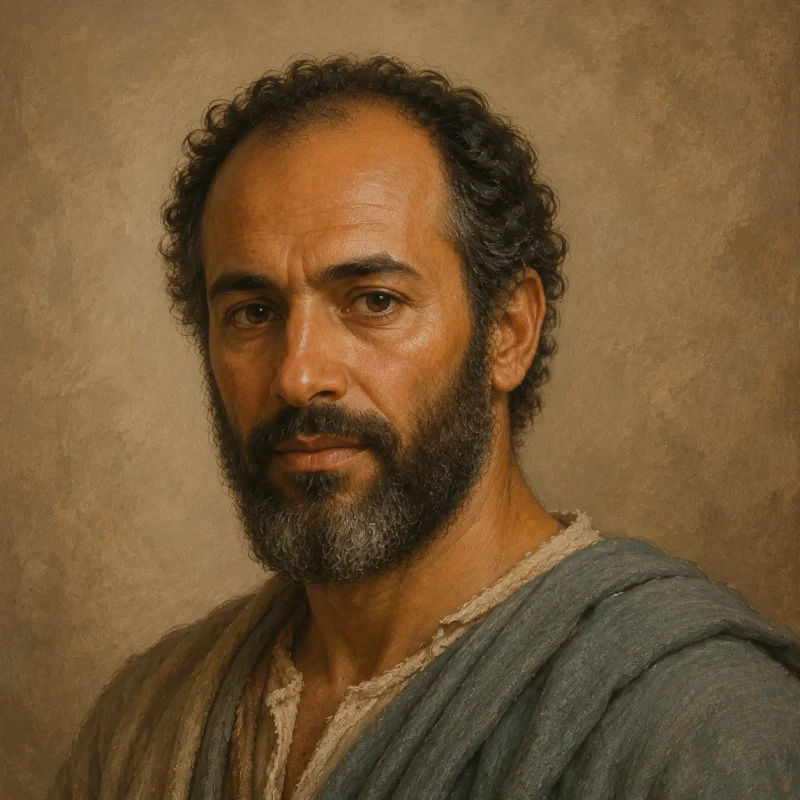
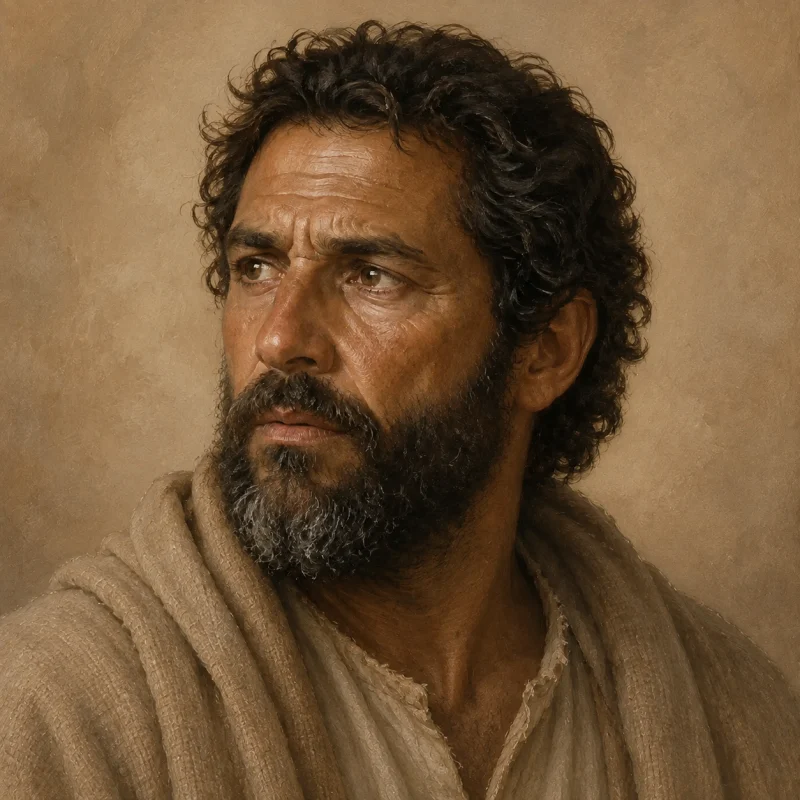
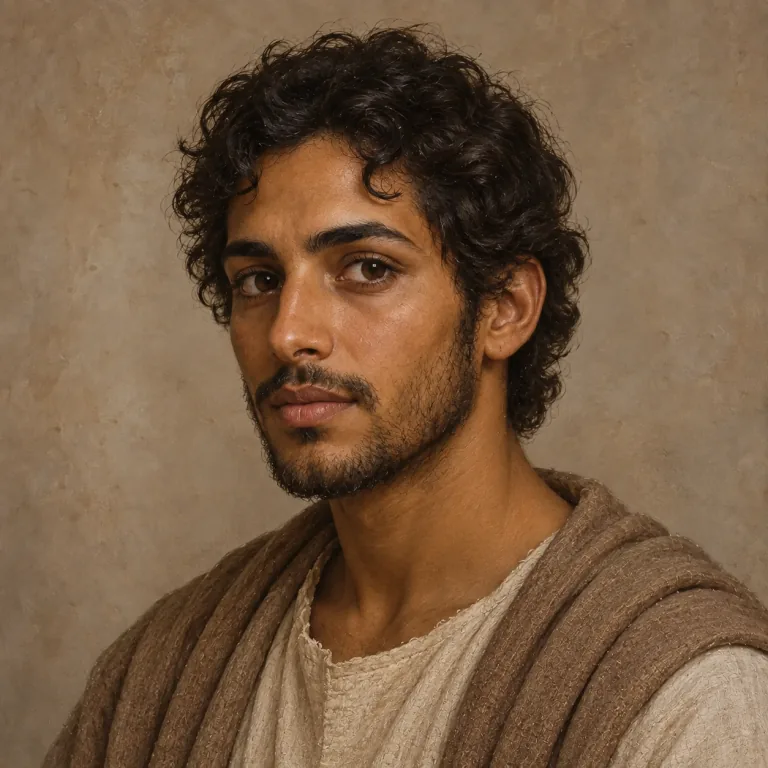
Portrait: an AI-generated artistic interpretation, not evidence of how Paul looked.
Who Paul is
Acts first names him at an execution: the witnesses "laid down their clothes at a young man’s feet, whose name was Saul", and "Saul was consenting unto his death". He "made havock of the church", then travels toward Damascus "breathing out threatenings and slaughter". A light and a voice stop him, he is "three days without sight", Ananias comes, scales fall from his eyes, and he is baptized and preaches. Disciples let him down the wall in a basket; Barnabas brings him to the apostles and later fetches him to Antioch. Sent out from Antioch, the narrator notes "Then Saul, (who also is called Paul,)". He and Barnabas turn to the Gentiles, are taken for gods at Lystra, and he is stoned and left for dead. After the Jerusalem meeting he and Barnabas part over Mark. A vision calls him to Macedonia; he is beaten and jailed at Philippi, speaks at Mars' hill, works as a tentmaker at Corinth, and stays two years at Ephesus. Seized in the temple at Jerusalem, he is bound, heard by council, Felix, Festus and Agrippa, appeals to Cesar, is shipwrecked, and reaches Rome, where he stays two years "in his own hired house". Thirteen letters, from Romans to Philemon, open with his name, and in them he tells parts of his story himself, from "beyond measure I persecuted the church of God" to "I have finished my course".
Cited passages: Acts 7:58, Acts 8:1, Acts 8:3, Acts 9:1, Acts 9:4, Acts 9:9, Acts 9:18, Acts 9:20, Acts 9:25, Acts 9:27, Acts 11:26, Acts 13:9, Acts 13:46, Acts 14:12, Acts 14:19, Acts 15:39, Acts 16:9, Acts 16:25, Acts 17:22, Acts 18:3, Acts 19:10, Acts 21:30, Acts 21:33, Acts 25:11, Acts 27:44, Acts 28:30, Romans 1:1, 1 Corinthians 1:1, 2 Corinthians 1:1, Galatians 1:1, Ephesians 1:1, Philippians 1:1, Colossians 1:1, 1 Thessalonians 1:1, 2 Thessalonians 1:1, 1 Timothy 1:1, 2 Timothy 1:1, Titus 1:1, Philemon 1:1, Galatians 1:13, 2 Timothy 4:7
Historical setting
Acts calls him Saul until Cyprus, where the narrator writes "Then Saul, (who also is called Paul,)"; the text gives no reason for the change and does not tie it to the Damascus road. In his defences he says he was "born in Tarsus, a city in Cilicia", brought up "at the feet of Gamaliel", and "I am a Pharisee, the son of a Pharisee"; Philippians adds "of the tribe of Benjamin, an Hebrew of the Hebrews". He claims Roman standing, "But I was free born", and Acts mentions "Paul’s sister’s son" once. The three Damascus accounts differ. In Acts 9 the men "stood speechless, hearing a voice, but seeing no man"; in Acts 22 they "heard not the voice of him that spake to me"; in Acts 26 "we were all fallen to the earth". Acts 22 says "about noon" and Acts 26 "At midday", while Acts 9 gives no hour. Ananias appears in the first two and not in the third, where the commission comes from the voice. What follows differs too: Acts moves from Damascus to Jerusalem, while Galatians says "I went into Arabia, and returned again unto Damascus" and "Then after three years I went up to Jerusalem". The letters open in his name, "Paul, a servant of Jesus Christ, called to be an apostle", and some mark a signature, "The salutation of me Paul with mine own hand". Acts ends with him still guarded and never says what became of him.
Cited passages: Acts 13:9, Acts 22:3, Acts 23:6, Philippians 3:5, Acts 22:28, Acts 23:16, Acts 9:7, Acts 22:9, Acts 26:14, Acts 22:6, Acts 26:13, Acts 9:17, Acts 22:12, Acts 26:16, Galatians 1:17, Galatians 1:18, Acts 28:31, Romans 1:1, 1 Corinthians 16:21, Acts 28:16
How the story is told
Acts introduces him as a name attached to a pile of coats and then follows him for the rest of the book. The Damascus scene is told three times and never identically, each version shaped for its hearers: the narrator tells it plainly, the Jerusalem speech is spoken "in the Hebrew tongue" and dwells on law and temple, and the speech to Agrippa ends "I was not disobedient unto the heavenly vision". From Troas the narrator switches to first person plural, "immediately we endeavoured to go into Macedonia", and keeps that voice through the voyage. City after city runs the same shape: he reasons in a synagogue, some believe, an uproar follows, he moves on. The hearings repeat before higher officials until "I appeal unto Cæsar" moves the story to Rome. The letters supply what the narrative does not, in his own words: "I am the least of the apostles", "a thorn in the flesh", and a list of beatings and shipwrecks. Second Peter calls him "our beloved brother Paul" and says some of his writing is "hard to be understood". Acts stops with preaching still going on rather than with a verdict.
Cited passages: Acts 21:40, Acts 22:1, Acts 26:19, Acts 16:10, Acts 17:2, Acts 17:5, Acts 25:11, Acts 26:28, 1 Corinthians 15:9, 2 Corinthians 12:7, 2 Corinthians 11:25, 2 Peter 3:15, 2 Peter 3:16, Acts 28:31
Story moments
- Clothes at Saul's feet (Acts 7:58). The witnesses at Stephen's stoning lay their clothes at the feet of a young man named Saul.
- The voice on the road (Acts 9:4). He falls to the earth near Damascus and hears a voice asking why he persecutes.
- Called Paul at Paphos (Acts 13:9). The narrator first prints the other name for him during the encounter on Cyprus.
- The Macedonian vision (Acts 16:9). A man of Macedonia in a night vision asks him to come over and help.
- Speaking at Mars' hill (Acts 17:22). He addresses the men of Athens about what they worship.
- The appeal to Cesar (Acts 25:11). Before Festus he refuses to be judged elsewhere and appeals to Cesar.
- Two years in Rome (Acts 28:30). Acts closes with him receiving all comers in a hired house.
- I have finished my course (2 Timothy 4:7). Writing to Timothy, he says the time of his departure is at hand and that he has kept the faith.
Key passages
Acts 7:58
And cast him out of the city, and stoned him: and the witnesses laid down their clothes at a young man’s feet, whose name was Saul.
Acts 8:1
And Saul was consenting unto his death. And at that time there was a great persecution against the church which was at Jerusalem; and they were all scattered abroad throughout the regions of Judæa and Samaria, except the apostles.
Acts 8:3
As for Saul, he made havock of the church, entering into every house, and haling men and women committed them to prison.
Acts 9:1
And Saul, yet breathing out threatenings and slaughter against the disciples of the Lord, went unto the high priest,
Acts 9:4
And he fell to the earth, and heard a voice saying unto him, Saul, Saul, why persecutest thou me?
Acts 9:8
And Saul arose from the earth; and when his eyes were opened, he saw no man: but they led him by the hand, and brought him into Damascus.
King James Version. 182 indexed passages in total.
For reflection
Acts tells the Damascus road three times and lets the details vary, on who heard the voice and who fell down and whether Ananias appears at all. What does it do to your reading that the book keeps all three versions instead of settling on one?
Books Paul appears in
Related people
Names and references are adapted from STEPBible TIPNR. A person listed with a verse is named or indexed there; it does not mean they wrote or spoke it.