Person in the Old and New Testaments
Jesus Christ
Jesus Christ: what the four Gospels report and how the letters and Revelation speak of him
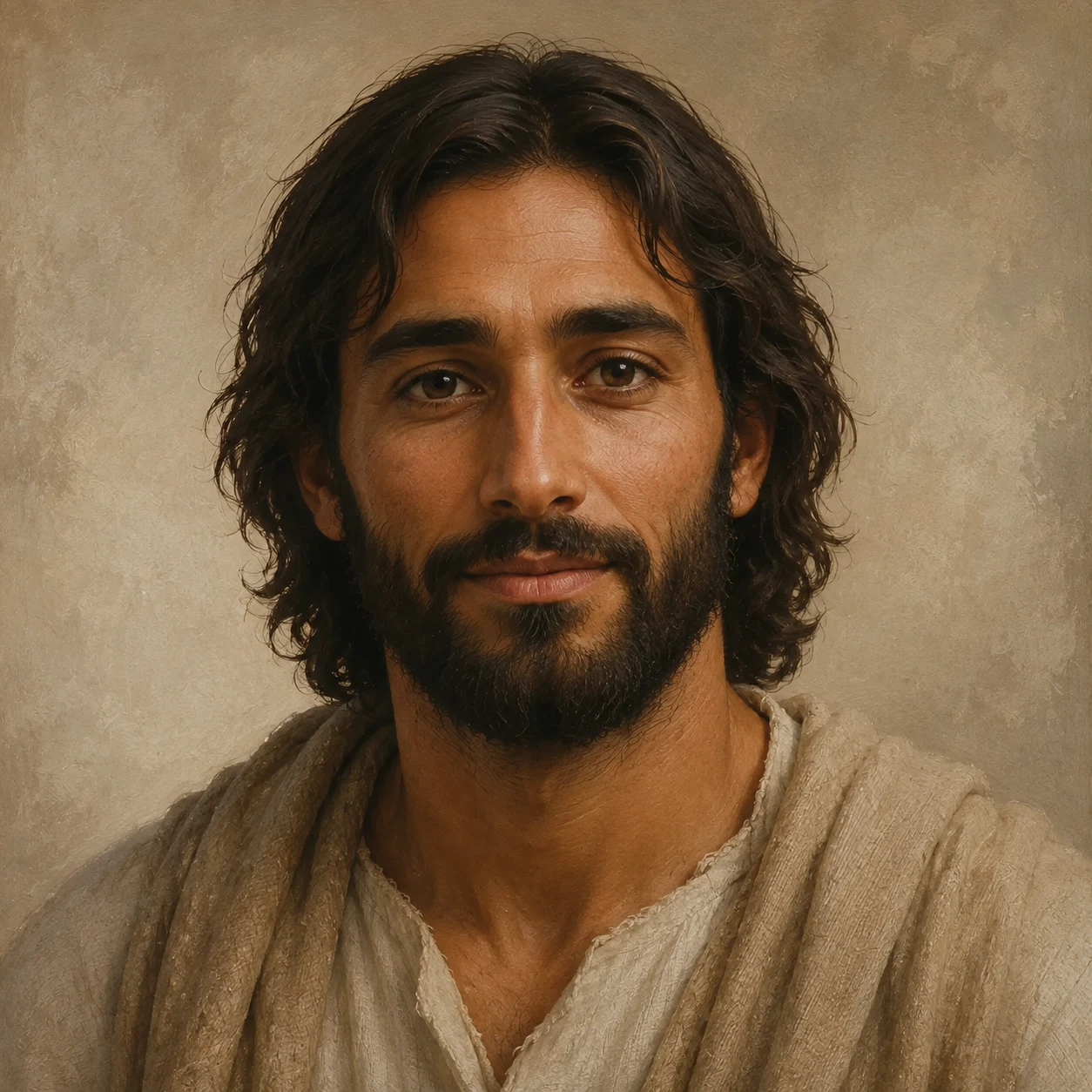
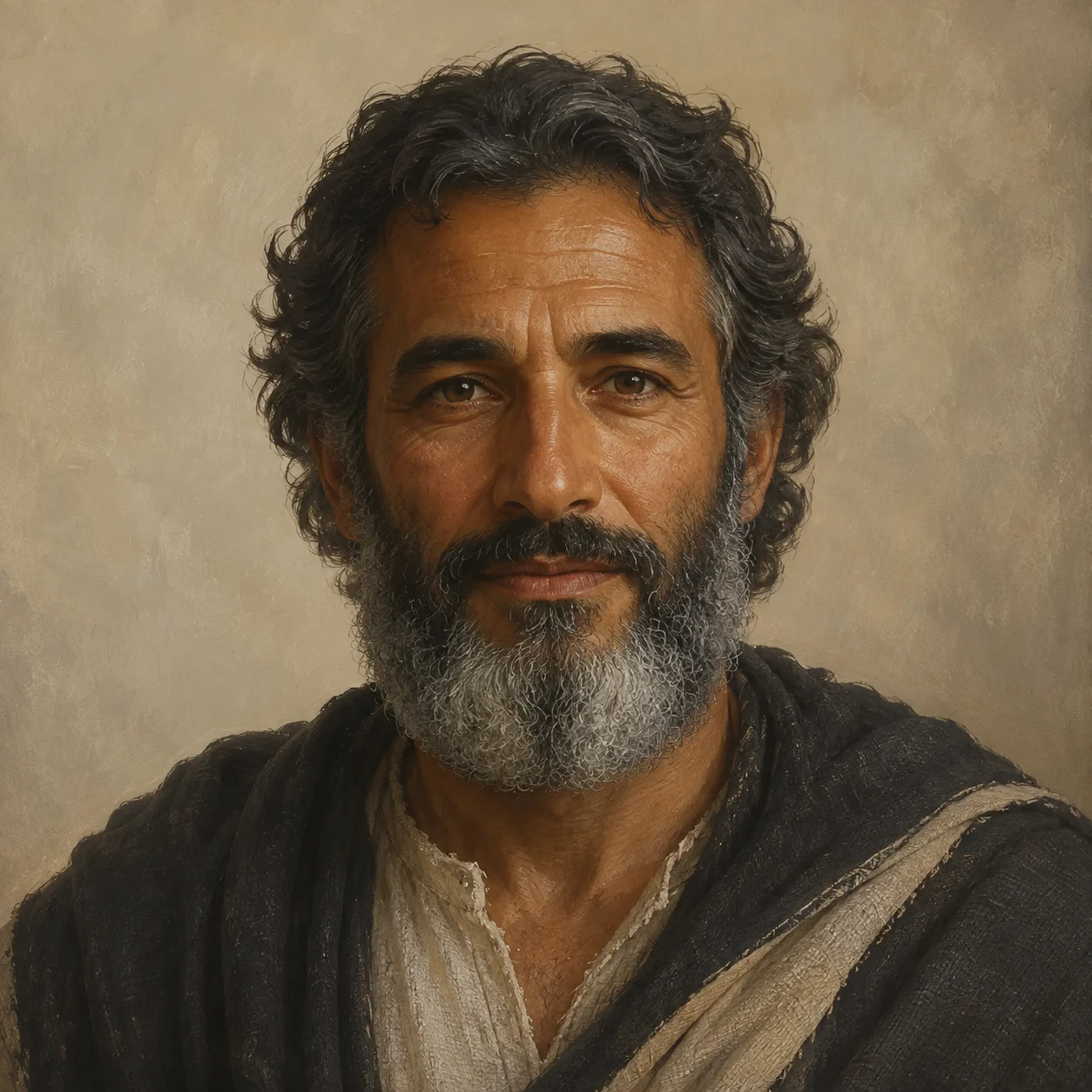
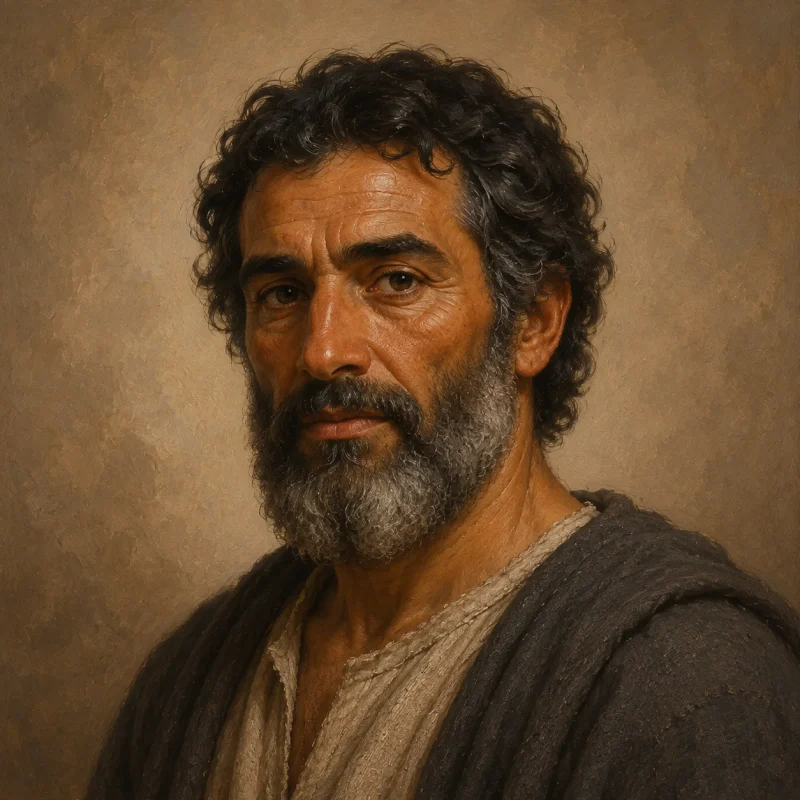
Portrait: an AI-generated artistic interpretation, not evidence of how Jesus Christ looked.
Who Jesus Christ is
Matthew's genealogy ends with Joseph "the husband of Mary, of whom was born Jesus," and says Mary "was found with child of the Holy Ghost." Gabriel tells Mary she will "bring forth a son," and Luke sets the birth in Bethlehem, where she "wrapped him in swaddling clothes, and laid him in a manger." Matthew adds wise men, Herod killing the children, and flight into Egypt; Luke adds shepherds, Simeon and a boy of twelve "sitting in the midst of the doctors." Mark's narrative begins with John baptizing "in the wilderness"; John opens "In the beginning was the Word." At the baptism Matthew has a voice say, "This is my beloved Son, in whom I am well pleased." The Spirit leads him into the wilderness, where he answers the devil, "Man shall not live by bread alone." He calls fishermen: "Follow me, and I will make you fishers of men." He teaches in synagogues and on a mountain, speaking "many things unto them in parables," touches a leper, tells a man sick of the palsy "thy sins be forgiven thee," stills a storm, raises the dead. Pharisees dispute over sabbath, forgiveness, company. Three disciples see him "transfigured before them." He enters Jerusalem to "Hosanna to the Son of David," overthrows "the tables of the moneychangers" and curses a fig tree. At supper he breaks bread: "Take, eat: this is my body." Judas kisses him, the disciples flee, the council condemns him, and Pilate, "when he had scourged Jesus," delivers him to be crucified. He dies and is laid in a new tomb. Each Gospel reports the tomb open, appearances and a sending: "Go ye therefore, and teach all nations."
Cited passages: Matthew 1:16, Matthew 1:18, Luke 1:26, Luke 1:31, Luke 2:7, Matthew 2:1, Matthew 2:16, Matthew 2:14, Luke 2:16, Luke 2:46, John 1:1, Matthew 3:17, Matthew 4:4, Matthew 4:19, Matthew 13:3, Mark 1:41, Mark 2:5, Mark 4:39, Matthew 17:2, Matthew 21:9, Mark 11:15, Matthew 21:19, Mark 14:22, Matthew 26:56, Matthew 27:26, Matthew 27:60, Matthew 9:11, Matthew 12:2, Matthew 26:49, Mark 14:64, Matthew 28:19
Historical setting
The four Gospels order and word things differently, and the differences stand unresolved. Matthew's line runs through Solomon and says "Jacob begat Joseph"; Luke's runs back to Adam through Nathan and has "(as was supposed) the son of Joseph, which was the son of Heli." Mark and John print no birth account. John places the temple scene early, with "a scourge of small cords"; the other three place it in the last week. Matthew's temptations run stones, pinnacle, mountain; Luke's run stones, mountain, pinnacle. Mark alone has "before the cock crow twice." Luke alone sends him to Herod, who "mocked him"; John alone takes him "to Annas first." Matthew has Simon compelled to "bear his cross"; John says "he bearing his cross went forth." Mark says "it was the third hour, and they crucified him"; John dates the sentence to "the preparation of the passover, and about the sixth hour." The last words differ: "why hast thou forsaken me" in Matthew and Mark, "Father, into thy hands I commend my spirit" in Luke, "It is finished" in John. Mark's centurion says "Truly this man was the Son of God"; Luke's says "Certainly this was a righteous man." Mark has the women flee the tomb, "for they were afraid"; Matthew sends the eleven to Galilee; in Luke he tells them to tarry in Jerusalem. The Gospels give no calendar dates, though Luke marks the setting by rulers: "the fifteenth year of the reign of Tiberius Cæsar." They give no description of his face or build, and no scene between infancy and the Jordan beyond Luke's twelve-year-old and the note that he "increased in wisdom and stature."
Cited passages: Matthew 1:16, Luke 3:23, Luke 3:31, John 2:15, Matthew 4:8, Luke 4:9, Mark 14:30, Luke 23:11, John 18:13, Matthew 27:32, John 19:17, Mark 15:25, John 19:14, Matthew 27:46, Luke 23:46, John 19:30, Mark 15:39, Luke 23:47, Mark 16:8, Matthew 21:12, Luke 3:1, Matthew 28:16, Luke 24:49, Luke 2:52
How the story is told
The titles come from many mouths. Mark's first line is "the gospel of Jesus Christ, the Son of God"; an unclean spirit calls him "the Holy One of God"; Peter answers "Thou art the Christ"; the high priest asks whether he is "the Christ, the Son of the Blessed"; the board over the cross reads "THE KING OF THE JEWS." Of himself he says repeatedly "the Son of man." He answers questions with questions: "Whose is this image and superscription?" and "The baptism of John, whence was it?" Matthew gathers the teaching into long blocks and says "he taught them as one having authority, and not as the scribes." The parables carry much of the argument: a sower, "A certain man had two sons," a Samaritan who "had compassion on him." Asked why he speaks so, he says, "because they seeing see not." John stacks sayings that open with I am: "I am the bread of life," "I am the light of the world," "I am the good shepherd," "I am the resurrection, and the life," "Before Abraham was, I am." Each Gospel starts and stops on its own terms: Matthew with "The book of the generation of Jesus Christ" and "I am with you alway"; Mark in the wilderness and with disciples who "preached every where"; John with the Word and with more books than "the world itself could not contain." The letters argue from him rather than narrate him. Philippians says he was "obedient unto death, even the death of the cross"; Colossians calls him "the image of the invisible God"; Hebrews says he "was in all points tempted like as we are." Revelation names him "the Lamb that was slain" and "KING OF KINGS, AND LORD OF LORDS."
Cited passages: Mark 1:1, Mark 1:24, Mark 8:29, Mark 14:61, Mark 15:26, Matthew 20:28, Matthew 22:20, Matthew 21:25, Matthew 7:29, Luke 15:11, Luke 10:33, John 6:35, John 8:12, John 10:11, John 11:25, John 8:58, John 21:25, Philippians 2:8, Colossians 1:15, Hebrews 4:15, Revelation 5:12, Matthew 13:13, Matthew 1:1, Matthew 28:20, Mark 16:20, Mark 1:4, Revelation 19:16
Story moments
- The voice at the Jordan (Matthew 3:17). After the baptism a voice from heaven says he is the beloved Son.
- Reading Isaiah in Nazareth (Luke 4:21). He tells the synagogue that the passage he has just read is fulfilled in their hearing.
- Peter answers the question (Mark 8:29). Asked who his disciples say he is, Peter says he is the Christ.
- Transfigured on the mountain (Matthew 17:2). His face and clothing change before Peter, James and John.
- Tables overthrown in the temple (Mark 11:15). He drives out the sellers and upends the moneychangers' tables.
- The cry from the cross (Mark 15:34). At the ninth hour he cries out asking why God has forsaken him.
- Thomas answers (John 20:28). Shown the wounds, Thomas calls him Lord and God.
Key passages
Matthew 1:1
The book of the generation of Jesus Christ, the son of David, the son of Abraham.
Matthew 1:16
And Jacob begat Joseph the husband of Mary, of whom was born Jesus, who is called Christ.
Matthew 1:17
So all the generations from Abraham to David are fourteen generations; and from David until the carrying away into Babylon are fourteen generations; and from the carrying away into Babylon unto Christ are fourteen generations.
Matthew 1:18
Now the birth of Jesus Christ was on this wise: When as his mother Mary was espoused to Joseph, before they came together, she was found with child of the Holy Ghost.
Matthew 1:21
And she shall bring forth a son, and thou shalt call his name JESUS: for he shall save his people from their sins.
Matthew 1:23
Behold, a virgin shall be with child, and shall bring forth a son, and they shall call his name Emmanuel, which being interpreted is, God with us.
King James Version. 1,160 indexed passages in total.
For reflection
The high priest puts a direct question and gets back, "Thou hast said." Pilate asks what truth is and walks out without waiting. Thomas demands to touch the wounds and is told to reach out his hand. Which of the questions put to him in these accounts is the one you would have asked?
Books Jesus Christ appears in
Related people
Names and references are adapted from STEPBible TIPNR. A person listed with a verse is named or indexed there; it does not mean they wrote or spoke it.