Person in the New Testament
Mark
Mark: John whose surname was Mark in Acts, and a Marcus in the letters

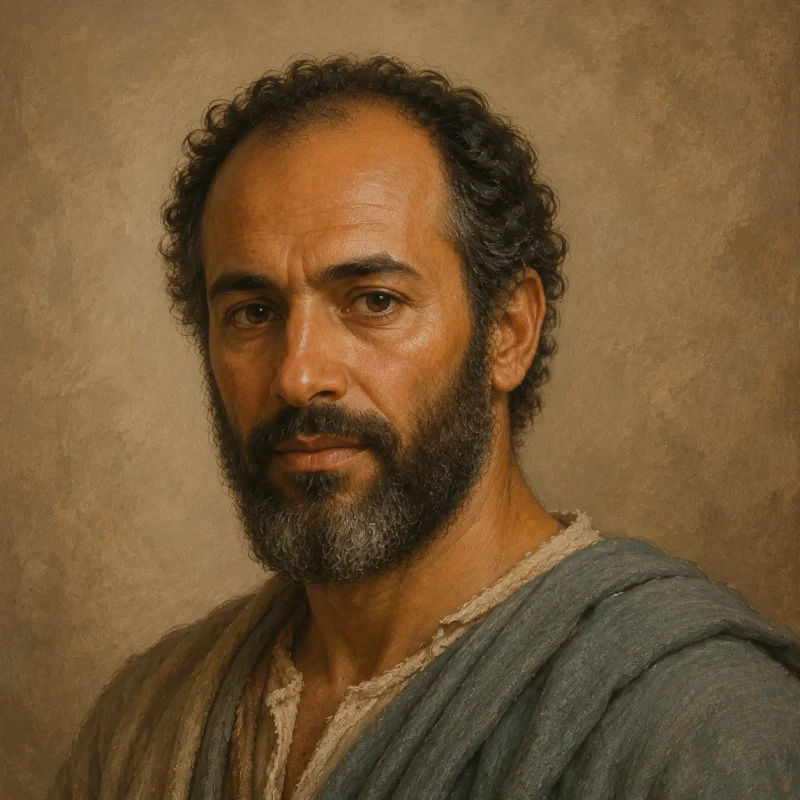
Portrait: an AI-generated artistic interpretation, not evidence of how Mark looked.
Who Mark is
Acts first mentions him by a house, saying Peter came to the house of Mary the mother of John, whose surname was Mark, where many were gathered together praying. Barnabas and Saul take him with them when they return from Jerusalem. At Salamis the text says they had also John to their minister, and at Perga John departs from them and returns to Jerusalem. Later, when Paul proposes revisiting the cities, Barnabas determines to take with them John, whose surname was Mark, and Paul thinks it not good to take him, since he departed from them from Pamphylia, and went not with them to the work. The contention is sharp enough that the two men separate, and Barnabas takes Mark and sails to Cyprus. Four verses in the letters carry the name Marcus or Mark. Colossians sends a greeting from Marcus, sister's son to Barnabas, with an instruction to receive him if he comes. Second Timothy says, Take Mark, and bring him with thee: for he is profitable to me for the ministry. Philemon lists Marcus among fellowlabourers. First Peter sends greetings from the church at Babylon and from Marcus my son.
Cited passages: Acts 12:12, Acts 12:25, Acts 13:5, Acts 13:13, Acts 15:37, Acts 15:38, Acts 15:39, Colossians 4:10, 2 Timothy 4:11, Philemon 1:24, 1 Peter 5:13
Historical setting
Acts calls him John whose surname was Mark and names his mother, Mary, and her house at Jerusalem; no father is named. The reason for his departure at 13:13 is not given there, and the reason stated later is Paul's own, that he departed from them from Pamphylia. The narrator calls the contention sharp and does not say who was right. The letters use only the name Marcus or Mark, without the surname formula of Acts. Colossians 4:10 alone ties a Marcus to Barnabas as sister's son, and Acts 15:39 has Barnabas take Mark with him, which points to one man. The printed verses do not state that the Mark of the letters is the John Mark of Acts; this index joins them, and each passage should be read for what it says. None of these texts says he wrote a gospel or any other book, none reports his death, and the last thing Acts says about him is the voyage to Cyprus.
Cited passages: Acts 12:12, Acts 13:13, Acts 15:38, Acts 15:39, Colossians 4:10, 2 Timothy 4:11, 1 Peter 5:13, Philemon 1:24
How the story is told
In every passage he is placed beside someone else: a mother and her house, two travellers who take him along, a dispute about whether he should come, a greeting inside another person's letter. He is given no speech anywhere, and no scene belongs to him. The two moments that shape his part in Acts are an absence and an argument, since he departs at Perga and then becomes the subject others quarrel over. The letters, if they mean the same man, strike a different note from that argument, one asking that he be received, one calling him profitable to me for the ministry, one listing him among fellowlabourers, and one calling him Marcus my son. Read together, these are four short mentions rather than a continued story.
Cited passages: Acts 12:12, Acts 12:25, Acts 13:5, Acts 13:13, Acts 15:37, Acts 15:39, Colossians 4:10, 2 Timothy 4:11, Philemon 1:24, 1 Peter 5:13
Story moments
- His mother's house (Acts 12:12). Peter goes to the house of Mary, the mother of John whose surname was Mark, where people are praying.
- Taken along as minister (Acts 13:5). At Salamis Barnabas and Saul have John with them as their minister.
- He turns back at Perga (Acts 13:13). John leaves the company and returns to Jerusalem, and no reason is given.
- Paul refuses to take him (Acts 15:38). Paul objects because Mark had left them in Pamphylia and had not gone on to the work.
- Barnabas takes him to Cyprus (Acts 15:39). After the sharp contention Barnabas sails to Cyprus with Mark.
- Sister's son to Barnabas (Colossians 4:10). Colossians sends greetings from a Marcus, sister's son to Barnabas.
- Profitable for the ministry (2 Timothy 4:11). Second Timothy asks that Mark be brought along because he is useful for the work.
Key passages
Acts 12:12
And when he had considered the thing, he came to the house of Mary the mother of John, whose surname was Mark; where many were gathered together praying.
Acts 12:25
And Barnabas and Saul returned from Jerusalem, when they had fulfilled their ministry, and took with them John, whose surname was Mark.
Acts 13:5
And when they were at Salamis, they preached the word of God in the synagogues of the Jews: and they had also John to their minister.
Acts 13:13
Now when Paul and his company loosed from Paphos, they came to Perga in Pamphylia: and John departing from them returned to Jerusalem.
Acts 15:37
And Barnabas determined to take with them John, whose surname was Mark.
Acts 15:39
And the contention was so sharp between them, that they departed asunder one from the other: and so Barnabas took Mark, and sailed unto Cyprus;
King James Version. 10 indexed passages in total.
For reflection
Every line about Mark is written by or about someone else, and he never speaks. How does that shape the weight you give to Paul's refusal in Acts 15 and to the request in Second Timothy?
Books Mark appears in
Related people





Names and references are adapted from STEPBible TIPNR. A person listed with a verse is named or indexed there; it does not mean they wrote or spoke it.