Person in the New Testament
Peter
Peter: the fisher named Simon, Cephas and Peter, from the nets to Antioch
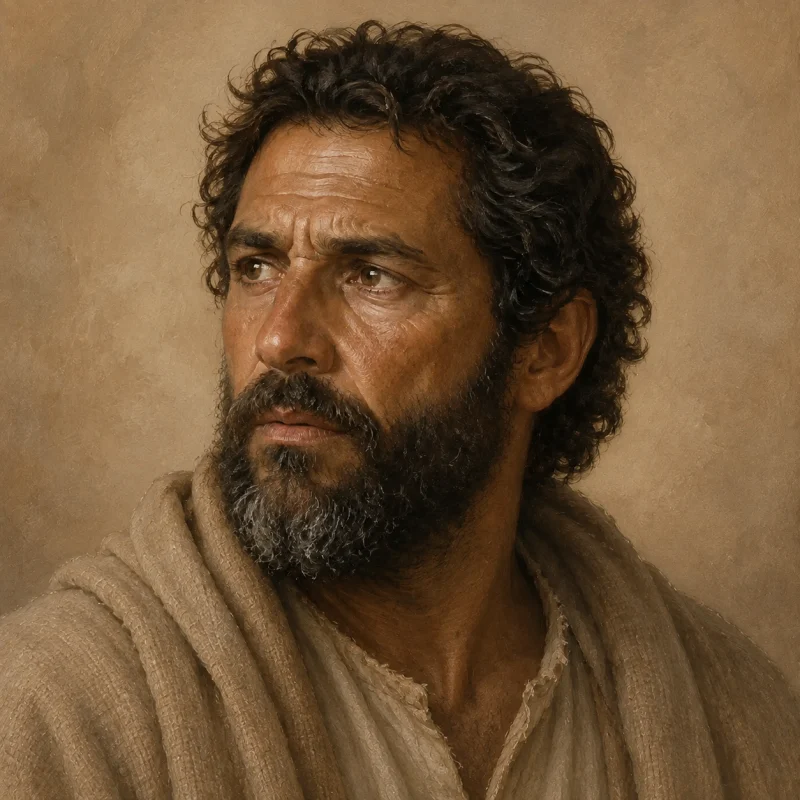
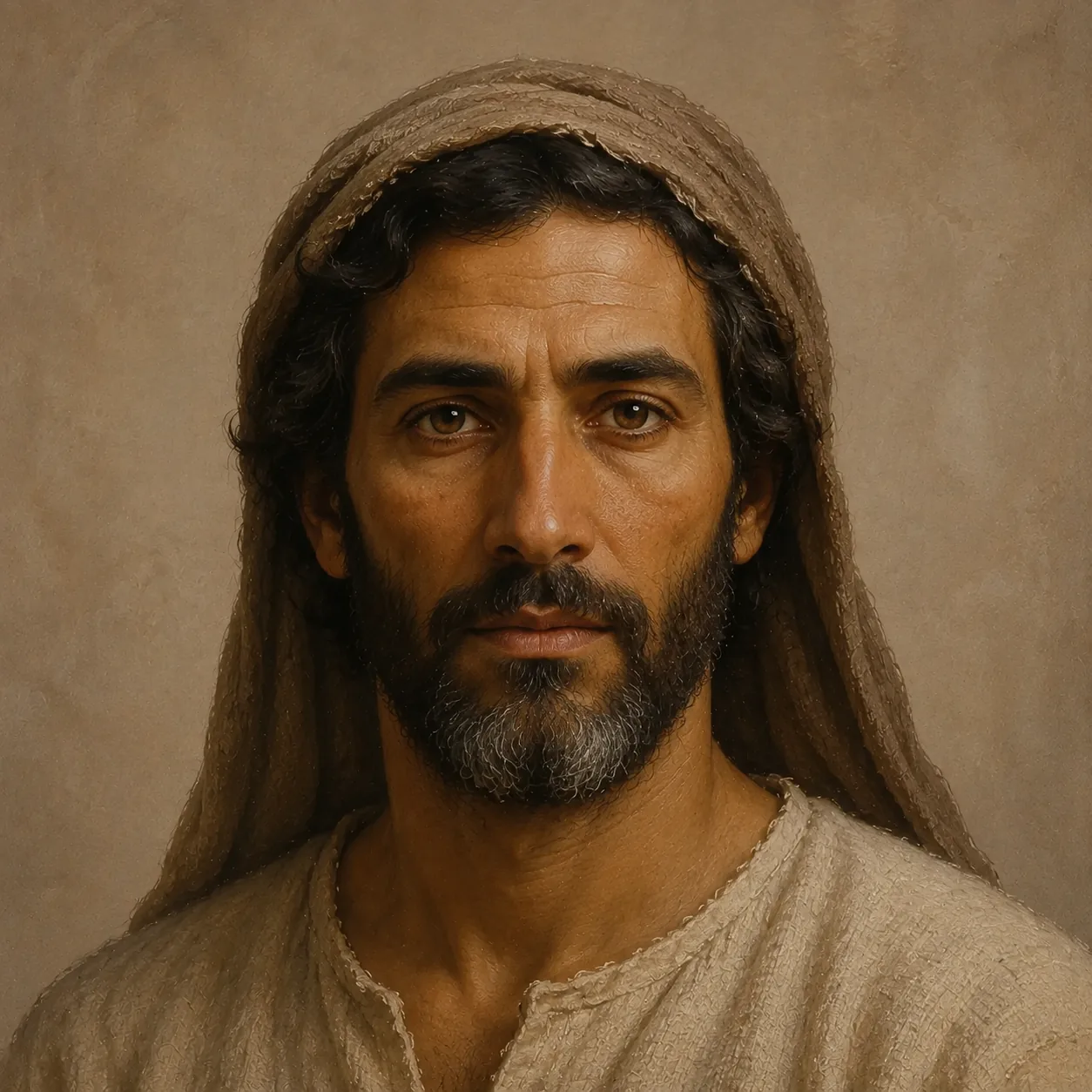
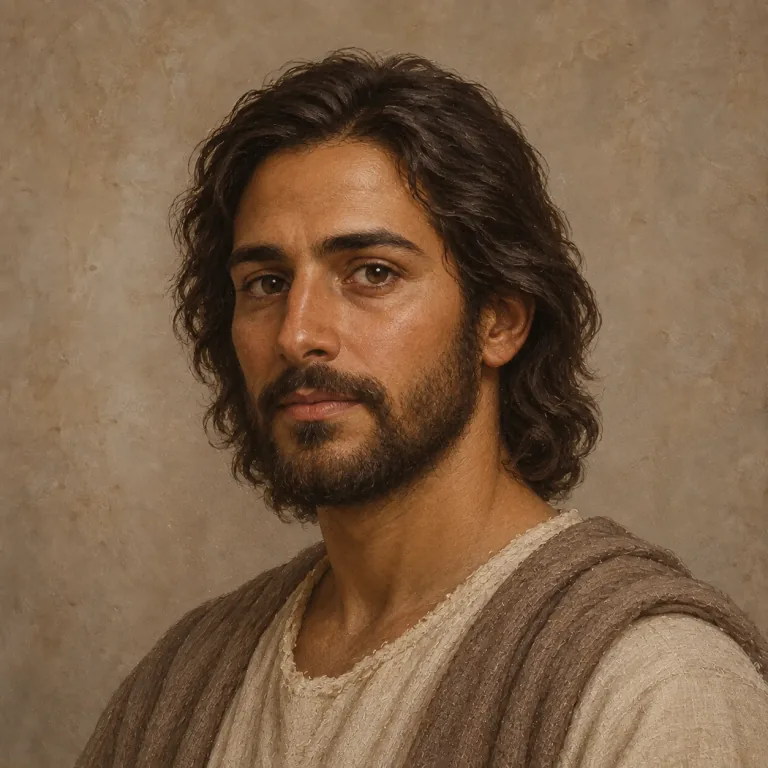
Portrait: an AI-generated artistic interpretation, not evidence of how Peter looked.
Who Peter is
Matthew and Mark meet him at the sea of Galilee, where Jesus sees "Simon called Peter, and Andrew his brother, casting a net into the sea: for they were fishers". Luke sets the call after a catch, and Simon says "Depart from me; for I am a sinful man, O Lord". John has Andrew bring him to Jesus, who says he "shalt be called Cephas". Jesus heals his wife's mother. He asks to come on the water, walks, and begins to sink. At Cesarea Philippi he answers "Thou art the Christ, the Son of the living God", then rebukes Jesus over the coming suffering and is told "Get thee behind me, Satan". He speaks on the mountain, answers the tribute collectors, asks how often to forgive, and says "Behold, we have forsaken all". He promises "yet will I never be offended", sleeps in Gethsemane, strikes with a sword in John, follows "afar off", and denies Jesus three times before the cock crows. After the resurrection he runs to the tomb, and by the sea is asked three times "lovest thou me". In Acts he preaches at Pentecost, heals a lame man, answers the council, confronts Ananias and Sapphira and Simon in Samaria, raises Tabitha, is sent to Cornelius, escapes prison and speaks at the Jerusalem meeting. In Galatians Paul writes that he withdrew from the Gentiles at Antioch.
Cited passages: Matthew 4:18, Mark 1:17, Luke 5:8, John 1:42, Matthew 8:14, Matthew 14:28, Matthew 14:30, Matthew 16:16, Matthew 16:22, Matthew 16:23, Matthew 17:4, Matthew 18:21, Matthew 19:27, Matthew 26:33, Matthew 26:40, John 18:10, Matthew 26:58, Matthew 26:75, Luke 24:12, John 21:17, Acts 2:14, Acts 3:6, Acts 5:3, Acts 8:20, Acts 9:40, Acts 10:34, Acts 12:7, Acts 15:7, Galatians 2:12
Historical setting
The texts use several names for him. The lists of the twelve print "The first, Simon, who is called Peter" and "Simon he surnamed Peter". Jesus calls him "Simon Bar-jona" and says "That thou art Peter, and upon this rock I will build my church"; John reports "Thou art Simon the son of Jona: thou shalt be called Cephas, which is by interpretation, A stone". Paul uses both forms, writing of "James, Cephas, and John, who seemed to be pillars" and then "when Peter was come to Antioch". Andrew is his brother, John calls Bethsaida "the city of Andrew and Peter", and Matthew places a healing in "Peter’s house" with "his wife’s mother" there. Other men named Simon appear nearby, including "Simon a tanner" who lodges him, the Simon of Samaria, and "Simon the Canaanite" among the twelve; James in Acts 15 says "Simeon hath declared", and the text does not spell out that identification. The denial accounts differ: Mark alone has the cock crow twice, and only John names the sword-bearer and "Malchus". John's Gospel reports words about his end, "signifying by what death he should glorify God", but no text here narrates it, and Acts leaves him after the Jerusalem meeting. The two letters name him as writer, "Peter, an apostle of Jesus Christ" and "Simon Peter, a servant and an apostle".
Cited passages: Matthew 10:2, Mark 3:16, Matthew 16:17, Matthew 16:18, John 1:42, Galatians 2:9, Galatians 2:11, John 1:40, John 1:44, Matthew 8:14, Mark 1:30, Acts 9:43, Matthew 10:4, Acts 15:14, Mark 14:72, John 18:10, 1 Peter 1:1, 2 Peter 1:1, 2 Peter 1:14, John 21:19
How the story is told
The Gospels quote him constantly, and they keep pairing his speech with a correction: a bold sentence, then a reply that reframes it. He asks to come on the water and hears "O thou of little faith, wherefore didst thou doubt?". He names Jesus rightly, then hears "thou savourest not the things that be of God". Mark and Luke comment on his mountain speech, "For he wist not what to say" and "not knowing what he said". At the washing he refuses outright and then asks for too much. Threes govern his story. Three denials at a fire in the high priest's court, then three questions at another "fire of coals" by the sea, where the narrator notes "Peter was grieved because he said unto him the third time". Mark's angel singles him out from the rest: "tell his disciples and Peter". In Acts his speech turns public, before crowds, a council and a Gentile household, and the narrator plays his rescue for surprise: he "wist not that it was true", and the praying house refuses to believe Rhoda. Galatians gives an outside verdict in Paul's own words, "I withstood him to the face, because he was to be blamed".
Cited passages: Matthew 14:31, Mark 8:33, Mark 9:6, Luke 9:33, John 13:8, John 13:9, John 18:18, John 21:9, John 21:17, Mark 16:7, Acts 4:13, Acts 12:9, Acts 12:15, Galatians 2:11, Galatians 2:14
Story moments
- The great draught of fishes (Luke 5:8). Simon Peter falls at Jesus' knees after the great draught of fishes and calls himself a sinful man.
- Thou art the Christ (Matthew 16:16). At Cesarea Philippi he answers the question about who Jesus is.
- The third denial (Matthew 26:75). He remembers the saying about the cock crowing and goes out and weeps bitterly.
- Asked a third time (John 21:17). By the sea Jesus asks him again whether he loves him, and tells him to feed the sheep.
- Speaking at Pentecost (Acts 2:14). Peter stands up with the eleven and addresses the crowd in Jerusalem.
- In the house of Cornelius (Acts 10:34). He says God is no respecter of persons before the Holy Ghost falls on the hearers.
- Withstood at Antioch (Galatians 2:11). Paul writes that he opposed Peter to his face over withdrawing from the Gentiles.
Key passages
Matthew 4:18
And Jesus, walking by the sea of Galilee, saw two brethren, Simon called Peter, and Andrew his brother, casting a net into the sea: for they were fishers.
Matthew 8:14
And when Jesus was come into Peter’s house, he saw his wife’s mother laid, and sick of a fever.
Matthew 10:2
Now the names of the twelve apostles are these; The first, Simon, who is called Peter, and Andrew his brother; James the son of Zebedee, and John his brother;
Matthew 14:28
And Peter answered him and said, Lord, if it be thou, bid me come unto thee on the water.
Matthew 14:29
And he said, Come. And when Peter was come down out of the ship, he walked on the water, to go to Jesus.
Matthew 15:15
Then answered Peter and said unto him, Declare unto us this parable.
King James Version. 179 indexed passages in total.
For reflection
Jesus tells him "when thou art converted, strengthen thy brethren" before the denials happen, not after. What difference does it make that the instruction comes first, while he is still insisting he is ready for prison and death?
Books Peter appears in
Related people
Names and references are adapted from STEPBible TIPNR. A person listed with a verse is named or indexed there; it does not mean they wrote or spoke it.