Person in the Old and New Testaments
Judah
Judah: from selling a brother to offering himself
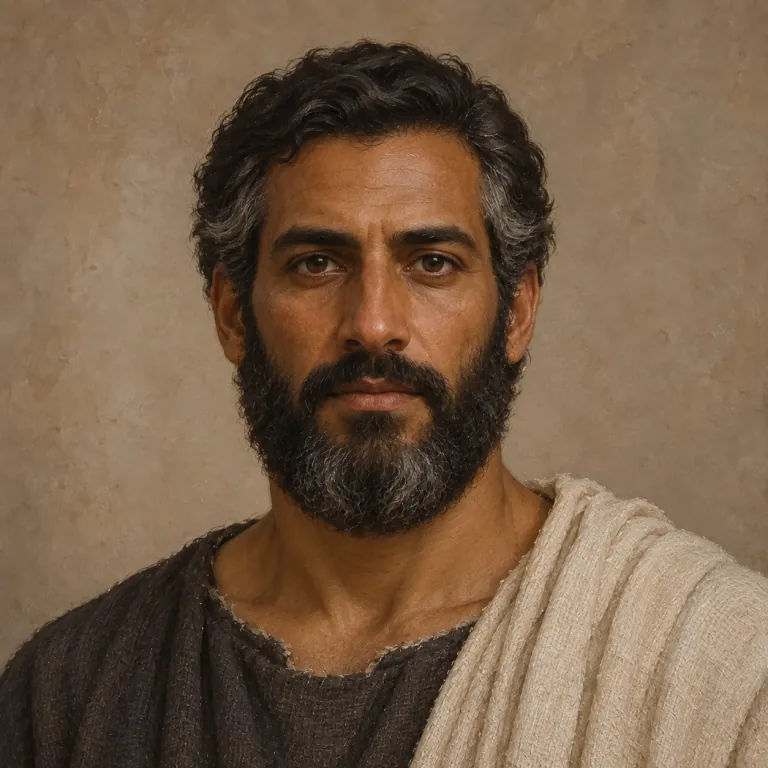
Portrait: an AI-generated artistic interpretation, not evidence of how Judah looked.
Who Judah is
Judah is Leah and Jacob's fourth son. Leah associates his name with praise of the Lord. When his brothers conspire against Joseph, Judah proposes selling him rather than killing him, invoking both profit and their kinship. He opposes killing Joseph but proposes enslavement instead of returning him home. Later, during famine, Judah guarantees Benjamin's return so Jacob will permit another journey to Egypt for food. After Joseph has his silver cup planted in Benjamin's sack, Judah speaks for the brothers and describes how losing Benjamin would devastate their father. He offers to remain as a servant in Benjamin's place. The narrative sets his willingness to bear that cost beside his earlier proposal to sell Joseph. This change in conduct does not undo the harm already done.
Cited passages: Genesis 29:35, Genesis 37:26, Genesis 37:27, Genesis 43:8, Genesis 43:9, Genesis 44:2, Genesis 44:30, Genesis 44:33, Genesis 44:34
Historical setting
Genesis also follows Judah's household in Canaan. His wife, identified as Shuah's daughter, bears Er, Onan and Shelah. Er marries Tamar; after his death, Judah tells Onan to raise offspring for his brother. Onan refuses that purpose, and the account reports his death under divine judgment. Judah sends Tamar to her father's home to wait for Shelah but does not give her to him when he grows up. After Judah's wife dies, Tamar disguises herself; Judah mistakes her for a prostitute and has sex with her, leaving his signet, bracelets and staff as a pledge. When he hears she is pregnant, he orders her burned. Tamar identifies the father through those objects, and Judah acknowledges that she is more righteous than he because he withheld Shelah. He has no further sexual relations with her. She bears the twins Perez and Zerah, named Pharez and Zarah in Genesis's KJV wording. The episode exposes Judah's failed obligation and unequal judgment; it does not present his threatened punishment as something readers should imitate.
Cited passages: Genesis 38:2, Genesis 38:3, Genesis 38:4, Genesis 38:5, Genesis 38:8, Genesis 38:9, Genesis 38:10, Genesis 38:11, Genesis 38:14, Genesis 38:18, Genesis 38:24, Genesis 38:25, Genesis 38:26, Genesis 38:29, Genesis 38:30
How the story is told
Recognition and responsibility connect Judah's family episodes. The brothers send Joseph's bloodied coat for Jacob to identify; Tamar later sends Judah his own possessions to identify. In one scene an object sustains a deception, while in the other it exposes one. Judah's admission concerning Tamar and his later offer for Benjamin are concrete acknowledgments and actions, rather than proof that every later choice was faultless. Jacob's final words associate Judah with his brothers' praise, a lion and a ruler's scepter. The wording about Shiloh in Genesis 49:10 differs across the translations: BBE renders the coming figure as one who has the right to rule. Matthew's genealogy names Judah and Tamar as parents of Perez and Zerah, then follows Perez's descendants. Hebrews names Jesus' tribe as Judah, and Revelation uses the Lion of Judah title. These later texts develop the ancestral and royal associations; references to Judah as a tribe or kingdom are not new events in the patriarch's own life.
Cited passages: Genesis 37:31, Genesis 37:32, Genesis 38:25, Genesis 38:26, Genesis 44:33, Genesis 49:8, Genesis 49:9, Genesis 49:10, Matthew 1:3, Hebrews 7:14, Revelation 5:5
Story moments
- A proposal to sell Joseph (Genesis 37:27). Judah proposes selling his brother, appealing to their kinship while still placing him in danger.
- Tamar identifies the father (Genesis 38:25). The signet, bracelets and staff expose Judah’s involvement after he orders Tamar punished.
- Judah acknowledges his failure (Genesis 38:26). He recognizes the objects and admits that he withheld Shelah from Tamar.
- An offer in Benjamin’s place (Genesis 44:33). Judah offers to remain as a servant so Benjamin can return to their father.
- A lion and a scepter (Genesis 49:9). Jacob’s final words use lion imagery for Judah, followed by language of rule.
Key passages
Genesis 29:35
And she conceived again, and bare a son: and she said, Now will I praise the Lord: therefore she called his name Judah; and left bearing.
Genesis 35:23
The sons of Leah; Reuben, Jacob’s firstborn, and Simeon, and Levi, and Judah, and Issachar, and Zebulun:
Genesis 37:26
And Judah said unto his brethren, What profit is it if we slay our brother, and conceal his blood?
Genesis 38:1
And it came to pass at that time, that Judah went down from his brethren, and turned in to a certain Adullamite, whose name was Hirah.
Genesis 38:2
And Judah saw there a daughter of a certain Canaanite, whose name was Shuah; and he took her, and went in unto her.
Genesis 38:6
And Judah took a wife for Er his firstborn, whose name was Tamar.
King James Version. 1,023 indexed passages in total.
For reflection
Compare Judah’s proposal about Joseph with his offer for Benjamin. What has changed in what he is willing to risk? Read his admission to Tamar alongside both scenes, keeping the people harmed by his earlier choices in view.
Books Judah appears in
- Genesis
- Exodus
- Numbers
- Deuteronomy
- Joshua
- Judges
- Ruth
- 1 Samuel
- 2 Samuel
- 1 Kings
- 2 Kings
- 1 Chronicles
- 2 Chronicles
- Ezra
- Nehemiah
- Esther
- Psalms
- Proverbs
- Isaiah
- Jeremiah
- Lamentations
- Ezekiel
- Daniel
- Hosea
- Joel
- Amos
- Obadiah
- Micah
- Nahum
- Zephaniah
- Haggai
- Zechariah
- Malachi
- Matthew
- Mark
- Luke
- John
- Acts
- Romans
- 1 Corinthians
- 2 Corinthians
- Galatians
- Colossians
- 1 Thessalonians
- Titus
- Hebrews
- Revelation
Related people

Names and references are adapted from STEPBible TIPNR. A person listed with a verse is named or indexed there; it does not mean they wrote or spoke it.