Person in the Old and New Testaments
Benjamin
Benjamin: the youngest brother and the tribe bearing his name
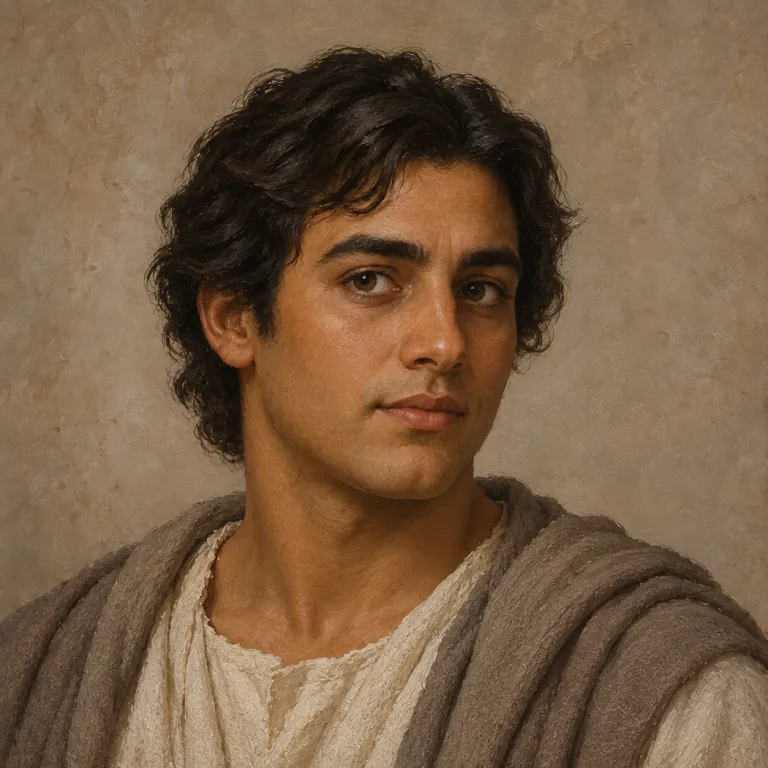
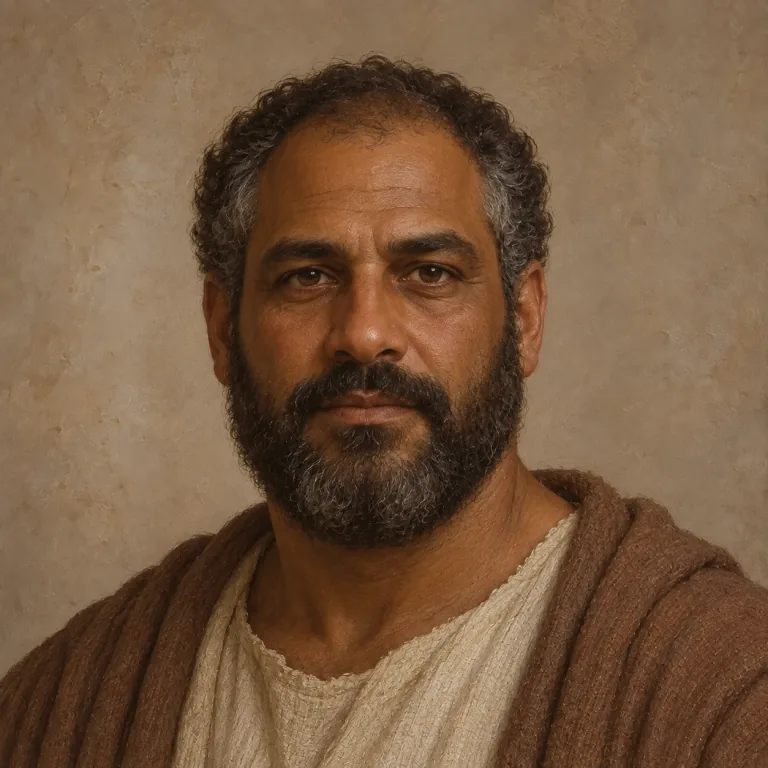
Portrait: an AI-generated artistic interpretation, not evidence of how Benjamin looked.
Who Benjamin is
Benjamin is Jacob and Rachel's younger son, Joseph's brother by the same mother. Rachel dies after a difficult labor on the way to Ephrath; she calls the child Ben-oni, but his father names him Benjamin. During famine Jacob keeps Benjamin home from the brothers' first journey to Egypt, fearing harm. Joseph, whom the brothers do not recognize, requires them to bring their youngest brother and holds Simeon. When food runs out, Judah pledges responsibility for Benjamin, and Jacob allows him to go. Joseph is moved to tears on seeing him and gives him a portion five times the others' at the meal. Joseph then orders his silver cup placed in Benjamin's sack. Its discovery leads to a threatened enslavement, not proof that Benjamin stole it. Judah offers to remain as a slave in his place, pleading for their father's sake. Joseph reveals who he is; he and Benjamin embrace and weep. Benjamin later appears with his family in the list of Jacob's household associated with the move to Egypt, and Exodus names him among the sons who came with Jacob.
Cited passages: Genesis 35:16, Genesis 35:18, Genesis 35:24, Genesis 42:4, Genesis 42:8, Genesis 42:20, Genesis 42:24, Genesis 43:2, Genesis 43:9, Genesis 43:13, Genesis 43:15, Genesis 43:29, Genesis 43:30, Genesis 43:34, Genesis 44:2, Genesis 44:12, Genesis 44:17, Genesis 44:30, Genesis 44:33, Genesis 44:34, Genesis 45:3, Genesis 45:14, Genesis 46:19, Genesis 46:21, Exodus 1:1, Exodus 1:3
Historical setting
Later references concern Benjamin's descendants and their territory. Numbers records tribal leaders and censuses; Joshua assigns the tribe land between Judah and Joseph, with the Jordan on its eastern side. The judge Ehud and king Saul are identified as Benjamites. Judges 19–21 tells a devastating tribal story: men at Gibeah rape a Levite's concubine after he sends her out to them. Her death and his dismemberment of her body lead to an assembly. Benjamin refuses to surrender the perpetrators, and civil war follows. After two victories, the tribe is defeated; six hundred men escape to Rimmon while Israel devastates its towns. Efforts to preserve the tribe bring further violence: an attack on Jabesh-gilead supplies surviving young women, and women dancing at Shiloh are abducted as wives. These are the actions of later communities, not Benjamin's personal deeds. Other passages record Benjamites joining David, Benjamin alongside Judah under Rehoboam, and returning families preparing to rebuild the temple. Esther identifies Mordecai as a Benjamite, and Paul names his own Benjaminite ancestry. Jeremiah's location in the land of Benjamin describes geography; the passage identifies him as a priest.
Cited passages: Numbers 1:11, Numbers 1:36, Numbers 26:41, Joshua 18:11, Joshua 18:20, Judges 3:15, 1 Samuel 9:1, 1 Samuel 9:2, Judges 19:25, Judges 19:29, Judges 20:1, Judges 20:4, Judges 20:13, Judges 20:14, Judges 20:21, Judges 20:25, Judges 20:35, Judges 20:47, Judges 20:48, Judges 21:10, Judges 21:11, Judges 21:12, Judges 21:14, Judges 21:21, Judges 21:23, 1 Chronicles 12:1, 1 Chronicles 12:2, 2 Chronicles 11:12, Ezra 1:5, Esther 2:5, Romans 11:1, Jeremiah 1:1, Acts 13:21
How the story is told
Benjamin's danger brings the brothers' obligations to one another into focus: Judah's pledge to Jacob becomes an offer to take Benjamin's place. The reader knows the cup was planted before the brothers discover it. Family lists also need to be read on their own terms: Genesis 46 names ten sons of Benjamin, Numbers 26 lists families and places Ard and Naaman under Bela, and 1 Chronicles 7 and 8 give different lists. The passages do not explain every difference. Jacob's blessing pictures Benjamin as a wolf dividing prey; Moses' blessing calls him beloved of the Lord and describes shelter and safety. Neither image supplies an unstated event in Benjamin's own life. Later texts include his tribe in prayers for deliverance, Jeremiah's promise of fields bought again, Ezekiel's land and city-gate vision, and Revelation's sealing of the tribes. Paul names his Benjaminite ancestry when denying that God has rejected his people in Romans, and among credentials he counts as loss for Christ in Philippians.
Cited passages: Genesis 43:9, Genesis 44:2, Genesis 44:12, Genesis 44:33, Genesis 46:21, Numbers 26:38, Numbers 26:39, Numbers 26:40, 1 Chronicles 7:6, 1 Chronicles 8:1, 1 Chronicles 8:2, Genesis 49:27, Deuteronomy 33:12, Psalms 80:2, Jeremiah 32:44, Ezekiel 48:23, Ezekiel 48:32, Revelation 7:8, Romans 11:1, Romans 11:2, Philippians 3:5, Philippians 3:7, Philippians 3:8
Story moments
- Two names at Benjamin’s birth (Genesis 35:18). As Rachel dies, she calls her son Ben-oni; Jacob calls him Benjamin.
- Benjamin travels to Egypt (Genesis 43:15). With Jacob’s permission and Judah’s pledge, the brothers take Benjamin to Joseph.
- The planted cup is found (Genesis 44:12). The steward finds in Benjamin’s sack the cup Joseph ordered him to place there.
- Judah offers to take his place (Genesis 44:33). Judah asks to remain as a slave so Benjamin can return with his brothers.
- Brothers embrace (Genesis 45:14). After Joseph reveals his identity, he and Benjamin weep together.
Key passages
Genesis 35:18
And it came to pass, as her soul was in departing, (for she died) that she called his name Ben-oni: but his father called him Benjamin.
Genesis 35:24
The sons of Rachel; Joseph, and Benjamin:
Genesis 42:4
But Benjamin, Joseph’s brother, Jacob sent not with his brethren; for he said, Lest peradventure mischief befall him.
Genesis 42:36
And Jacob their father said unto them, Me have ye bereaved of my children: Joseph is not, and Simeon is not, and ye will take Benjamin away: all these things are against me.
Genesis 43:14
And God Almighty give you mercy before the man, that he may send away your other brother, and Benjamin. If I be bereaved of my children, I am bereaved.
Genesis 43:15
And the men took that present, and they took double money in their hand, and Benjamin; and rose up, and went down to Egypt, and stood before Joseph.
King James Version. 166 indexed passages in total.
For reflection
What does Judah's response to Benjamin's danger reveal about the responsibility he has promised to take? As the name Benjamin begins to refer to a tribe, how does that change the way you read later passages?
Books Benjamin appears in
Related people

Names and references are adapted from STEPBible TIPNR. A person listed with a verse is named or indexed there; it does not mean they wrote or spoke it.