Person in the Old and New Testaments
Jacob
Jacob: promise, conflict and the family of Israel
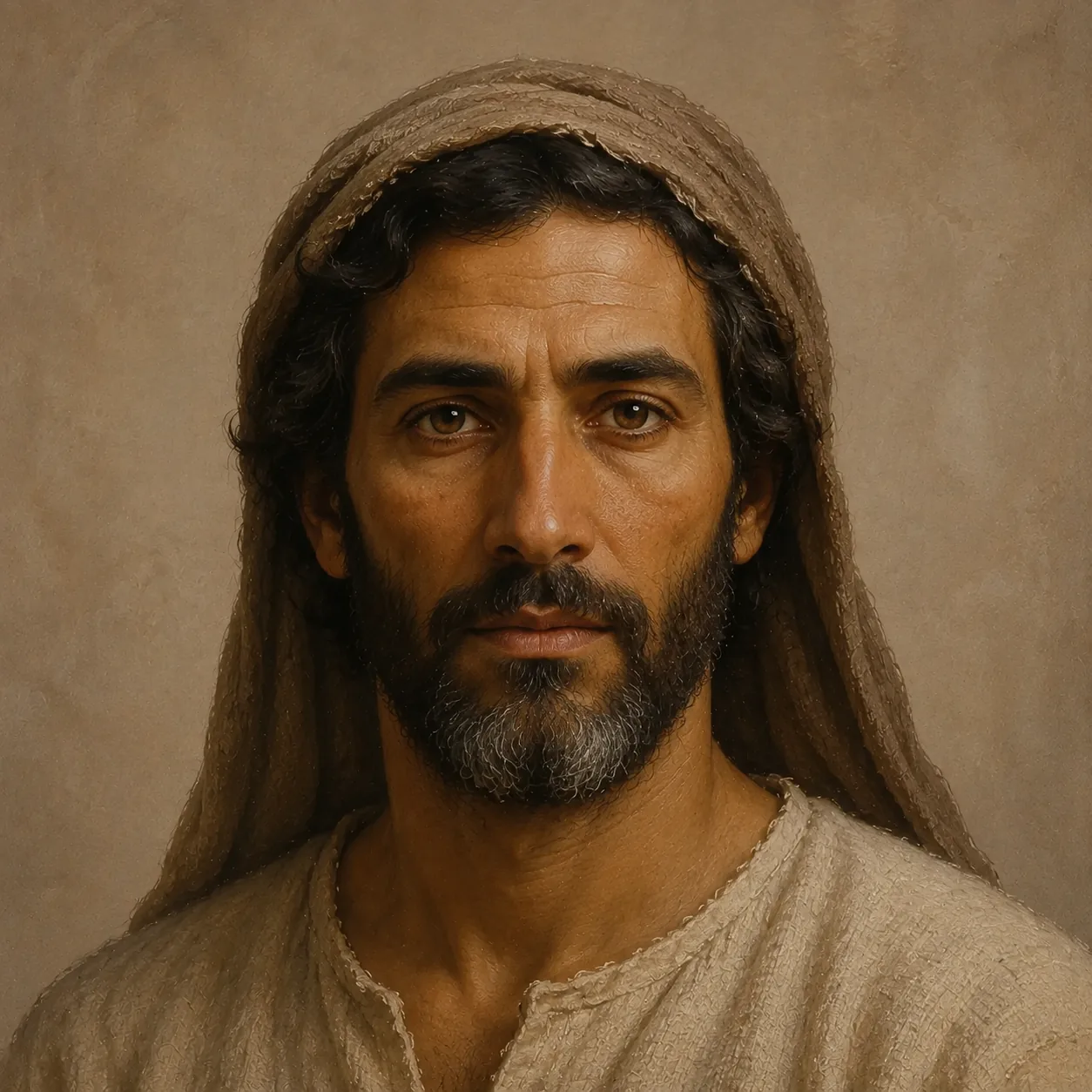
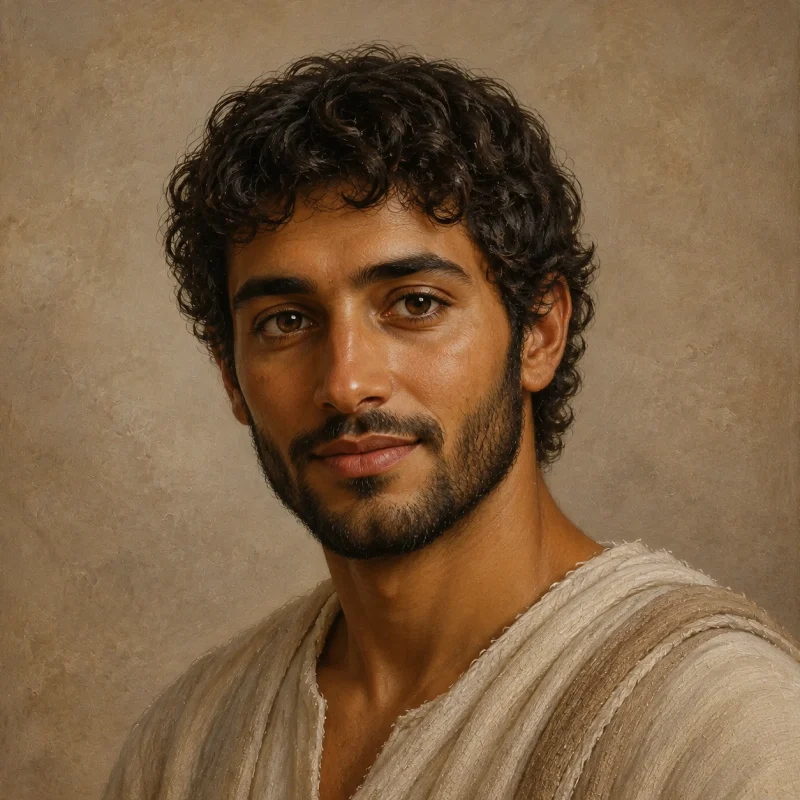
Portrait: an AI-generated artistic interpretation, not evidence of how Jacob looked.
Who Jacob is
Jacob is Isaac and Rebekah's younger twin, born holding Esau's heel. Before their birth, God tells Rebekah that two nations are within her and the older will serve the younger. Esau later sells Jacob his birthright for food. In a separate episode, Rebekah directs Jacob's deception of Isaac: Jacob claims to be Esau and receives the blessing intended for his brother. Esau's threat drives Jacob away. On the journey, Jacob dreams at Bethel of angels moving between earth and heaven; God promises land, descendants, blessing for all families and protection wherever Jacob goes, with a return to the land. Years later, approaching Esau again, Jacob is afraid and prays for deliverance. At the Jabbok he wrestles through the night with a figure called a man, receives the name Israel and leaves with a limp. The figure does not give his own name; Jacob says he has seen God face to face. Esau then embraces him. At Bethel God again names him Israel and renews the promises of land and descendants.
Cited passages: Genesis 25:23, Genesis 25:26, Genesis 25:33, Genesis 27:19, Genesis 27:41, Genesis 28:12, Genesis 28:14, Genesis 28:15, Genesis 32:11, Genesis 32:24, Genesis 32:28, Genesis 32:30, Genesis 32:31, Genesis 33:4, Genesis 35:10, Genesis 35:12, Genesis 25:34, Genesis 27:8, Genesis 28:13, Genesis 32:29
Historical setting
Jacob's years with his uncle Laban establish a divided household. He works seven years for Rachel, but Laban substitutes Leah at the wedding. Jacob receives Rachel after Leah's wedding week and then serves seven more years. Leah, Rachel and their servants Bilhah and Zilpah become mothers of his twelve sons; Leah also bears Dinah. Rivalry, unequal affection and conflict over wages run through the account. Jacob eventually leaves with his household and livestock, and he and Laban agree to a boundary against mutual harm. After returning to Canaan, Jacob loses Rachel when Benjamin is born. His favoritism toward Joseph deepens the brothers' hatred; their bloodied-coat deception makes him believe Joseph has died. During the famine, his returning sons bring news that Joseph is alive in Egypt. With divine reassurance, Jacob moves there and is reunited with him. He lives seventeen years in Egypt and dies at 147. Before death he blesses Joseph's sons and speaks over his own sons, requesting burial at Machpelah. His sons carry out that request in Canaan.
Cited passages: Genesis 29:25, Genesis 29:28, Genesis 29:30, Genesis 30:21, Genesis 31:52, Genesis 35:18, Genesis 35:23, Genesis 35:24, Genesis 35:25, Genesis 35:26, Genesis 37:3, Genesis 37:4, Genesis 37:33, Genesis 45:28, Genesis 46:3, Genesis 46:29, Genesis 47:28, Genesis 48:20, Genesis 49:29, Genesis 50:13, Genesis 29:20, Genesis 31:53, Genesis 45:26
How the story is told
The story repeatedly unsettles expectations about the firstborn. Jacob receives privileges ahead of Esau, Laban invokes the older daughter's precedence when explaining his deception, and Jacob later places younger Ephraim before Manasseh. These parallels invite comparison without making every deception a divine command. Blessing also persists alongside consequences: Jacob receives promises but faces estrangement, household suffering and bereavement. His own words near life's end remember God as the one who sustained him. Genesis continues to use both Jacob and Israel after the renaming; the new name does not erase his earlier history. His final words speak both to named sons and to the twelve tribes, connecting a family's story to a people's future. That connection matters when later passages use Jacob or Israel collectively: the ancestor and his descendants are related, but they are not interchangeable characters in each scene.
Cited passages: Genesis 25:23, Genesis 27:19, Genesis 29:26, Genesis 35:10, Genesis 47:28, Genesis 48:15, Genesis 48:19, Genesis 48:20, Genesis 49:1, Genesis 49:28
Story moments
- A purchased birthright (Genesis 25:33). Esau swears to sell Jacob his birthright; the later deception for Isaac’s blessing is a separate episode.
- Promise at Bethel (Genesis 28:15). God promises to accompany Jacob and bring him back to the land.
- A new name at the Jabbok (Genesis 32:28). During the night’s wrestling, Jacob receives the name Israel and a blessing.
- Esau’s embrace (Genesis 33:4). The feared meeting becomes an embrace as the brothers weep together.
- A burial beyond Egypt (Genesis 50:13). Jacob’s sons bury him at Machpelah in Canaan, as he requested.
Key passages
Genesis 25:26
And after that came his brother out, and his hand took hold on Esau’s heel; and his name was called Jacob: and Isaac was threescore years old when she bare them.
Genesis 25:27
And the boys grew: and Esau was a cunning hunter, a man of the field; and Jacob was a plain man, dwelling in tents.
Genesis 25:28
And Isaac loved Esau, because he did eat of his venison: but Rebekah loved Jacob.
Genesis 25:29
And Jacob sod pottage: and Esau came from the field, and he was faint:
Genesis 25:30
And Esau said to Jacob, Feed me, I pray thee, with that same red pottage; for I am faint: therefore was his name called Edom.
Genesis 25:31
And Jacob said, Sell me this day thy birthright.
King James Version. 2,578 indexed passages in total.
For reflection
Notice where Jacob tries to secure his future through deception and where he asks for help or receives reconciliation. How do the promises and the painful consequences of family choices remain present together?
Books Jacob appears in
- Genesis
- Exodus
- Leviticus
- Numbers
- Deuteronomy
- Joshua
- Judges
- Ruth
- 1 Samuel
- 2 Samuel
- 1 Kings
- 2 Kings
- 1 Chronicles
- 2 Chronicles
- Ezra
- Nehemiah
- Psalms
- Proverbs
- Ecclesiastes
- Song of Solomon
- Isaiah
- Jeremiah
- Lamentations
- Ezekiel
- Daniel
- Hosea
- Joel
- Amos
- Obadiah
- Micah
- Nahum
- Zephaniah
- Zechariah
- Malachi
- Matthew
- Mark
- Luke
- John
- Acts
- Romans
- 1 Corinthians
- 2 Corinthians
- Galatians
- Ephesians
- Philippians
- Hebrews
- Revelation
Related people
Names and references are adapted from STEPBible TIPNR. A person listed with a verse is named or indexed there; it does not mean they wrote or spoke it.