Person in the New Testament
John the Baptist
John the Baptist: the wilderness preacher who baptized and died in prison
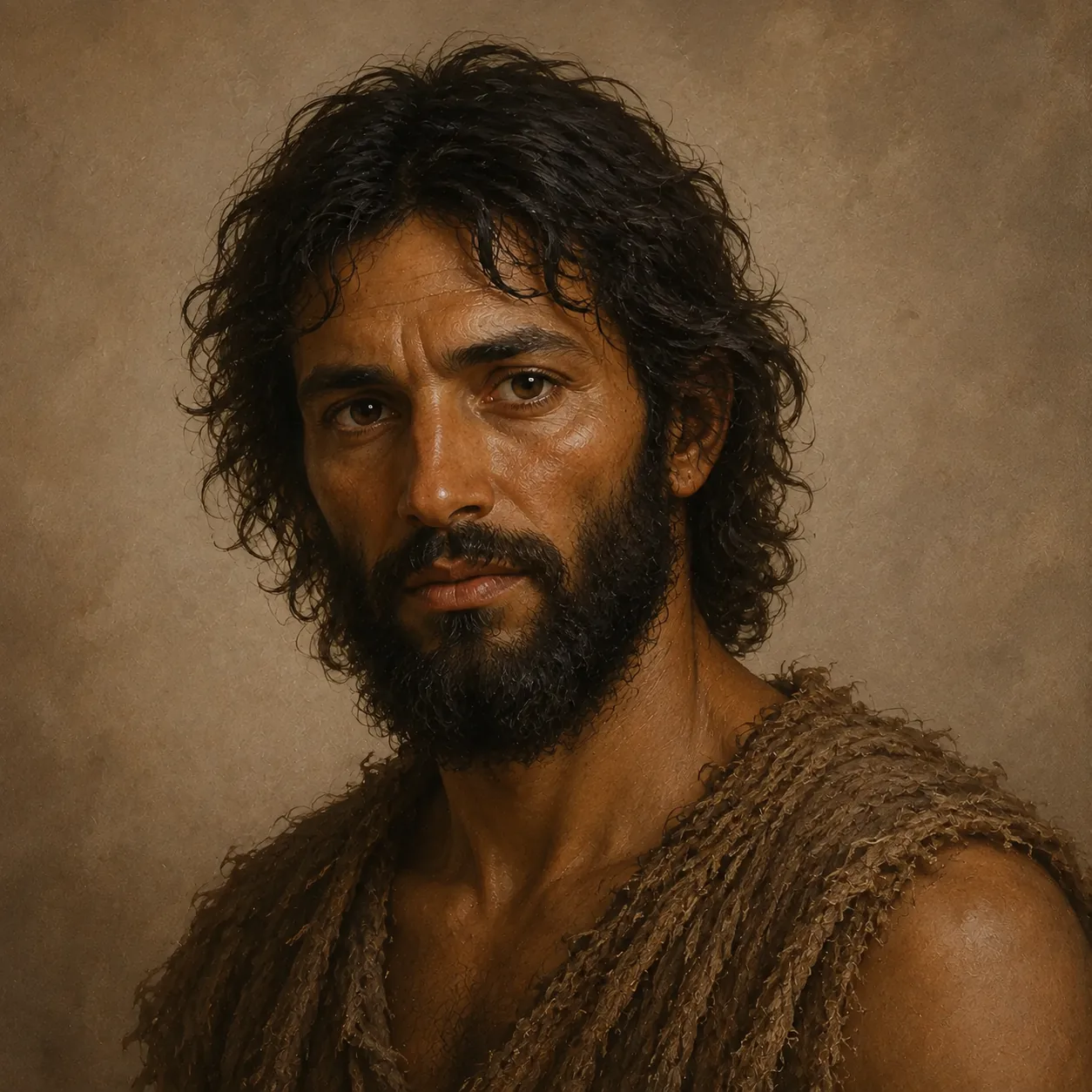
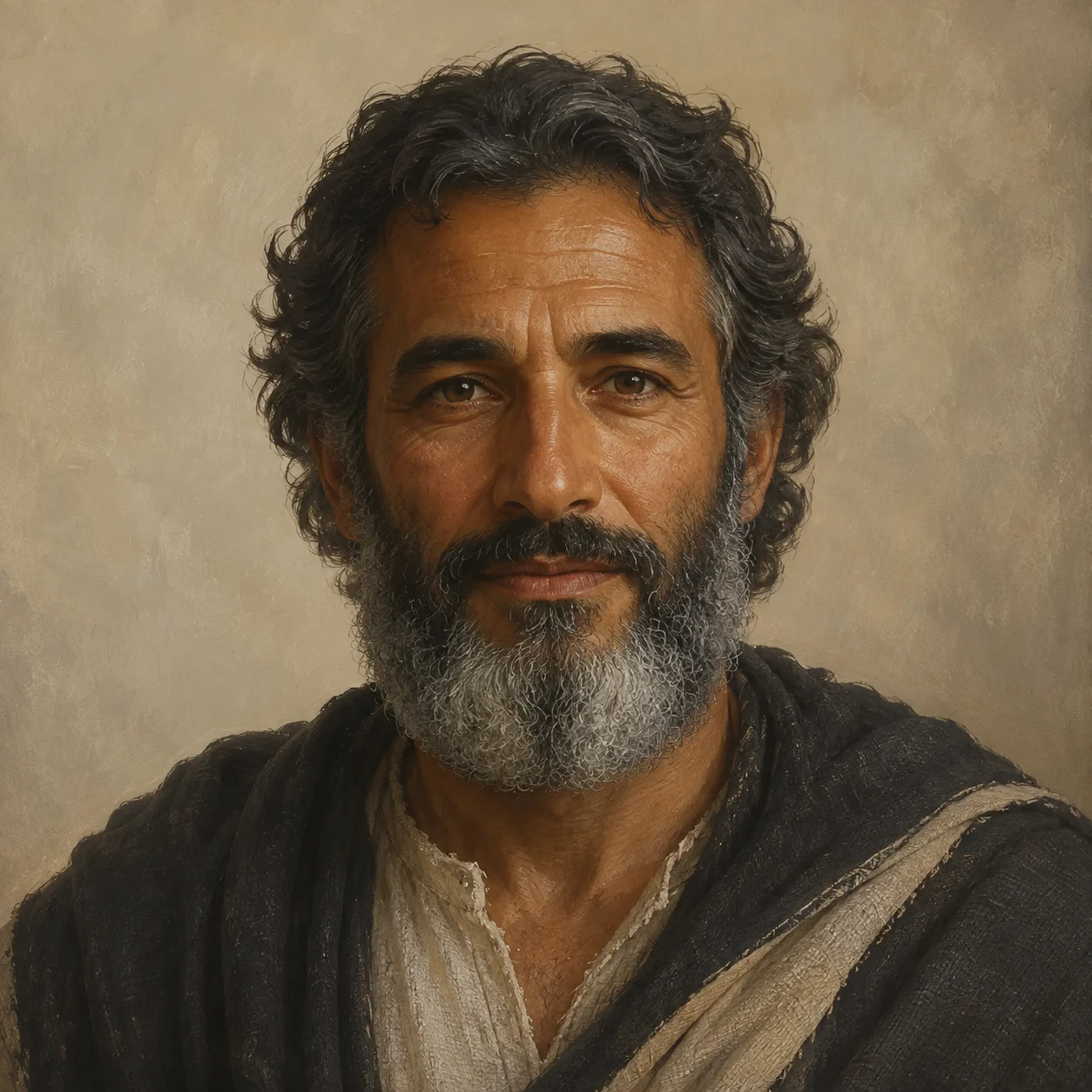
Portrait: an AI-generated artistic interpretation, not evidence of how John the Baptist looked.
Who John the Baptist is
Luke gives John a birth account: an angel tells Zacharias "thou shalt call his name John", says he will "drink neither wine nor strong drink" and will go "in the spirit and power of Elias"; his mother says "Not so; but he shall be called John", Zacharias writes "His name is John", and the child "was in the deserts till the day of his shewing unto Israel". Luke 3 sets his call by a regnal year and a list of rulers, and says "the word of God came unto John the son of Zacharias in the wilderness". He preaches "the baptism of repentance for the remission of sins" and people "were baptized of him in Jordan, confessing their sins". In Matthew he says "O generation of vipers" to Pharisees and Sadducees, in Luke to the multitude. He warns that "the axe is laid unto the root of the trees" and points past himself to one mightier. Luke adds his answers about coats, tax and wages. Jesus comes to Jordan; John's Gospel has him say "Behold the Lamb of God" and "He must increase, but I must decrease". Herod imprisons him over Herodias. From prison he sends to ask "Art thou he that should come". Herod has him beheaded, and his disciples take the body away.
Cited passages: Luke 1:13, Luke 1:15, Luke 1:17, Luke 1:60, Luke 1:63, Luke 1:80, Luke 3:2, Mark 1:4, Matthew 3:6, Matthew 3:7, Matthew 3:10, Matthew 3:11, Luke 3:11, Luke 3:13, Luke 3:14, Matthew 3:13, John 1:29, John 3:30, Matthew 14:3, Matthew 11:3, Matthew 14:10, Mark 6:29
Historical setting
Only Luke gives his parents, naming him "John the son of Zacharias" and reporting Elisabeth as his mother. The angel tells Mary "thy cousin Elisabeth", so the two households are connected in that account alone. This John is not John the brother of James: the lists of the twelve name "James the son of Zebedee, and John his brother" as a separate man. The texts differ on Elias. In John's Gospel he is asked "Art thou Elias?" and answers "I am not", while in Matthew Jesus says "this is Elias, which was for to come" and the narrator adds that "the disciples understood that he spake unto them of John the Baptist". They differ on the baptism too. Mark says Jesus "was baptized of John in Jordan"; Matthew adds that "But John forbad him", saying "I have need to be baptized of thee"; Luke reports "that he shut up John in prison" before the baptism paragraph and does not say who baptized; John's Gospel never narrates it, giving only John's report, "I saw the Spirit descending from heaven like a dove". Matthew says Herod "would have put him to death", Mark says Herodias "would have killed him" and that "Herod feared John". Luke never narrates the beheading; Herod only says "John have I beheaded".
Cited passages: Luke 1:36, Luke 1:57, Matthew 10:2, Mark 3:17, John 1:21, Matthew 11:14, Matthew 17:13, Mark 1:9, Matthew 3:14, Luke 3:20, John 1:32, Matthew 14:5, Mark 6:19, Mark 6:20, Luke 9:9, John 10:41
How the story is told
All four Gospels put him before Jesus' public work, and three attach the same prophetic line to him: "The voice of one crying in the wilderness". John's Gospel turns that line into his own answer, "I am the voice of one crying in the wilderness". His self-description is built by denial: "I am not the Christ", "I am not" to Elias, "No" to that prophet. Each Gospel keeps a version of the shoe saying while varying the verb, from "whose shoes I am not worthy to bear" to "not worthy to stoop down and unloose". Matthew and Mark both stop to describe his clothing and food, so his appearance sits inside the preaching account. Jesus' speech about him repeats one question three times, "What went ye out into the wilderness to see?", then sets him against the crowd's verdicts: "For John came neither eating nor drinking, and they say, He hath a devil." Mark tells the death as a flashback triggered by Herod's guess, with the oath, the dance and the request in a charger. Matthew closes it with his disciples going to Jesus; Mark closes it at the tomb. Acts keeps citing his baptism after his death.
Cited passages: Matthew 3:3, Mark 1:3, Luke 3:4, John 1:23, John 1:20, Matthew 3:11, Mark 1:7, Matthew 3:4, Matthew 11:7, Matthew 11:18, Mark 6:14, Mark 6:24, Matthew 14:12, Acts 19:4, Acts 18:25
Story moments
- Named before his birth (Luke 1:13). The angel tells Zacharias that his son is to be called John.
- Baptizing in the wilderness (Mark 1:4). John preaches the baptism of repentance for the remission of sins.
- Jesus comes to Jordan (Matthew 3:13). Matthew says Jesus comes from Galilee to John to be baptized of him.
- Behold the Lamb of God (John 1:29). In John's Gospel he points to Jesus with that title as Jesus comes toward him.
- He must increase (John 3:30). Asked about Jesus baptizing more people, John says he himself must decrease.
- The question from prison (Matthew 11:3). His disciples ask Jesus whether he is the one who should come.
- Beheaded in the prison (Matthew 14:10). Herod sends and has John beheaded after the oath at his birthday.
Key passages
Matthew 3:1
In those days came John the Baptist, preaching in the wilderness of Judaea,
Matthew 3:4
And the same John had his raiment of camel’s hair, and a leathern girdle about his loins; and his meat was locusts and wild honey.
Matthew 3:13
Then cometh Jesus from Galilee to Jordan unto John, to be baptized of him.
Matthew 3:14
But John forbad him, saying, I have need to be baptized of thee, and comest thou to me?
Matthew 4:12
Now when Jesus had heard that John was cast into prison, he departed into Galilee;
Matthew 9:14
Then came to him the disciples of John, saying, Why do we and the Pharisees fast oft, but thy disciples fast not?
King James Version. 89 indexed passages in total.
For reflection
The same man who says he must decrease later sends from prison to ask whether Jesus is the one who should come. What does it mean that the text keeps both his certainty and his question, and lets Jesus answer with a list of things being done rather than a yes?
Books John the Baptist appears in
Related people

Names and references are adapted from STEPBible TIPNR. A person listed with a verse is named or indexed there; it does not mean they wrote or spoke it.