The Torah · Old Testament
Genesis 25
Abraham dies and Esau sells his birthright
General context
The chapter names Abraham's children through Keturah, reports his gifts to the sons of his concubines, and says he gives all he has to Isaac. Abraham dies at one hundred and seventy-five, and Isaac and Ishmael bury him beside Sarah. Ishmael's descendants and death are then recorded. The account turns to Isaac and Rebekah. Isaac prays because she has no children, and she conceives twins who struggle within her. The Lord tells her that two nations are in her womb, one will be stronger, and the older will serve the younger. Esau is born first, followed by Jacob holding his heel. As they grow, their ways of life and their parents' preferences differ. Returning faint from the field, Esau asks for Jacob's stew and swears to sell him the birthright. He eats and leaves, and the narrator concludes that he despised his birthright.
Cited passages: Genesis 25:1, Genesis 25:2, Genesis 25:3, Genesis 25:4, Genesis 25:5, Genesis 25:6, Genesis 25:7, Genesis 25:8, Genesis 25:9, Genesis 25:10, Genesis 25:11, Genesis 25:12, Genesis 25:13, Genesis 25:14, Genesis 25:15, Genesis 25:16, Genesis 25:17, Genesis 25:18, Genesis 25:19, Genesis 25:20, Genesis 25:21, Genesis 25:22, Genesis 25:23, Genesis 25:24, Genesis 25:25, Genesis 25:26, Genesis 25:27, Genesis 25:28, Genesis 25:29, Genesis 25:30, Genesis 25:31, Genesis 25:32, Genesis 25:33, Genesis 25:34
Genesis 25 (KJV)
1Then again Abraham took a wife, and her name was Keturah.
2And she bare him Zimran, and Jokshan, and Medan, and Midian, and Ishbak, and Shuah.
3And Jokshan begat Sheba, and Dedan. And the sons of Dedan were Asshurim, and Letushim, and Leummim.
4And the sons of Midian; Ephah, and Epher, and Hanoch, and Abidah, and Eldaah. All these were the children of Keturah.
5And Abraham gave all that he had unto Isaac.
6But unto the sons of the concubines, which Abraham had, Abraham gave gifts, and sent them away from Isaac his son, while he yet lived, eastward, unto the east country.
7And these are the days of the years of Abraham’s life which he lived, an hundred threescore and fifteen years.
8Then Abraham gave up the ghost, and died in a good old age, an old man, and full of years; and was gathered to his people.
9And his sons Isaac and Ishmael buried him in the cave of Machpelah, in the field of Ephron the son of Zohar the Hittite, which is before Mamre;
10The field which Abraham purchased of the sons of Heth: there was Abraham buried, and Sarah his wife.
11And it came to pass after the death of Abraham, that God blessed his son Isaac; and Isaac dwelt by the well Lahai-roi.
12Now these are the generations of Ishmael, Abraham’s son, whom Hagar the Egyptian, Sarah’s handmaid, bare unto Abraham:
13And these are the names of the sons of Ishmael, by their names, according to their generations: the firstborn of Ishmael, Nebajoth; and Kedar, and Adbeel, and Mibsam,
14And Mishma, and Dumah, and Massa,
15Hadar, and Tema, Jetur, Naphish, and Kedemah:
16These are the sons of Ishmael, and these are their names, by their towns, and by their castles; twelve princes according to their nations.
17And these are the years of the life of Ishmael, an hundred and thirty and seven years: and he gave up the ghost and died; and was gathered unto his people.
18And they dwelt from Havilah unto Shur, that is before Egypt, as thou goest toward Assyria: and he died in the presence of all his brethren.
19And these are the generations of Isaac, Abraham’s son: Abraham begat Isaac:
20And Isaac was forty years old when he took Rebekah to wife, the daughter of Bethuel the Syrian of Padan-aram, the sister to Laban the Syrian.
21And Isaac intreated the Lord for his wife, because she was barren: and the Lord was intreated of him, and Rebekah his wife conceived.
22And the children struggled together within her; and she said, If it be so, why am I thus? And she went to enquire of the Lord.
23And the Lord said unto her, Two nations are in thy womb, and two manner of people shall be separated from thy bowels; and the one people shall be stronger than the other people; and the elder shall serve the younger.
24And when her days to be delivered were fulfilled, behold, there were twins in her womb.
25And the first came out red, all over like an hairy garment; and they called his name Esau.
26And after that came his brother out, and his hand took hold on Esau’s heel; and his name was called Jacob: and Isaac was threescore years old when she bare them.
27And the boys grew: and Esau was a cunning hunter, a man of the field; and Jacob was a plain man, dwelling in tents.
28And Isaac loved Esau, because he did eat of his venison: but Rebekah loved Jacob.
29And Jacob sod pottage: and Esau came from the field, and he was faint:
30And Esau said to Jacob, Feed me, I pray thee, with that same red pottage; for I am faint: therefore was his name called Edom.
31And Jacob said, Sell me this day thy birthright.
32And Esau said, Behold, I am at the point to die: and what profit shall this birthright do to me?
33And Jacob said, Swear to me this day; and he sware unto him: and he sold his birthright unto Jacob.
34Then Jacob gave Esau bread and pottage of lentiles; and he did eat and drink, and rose up, and went his way: thus Esau despised his birthright.
This page shows the King James Version. In the app, reading opens in the Berean Standard Bible unless you have chosen another translation. The reader includes five translations: the Berean Standard Bible (BSB), the King James Version (KJV), the World English Bible (WEB), the Bible in Basic English (BBE), and the American Standard Version (ASV). Search covers three of them: Berean Standard, King James, and World English. Basic English and American Standard readers search the King James words.
Historical context
Keturah is called Abraham's wife, and six sons are named before further descendants are listed. Gifts to the sons of the concubines and their departure east occur while Abraham is alive. The chapter does not explain every relationship between these family notices. Isaac and Ishmael bury Abraham at Machpelah, in the field purchased from the sons of Heth. Ishmael's twelve sons are described as princes, and his age at death is one hundred and thirty-seven. Isaac is forty when he marries Rebekah and sixty when the twins are born. The final meal is bread and lentil stew. Esau's statement that he is about to die belongs to his own speech, rather than a separate account of a medical emergency.
Cited passages: Genesis 25:1, Genesis 25:2, Genesis 25:3, Genesis 25:4, Genesis 25:5, Genesis 25:6, Genesis 25:7, Genesis 25:9, Genesis 25:10, Genesis 25:12, Genesis 25:13, Genesis 25:14, Genesis 25:15, Genesis 25:16, Genesis 25:17, Genesis 25:20, Genesis 25:26, Genesis 25:29, Genesis 25:30, Genesis 25:32, Genesis 25:33, Genesis 25:34
Literary context
Family lists and death notices move the account from Abraham through Ishmael to Isaac's household. The twins' struggle before birth is followed by a word about the future relationship of two peoples, then by Esau's first birth and Jacob's grasp of his heel. Their contrasting activities and the parents' divided affections prepare the reader for the exchange over food. Esau emphasizes his immediate hunger, while Jacob demands a sale and an oath. The quick sequence of eating, drinking, rising and leaving ends with the narrator's explicit judgment about the birthright.
Cited passages: Genesis 25:1, Genesis 25:7, Genesis 25:8, Genesis 25:12, Genesis 25:17, Genesis 25:19, Genesis 25:22, Genesis 25:23, Genesis 25:25, Genesis 25:26, Genesis 25:27, Genesis 25:28, Genesis 25:29, Genesis 25:30, Genesis 25:31, Genesis 25:32, Genesis 25:33, Genesis 25:34
Key moments
- Both sons bury Abraham (Genesis 25:9). Isaac and Ishmael bury Abraham in the cave of Machpelah.
- Rebekah hears about two nations (Genesis 25:23). The Lord tells Rebekah that two nations are in her womb and that the older will serve the younger.
- Jacob follows holding Esau's heel (Genesis 25:26). Jacob is born after Esau with his hand grasping his brother's heel.
- Esau swears to the sale (Genesis 25:33). Esau swears and sells his birthright to Jacob.
For reflection
How do Esau's words about immediate need compare with the narrator's final judgment about the birthright?
People in this chapter
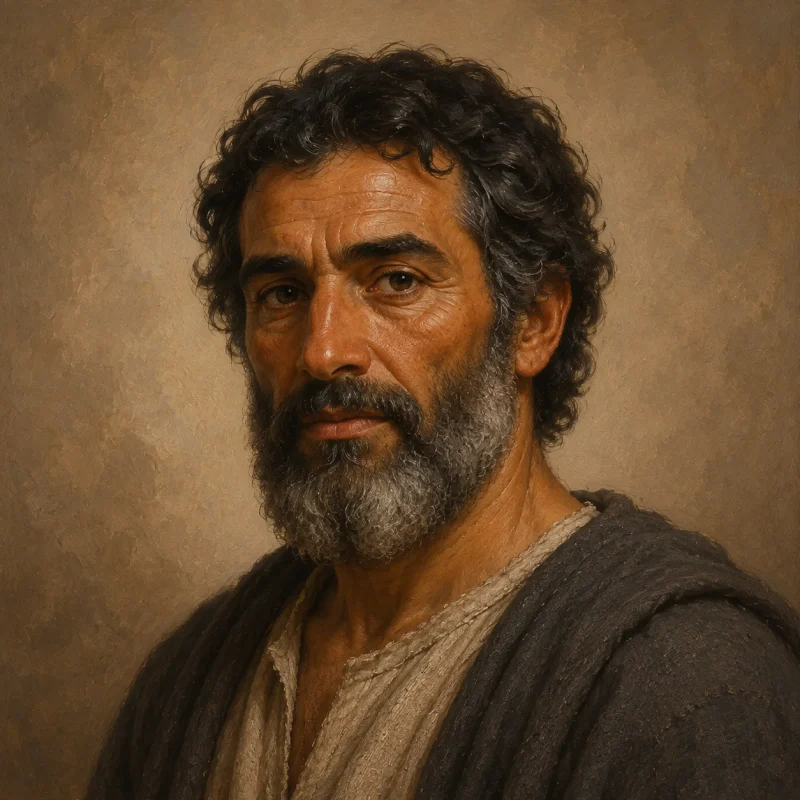
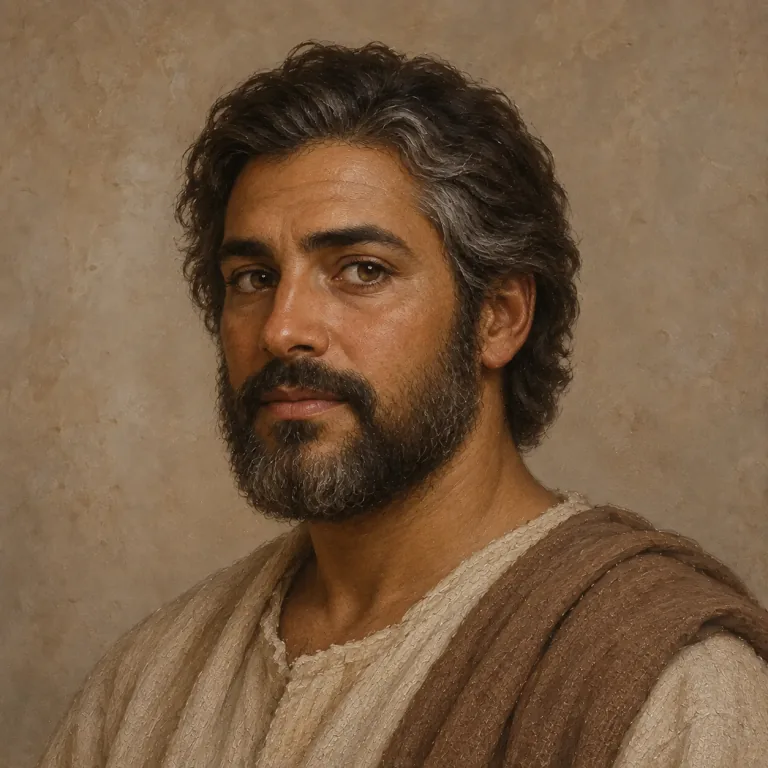
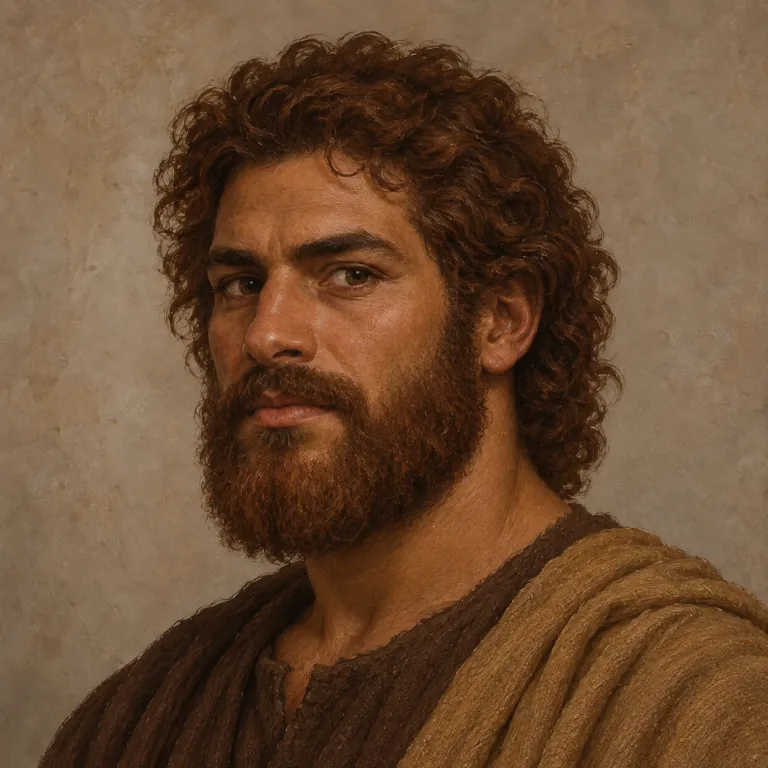
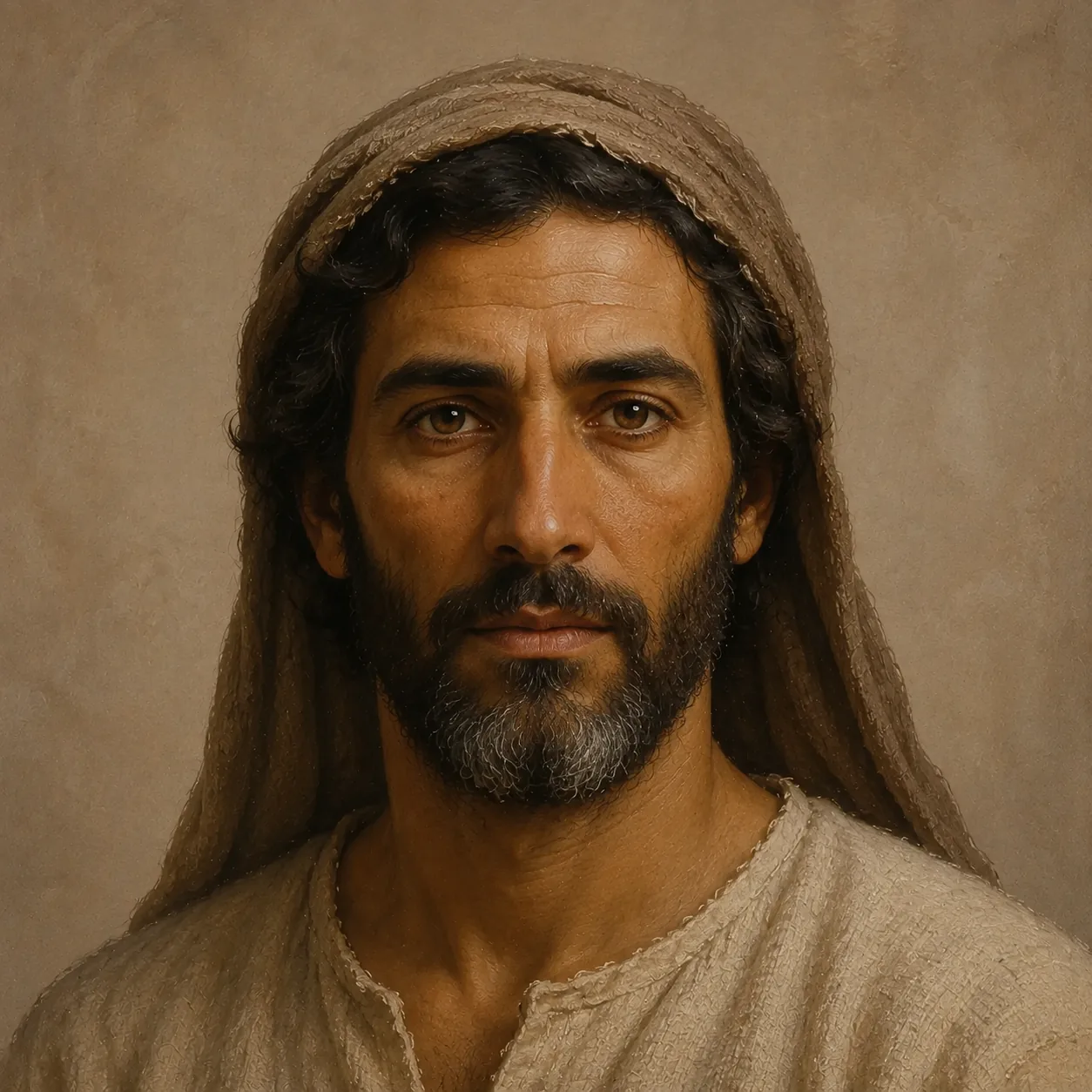
Also indexed here: