Person in the Old and New Testaments
Aaron
Aaron: speaking for Moses, serving as priest and answering for failure
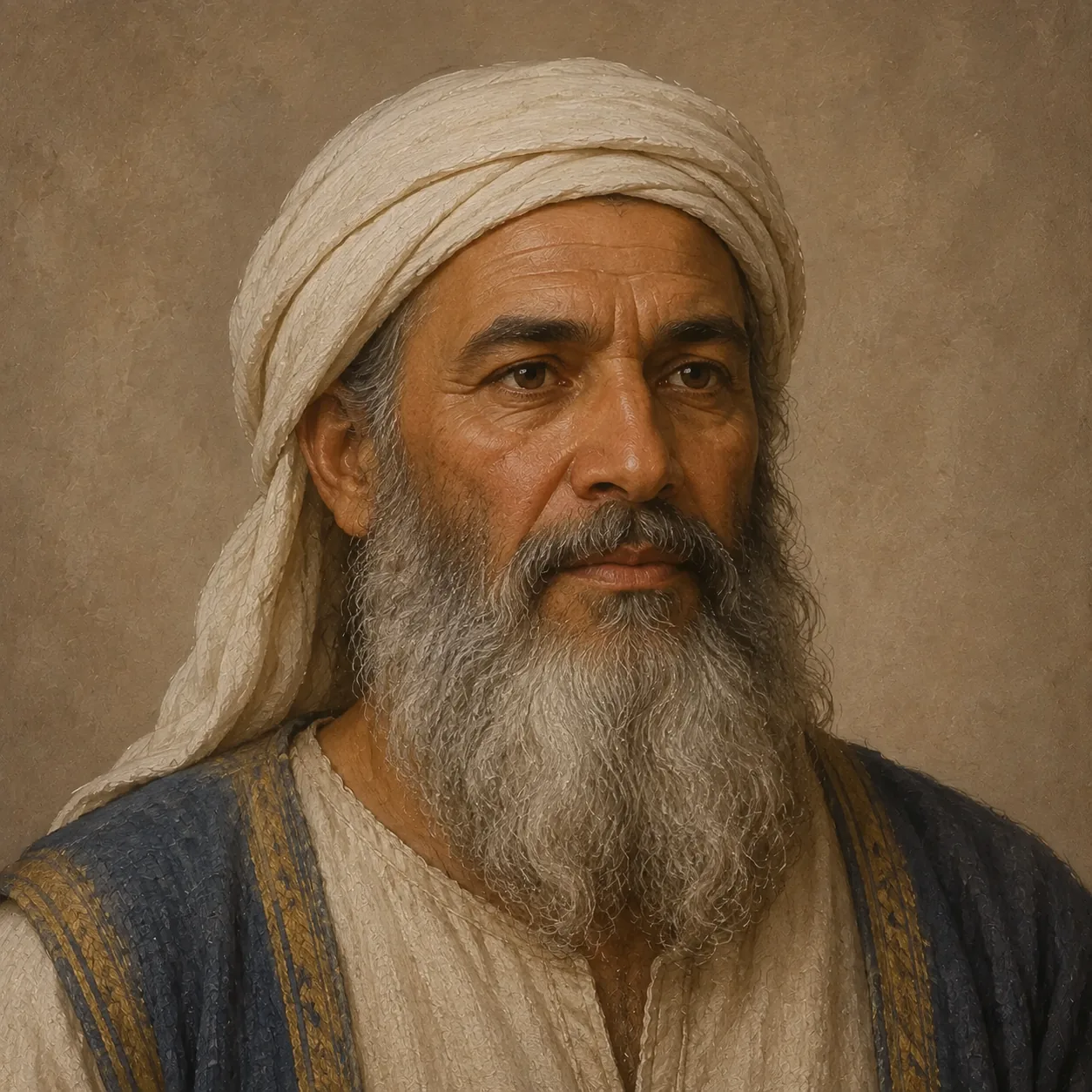
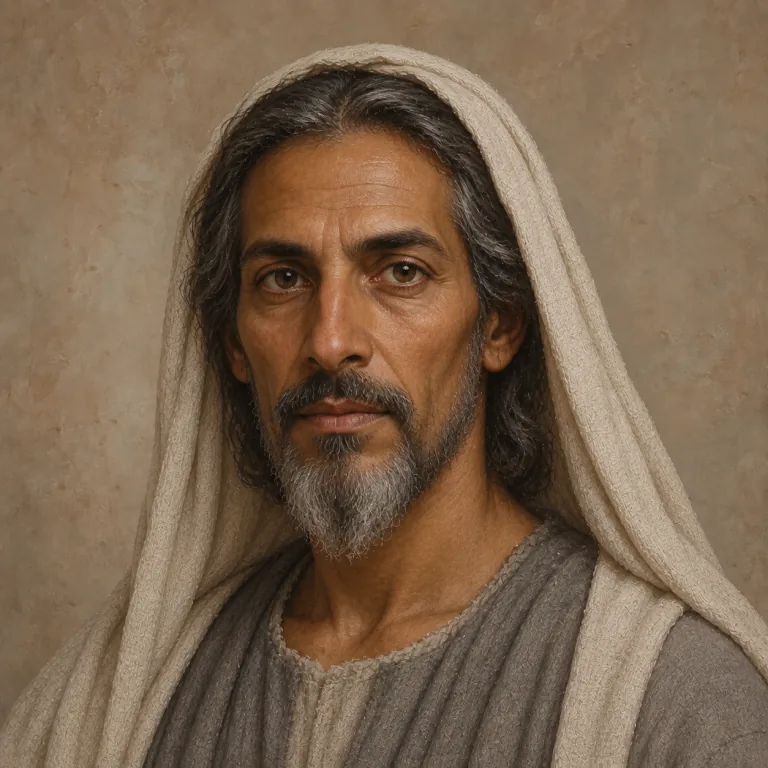
Portrait: an AI-generated artistic interpretation, not evidence of how Aaron looked.
Who Aaron is
Aaron is the son of Amram and Jochebed, brother of Moses and Miriam. His wife Elisheba bears Nadab, Abihu, Eleazar and Ithamar. When Moses resists God's call because of his speech, God appoints Aaron as his spokesman. Aaron meets Moses, speaks to Israel's elders and joins him before Pharaoh. He is eighty-three at this confrontation and performs signs with his rod. In the wilderness, he and Hur support Moses' hands while Joshua fights Amalek. Aaron joins the elders at the covenant meal, but when Moses remains on the mountain, he collects gold, makes the calf and announces a feast to the Lord. Challenged by Moses, he blames the people and says the calf came out of the fire. Deuteronomy recalls God's anger against Aaron and Moses' prayer for him. Later Aaron and Miriam speak against Moses over his Cushite wife and question his unique authority. After Miriam is afflicted, Aaron acknowledges their sin and pleads with Moses for her; Moses prays for healing. At Meribah, God commands that the rock be addressed, but Moses strikes it twice. God holds both brothers responsible for failing to trust him and honor his holiness, excluding them from leading the people into the land. In Numbers, Moses transfers Aaron's garments to Eleazar on Mount Hor, where Aaron dies at one hundred twenty-three; Israel mourns thirty days. Deuteronomy 10 also reports his death and burial at Moserah, without explaining the relation between these locations.
Cited passages: Exodus 6:20, Exodus 6:23, Numbers 26:59, Exodus 4:14, Exodus 4:16, Exodus 4:27, Exodus 4:30, Exodus 7:7, Exodus 7:10, Exodus 17:12, Exodus 24:9, Exodus 24:11, Exodus 32:4, Exodus 32:5, Exodus 32:24, Deuteronomy 9:20, Numbers 12:1, Numbers 12:2, Numbers 12:11, Numbers 12:13, Numbers 20:8, Numbers 20:11, Numbers 20:12, Numbers 20:28, Numbers 20:29, Numbers 33:39, Deuteronomy 10:6, Exodus 4:29, Exodus 32:22, Numbers 12:12
Historical setting
Aaron's priesthood belongs to Israel's wilderness sanctuary. Exodus appoints him and his sons to serve as priests; Levites assist them but do not thereby all become Aaronic priests. His garments carry the tribes' names on the shoulders and over his heart as memorials before God. Moses washes, clothes and anoints him, and the consecration lasts seven days. On the eighth day Aaron offers sacrifices for himself and the people and blesses them; divine fire consumes the offering. Nadab and Abihu then die after offering fire that God had not commanded. Aaron initially remains silent, but later questions whether eating the sin offering that day would have pleased God; Moses accepts his answer. The later prohibition of wine during service does not explicitly say the dead sons were drunk. Leviticus 16 regulates entry behind the veil and yearly atonement: the priest brings blood for himself and the people, and Israel's sins are confessed over the live goat sent into the wilderness. Numbers gives Aaron and his sons words of blessing. After Korah's challenge, fire kills the incense offerers; a subsequent plague strikes the complaining congregation. At Moses' instruction Aaron runs among them with incense, makes atonement and stands between the living and the dead as the plague stops. His rod then buds, flowers and bears almonds as the sign confirming God's choice. These accounts establish responsibilities and limits around priestly service; they do not make Aaron faultless.
Cited passages: Exodus 28:1, Numbers 3:9, Numbers 3:10, Exodus 28:12, Exodus 28:29, Leviticus 8:6, Leviticus 8:12, Leviticus 8:33, Leviticus 9:1, Leviticus 9:7, Leviticus 9:22, Leviticus 9:24, Leviticus 10:1, Leviticus 10:2, Leviticus 10:3, Leviticus 10:9, Leviticus 10:19, Leviticus 10:20, Leviticus 16:2, Leviticus 16:14, Leviticus 16:15, Leviticus 16:21, Leviticus 16:34, Numbers 6:23, Numbers 6:24, Numbers 6:25, Numbers 6:26, Numbers 16:35, Numbers 16:41, Numbers 16:47, Numbers 16:48, Numbers 17:8, Leviticus 8:7, Numbers 17:5
How the story is told
Aaron's story places divine appointment beside human failure. The man chosen to speak for Moses and represent Israel also makes the calf and later needs Moses' intercession. His plea for Miriam and his movement into the plague show him seeking help and making atonement for others. The burning of the accepted offering in Leviticus 9 is followed by the fire that kills his sons in Leviticus 10, making the danger of unauthorized approach explicit. Later references require care: the 'house of Aaron,' priestly genealogies and Elizabeth's ancestry concern his family and successors, not new events in his own life. Psalm 133 compares communal unity with precious oil flowing over Aaron's head and garments. Micah recalls God sending Moses, Aaron and Miriam to lead the people out of Egypt. Hebrews takes Aaron's call as an example of priestly honor received from God. It then argues that Jesus' priesthood follows Melchizedek's order rather than Aaron's, contrasting mortal priests and repeated offerings with Jesus' continuing life and self-offering. The argument belongs to Hebrews; it does not erase the original sanctuary narratives or turn every detail of Aaron's biography into an explicit prediction about Jesus.
Cited passages: Exodus 4:16, Exodus 28:29, Exodus 32:4, Deuteronomy 9:20, Numbers 12:11, Numbers 16:47, Leviticus 9:24, Leviticus 10:2, Psalms 115:10, 1 Chronicles 6:50, Luke 1:5, Psalms 133:1, Psalms 133:2, Micah 6:4, Hebrews 5:4, Hebrews 7:11, Hebrews 7:23, Hebrews 7:24, Hebrews 7:27
Story moments
- A spokesman for Moses (Exodus 4:16). God appoints Aaron to speak the words Moses gives him, addressing Moses' reluctance about speaking.
- The calf Aaron makes (Exodus 32:4). Aaron fashions the people's gold into a calf. His later explanation that it came out of the fire must be read against this account of his own work.
- Service begins with sacrifice (Leviticus 9:7). Aaron offers for himself and the people at the beginning of his priestly service.
- Between the dead and the living (Numbers 16:48). Following Moses' instruction, Aaron carries incense into the stricken congregation and makes atonement as the plague stops.
- The garments pass to Eleazar (Numbers 20:28). On Mount Hor, Moses places Aaron's garments on Eleazar; Aaron dies before Israel enters the land.
Key passages
Exodus 4:14
And the anger of the Lord was kindled against Moses, and he said, Is not Aaron the Levite thy brother? I know that he can speak well. And also, behold, he cometh forth to meet thee: and when he seeth thee, he will be glad in his heart.
Exodus 4:27
And the Lord said to Aaron, Go into the wilderness to meet Moses. And he went, and met him in the mount of God, and kissed him.
Exodus 4:28
And Moses told Aaron all the words of the Lord who had sent him, and all the signs which he had commanded him.
Exodus 4:29
And Moses and Aaron went and gathered together all the elders of the children of Israel:
Exodus 4:30
And Aaron spake all the words which the Lord had spoken unto Moses, and did the signs in the sight of the people.
Exodus 5:1
And afterward Moses and Aaron went in, and told Pharaoh, Thus saith the Lord God of Israel, Let my people go, that they may hold a feast unto me in the wilderness.
King James Version. 333 indexed passages in total.
For reflection
Where does Aaron use his position to protect others, and where does he give way to pressure? Compare his explanation of the calf with his confession after Miriam's affliction. What does the contrast suggest about accepting responsibility?
Books Aaron appears in
Related people

Names and references are adapted from STEPBible TIPNR. A person listed with a verse is named or indexed there; it does not mean they wrote or spoke it.