The Torah · Old Testament
Genesis 37
Joseph is sold, and Jacob mourns a son he thinks is dead
General context
Seventeen-year-old Joseph brings his father a bad report about his brothers. Israel favors him and gives him a special coat. Joseph's dreams of bowing sheaves and heavenly bodies intensify his brothers' hatred and jealousy. His father rebukes him over the second dream but keeps the saying in mind. Sent to check on them, he follows them from Shechem to Dothan. They plan to kill him, but Reuben urges them to put him in a pit, intending to rescue him later. They strip off his coat and throw him into the empty pit. Judah proposes selling him, and the brothers agree. The account brings Midianite traders into the scene, and Joseph is sold to Ishmaelites for twenty pieces of silver and taken to Egypt. Reuben returns to find him gone. The brothers send the coat, stained with goat's blood, to Jacob, who concludes that a wild animal killed Joseph and refuses comfort. The final notice places Joseph in Potiphar's household in Egypt.
Cited passages: Genesis 37:1, Genesis 37:2, Genesis 37:3, Genesis 37:4, Genesis 37:5, Genesis 37:6, Genesis 37:7, Genesis 37:8, Genesis 37:9, Genesis 37:10, Genesis 37:11, Genesis 37:12, Genesis 37:13, Genesis 37:14, Genesis 37:15, Genesis 37:16, Genesis 37:17, Genesis 37:18, Genesis 37:19, Genesis 37:20, Genesis 37:21, Genesis 37:22, Genesis 37:23, Genesis 37:24, Genesis 37:25, Genesis 37:26, Genesis 37:27, Genesis 37:28, Genesis 37:29, Genesis 37:30, Genesis 37:31, Genesis 37:32, Genesis 37:33, Genesis 37:34, Genesis 37:35, Genesis 37:36
Genesis 37 (KJV)
1And Jacob dwelt in the land wherein his father was a stranger, in the land of Canaan.
2These are the generations of Jacob. Joseph, being seventeen years old, was feeding the flock with his brethren; and the lad was with the sons of Bilhah, and with the sons of Zilpah, his father’s wives: and Joseph brought unto his father their evil report.
3Now Israel loved Joseph more than all his children, because he was the son of his old age: and he made him a coat of many colours.
4And when his brethren saw that their father loved him more than all his brethren, they hated him, and could not speak peaceably unto him.
5And Joseph dreamed a dream, and he told it his brethren: and they hated him yet the more.
6And he said unto them, Hear, I pray you, this dream which I have dreamed:
7For, behold, we were binding sheaves in the field, and, lo, my sheaf arose, and also stood upright; and, behold, your sheaves stood round about, and made obeisance to my sheaf.
8And his brethren said to him, Shalt thou indeed reign over us? or shalt thou indeed have dominion over us? And they hated him yet the more for his dreams, and for his words.
9And he dreamed yet another dream, and told it his brethren, and said, Behold, I have dreamed a dream more; and, behold, the sun and the moon and the eleven stars made obeisance to me.
10And he told it to his father, and to his brethren: and his father rebuked him, and said unto him, What is this dream that thou hast dreamed? Shall I and thy mother and thy brethren indeed come to bow down ourselves to thee to the earth?
11And his brethren envied him; but his father observed the saying.
12And his brethren went to feed their father’s flock in Shechem.
13And Israel said unto Joseph, Do not thy brethren feed the flock in Shechem? come, and I will send thee unto them. And he said to him, Here am I.
14And he said to him, Go, I pray thee, see whether it be well with thy brethren, and well with the flocks; and bring me word again. So he sent him out of the vale of Hebron, and he came to Shechem.
15And a certain man found him, and, behold, he was wandering in the field: and the man asked him, saying, What seekest thou?
16And he said, I seek my brethren: tell me, I pray thee, where they feed their flocks.
17And the man said, They are departed hence; for I heard them say, Let us go to Dothan. And Joseph went after his brethren, and found them in Dothan.
18And when they saw him afar off, even before he came near unto them, they conspired against him to slay him.
19And they said one to another, Behold, this dreamer cometh.
20Come now therefore, and let us slay him, and cast him into some pit, and we will say, Some evil beast hath devoured him: and we shall see what will become of his dreams.
21And Reuben heard it, and he delivered him out of their hands; and said, Let us not kill him.
22And Reuben said unto them, Shed no blood, but cast him into this pit that is in the wilderness, and lay no hand upon him; that he might rid him out of their hands, to deliver him to his father again.
23And it came to pass, when Joseph was come unto his brethren, that they stript Joseph out of his coat, his coat of many colours that was on him;
24And they took him, and cast him into a pit: and the pit was empty, there was no water in it.
25And they sat down to eat bread: and they lifted up their eyes and looked, and, behold, a company of Ishmeelites came from Gilead with their camels bearing spicery and balm and myrrh, going to carry it down to Egypt.
26And Judah said unto his brethren, What profit is it if we slay our brother, and conceal his blood?
27Come, and let us sell him to the Ishmeelites, and let not our hand be upon him; for he is our brother and our flesh. And his brethren were content.
28Then there passed by Midianites merchantmen; and they drew and lifted up Joseph out of the pit, and sold Joseph to the Ishmeelites for twenty pieces of silver: and they brought Joseph into Egypt.
29And Reuben returned unto the pit; and, behold, Joseph was not in the pit; and he rent his clothes.
30And he returned unto his brethren, and said, The child is not; and I, whither shall I go?
31And they took Joseph’s coat, and killed a kid of the goats, and dipped the coat in the blood;
32And they sent the coat of many colours, and they brought it to their father; and said, This have we found: know now whether it be thy son’s coat or no.
33And he knew it, and said, It is my son’s coat; an evil beast hath devoured him; Joseph is without doubt rent in pieces.
34And Jacob rent his clothes, and put sackcloth upon his loins, and mourned for his son many days.
35And all his sons and all his daughters rose up to comfort him; but he refused to be comforted; and he said, For I will go down into the grave unto my son mourning. Thus his father wept for him.
36And the Midianites sold him into Egypt unto Potiphar, an officer of Pharaoh’s, and captain of the guard.
This page shows the King James Version. In the app, reading opens in the Berean Standard Bible unless you have chosen another translation. The reader includes five translations: the Berean Standard Bible (BSB), the King James Version (KJV), the World English Bible (WEB), the Bible in Basic English (BBE), and the American Standard Version (ASV). Search covers three of them: Berean Standard, King James, and World English. Basic English and American Standard readers search the King James words.
Historical context
The opening places Jacob's household in Canaan and gives Joseph's age as seventeen. The coat is described as multicolored in the King James wording cited here. His father's response to the second dream mentions father, mother and brothers; the chapter does not explain every family detail in that question. Joseph travels from the Hebron valley to Shechem, then to Dothan after directions from an unnamed man. The pit is explicitly dry. The trade account names both Midianites and Ishmaelites without explaining all the relationships between those groups. The last verse says Midianites sell Joseph to Potiphar, an officer of Pharaoh and captain of the guard. No ruler's personal name or Egyptian date is supplied.
Cited passages: Genesis 37:1, Genesis 37:2, Genesis 37:3, Genesis 37:9, Genesis 37:10, Genesis 37:11, Genesis 37:14, Genesis 37:15, Genesis 37:16, Genesis 37:17, Genesis 37:24, Genesis 37:25, Genesis 37:27, Genesis 37:28, Genesis 37:29, Genesis 37:31, Genesis 37:32, Genesis 37:33, Genesis 37:34, Genesis 37:35, Genesis 37:36
Literary context
The dreams give the brothers a language for mocking Joseph before they decide what to do with him. Reuben's hidden rescue intention differs from the killing plan and Judah's proposal to sell. The coat moves from a sign of favoritism to an object used to mislead the father. The brothers ask Jacob to identify it; he supplies the false conclusion about Joseph's death. The reader knows Joseph is alive while Jacob mourns, and the closing sale notice shifts the story to Egypt rather than resolving the family's deception.
Cited passages: Genesis 37:3, Genesis 37:4, Genesis 37:5, Genesis 37:7, Genesis 37:8, Genesis 37:9, Genesis 37:10, Genesis 37:18, Genesis 37:19, Genesis 37:20, Genesis 37:21, Genesis 37:22, Genesis 37:23, Genesis 37:26, Genesis 37:27, Genesis 37:28, Genesis 37:29, Genesis 37:30, Genesis 37:31, Genesis 37:32, Genesis 37:33, Genesis 37:34, Genesis 37:35, Genesis 37:36
Key moments
- Reuben intends a rescue (Genesis 37:22). Reuben proposes the pit rather than bloodshed, and the narrator says he intends to return Joseph to his father.
- Joseph is thrown into the dry pit (Genesis 37:24). The brothers put Joseph in a pit that has no water.
- Joseph is sold toward Egypt (Genesis 37:28). Joseph is lifted from the pit and sold to the Ishmaelites for twenty pieces of silver.
- Jacob draws the wrong conclusion (Genesis 37:33). Jacob recognizes the coat and concludes that a wild animal has killed Joseph.
For reflection
How does knowing Joseph is alive affect your reading of the coat's presentation and Jacob's grief?
People in this chapter
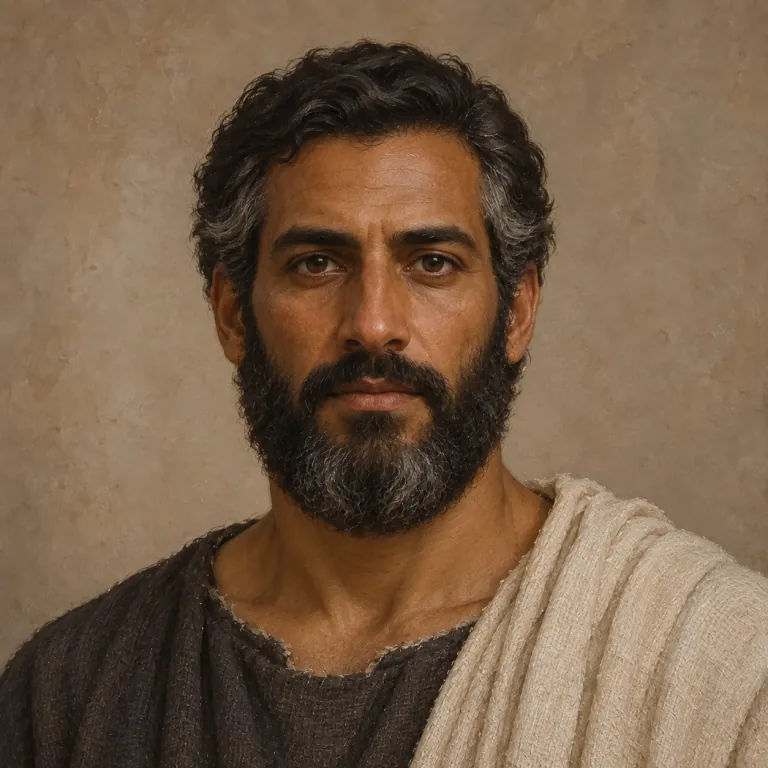
Also indexed here: