The Histories · Old Testament
2 Chronicles 30
2 Chronicles 30: the passover kept in the second month
General context
Hezekiah sends to all Israel and Judah and writes to Ephraim and Manasseh, calling them to keep the passover at Jerusalem. The king, princes and congregation decide on the second month, because the priests are not sufficiently sanctified and the people have not gathered, and a decree goes out from Beer-sheba to Dan, since the feast has not been kept as written for a long time. The letters call Israel to turn again to the Lord so that he will return to the remnant escaped from Assyria, and promise compassion for their captive children if they return. The posts are laughed to scorn in Ephraim, Manasseh and Zebulun, but some of Asher, Manasseh and Zebulun humble themselves and come, and in Judah God gives one heart. The congregation removes Jerusalem's altars and throws them into Kidron. The passover is killed on the fourteenth day of the second month; the priests and Levites are ashamed and sanctify themselves, and the Levites kill the passover for those who are not clean. Many from the northern tribes eat it uncleansed, otherwise than written, and Hezekiah prays that the good Lord pardon everyone who prepares his heart to seek God; the Lord hearkens and heals the people. Unleavened bread is kept seven days with gladness, and the assembly agrees to keep another seven days. Hezekiah and the princes give thousands of bullocks and sheep, and many priests sanctify themselves. Judah, the priests and Levites, those from Israel and the strangers rejoice; the narrator says there had been nothing like it since Solomon. The priests bless the people, and their prayer reaches heaven.
Cited passages: 2 Chronicles 30:1, 2 Chronicles 30:2, 2 Chronicles 30:3, 2 Chronicles 30:5, 2 Chronicles 30:6, 2 Chronicles 30:8, 2 Chronicles 30:9, 2 Chronicles 30:10, 2 Chronicles 30:11, 2 Chronicles 30:12, 2 Chronicles 30:13, 2 Chronicles 30:14, 2 Chronicles 30:15, 2 Chronicles 30:17, 2 Chronicles 30:18, 2 Chronicles 30:19, 2 Chronicles 30:20, 2 Chronicles 30:21, 2 Chronicles 30:22, 2 Chronicles 30:23, 2 Chronicles 30:24, 2 Chronicles 30:25, 2 Chronicles 30:26, 2 Chronicles 30:27
2 Chronicles 30 (KJV)
1And Hezekiah sent to all Israel and Judah, and wrote letters also to Ephraim and Manasseh, that they should come to the house of the Lord at Jerusalem, to keep the passover unto the Lord God of Israel.
2For the king had taken counsel, and his princes, and all the congregation in Jerusalem, to keep the passover in the second month.
3For they could not keep it at that time, because the priests had not sanctified themselves sufficiently, neither had the people gathered themselves together to Jerusalem.
4And the thing pleased the king and all the congregation.
5So they established a decree to make proclamation throughout all Israel, from Beer-sheba even to Dan, that they should come to keep the passover unto the Lord God of Israel at Jerusalem: for they had not done it of a long time in such sort as it was written.
6So the posts went with the letters from the king and his princes throughout all Israel and Judah, and according to the commandment of the king, saying, Ye children of Israel, turn again unto the Lord God of Abraham, Isaac, and Israel, and he will return to the remnant of you, that are escaped out of the hand of the kings of Assyria.
7And be not ye like your fathers, and like your brethren, which trespassed against the Lord God of their fathers, who therefore gave them up to desolation, as ye see.
8Now be ye not stiffnecked, as your fathers were, but yield yourselves unto the Lord, and enter into his sanctuary, which he hath sanctified for ever: and serve the Lord your God, that the fierceness of his wrath may turn away from you.
9For if ye turn again unto the Lord, your brethren and your children shall find compassion before them that lead them captive, so that they shall come again into this land: for the Lord your God is gracious and merciful, and will not turn away his face from you, if ye return unto him.
10So the posts passed from city to city through the country of Ephraim and Manasseh even unto Zebulun: but they laughed them to scorn, and mocked them.
11Nevertheless divers of Asher and Manasseh and of Zebulun humbled themselves, and came to Jerusalem.
12Also in Judah the hand of God was to give them one heart to do the commandment of the king and of the princes, by the word of the Lord.
13And there assembled at Jerusalem much people to keep the feast of unleavened bread in the second month, a very great congregation.
14And they arose and took away the altars that were in Jerusalem, and all the altars for incense took they away, and cast them into the brook Kidron.
15Then they killed the passover on the fourteenth day of the second month: and the priests and the Levites were ashamed, and sanctified themselves, and brought in the burnt offerings into the house of the Lord.
16And they stood in their place after their manner, according to the law of Moses the man of God: the priests sprinkled the blood, which they received of the hand of the Levites.
17For there were many in the congregation that were not sanctified: therefore the Levites had the charge of the killing of the passovers for every one that was not clean, to sanctify them unto the Lord.
18For a multitude of the people, even many of Ephraim, and Manasseh, Issachar, and Zebulun, had not cleansed themselves, yet did they eat the passover otherwise than it was written. But Hezekiah prayed for them, saying, The good Lord pardon every one
19That prepareth his heart to seek God, the Lord God of his fathers, though he be not cleansed according to the purification of the sanctuary.
20And the Lord hearkened to Hezekiah, and healed the people.
21And the children of Israel that were present at Jerusalem kept the feast of unleavened bread seven days with great gladness: and the Levites and the priests praised the Lord day by day, singing with loud instruments unto the Lord.
22And Hezekiah spake comfortably unto all the Levites that taught the good knowledge of the Lord: and they did eat throughout the feast seven days, offering peace offerings, and making confession to the Lord God of their fathers.
23And the whole assembly took counsel to keep other seven days: and they kept other seven days with gladness.
24For Hezekiah king of Judah did give to the congregation a thousand bullocks and seven thousand sheep; and the princes gave to the congregation a thousand bullocks and ten thousand sheep: and a great number of priests sanctified themselves.
25And all the congregation of Judah, with the priests and the Levites, and all the congregation that came out of Israel, and the strangers that came out of the land of Israel, and that dwelt in Judah, rejoiced.
26So there was great joy in Jerusalem: for since the time of Solomon the son of David king of Israel there was not the like in Jerusalem.
27Then the priests the Levites arose and blessed the people: and their voice was heard, and their prayer came up to his holy dwelling place, even unto heaven.
This page shows the King James Version. In the app, reading opens in the Berean Standard Bible unless you have chosen another translation. The reader includes five translations: the Berean Standard Bible (BSB), the King James Version (KJV), the World English Bible (WEB), the Bible in Basic English (BBE), and the American Standard Version (ASV). Search covers three of them: Berean Standard, King James, and World English. Basic English and American Standard readers search the King James words.
Historical context
The passover is held in the second month rather than the first, and the text gives two reasons: the priests were not sufficiently sanctified and the people had not gathered. The letters address a remnant escaped from the kings of Assyria, so the chapter presumes a northern captivity that Chronicles has not narrated. Tribes are named by response: Ephraim, Manasseh and Zebulun mock the messengers, some of Asher, Manasseh and Zebulun come, and people of Ephraim, Manasseh, Issachar and Zebulun are among those who eat uncleansed. The Lord is said to have healed the people after Hezekiah's prayer; no illness is described, and the word is left to stand. The written standard is invoked three times, as what had not been done for a long time, as the law of Moses for the priests' stations, and as what the uncleansed eaters departed from. Strangers from the land of Israel and dwelling in Judah are included among those who rejoice. The comparison reaches back to Solomon; the chapter does not say which earlier passovers it has in view. Animal numbers are stated for the king and princes separately. Priests and Levites are said to be ashamed, without the text saying of what beyond their delay in sanctifying themselves.
Cited passages: 2 Chronicles 30:2, 2 Chronicles 30:3, 2 Chronicles 30:6, 2 Chronicles 30:10, 2 Chronicles 30:11, 2 Chronicles 30:18, 2 Chronicles 30:20, 2 Chronicles 30:5, 2 Chronicles 30:16, 2 Chronicles 30:25, 2 Chronicles 30:26, 2 Chronicles 30:24, 2 Chronicles 30:15
Literary context
The chapter turns on an invitation and its answers. The letter's call to turn again is matched by the promise that the Lord will return, and the responses are sorted: scorn in the north, humbling by some, one heart in Judah. What is written stands as the measure throughout, and the chapter admits three times that practice fell short of it, in the long neglect, the second-month date and the uncleansed eating. Hezekiah's prayer meets that gap not by enforcing the rule but by asking pardon for whoever prepares his heart, and the phrase about a prepared heart recalls the praise of Jehoshaphat and the failure of his people. Gladness and joy are the repeated words of the second half, and the feast doubles itself by common counsel. The priests, ashamed at the start of the feast, bless the people at its end, and the chapter closes with the upward movement of their voice to heaven. The narrator's comparison with Solomon places this second-month passover above every one between.
Cited passages: 2 Chronicles 30:6, 2 Chronicles 30:10, 2 Chronicles 30:12, 2 Chronicles 30:5, 2 Chronicles 30:18, 2 Chronicles 30:19, 2 Chronicles 19:3, 2 Chronicles 20:33, 2 Chronicles 30:23, 2 Chronicles 30:15, 2 Chronicles 30:27, 2 Chronicles 30:26
Key moments
- Letters to Ephraim and Manasseh (2 Chronicles 30:1). Hezekiah invites all Israel and Judah to keep the passover at Jerusalem.
- Turn again to the Lord (2 Chronicles 30:6). The posts carry the king's call to the remnant escaped from Assyria.
- Laughed to scorn (2 Chronicles 30:10). In Ephraim, Manasseh and Zebulun the messengers are mocked.
- Some humble themselves (2 Chronicles 30:11). People of Asher, Manasseh and Zebulun come to Jerusalem.
- Altars into Kidron (2 Chronicles 30:14). The congregation removes Jerusalem's altars and throws them into the brook.
- Prayer for the uncleansed (2 Chronicles 30:18). Hezekiah asks pardon for those who eat the passover without cleansing.
- Another seven days (2 Chronicles 30:23). The assembly agrees to extend the feast with gladness.
For reflection
Many eat the passover otherwise than it was written, and the king prays for pardon for anyone who prepares his heart rather than sending them away. Does the chapter set the written rule and the prepared heart against each other, or does it hold them together, and what would that look like in practice?
People in this chapter
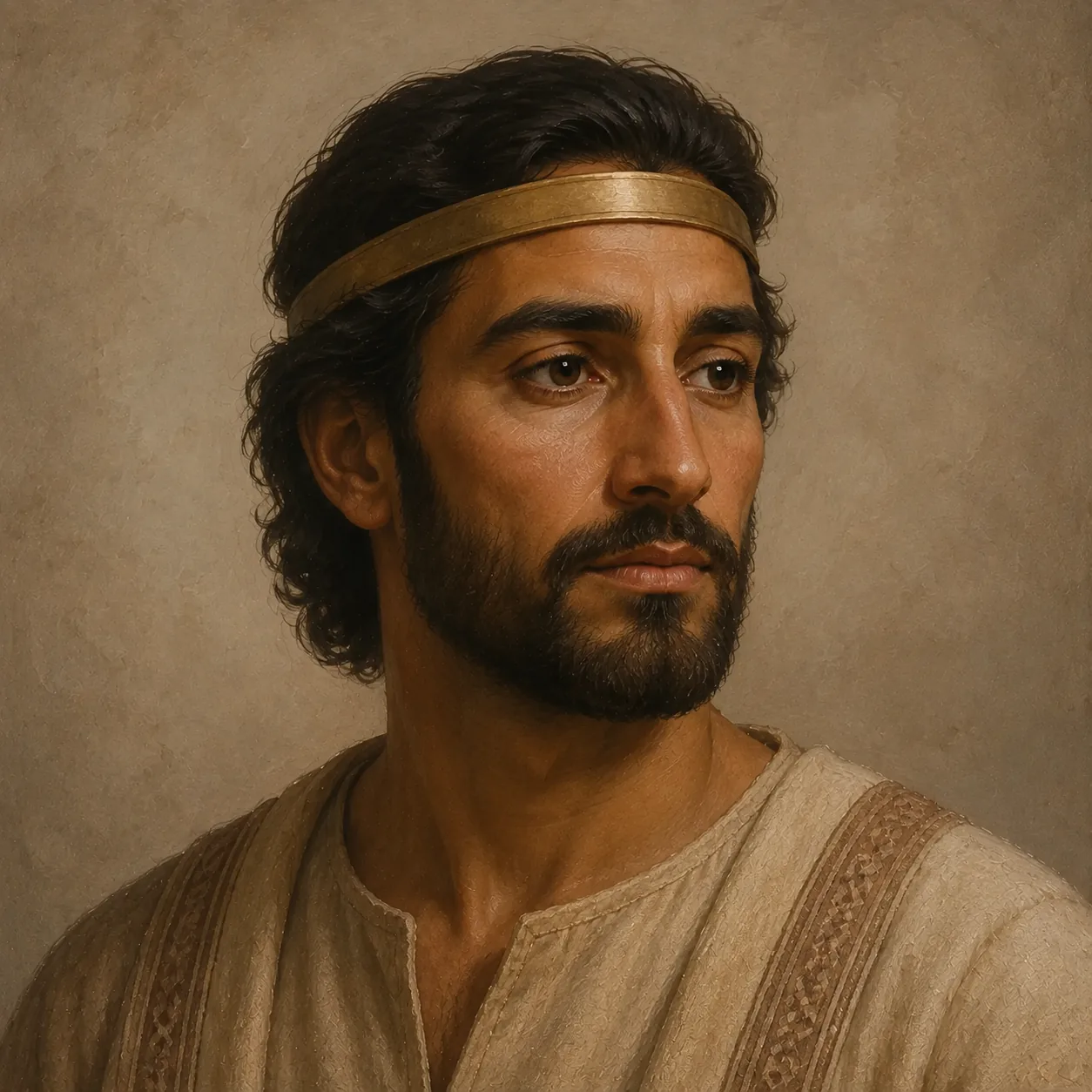
Also indexed here: