Person in the Old and New Testaments
Joshua
Joshua: Moses’ successor and Israel’s covenant charge
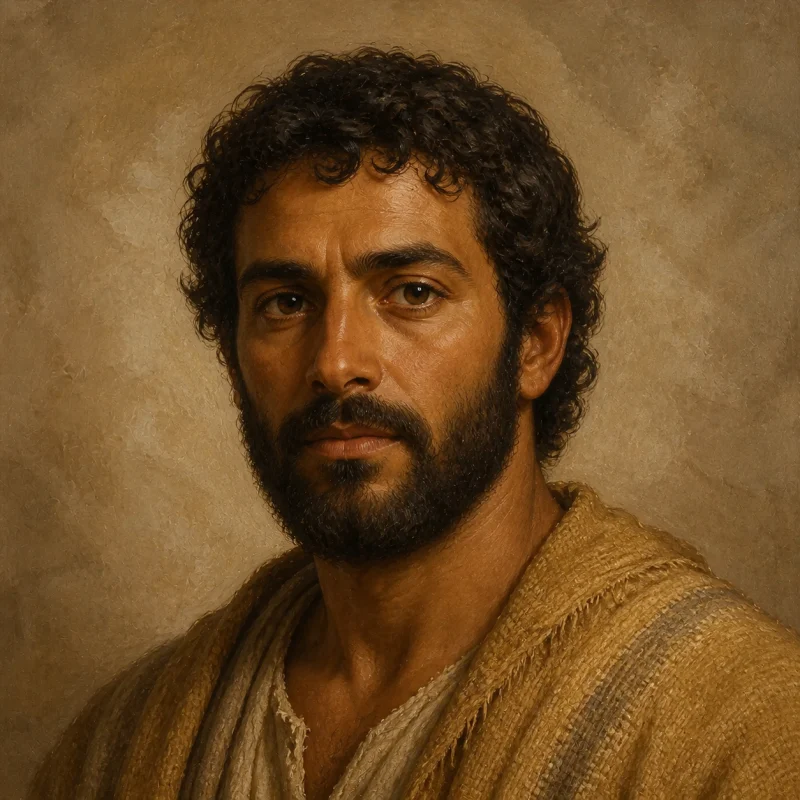
Portrait: an AI-generated artistic interpretation, not evidence of how Joshua looked.
Who Joshua is
Joshua son of Nun, from Ephraim, serves Moses before becoming Israel's leader. Numbers calls him Oshea the son of Nun and says Moses called him Jehoshua. He leads the fighting against Amalek while Moses' hands are supported by Aaron and Hur. He remains at the tent when Moses returns to camp. When Eldad and Medad prophesy, Joshua wants Moses to stop them; Moses answers by wishing all the Lord's people were prophets. Joshua and Caleb oppose the fearful response to the report about Canaan and urge the people not to rebel. They survive when the other spies die and are excepted from the exclusion imposed on the numbered men aged twenty and over who complained. At God's direction Moses commissions Joshua before Eleazar and the congregation. After Moses' death, Joshua is charged to cross the Jordan, remain courageous and obey the law. His leadership includes warfare, distributing inheritances and calling Israel to covenant faithfulness. At Shechem he declares that he and his household will serve the Lord, warns the people against abandoning God, and makes a covenant with them. He dies at one hundred ten and is buried in his inheritance.
Cited passages: Numbers 13:8, Numbers 13:16, Exodus 17:10, Exodus 17:12, Exodus 17:13, Exodus 33:11, Numbers 11:28, Numbers 11:29, Numbers 14:6, Numbers 14:7, Numbers 14:9, Numbers 14:29, Numbers 14:30, Numbers 14:37, Numbers 14:38, Numbers 27:18, Numbers 27:22, Numbers 27:23, Joshua 1:1, Joshua 1:2, Joshua 1:7, Joshua 1:9, Joshua 19:51, Joshua 24:1, Joshua 24:15, Joshua 24:20, Joshua 24:25, Joshua 24:29, Joshua 24:30
Historical setting
Joshua leads Israel across the Jordan on dry ground while the priests stand with the ark. Stones at Gilgal become a memorial for children's questions. The people undergo circumcision and keep Passover; manna ceases as they eat the land's produce. Jericho falls after the commanded marches and shout. Its inhabitants, including women and children, are killed, while Rahab and her household are spared because she hid the spies. Israel's first attack on Ai fails; the narrative connects the defeat to Achan's taking prohibited goods. Achan confesses and is stoned; his family and possessions are also brought to Achor. The text then says all Israel "stoned him with stones, and burned them with fire, after they had stoned them with stones". Joshua then takes Ai by ambush, destroys its people and burns the city. The Gibeonites gain a treaty through deception when Israel fails to seek God's counsel; Joshua preserves their lives but imposes woodcutting and water-carrying service. He answers their appeal against attacking kings. The account describes hailstones and the sun standing still, attributes the victory to the Lord, and continues through southern and northern campaigns with mass killing. Joshua, Eleazar and tribal heads distribute the land, including inheritances for Caleb and Zelophehad's daughters. Joshua receives Timnath-serah, and he later sends the eastern tribes home after their service with their brothers.
Cited passages: Joshua 3:17, Joshua 4:20, Joshua 4:21, Joshua 5:7, Joshua 5:10, Joshua 5:12, Joshua 6:15, Joshua 6:20, Joshua 6:21, Joshua 6:25, Joshua 7:1, Joshua 7:4, Joshua 7:11, Joshua 7:20, Joshua 7:24, Joshua 7:25, Joshua 8:19, Joshua 8:24, Joshua 8:25, Joshua 8:28, Joshua 9:14, Joshua 9:15, Joshua 9:23, Joshua 9:26, Joshua 9:27, Joshua 10:6, Joshua 10:7, Joshua 10:11, Joshua 10:13, Joshua 10:14, Joshua 10:40, Joshua 11:11, Joshua 14:1, Joshua 14:13, Joshua 17:4, Joshua 19:50, Joshua 22:2, Joshua 22:4
How the story is told
Joshua's story repeatedly links leadership to hearing and doing what God commands through Moses. The opening charge to keep the law returns in public readings and farewell warnings. Joshua bows before the commander of the Lord's army and asks what he has to say; he obeys the instruction to remove his shoe on holy ground. The conquest summaries say the land was taken and God's promises fulfilled, yet Joshua 13 says much land remains, and Joshua 23 speaks of nations still among Israel. Both statements belong in the account. The account also attributes the enemy kings' hardened hearts to God and portrays the mass killing as commanded. Covenant renewal includes a warning that Israel too can perish from the land by serving other gods. Joshua 24 and Judges 2 remember Israel's faithfulness during his life and the elders' generation; Judges then describes a generation that does not know the Lord. Hebrews takes up the theme of rest and argues that a rest remains for God's people. Acts 7:45 and Hebrews 4:8 print the name Jesus where the setting is the entry into the land and the generation that fell in the wilderness, which points to Moses' successor, though neither verse says Joshua.
Cited passages: Joshua 1:7, Joshua 1:8, Joshua 8:34, Joshua 8:35, Joshua 23:6, Joshua 5:13, Joshua 5:14, Joshua 5:15, Joshua 11:23, Joshua 21:43, Joshua 21:45, Joshua 13:1, Joshua 23:4, Joshua 10:40, Joshua 11:20, Joshua 23:16, Joshua 24:20, Joshua 24:31, Judges 2:7, Judges 2:10, Hebrews 4:7, Hebrews 4:8, Hebrews 4:9, Acts 7:45, Acts 7:44, Hebrews 3:17
Story moments
- Joshua leads against Amalek (Exodus 17:13). Joshua fights below while Moses, Aaron and Hur remain on the hill.
- Moses commissions Joshua (Numbers 27:22). Moses presents Joshua before Eleazar and the congregation and lays his hands on him.
- Israel crosses the Jordan (Joshua 3:17). The people cross on dry ground while priests stand with the ark in the river.
- Rahab’s household survives Jericho (Joshua 6:25). Joshua spares Rahab and her household because she hid the spies; the wider city is destroyed.
- The covenant at Shechem (Joshua 24:25). After the call to serve the Lord and warnings against abandoning him, Joshua makes a covenant with the people.
Key passages
Exodus 17:9
And Moses said unto Joshua, Choose us out men, and go out, fight with Amalek: to morrow I will stand on the top of the hill with the rod of God in mine hand.
Exodus 17:10
So Joshua did as Moses had said to him, and fought with Amalek: and Moses, Aaron, and Hur went up to the top of the hill.
Exodus 17:13
And Joshua discomfited Amalek and his people with the edge of the sword.
Exodus 17:14
And the Lord said unto Moses, Write this for a memorial in a book, and rehearse it in the ears of Joshua: for I will utterly put out the remembrance of Amalek from under heaven.
Exodus 24:13
And Moses rose up, and his minister Joshua: and Moses went up into the mount of God.
Exodus 32:17
And when Joshua heard the noise of the people as they shouted, he said unto Moses, There is a noise of war in the camp.
King James Version. 190 indexed passages in total.
For reflection
How do the calls to courage relate to the commands to listen and obey? What changes when you read Joshua's declaration at Shechem together with his warnings and the people's responses?
Books Joshua appears in
Related people

Names and references are adapted from STEPBible TIPNR. A person listed with a verse is named or indexed there; it does not mean they wrote or spoke it.