The Histories · Old Testament
Joshua 17
Manasseh's portions and Joseph's request for more land
General context
Manasseh's allotment begins with the family line of Machir and Gilead and the earlier eastern land, then turns to the remaining families. Zelophehad's five daughters approach Eleazar, Joshua and the leaders to invoke the Lord's command to Moses concerning their inheritance. They receive portions among their father's relatives. Ten portions are counted for Manasseh besides Gilead and Bashan east of the Jordan. The borders include towns assigned to Ephraim and Manasseh's holdings within Issachar and Asher. Canaanites remain in some of these towns; stronger Israel later puts them to compulsory labour without completely expelling them. Joseph's descendants complain that one allotment is insufficient for their large population. Joshua tells them to clear forest country. They point to the valley inhabitants' iron chariots, and he answers that their strength is sufficient for clearing the wooded hill country and driving out the Canaanites despite their strength and iron chariots.
Cited passages: Joshua 17:1, Joshua 17:2, Joshua 17:3, Joshua 17:4, Joshua 17:5, Joshua 17:6, Joshua 17:7, Joshua 17:8, Joshua 17:9, Joshua 17:10, Joshua 17:11, Joshua 17:12, Joshua 17:13, Joshua 17:14, Joshua 17:15, Joshua 17:16, Joshua 17:17, Joshua 17:18
Joshua 17 (KJV)
1There was also a lot for the tribe of Manasseh; for he was the firstborn of Joseph; to wit, for Machir the firstborn of Manasseh, the father of Gilead: because he was a man of war, therefore he had Gilead and Bashan.
2There was also a lot for the rest of the children of Manasseh by their families; for the children of Abiezer, and for the children of Helek, and for the children of Asriel, and for the children of Shechem, and for the children of Hepher, and for the children of Shemida: these were the male children of Manasseh the son of Joseph by their families.
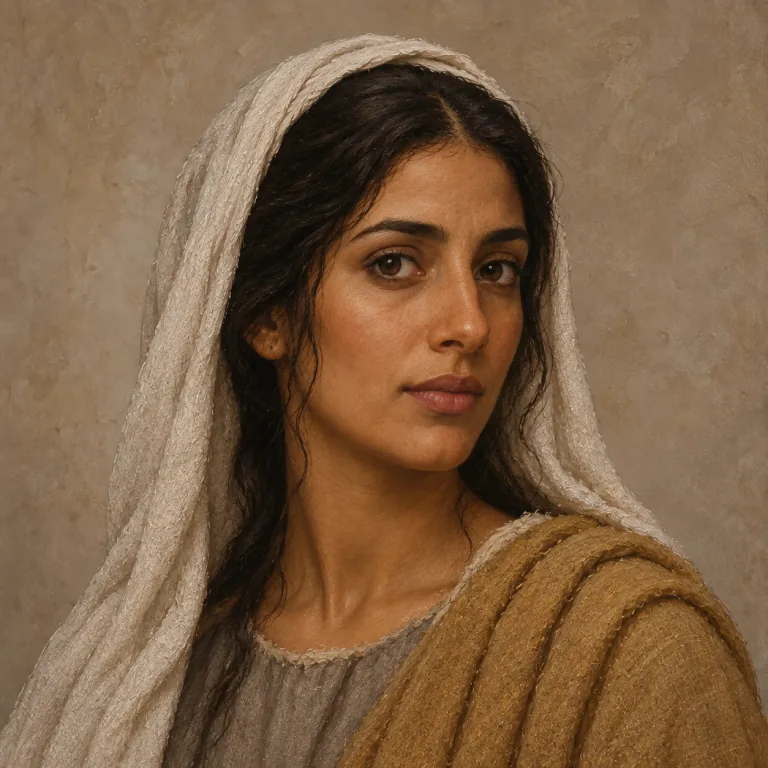
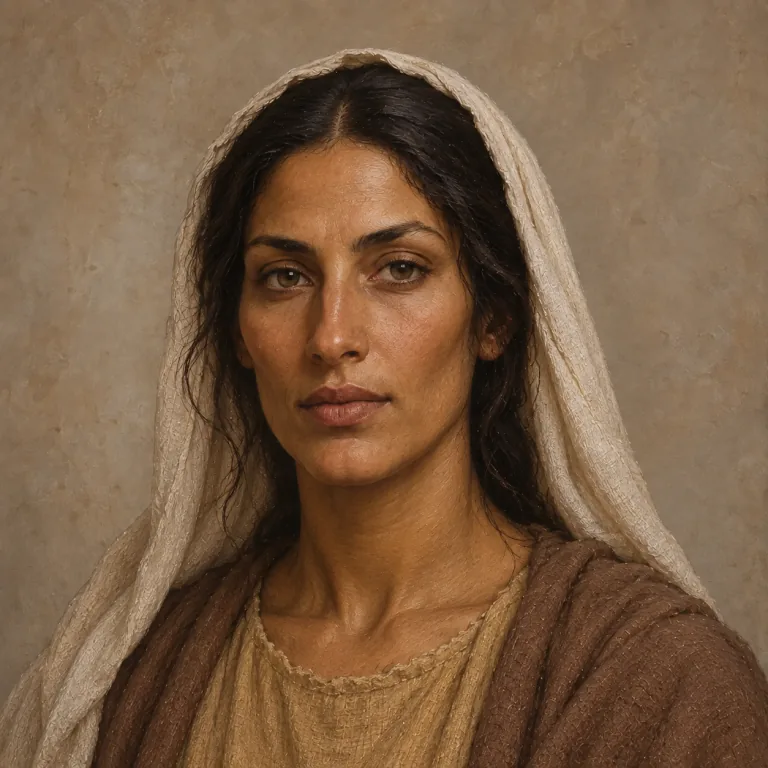
3But Zelophehad, the son of Hepher, the son of Gilead, the son of Machir, the son of Manasseh, had no sons, but daughters: and these are the names of his daughters, Mahlah, and Noah, Hoglah, Milcah, and Tirzah.
4And they came near before Eleazar the priest, and before Joshua the son of Nun, and before the princes, saying, The Lord commanded Moses to give us an inheritance among our brethren. Therefore according to the commandment of the Lord he gave them an inheritance among the brethren of their father.
5And there fell ten portions to Manasseh, beside the land of Gilead and Bashan, which were on the other side Jordan;
6Because the daughters of Manasseh had an inheritance among his sons: and the rest of Manasseh’s sons had the land of Gilead.
7And the coast of Manasseh was from Asher to Michmethah, that lieth before Shechem; and the border went along on the right hand unto the inhabitants of En-tappuah.
8Now Manasseh had the land of Tappuah: but Tappuah on the border of Manasseh belonged to the children of Ephraim;
9And the coast descended unto the river Kanah, southward of the river: these cities of Ephraim are among the cities of Manasseh: the coast of Manasseh also was on the north side of the river, and the outgoings of it were at the sea:
10Southward it was Ephraim’s, and northward it was Manasseh’s, and the sea is his border; and they met together in Asher on the north, and in Issachar on the east.
11And Manasseh had in Issachar and in Asher Beth-shean and her towns, and Ibleam and her towns, and the inhabitants of Dor and her towns, and the inhabitants of Endor and her towns, and the inhabitants of Taanach and her towns, and the inhabitants of Megiddo and her towns, even three countries.
12Yet the children of Manasseh could not drive out the inhabitants of those cities; but the Canaanites would dwell in that land.
13Yet it came to pass, when the children of Israel were waxen strong, that they put the Canaanites to tribute; but did not utterly drive them out.
14And the children of Joseph spake unto Joshua, saying, Why hast thou given me but one lot and one portion to inherit, seeing I am a great people, forasmuch as the Lord hath blessed me hitherto?
15And Joshua answered them, If thou be a great people, then get thee up to the wood country, and cut down for thyself there in the land of the Perizzites and of the giants, if mount Ephraim be too narrow for thee.
16And the children of Joseph said, The hill is not enough for us: and all the Canaanites that dwell in the land of the valley have chariots of iron, both they who are of Beth-shean and her towns, and they who are of the valley of Jezreel.
17And Joshua spake unto the house of Joseph, even to Ephraim and to Manasseh, saying, Thou art a great people, and hast great power: thou shalt not have one lot only:
18But the mountain shall be thine; for it is a wood, and thou shalt cut it down: and the outgoings of it shall be thine: for thou shalt drive out the Canaanites, though they have iron chariots, and though they be strong.
This page shows the King James Version. In the app, reading opens in the Berean Standard Bible unless you have chosen another translation. The reader includes five translations: the Berean Standard Bible (BSB), the King James Version (KJV), the World English Bible (WEB), the Bible in Basic English (BBE), and the American Standard Version (ASV). Search covers three of them: Berean Standard, King James, and World English. Basic English and American Standard readers search the King James words.
Historical context
The opening uses ancestor names to organize descendant families and their land claims. Zelophehad's daughters are individually named: Mahlah, Noah, Hoglah, Milcah and Tirzah. Their appearance implements the inheritance command already stated in Numbers 27; it is not a new ruling invented by Joshua. The stated ten portions exclude the eastern Gilead and Bashan grant. Land around Tappuah belongs to Manasseh while the town is assigned to Ephraim, and other holdings cross neighbouring tribal areas. KJV's tribute becomes taskwork in ASV and forced work in BBE. Iron chariots are part of the people's stated objection; Joshua's answer promises success without narrating that success in this chapter.
Cited passages: Joshua 17:1, Joshua 17:2, Joshua 17:3, Joshua 17:4, Joshua 17:5, Joshua 17:6, Joshua 17:7, Joshua 17:8, Joshua 17:9, Joshua 17:10, Joshua 17:11, Joshua 17:12, Joshua 17:13, Joshua 17:14, Joshua 17:15, Joshua 17:16, Joshua 17:17, Joshua 17:18, Numbers 27:1, Numbers 27:2, Numbers 27:3, Numbers 27:4, Numbers 27:5, Numbers 27:6, Numbers 27:7, Numbers 27:8, Numbers 27:9, Numbers 27:10, Numbers 27:11
Literary context
Two requests frame the territorial description. The daughters ask for an inheritance already commanded and receive it; Joseph's descendants ask for more room and receive an answer requiring further work and conflict. Joshua takes up their own claim to be a great people and turns it into a reason to act. The passage keeps the difference between allocated land and possession visible through surviving Canaanites, forced labour and the final promise of further expulsion.
Cited passages: Joshua 17:3, Joshua 17:4, Joshua 17:5, Joshua 17:6, Joshua 17:12, Joshua 17:13, Joshua 17:14, Joshua 17:15, Joshua 17:16, Joshua 17:17, Joshua 17:18
Key moments
- The daughters claim their inheritance (Joshua 17:4). Zelophehad's daughters cite the command given to Moses and receive land among their father's relatives.
- Ten western portions (Joshua 17:5). Manasseh's ten portions are counted separately from Gilead and Bashan across the Jordan.
- Labour without full expulsion (Joshua 17:13). The Canaanites are subjected to work but are not completely driven out.
- Strength becomes a responsibility (Joshua 17:18). Joshua tells Joseph's descendants to clear the forest and says they can overcome the Canaanites despite iron chariots.
For reflection
Joshua responds to the people's claim of strength by assigning work still to do. When you describe what you are capable of, what responsibilities follow from that description?
People in this chapter
Also indexed here: