The Gospels · New Testament
John 3
John 3: Nicodemus by night and John's answer about the bridegroom
General context
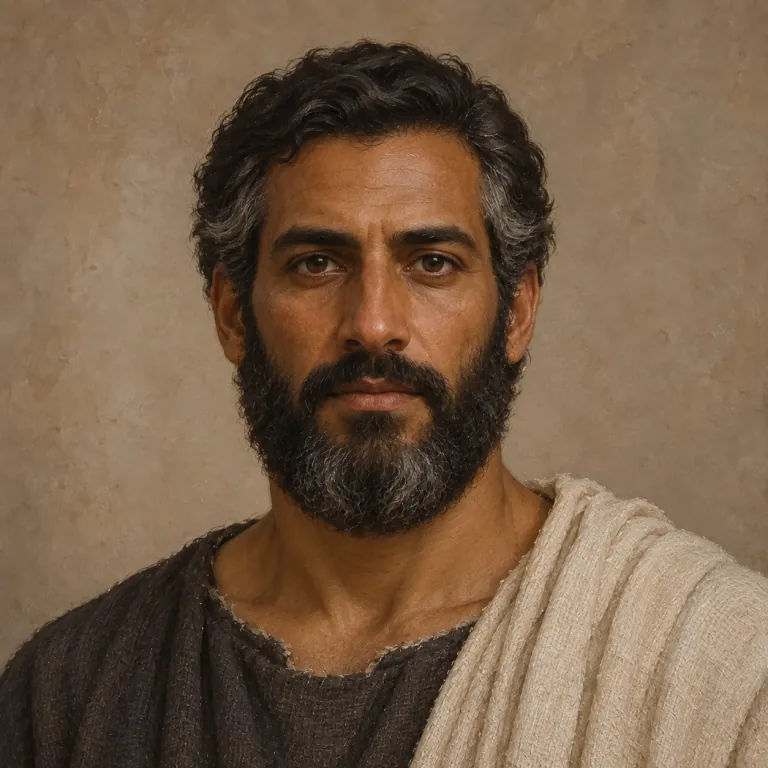
Nicodemus, a Pharisee and a ruler of the Jews, comes to Jesus by night and says they know he is a teacher come from God. Jesus answers that a man must be born again to see the kingdom of God. Nicodemus asks how a man can be born when he is old. Jesus speaks of birth of water and of the Spirit, of flesh and spirit, and of wind whose sound is heard though its course is unknown. He compares the lifting up of the Son of man to Moses lifting the serpent in the wilderness, and speaks of God giving his only begotten Son so that whoever believes should not perish, of the Son sent to save rather than condemn, and of men loving darkness rather than light. The scene then moves to Judea, where Jesus and his disciples baptize while John baptizes at Aenon near Salim. John's disciples report that everyone is going to Jesus. John answers that a man receives only what is given from heaven, compares himself to the friend of the bridegroom, and says he must decrease.
Cited passages: John 3:1, John 3:2, John 3:3, John 3:4, John 3:5, John 3:6, John 3:8, John 3:9, John 3:14, John 3:16, John 3:17, John 3:19, John 3:22, John 3:23, John 3:26, John 3:27, John 3:29, John 3:30, John 3:36
John 3 (KJV)
1There was a man of the Pharisees, named Nicodemus, a ruler of the Jews:
2The same came to Jesus by night, and said unto him, Rabbi, we know that thou art a teacher come from God: for no man can do these miracles that thou doest, except God be with him.
3Jesus answered and said unto him, Verily, verily, I say unto thee, Except a man be born again, he cannot see the kingdom of God.
4Nicodemus saith unto him, How can a man be born when he is old? can he enter the second time into his mother’s womb, and be born?
5Jesus answered, Verily, verily, I say unto thee, Except a man be born of water and of the Spirit, he cannot enter into the kingdom of God.
6That which is born of the flesh is flesh; and that which is born of the Spirit is spirit.
7Marvel not that I said unto thee, Ye must be born again.
8The wind bloweth where it listeth, and thou hearest the sound thereof, but canst not tell whence it cometh, and whither it goeth: so is every one that is born of the Spirit.
9Nicodemus answered and said unto him, How can these things be?
10Jesus answered and said unto him, Art thou a master of Israel, and knowest not these things?
11Verily, verily, I say unto thee, We speak that we do know, and testify that we have seen; and ye receive not our witness.
12If I have told you earthly things, and ye believe not, how shall ye believe, if I tell you of heavenly things?
13And no man hath ascended up to heaven, but he that came down from heaven, even the Son of man which is in heaven.
14And as Moses lifted up the serpent in the wilderness, even so must the Son of man be lifted up:
15That whosoever believeth in him should not perish, but have eternal life.
16For God so loved the world, that he gave his only begotten Son, that whosoever believeth in him should not perish, but have everlasting life.
17For God sent not his Son into the world to condemn the world; but that the world through him might be saved.
18He that believeth on him is not condemned: but he that believeth not is condemned already, because he hath not believed in the name of the only begotten Son of God.
19And this is the condemnation, that light is come into the world, and men loved darkness rather than light, because their deeds were evil.
20For every one that doeth evil hateth the light, neither cometh to the light, lest his deeds should be reproved.
21But he that doeth truth cometh to the light, that his deeds may be made manifest, that they are wrought in God.
22After these things came Jesus and his disciples into the land of Judæa; and there he tarried with them, and baptized.
23And John also was baptizing in Ænon near to Salim, because there was much water there: and they came, and were baptized.
24For John was not yet cast into prison.
25Then there arose a question between some of John’s disciples and the Jews about purifying.
26And they came unto John, and said unto him, Rabbi, he that was with thee beyond Jordan, to whom thou barest witness, behold, the same baptizeth, and all men come to him.
27John answered and said, A man can receive nothing, except it be given him from heaven.
28Ye yourselves bear me witness, that I said, I am not the Christ, but that I am sent before him.
29He that hath the bride is the bridegroom: but the friend of the bridegroom, which standeth and heareth him, rejoiceth greatly because of the bridegroom’s voice: this my joy therefore is fulfilled.
30He must increase, but I must decrease.
31He that cometh from above is above all: he that is of the earth is earthly, and speaketh of the earth: he that cometh from heaven is above all.
32And what he hath seen and heard, that he testifieth; and no man receiveth his testimony.
33He that hath received his testimony hath set to his seal that God is true.
34For he whom God hath sent speaketh the words of God: for God giveth not the Spirit by measure unto him.
35The Father loveth the Son, and hath given all things into his hand.
36He that believeth on the Son hath everlasting life: and he that believeth not the Son shall not see life; but the wrath of God abideth on him.
This page shows the King James Version. In the app, reading opens in the Berean Standard Bible unless you have chosen another translation. The reader includes five translations: the Berean Standard Bible (BSB), the King James Version (KJV), the World English Bible (WEB), the Bible in Basic English (BBE), and the American Standard Version (ASV). Search covers three of them: Berean Standard, King James, and World English. Basic English and American Standard readers search the King James words.
Historical context
Nicodemus is identified by party and office, a Pharisee and a ruler of the Jews, and is later addressed by Jesus as a master of Israel. The night visit is stated without any reason given for it. The printed text carries no quotation marks or speaker labels, so where the speech beginning at verse 11 ends, and whether verses 31 to 36 continue John's words or become the narrator's, is not marked. The narrator does supply one aside, that John was not yet cast into prison, and elsewhere states plainly that Jesus and his disciples baptized in Judea. The question that starts the second half arises between some of John's disciples and the Jews about purifying, and it is John's disciples, not John, who say that all men come to Jesus.
Cited passages: John 3:1, John 3:2, John 3:10, John 3:11, John 3:31, John 3:24, John 3:22, John 3:25, John 3:26, John 3:28
Literary context
The conversation runs on misheard words. Born again is met with a question about a second physical birth, and the reply widens the term rather than explaining it away. Wind and Spirit are set together so that what cannot be traced can still be heard. Light and darkness return from the opening of the book, now attached to what men do and whether they will come to the light. The second half repeats the first half's logic in another voice: John says he is not the Christ, places himself beside the bridegroom rather than in his place, and states the relation as increase against decrease. Belief and refusal to believe close the chapter as the two outcomes it names.
Cited passages: John 3:3, John 3:4, John 3:5, John 3:8, John 3:9, John 3:19, John 3:20, John 3:21, John 3:28, John 3:29, John 3:30, John 3:32, John 3:36
Key moments
- A ruler comes by night (John 3:2). Nicodemus visits Jesus at night and calls him a teacher come from God.
- Born again (John 3:3). Jesus says no one can see the kingdom of God without being born again.
- How can these things be (John 3:9). Nicodemus asks how what he has heard is possible.
- The serpent lifted up (John 3:14). Jesus compares the lifting up of the Son of man to Moses lifting the serpent.
- Light come into the world (John 3:19). The speech names the condemnation as men loving darkness rather than light.
- All men come to him (John 3:26). John's disciples report that everyone is going to the one he bore witness to.
- He must increase (John 3:30). John states his own place as decreasing while the other increases.
For reflection
Nicodemus asks two questions and receives answers that change the terms rather than settle them, and the chapter does not say what he concludes. What is gained by leaving his response unreported here?