Person in the Old and New Testaments
Pharaoh
Pharaoh: the king who refuses Israel’s release
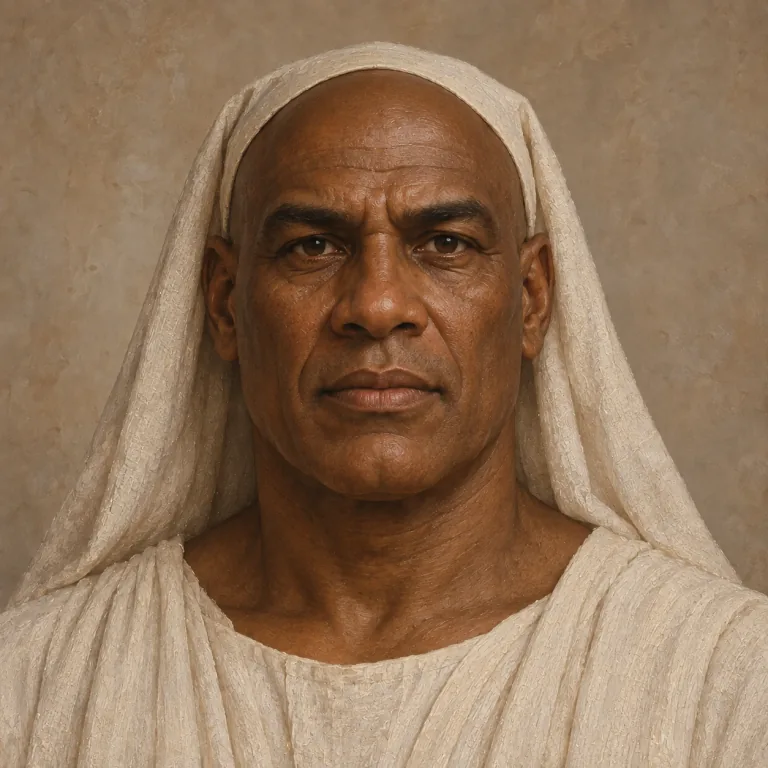
Portrait: an AI-generated artistic interpretation, not evidence of how Pharaoh looked.
Who Pharaoh is
This is the king of Egypt whom Moses and Aaron confront in the Exodus account. The earlier king who sought Moses' life dies before Moses returns; these passages give the later ruler no personal name. Asked to let Israel hold a feast to the Lord, Pharaoh refuses and says he does not know the Lord. He orders the people to gather their own straw while keeping their brick quota unchanged. During the plagues, he asks for relief and offers concessions, then refuses release again. After the firstborn die, including his own, he orders Israel to leave with its flocks and herds and asks for a blessing. He and his servants then regret losing Israel's service, and he pursues the people with his army.
Cited passages: Exodus 2:15, Exodus 2:23, Exodus 4:19, Exodus 5:1, Exodus 5:2, Exodus 5:6, Exodus 5:7, Exodus 5:8, Exodus 8:8, Exodus 8:15, Exodus 12:29, Exodus 12:30, Exodus 12:31, Exodus 12:32, Exodus 14:5, Exodus 14:6, Exodus 14:8
Historical setting
The encounters move from demands and signs to increasingly severe plagues. Pharaoh's magicians imitate some signs, but later acknowledge the finger of God and cannot stand before Moses because of the boils. Pharaoh offers worship within Egypt, then only a short journey; later he permits only the men to go, and later still wants to keep the livestock. Moses insists on worship in the wilderness and on taking the children and livestock. Pharaoh admits wrongdoing during the hail and locust plagues, yet release does not follow the relief. After Israel finally departs, his forces overtake them beside the sea. The narrative says Israel crosses on dry ground and the returning waters cover all Pharaoh's forces that entered after them. Exodus 15 celebrates the defeat of his chariots and army; Psalm 136 speaks of Pharaoh and his host being overthrown in the Red Sea.
Cited passages: Exodus 7:11, Exodus 7:12, Exodus 7:22, Exodus 8:7, Exodus 8:18, Exodus 8:19, Exodus 9:11, Exodus 8:25, Exodus 8:26, Exodus 8:27, Exodus 8:28, Exodus 10:9, Exodus 10:11, Exodus 10:24, Exodus 10:26, Exodus 9:27, Exodus 9:33, Exodus 9:34, Exodus 9:35, Exodus 10:16, Exodus 10:19, Exodus 10:20, Exodus 14:9, Exodus 14:22, Exodus 14:23, Exodus 14:28, Exodus 15:4, Psalms 136:15
How the story is told
Pharaoh's question about knowing the Lord is answered by repeated declarations that Egypt will know who the Lord is. The hardening language varies: Pharaoh hardens his own heart after relief, God hardens it, and some verses simply describe it as hardened. Exodus 7:13 uses an active, unnamed he in the KJV, while the ASV and BBE use passive wording. Both Pharaoh’s refusal and God’s action remain part of the account. Exodus 9:16 speaks of Pharaoh being raised up in the KJV, made to stand in the ASV, and kept from destruction in the BBE, so that God's power and name are made known. Romans takes up that declaration in its discussion of mercy and hardening. Other passages make the Exodus a memory to teach children, a warning against stubbornness and a reason for praise; they are later reflections on the account, not new meetings with Pharaoh.
Cited passages: Exodus 5:2, Exodus 7:5, Exodus 14:18, Exodus 7:13, Exodus 8:15, Exodus 8:32, Exodus 9:12, Exodus 9:35, Exodus 9:16, Romans 9:15, Romans 9:16, Romans 9:17, Romans 9:18, Deuteronomy 6:20, Deuteronomy 6:21, Deuteronomy 6:22, 1 Samuel 6:2, 1 Samuel 6:6, Psalms 135:8, Psalms 135:9
Story moments
- Pharaoh refuses the demand (Exodus 5:2). Pharaoh says he does not know the Lord and will not let Israel go.
- The labor burden increases (Exodus 5:7). He stops supplying straw while keeping the required number of bricks unchanged.
- Relief is followed by refusal (Exodus 8:15). After the frogs die, Pharaoh hardens his heart and does not listen.
- He orders Israel to leave (Exodus 12:31). After the death of the firstborn, Pharaoh tells Moses and Aaron to take Israel away to serve the Lord.
- The pursuing forces are overwhelmed (Exodus 14:28). The returning waters cover the chariots, horsemen and forces that followed Israel into the sea.
Key passages
Exodus 3:10
Come now therefore, and I will send thee unto Pharaoh, that thou mayest bring forth my people the children of Israel out of Egypt.
Exodus 3:11
And Moses said unto God, Who am I, that I should go unto Pharaoh, and that I should bring forth the children of Israel out of Egypt?
Exodus 4:21
And the Lord said unto Moses, When thou goest to return into Egypt, see that thou do all those wonders before Pharaoh, which I have put in thine hand: but I will harden his heart, that he shall not let the people go.
Exodus 4:22
And thou shalt say unto Pharaoh, Thus saith the Lord, Israel is my son, even my firstborn:
Exodus 5:1
And afterward Moses and Aaron went in, and told Pharaoh, Thus saith the Lord God of Israel, Let my people go, that they may hold a feast unto me in the wilderness.
Exodus 5:2
And Pharaoh said, Who is the Lord, that I should obey his voice to let Israel go? I know not the Lord, neither will I let Israel go.
King James Version. 111 indexed passages in total.
For reflection
What changes in Pharaoh's words when a plague is severe, and what happens after relief comes? How does the narrator describe those changes?
Books Pharaoh appears in
Related people

Names and references are adapted from STEPBible TIPNR. A person listed with a verse is named or indexed there; it does not mean they wrote or spoke it.