Person in the Old Testament
Tirzah
Tirzah: a named daughter in the inheritance petitions
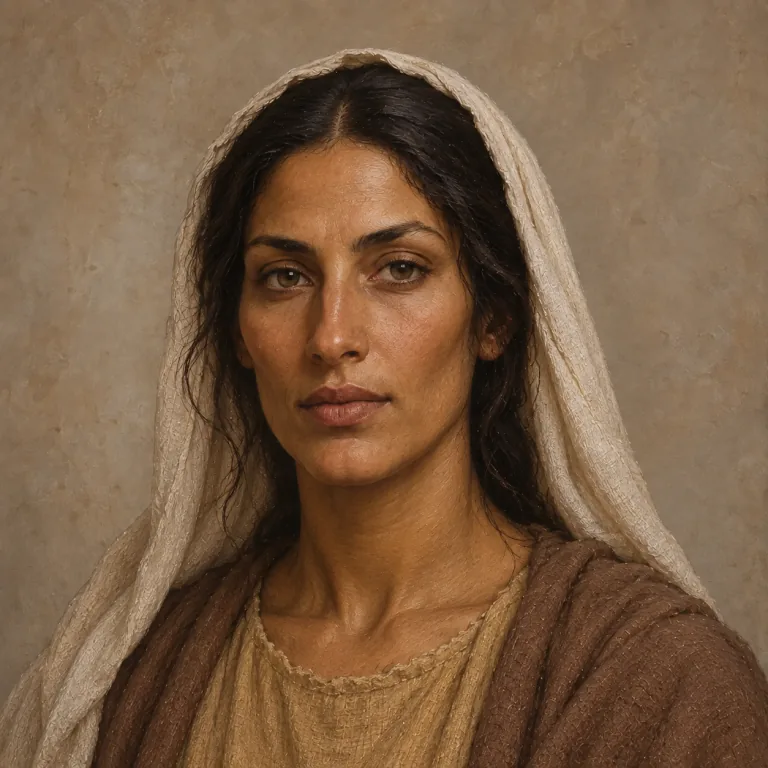
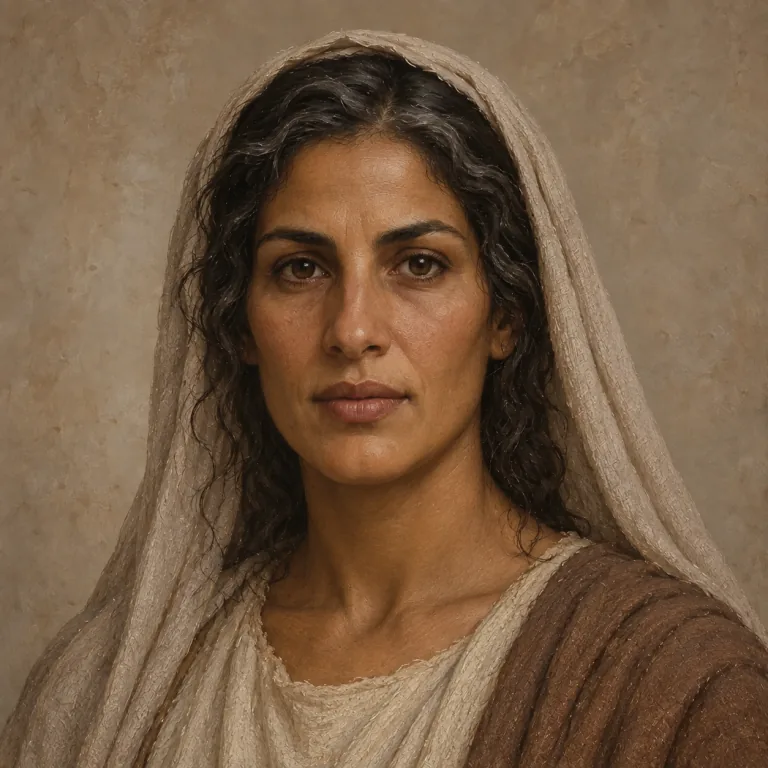
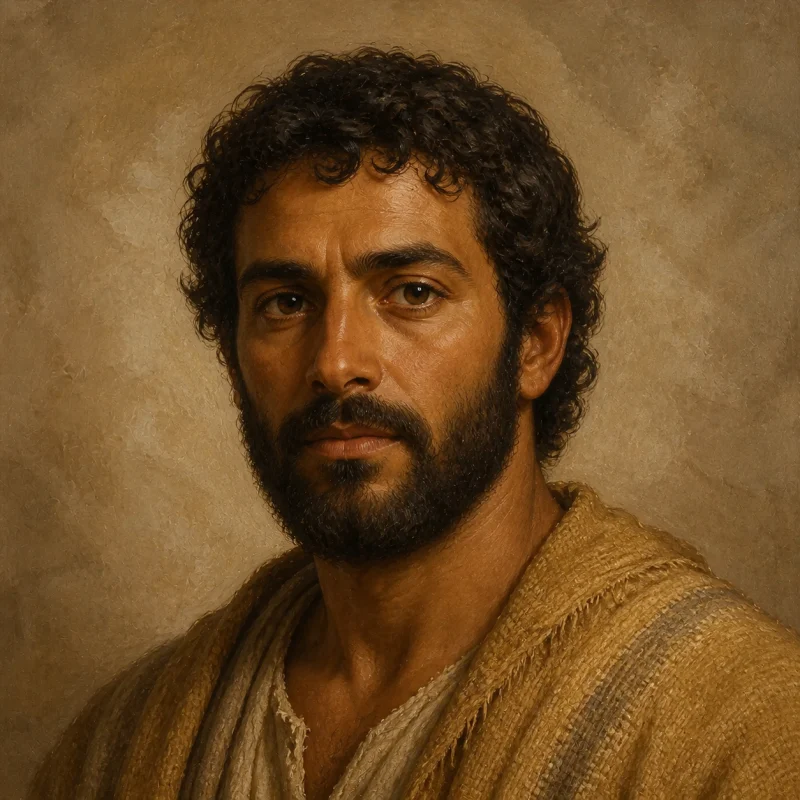
Portrait: an AI-generated artistic interpretation, not evidence of how Tirzah looked.
Who Tirzah is
Tirzah is one of Zelophehad's daughters, named with Mahlah, Noah, Hoglah and Milcah. With no brother to inherit their father's share, the sisters ask Moses for a possession among his relatives. The Lord affirms their claim and gives an inheritance rule extending beyond their household. A later concern about land moving between tribes leads to a marriage restriction for daughters who inherit. Tirzah and her sisters marry paternal cousins, and their inheritance stays in Manasseh. Joshua later names them again and records the grant made under the command given to Moses.
Cited passages: Numbers 26:33, Numbers 27:1, Numbers 27:2, Numbers 27:3, Numbers 27:4, Numbers 27:5, Numbers 27:6, Numbers 27:7, Numbers 27:8, Numbers 27:9, Numbers 27:10, Numbers 27:11, Numbers 36:1, Numbers 36:2, Numbers 36:3, Numbers 36:4, Numbers 36:5, Numbers 36:6, Numbers 36:7, Numbers 36:8, Numbers 36:9, Numbers 36:10, Numbers 36:11, Numbers 36:12, Joshua 17:3, Joshua 17:4, Joshua 17:5, Joshua 17:6
Historical setting
The family belongs to Manasseh through Machir, Gilead, Hepher and Zelophehad. In Numbers 36, the leaders argue that marriage into another tribe would move the inherited land out of their ancestral holding, including at Jubilee. The answer permits the daughters to choose within their father's tribal family. The report then states that they marry sons of their father's brothers. Tirzah's husband's name, her age and her individual marriage negotiations are not supplied.
Cited passages: Numbers 27:1, Numbers 36:1, Numbers 36:2, Numbers 36:3, Numbers 36:4, Numbers 36:5, Numbers 36:6, Numbers 36:7, Numbers 36:8, Numbers 36:9, Numbers 36:10, Numbers 36:11, Numbers 36:12, Joshua 17:3
How the story is told
The order of the sisters' names changes in the marriage report, but all five remain present. Tirzah appears last in Numbers 26 and 27 and Joshua 17, and second in Numbers 36; these lists do not state birth order. Their shared words and actions carry the account. The recurring names connect an initial household question, a rule about tribal inheritance and a later report of land actually given.
Cited passages: Numbers 26:33, Numbers 27:1, Numbers 27:2, Numbers 27:3, Numbers 27:4, Numbers 27:5, Numbers 27:6, Numbers 27:7, Numbers 27:8, Numbers 27:9, Numbers 27:10, Numbers 27:11, Numbers 36:10, Numbers 36:11, Numbers 36:12, Joshua 17:3, Joshua 17:4, Joshua 17:5, Joshua 17:6
Story moments
- Tirzah in the petitioning family (Numbers 27:1). The opening names Tirzah among the daughters who bring the inheritance request.
- Tirzah in the marriage report (Numbers 36:11). Tirzah is named among the sisters married to their paternal cousins.
- A share among the sons (Joshua 17:6). The allocation account explains that the daughters of Manasseh received an inheritance among his sons.
Key passages
Numbers 26:33
And Zelophehad the son of Hepher had no sons, but daughters: and the names of the daughters of Zelophehad were Mahlah, and Noah, Hoglah, Milcah, and Tirzah.
Numbers 27:1
Then came the daughters of Zelophehad, the son of Hepher, the son of Gilead, the son of Machir, the son of Manasseh, of the families of Manasseh the son of Joseph: and these are the names of his daughters; Mahlah, Noah, and Hoglah, and Milcah, and Tirzah.
Numbers 36:11
For Mahlah, Tirzah, and Hoglah, and Milcah, and Noah, the daughters of Zelophehad, were married unto their father’s brothers’ sons:
Joshua 17:3
But Zelophehad, the son of Hepher, the son of Gilead, the son of Machir, the son of Manasseh, had no sons, but daughters: and these are the names of his daughters, Mahlah, and Noah, Hoglah, Milcah, and Tirzah.
King James Version. 4 indexed passages in total.
For reflection
How does attending to the repeated names help you follow the same family through several legal and narrative settings? What can the account tell you about Tirzah, and what does it leave unstated?
Books Tirzah appears in
Related people
Names and references are adapted from STEPBible TIPNR. A person listed with a verse is named or indexed there; it does not mean they wrote or spoke it.