Person in the Old Testament
Hoglah
Hoglah: one of the five daughters whose claim was affirmed
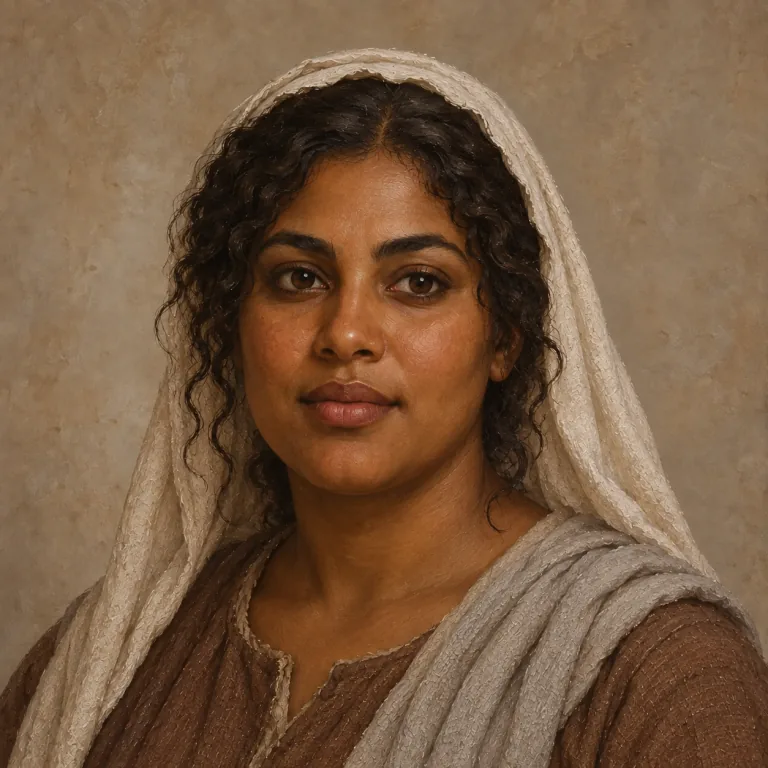
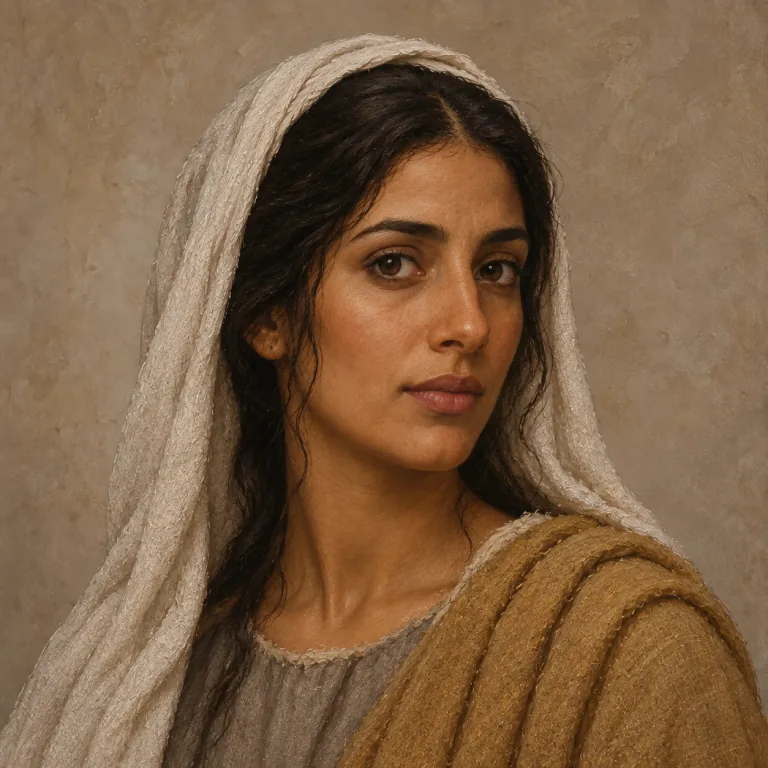
Portrait: an AI-generated artistic interpretation, not evidence of how Hoglah looked.
Who Hoglah is
Hoglah is named among the five daughters of Zelophehad, a Manassite who has no sons. With Mahlah, Noah, Milcah and Tirzah, she appears before Moses and the assembled leaders to ask for an inheritance among her father's relatives. Their request is brought before the Lord and affirmed. The ruling transfers their father's inheritance to them and extends the succession rule to other cases where a man dies without a son. Later, the sisters bring the earlier command before Eleazar and Joshua, and the account states that an inheritance is given to them.
Cited passages: Numbers 26:33, Numbers 27:1, Numbers 27:2, Numbers 27:3, Numbers 27:4, Numbers 27:5, Numbers 27:6, Numbers 27:7, Numbers 27:8, Numbers 27:9, Numbers 27:10, Numbers 27:11, Joshua 17:3, Joshua 17:4, Joshua 17:5, Joshua 17:6
Historical setting
The petition is made at the entrance of the tent of meeting before Moses, Eleazar, the leaders and congregation. A later petition comes from leaders of the same ancestral family, concerned that the sisters' marriages could move land to another tribe. The resulting instruction allows choice within the father's tribal family. Hoglah is then named among the daughters who marry paternal cousins, leaving their inheritance within Manasseh. Neither petition assigns her an individual spokesman role.
Cited passages: Numbers 27:1, Numbers 27:2, Numbers 27:3, Numbers 27:4, Numbers 27:5, Numbers 27:6, Numbers 27:7, Numbers 36:1, Numbers 36:2, Numbers 36:3, Numbers 36:4, Numbers 36:5, Numbers 36:6, Numbers 36:7, Numbers 36:8, Numbers 36:9, Numbers 36:10, Numbers 36:11, Numbers 36:12
How the story is told
Hoglah's story is preserved through shared action and repeated naming. The first petition asks how the family can receive its inheritance; the second asks how that inheritance will stay with the tribe. Both receive an affirmative response followed by a rule. Joshua's allocation notice carries the first command into a later setting, giving the sisters' request a reported outcome beyond the original hearing.
Cited passages: Numbers 27:1, Numbers 27:2, Numbers 27:3, Numbers 27:4, Numbers 27:5, Numbers 27:6, Numbers 27:7, Numbers 27:8, Numbers 27:9, Numbers 27:10, Numbers 27:11, Numbers 36:1, Numbers 36:2, Numbers 36:3, Numbers 36:4, Numbers 36:5, Numbers 36:6, Numbers 36:7, Numbers 36:8, Numbers 36:9, Numbers 36:10, Numbers 36:11, Numbers 36:12, Joshua 17:3, Joshua 17:4, Joshua 17:5, Joshua 17:6
Story moments
- Hoglah approaches with her sisters (Numbers 27:1). Hoglah is named as the daughters come to present their claim.
- The claim is upheld (Numbers 27:7). The Lord declares that the daughters speak rightly.
- Inheritance within Manasseh (Numbers 36:12). The marriage report states that their inheritance remains in their father's tribal family.
Key passages
Numbers 26:33
And Zelophehad the son of Hepher had no sons, but daughters: and the names of the daughters of Zelophehad were Mahlah, and Noah, Hoglah, Milcah, and Tirzah.
Numbers 27:1
Then came the daughters of Zelophehad, the son of Hepher, the son of Gilead, the son of Machir, the son of Manasseh, of the families of Manasseh the son of Joseph: and these are the names of his daughters; Mahlah, Noah, and Hoglah, and Milcah, and Tirzah.
Numbers 36:11
For Mahlah, Tirzah, and Hoglah, and Milcah, and Noah, the daughters of Zelophehad, were married unto their father’s brothers’ sons:
Joshua 17:3
But Zelophehad, the son of Hepher, the son of Gilead, the son of Machir, the son of Manasseh, had no sons, but daughters: and these are the names of his daughters, Mahlah, and Noah, Hoglah, Milcah, and Tirzah.
King James Version. 4 indexed passages in total.
For reflection
What do the two inheritance petitions ask the community to consider at different scales? How does the later allocation affect your reading of the original request?
Books Hoglah appears in
Related people

Names and references are adapted from STEPBible TIPNR. A person listed with a verse is named or indexed there; it does not mean they wrote or spoke it.