Person in the Old and New Testaments
Sarah
Sarah: Abraham's wife, barren until Isaac, buried at Machpelah
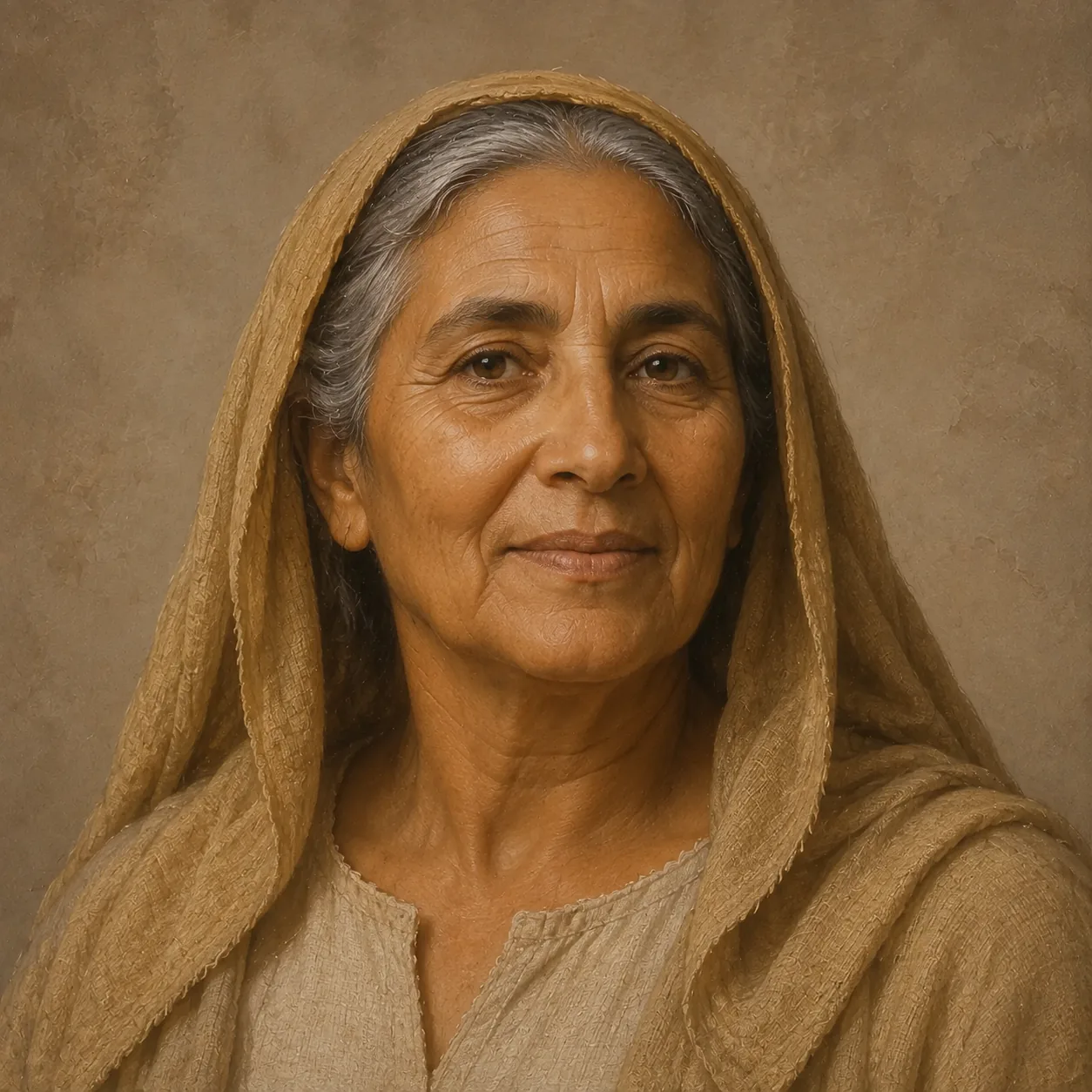
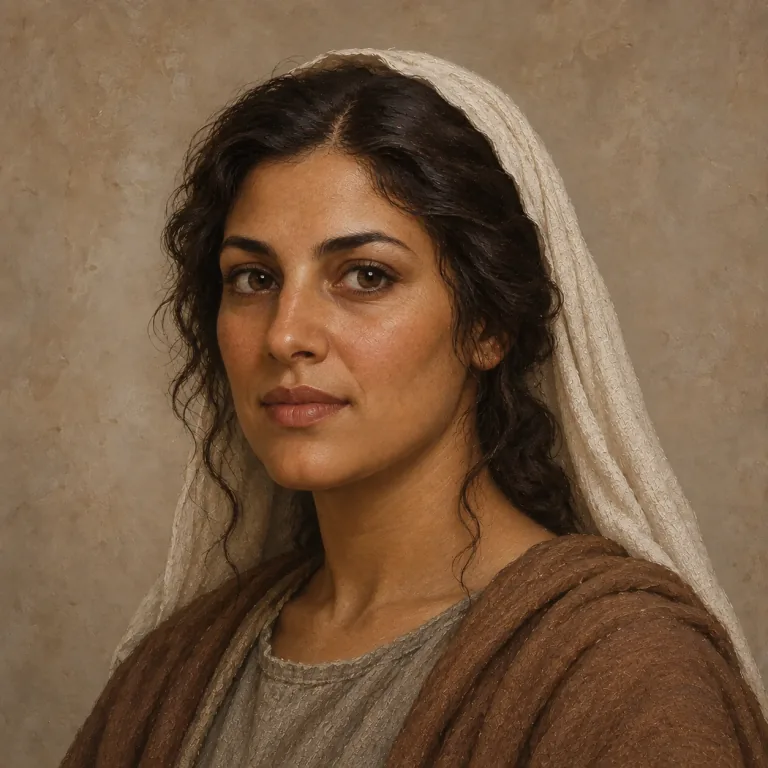
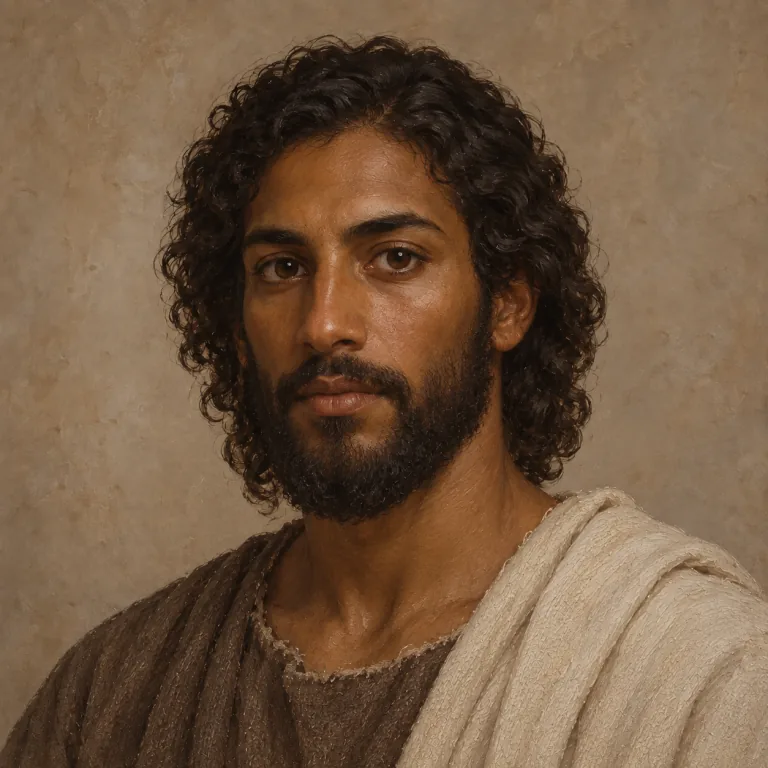
Portrait: an AI-generated artistic interpretation, not evidence of how Sarah looked.
Who Sarah is
Sarai is named as Abram's wife in the generations of Terah, and the narrator adds at once that she is barren. She travels with Terah and Abram from Ur to Haran and then with Abram into Canaan. Near Egypt Abram asks her to say she is his sister; she is taken into Pharaoh's house, the Lord plagues Pharaoh because of her, and Pharaoh sends them away. Childless after ten years in Canaan, Sarai gives her Egyptian maid Hagar to Abram as a wife, then complains to Abram when the pregnant Hagar despises her, and deals hardly with her so that she flees. God renames her Sarah, promises Abraham a son by her and calls her a mother of nations; Abraham laughs. At Mamre three men ask for her, and one says she will have a son; Sarah, listening at the tent door, laughs within herself, is challenged by the Lord, and denies laughing. In Gerar Abraham again calls her his sister, Abimelech takes her, God warns him in a dream, and he restores her with gifts and a rebuke. The Lord visits Sarah as he said; she bears Isaac, says God has made her laugh, and later demands that Abraham cast out the bondwoman and her son, which God tells him to do. Sarah dies at one hundred twenty-seven in Kirjath-arba, Abraham mourns her and buys the cave of Machpelah, and buries her there. Later verses recall her tent, her burial and her bearing a son in old age. Isaiah names her; Romans, Hebrews and 1 Peter cite her as Sara.
Cited passages: Genesis 11:29, Genesis 11:30, Genesis 11:31, Genesis 12:5, Genesis 12:13, Genesis 12:15, Genesis 12:17, Genesis 16:3, Genesis 16:5, Genesis 16:6, Genesis 17:15, Genesis 17:16, Genesis 17:17, Genesis 18:9, Genesis 18:10, Genesis 18:12, Genesis 18:15, Genesis 20:2, Genesis 20:14, Genesis 20:16, Genesis 21:1, Genesis 21:6, Genesis 21:10, Genesis 21:12, Genesis 23:1, Genesis 23:2, Genesis 23:19, Genesis 24:67, Genesis 24:36, Genesis 49:31, Isaiah 51:2, Romans 4:19, Hebrews 11:11, 1 Peter 3:6, Genesis 18:2, Genesis 18:1
Historical setting
The text calls her Sarai from Genesis 11 until God renames her Sarah in chapter 17, and the narrator uses Sarah from then on. Her parentage is not given in the genealogy of chapter 11; the only statement about it is Abraham's own claim to Abimelech that she is the daughter of his father but not of his mother, which the narrator neither confirms nor repeats. Her age is stated twice, ninety in Abraham's laughter and one hundred twenty-seven at death, and the text gives her death and burial a whole chapter. The sister claim is made twice, in Egypt and in Gerar; Abimelech says Sarah herself said he is my brother, and Abraham says he asked this of her at every place. Genesis does not record what happened to her in Pharaoh's house beyond her being taken and restored, and says of Abimelech that he had not come near her. Her words are few: her proposal and complaint about Hagar, her inward laugh, her denial, her two sayings at Isaac's birth, and her demand about the bondwoman. The New Testament references are later readings. Romans cites the deadness of Sara's womb and quotes the promise that Sara shall have a son. Hebrews says she received strength to conceive because she judged him faithful who had promised, a reading that goes beyond the Genesis scene, where she laughs and denies. 1 Peter cites her calling Abraham lord; in Genesis that word is her phrase my lord in the inward laugh. Isaiah names Sarah that bare you beside Abraham. Her name is spelled Sara in Romans, Hebrews and 1 Peter.
Cited passages: Genesis 17:15, Genesis 11:29, Genesis 20:12, Genesis 17:17, Genesis 23:1, Genesis 20:5, Genesis 20:13, Genesis 12:19, Genesis 20:4, Genesis 16:2, Genesis 18:12, Genesis 21:7, Romans 4:19, Romans 9:9, Hebrews 11:11, Genesis 18:15, 1 Peter 3:6, Isaiah 51:2
How the story is told
The narrator introduces Sarai with barrenness in the same breath as her name, and the whole account moves toward the reversal of that sentence: the Lord visited Sarah as he had said. Two sister-wife episodes frame the promise of a son, each ending with a foreign king asking Abraham what he has done. Laughter is the thread of the middle chapters. Abraham laughs at the promise, Sarah laughs within herself and denies it, the Lord answers Nay; but thou didst laugh, and at Isaac's birth Sarah says God has made her laugh so that all who hear will laugh with her. In the Hagar scenes Sarah's speech drives Abram's action, and God's word to Abraham, hearken unto her voice, gives her demand the final authority in chapter 21. Chapter 23 gives her death a whole chapter, spent on Abraham's negotiation for a burying place, so her burial place is the field and cave the sons of Heth make sure to Abraham as a possession. Her tent is the place Isaac brings Rebekah, her bearing a son in old age is recalled by Abraham's servant, and the burial place is named again at Abraham's death and in Jacob's last instructions. The later writers use her differently: Isaiah as an ancestor to look to, Romans as evidence of promise over nature, Hebrews as an example of faith, and 1 Peter as a model of conduct.
Cited passages: Genesis 11:30, Genesis 21:1, Genesis 12:18, Genesis 20:9, Genesis 17:17, Genesis 18:13, Genesis 18:15, Genesis 21:6, Genesis 16:2, Genesis 21:12, Genesis 23:4, Genesis 23:20, Genesis 24:67, Genesis 25:10, Genesis 49:31, Isaiah 51:2, Romans 9:9, Hebrews 11:11, 1 Peter 3:5
Story moments
- Sarai was barren (Genesis 11:30). The narrator introduces Abram's wife and says at once that she has no child.
- Taken into Pharaoh's house (Genesis 12:15). After Abram calls her his sister, Pharaoh's princes commend her and she is taken.
- Hagar given to Abram (Genesis 16:3). Sarai gives her Egyptian maid to Abram as a wife after ten years in Canaan.
- Renamed Sarah (Genesis 17:15). God tells Abraham to call her Sarah, not Sarai, and promises a son by her.
- Sarah laughs in the tent door (Genesis 18:12). Hearing that she will have a son, Sarah laughs within herself at her age.
- Isaac is born (Genesis 21:2). Sarah conceives and bears Abraham a son at the set time God had spoken.
- Death at Kirjath-arba (Genesis 23:2). Sarah dies at one hundred twenty-seven and Abraham comes to mourn and weep for her.
Key passages
Genesis 11:29
And Abram and Nahor took them wives: the name of Abram’s wife was Sarai; and the name of Nahor’s wife, Milcah, the daughter of Haran, the father of Milcah, and the father of Iscah.
Genesis 11:30
But Sarai was barren; she had no child.
Genesis 11:31
And Terah took Abram his son, and Lot the son of Haran his son’s son, and Sarai his daughter in law, his son Abram’s wife; and they went forth with them from Ur of the Chaldees, to go into the land of Canaan; and they came unto Haran, and dwelt there.
Genesis 12:5
And Abram took Sarai his wife, and Lot his brother’s son, and all their substance that they had gathered, and the souls that they had gotten in Haran; and they went forth to go into the land of Canaan; and into the land of Canaan they came.
Genesis 12:11
And it came to pass, when he was come near to enter into Egypt, that he said unto Sarai his wife, Behold now, I know that thou art a fair woman to look upon:
Genesis 12:17
And the Lord plagued Pharaoh and his house with great plagues because of Sarai Abram’s wife.
King James Version. 48 indexed passages in total.
For reflection
Sarah laughs at the promise, denies it out of fear, and later says God has made her laugh. What changes between the first laugh and the last, and does the text let the reader decide whether the first one was wrong?
Books Sarah appears in
Related people
Names and references are adapted from STEPBible TIPNR. A person listed with a verse is named or indexed there; it does not mean they wrote or spoke it.