Person in the Old and New Testaments
Hagar
Hagar: the Egyptian handmaid who bore Ishmael and was sent away
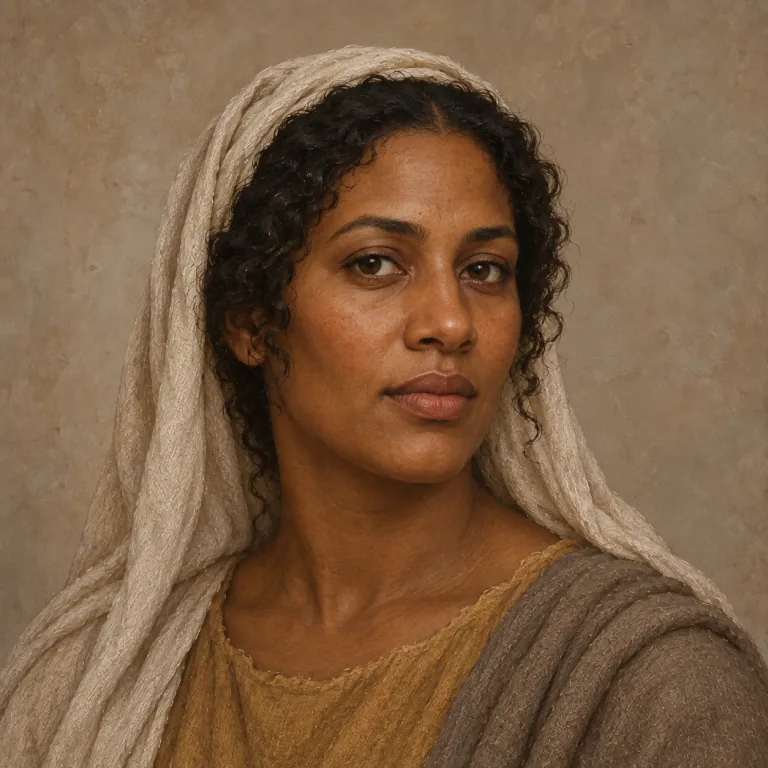
Portrait: an AI-generated artistic interpretation, not evidence of how Hagar looked.
Who Hagar is
Hagar is Sarai's Egyptian handmaid. Sarai, who has borne no children, gives her to Abram as a wife after ten years in Canaan. Hagar conceives, and her mistress is despised in her eyes. Sarai complains to Abram, who says the maid is in her hand; Sarai deals hardly with her and she flees. The angel of the Lord finds her by a fountain in the way to Shur, calls her Sarai's maid and asks whence she came and whither she goes; she says she flees from her mistress. The angel tells her to return and submit, promises to multiply her seed beyond counting, and says she will bear a son named Ishmael because the Lord has heard her affliction, a wild man with his hand against every man. Hagar names the Lord who spoke to her Thou God seest me, and the well is called Beer-lahai-roi. She bears Abram a son, and Abram, then eighty-six, names him Ishmael. After Isaac is weaned, Sarah sees Hagar's son mocking and demands that the bondwoman and her son be cast out. God tells Abraham to listen to Sarah and promises to make the bondwoman's son a nation. Abraham rises early, gives Hagar bread and a bottle of water, and sends her away. She wanders in the wilderness of Beer-sheba, and when the water is spent she casts the child under a shrub, sits a bowshot away so as not to see him die, and weeps. God hears the lad's voice, the angel of God calls to Hagar from heaven, and God opens her eyes to a well. The lad grows in the wilderness of Paran and his mother takes him a wife from Egypt. Genesis 25 names her again as Ishmael's mother. Galatians later reads her as Agar in an allegory of two covenants.
Cited passages: Genesis 16:1, Genesis 16:2, Genesis 16:3, Genesis 16:4, Genesis 16:6, Genesis 16:7, Genesis 16:8, Genesis 16:9, Genesis 16:10, Genesis 16:11, Genesis 16:12, Genesis 16:13, Genesis 16:14, Genesis 16:15, Genesis 16:16, Genesis 21:9, Genesis 21:10, Genesis 21:13, Genesis 21:14, Genesis 21:15, Genesis 21:16, Genesis 21:17, Genesis 21:19, Genesis 21:21, Genesis 25:12, Galatians 4:24
Historical setting
The text establishes that Hagar is Egyptian, Sarai's handmaid, given to Abram as a wife by Sarai, and the mother of Ishmael. Genesis 16 calls her wife once and maid or handmaid otherwise; chapter 21 calls her bondwoman in Sarah's and God's speech and Hagar in the narrator's. Nothing is said about how she came to Sarai's household. In chapter 16 the speaker is the angel of the Lord, and Hagar herself names the Lord that spake unto her; in chapter 21 God hears the lad and the angel of God calls out of heaven. Ishmael's name is announced by the angel and given by Abram; in chapter 21 the son is not named, only called the child and the lad. Abram is eighty-six at Ishmael's birth, and Ishmael is thirteen when circumcised; chapter 21 gives no age for him at the sending away. What Sarah saw is printed as mocking, without further description. Genesis does not record Hagar's death or any later return to Abraham's house; the last note is that she took a wife for her son out of Egypt. Genesis 25 identifies her again as Hagar the Egyptian, Sarah's handmaid. Galatians is a later citation. It spells her Agar, says Abraham had two sons, one by a bondmaid and one by a freewoman, declares the story an allegory of two covenants, and cites as scripture the words cast out the bondwoman and her son, in wording close to but not the same as Sarah's at Genesis 21:10. That reading belongs to Paul's argument and is not part of the Genesis narrative.
Cited passages: Genesis 16:1, Genesis 16:3, Genesis 21:10, Genesis 21:12, Genesis 16:7, Genesis 16:13, Genesis 21:17, Genesis 16:11, Genesis 16:15, Genesis 21:18, Genesis 16:16, Genesis 17:25, Genesis 21:9, Genesis 21:21, Genesis 25:12, Galatians 4:22, Galatians 4:25, Galatians 4:30, Galatians 1:1
How the story is told
Hagar's two scenes are built as a pair. In both she leaves Sarai's household, once by flight and once by being sent, and in both a messenger from God speaks to her in the wilderness and asks her a question, whence camest thou and what aileth thee, with water in each scene, a fountain in the first and a well in the second. In both a promise about her son follows, seed not to be numbered and a great nation. The first ends with her naming God as the one who sees her; the second with God opening her eyes to see a well. Hearing runs through her story: Ishmael's name is explained by the Lord hearing her affliction, and in chapter 21 God hears the voice of the lad. The narrator gives Hagar direct speech at the fountain and in the wilderness, and gives her the act of naming the Lord, while in chapter 21 she is spoken about by Sarah as this bondwoman without being named by her. The scene of her sitting a bowshot from the child, refusing to watch him die, is told plainly and at length. In Galatians the bondmaid and the freewoman become two covenants, and Paul quotes the demand to cast out the bondwoman as scripture speaking, so Hagar's story is read there for its contrast with the freewoman rather than for what happens to her.
Cited passages: Genesis 16:6, Genesis 21:14, Genesis 16:8, Genesis 21:17, Genesis 16:10, Genesis 21:18, Genesis 16:13, Genesis 21:19, Genesis 16:11, Genesis 21:10, Genesis 21:16, Galatians 4:24, Galatians 4:30, Galatians 4:31
Story moments
- Given to Abram as a wife (Genesis 16:3). Sarai gives her Egyptian maid Hagar to Abram after ten years in Canaan.
- Found at the fountain (Genesis 16:7). Having fled from Sarai, Hagar is found by the angel of the Lord at a fountain in the way to Shur.
- Thou God seest me (Genesis 16:13). Hagar names the Lord who spoke to her as the God who sees her.
- Ishmael is born (Genesis 16:15). Hagar bears Abram a son and Abram names him Ishmael.
- Sent away with bread and water (Genesis 21:14). Abraham gives Hagar bread and a bottle of water and sends her and the child away.
- Weeping a bowshot away (Genesis 21:16). With the water gone, Hagar sits apart from the child so as not to see him die, and weeps.
- God opens her eyes (Genesis 21:19). God opens Hagar's eyes to a well and she gives the lad drink.
Key passages
Genesis 16:1
Now Sarai Abram’s wife bare him no children: and she had an handmaid, an Egyptian, whose name was Hagar.
Genesis 16:3
And Sarai Abram’s wife took Hagar her maid the Egyptian, after Abram had dwelt ten years in the land of Canaan, and gave her to her husband Abram to be his wife.
Genesis 16:4
And he went in unto Hagar, and she conceived: and when she saw that she had conceived, her mistress was despised in her eyes.
Genesis 16:8
And he said, Hagar, Sarai’s maid, whence camest thou? and whither wilt thou go? And she said, I flee from the face of my mistress Sarai.
Genesis 16:15
And Hagar bare Abram a son: and Abram called his son’s name, which Hagar bare, Ishmael.
Genesis 16:16
And Abram was fourscore and six years old, when Hagar bare Ishmael to Abram.
King James Version. 12 indexed passages in total.
For reflection
The angel tells Hagar to return and submit to the mistress who dealt hardly with her, and in the same speech promises her descendants beyond counting. How does a reader hold those two instructions together, and what does the text leave unsaid about her return?
Books Hagar appears in
Related people

Names and references are adapted from STEPBible TIPNR. A person listed with a verse is named or indexed there; it does not mean they wrote or spoke it.