Person in the Old Testament
Phinehas
Phinehas: priestly lineage, zeal and an altar dispute
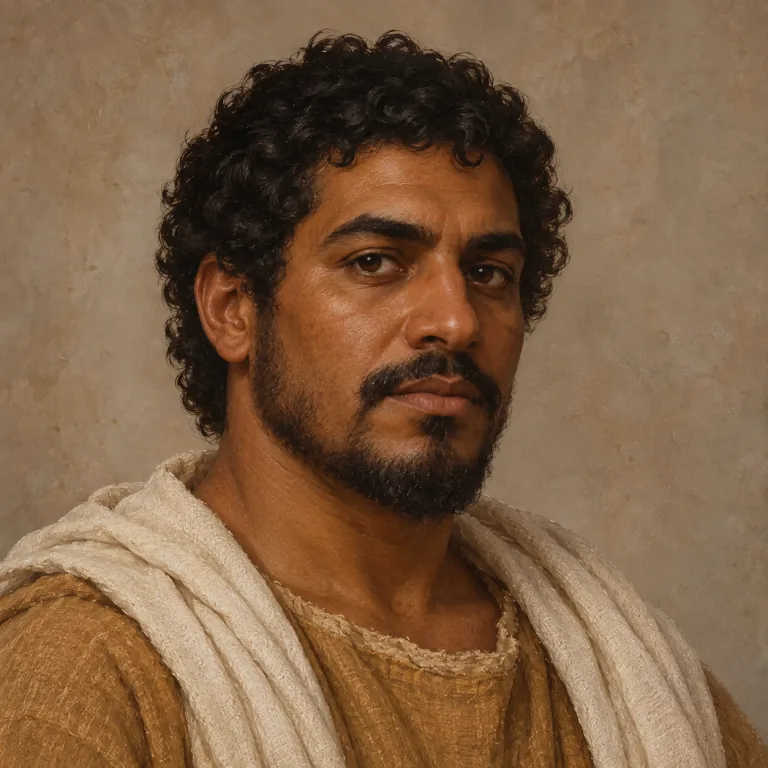
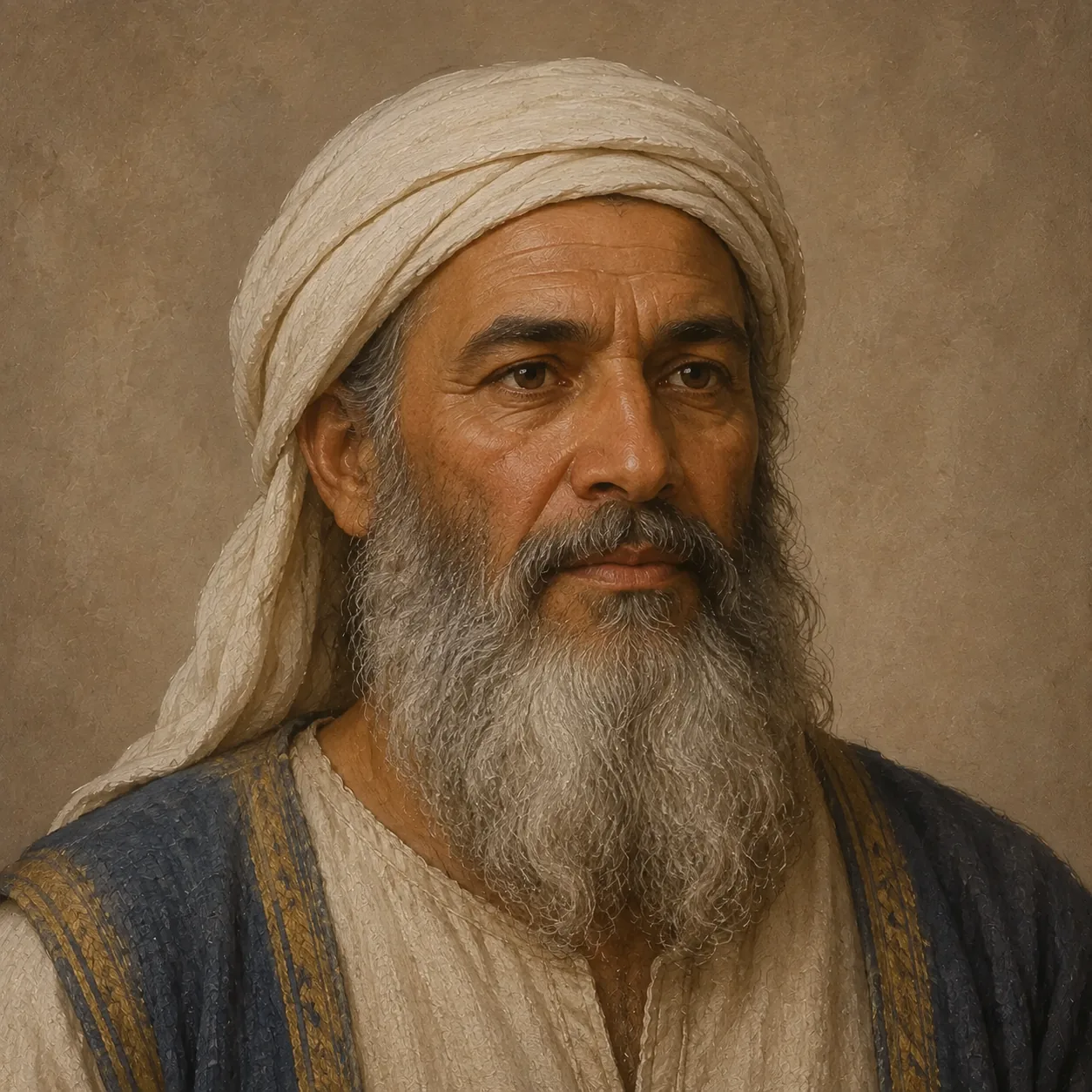
Portrait: an AI-generated artistic interpretation, not evidence of how Phinehas looked.
Who Phinehas is
Phinehas is Eleazar's son and Aaron's grandson; his mother is an unnamed daughter of Putiel. At Peor he takes a spear and kills an Israelite man and a Midianite woman, later named Zimri and Cozbi. Numbers says the plague stops and records God's declaration that Phinehas turned away wrath, followed by a covenant of peace and lasting priesthood for him and his descendants. Moses later sends him with the force against Midian, carrying sacred instruments and trumpets. In Joshua, Phinehas joins ten leaders sent to question the eastern tribes about an altar. After hearing that it is a witness rather than a rival place of sacrifice, he accepts their explanation and returns with the report; the threatened battle does not proceed.
Cited passages: Exodus 6:25, Numbers 25:7, Numbers 25:8, Numbers 25:11, Numbers 25:12, Numbers 25:13, Numbers 25:14, Numbers 25:15, Numbers 31:6, Joshua 22:12, Joshua 22:13, Joshua 22:14, Joshua 22:26, Joshua 22:27, Joshua 22:30, Joshua 22:31, Joshua 22:32, Joshua 22:33
Historical setting
The account names Phinehas by his father and grandfather, keeping him distinct from other people with the same name. Joshua records Eleazar's burial on land belonging to Phinehas. Judges places Phinehas before the ark when Israel seeks an answer about fighting Benjamin. Chronicles names Abishua as his son and remembers Phinehas as a ruler over the gatekeepers in an earlier time. Ezra's genealogy and the reference to sons of Phinehas concern his family line, not his personal presence in the return from Babylon. Psalm 106:30 also differs in wording: KJV and ASV say he executed judgment, while BBE says he made prayer for them.
Cited passages: Numbers 25:7, Joshua 24:33, Judges 20:26, Judges 20:27, Judges 20:28, 1 Chronicles 6:4, 1 Chronicles 6:50, 1 Chronicles 9:19, 1 Chronicles 9:20, Ezra 7:5, Ezra 7:6, Ezra 8:1, Ezra 8:2, Psalms 106:30
How the story is told
Peor is remembered within the later altar dispute: the delegation recalls the plague while questioning the eastern tribes. The response changes the outcome. Phinehas declares that the alleged trespass has not occurred, and Israel welcomes the report instead of attacking. Numbers' account of killing and covenant, Joshua's account of inquiry and reconciliation, and the psalm's praise of Phinehas should each be read in their stated setting. The texts do not reduce every later question of faithfulness to the action at Peor.
Cited passages: Numbers 25:7, Numbers 25:8, Numbers 25:11, Numbers 25:12, Numbers 25:13, Joshua 22:16, Joshua 22:17, Joshua 22:21, Joshua 22:26, Joshua 22:27, Joshua 22:30, Joshua 22:31, Joshua 22:33, Psalms 106:30, Psalms 106:31
Story moments
- He kills the two people at Peor (Numbers 25:8). Phinehas follows them into the tent and kills them with the spear; the account says the plague stops.
- A covenant of peace is declared (Numbers 25:12). The Lord tells Moses to announce the covenant to Phinehas.
- He is sent with the force against Midian (Numbers 31:6). Phinehas accompanies the armed men with sacred instruments and trumpets.
- He accepts the explanation of the altar (Joshua 22:31). Phinehas says the eastern tribes have not committed the alleged trespass.
- He stands before the ark (Judges 20:28). The passage places him there when Israel seeks guidance about battle with Benjamin.
Key passages
Exodus 6:25
And Eleazar Aaron’s son took him one of the daughters of Putiel to wife; and she bare him Phinehas: these are the heads of the fathers of the Levites according to their families.
Numbers 25:7
And when Phinehas, the son of Eleazar, the son of Aaron the priest, saw it, he rose up from among the congregation, and took a javelin in his hand;
Numbers 25:11
Phinehas, the son of Eleazar, the son of Aaron the priest, hath turned my wrath away from the children of Israel, while he was zealous for my sake among them, that I consumed not the children of Israel in my jealousy.
Numbers 31:6
And Moses sent them to the war, a thousand of every tribe, them and Phinehas the son of Eleazar the priest, to the war, with the holy instruments, and the trumpets to blow in his hand.
Joshua 22:13
And the children of Israel sent unto the children of Reuben, and to the children of Gad, and to the half tribe of Manasseh, into the land of Gilead, Phinehas the son of Eleazar the priest,
Joshua 22:30
And when Phinehas the priest, and the princes of the congregation and heads of the thousands of Israel which were with him, heard the words that the children of Reuben and the children of Gad and the children of Manasseh spake, it pleased them.
King James Version. 16 indexed passages in total.
For reflection
How does hearing the eastern tribes' explanation affect Phinehas's response to the altar, and why does that outcome matter when reading his story?
Books Phinehas appears in
Related people


Names and references are adapted from STEPBible TIPNR. A person listed with a verse is named or indexed there; it does not mean they wrote or spoke it.