Person in the New Testament
Philip the apostle
Philip the apostle: of Bethsaida, who told Nathanael to come and see
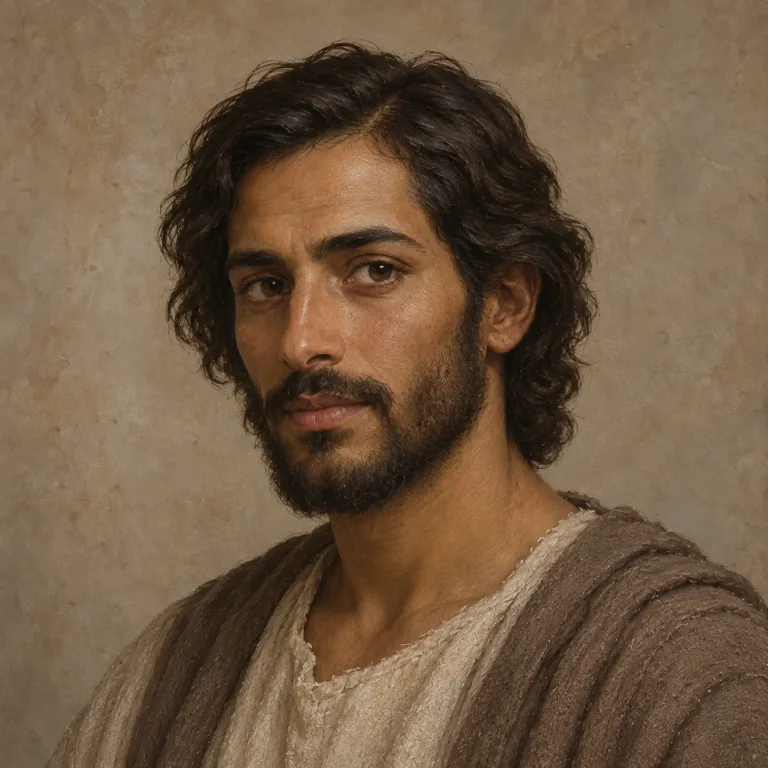
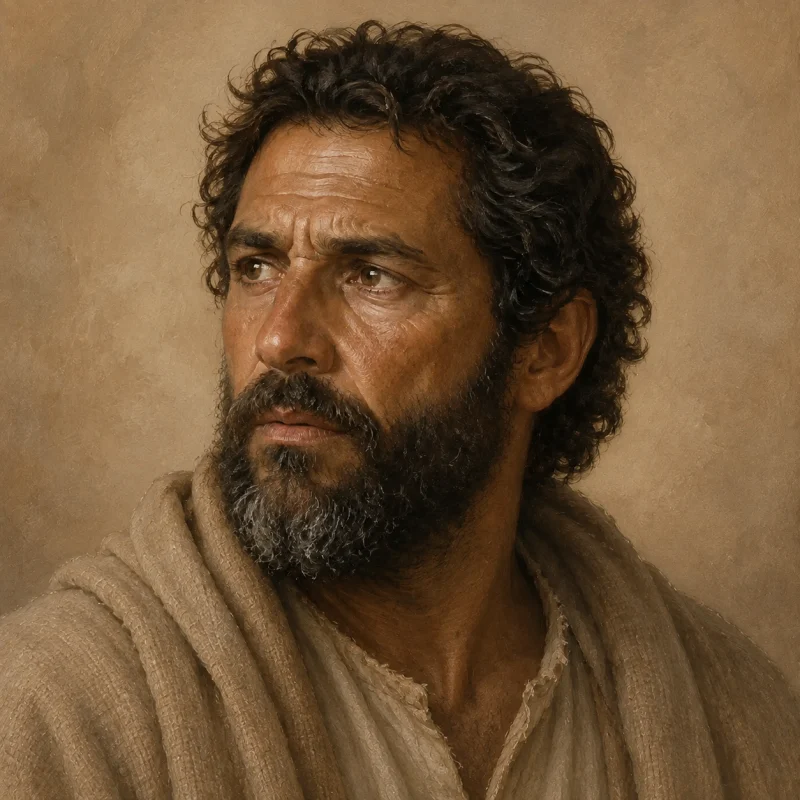
Portrait: an AI-generated artistic interpretation, not evidence of how Philip looked.
Who Philip is
Philip is named in the apostle lists of Matthew, Mark and Luke, always in the same run with Bartholomew, and in the upper room list in Acts. John supplies his scenes. Jesus, going into Galilee, finds Philip and tells him to follow, and John notes that Philip was of Bethsaida, the city of Andrew and Peter. Philip then finds Nathanael and says they have found the one Moses in the law and the prophets wrote of, Jesus of Nazareth the son of Joseph; when Nathanael asks whether any good thing can come out of Nazareth, Philip answers, come and see. Jesus later tells Nathanael he saw him under the fig tree before Philip called him. At the feeding of the great company Jesus asks Philip where bread can be bought, which John says was to prove him, and Philip answers that two hundred pennyworth would not give each a little. When Greeks at the feast come to Philip and say they would see Jesus, he tells Andrew, and the two of them tell Jesus. In the discourse before the arrest Philip asks him to show them the Father and says that will be enough, and Jesus asks how, after so long a time, he still asks that.
Cited passages: Matthew 10:3, Mark 3:18, Luke 6:14, John 1:43, John 1:44, John 1:45, John 1:46, John 1:48, John 6:5, John 6:6, John 6:7, John 12:20, John 12:21, John 12:22, John 14:8, John 14:9, Acts 1:13
Historical setting
More than one Philip appears in these books and they must not be run together. This one is the apostle in the lists and in John's scenes. Acts names a Philip among the men chosen when the multitude was pleased, reports that a Philip went down to the city of Samaria and preached Christ, and later speaks of Philip the evangelist, which was one of the seven. A third Philip is named only as Herod's brother, whose wife Herodias was. Of the apostle the text gives a home town, Bethsaida, and no family, trade or death. John alone records his words. The remark that Jesus asked him about bread to prove him is the narrator's own note, not an inference, and the text does not say what Philip thought when he answered.
Cited passages: Matthew 10:3, Luke 6:14, John 1:43, John 1:44, John 6:5, John 6:6, John 6:7, Acts 1:13, Acts 6:5, Acts 8:5, Acts 21:8, Mark 6:17
How the story is told
Philip's part in John is to stand between people and Jesus, and the passages keep testing how well he does it. He is found and told to follow, and immediately he finds someone else; when Nathanael objects, his reply is the same invitation he received, come and see. Later he is asked a question he cannot answer, and the narrator tells the reader in advance that the question was a test. The Greeks reach Jesus through him and Andrew together. The last exchange puts a request in his mouth that Jesus turns back into a question about how long he has been with them, so the figure who first said come and see is asked what he has seen.
Cited passages: John 1:43, John 1:45, John 1:46, John 1:48, John 6:5, John 6:6, John 6:7, John 12:21, John 12:22, John 14:8, John 14:9
Story moments
- Follow me (John 1:43). Jesus finds Philip on the way into Galilee and calls him.
- Come and see (John 1:46). He answers Nathanael’s objection about Nazareth with an invitation.
- A question to prove him (John 6:5). Jesus asks Philip where bread can be bought for the crowd.
- Two hundred pennyworth (John 6:7). Philip answers that the sum would not give each person a little.
- Greeks brought forward (John 12:22). He tells Andrew, and the two of them tell Jesus.
- Shew us the Father (John 14:8). Philip asks for something he says would be enough.
- In the upper room (Acts 1:13). Acts names him among those gathered after the ascension.
Key passages
Matthew 10:3
Philip, and Bartholomew; Thomas, and Matthew the publican; James the son of Alphaeus, and Lebbaeus, whose surname was Thaddaeus;
Mark 3:18
And Andrew, and Philip, and Bartholomew, and Matthew, and Thomas, and James the son of Alphaeus, and Thaddaeus, and Simon the Canaanite,
Luke 6:14
Simon, (whom he also named Peter,) and Andrew his brother, James and John, Philip and Bartholomew,
John 1:43
The day following Jesus would go forth into Galilee, and findeth Philip, and saith unto him, Follow me.
John 1:44
Now Philip was of Bethsaida, the city of Andrew and Peter.
John 1:45
Philip findeth Nathanael, and saith unto him, We have found him, of whom Moses in the law, and the prophets, did write, Jesus of Nazareth, the son of Joseph.
King James Version. 15 indexed passages in total.
For reflection
Philip answers Nathanael's objection with an invitation rather than an argument, and much later asks to be shown the Father. What do those two moments, set side by side, show about what he is asking for?
Books Philip appears in
Related people

Names and references are adapted from STEPBible TIPNR. A person listed with a verse is named or indexed there; it does not mean they wrote or spoke it.