Person in the Old Testament
Laban
Laban: Rebekah's brother who gave Jacob Leah and Rachel and pursued him to Gilead
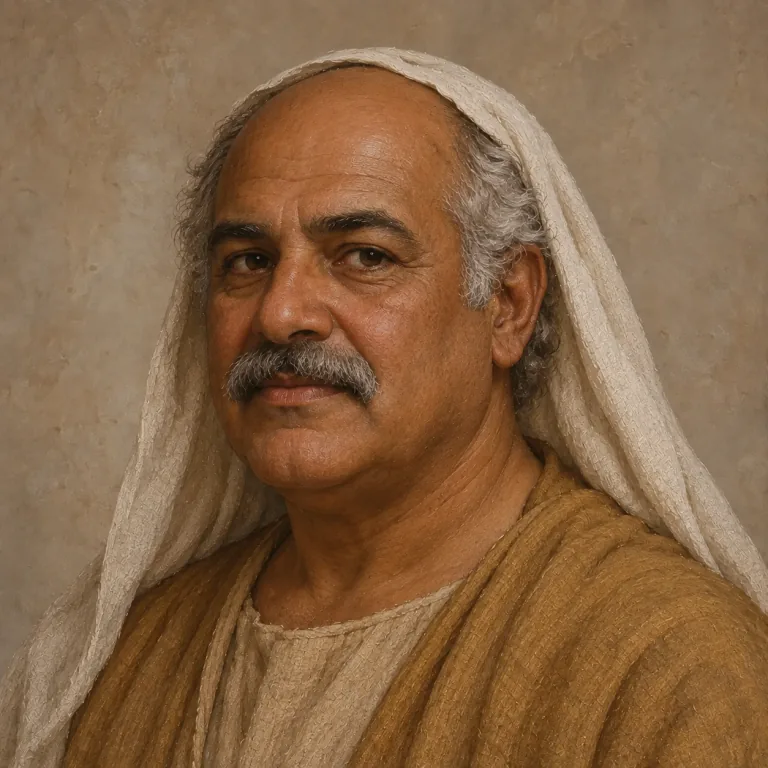
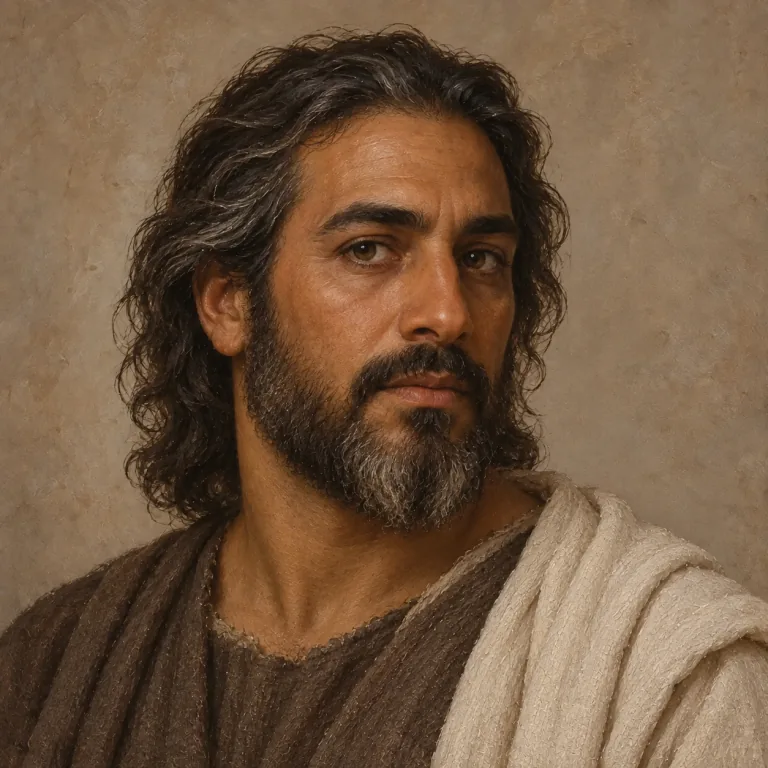
Portrait: an AI-generated artistic interpretation, not evidence of how Laban looked.
Who Laban is
Laban is Rebekah's brother. Seeing the gold on his sister and hearing her account, he runs to the well and brings Abraham's servant home. He and Bethuel say the matter proceeds from the Lord; the servant gives him and his mother precious things, and they ask that she stay a few days. Rebekah later sends Jacob to Laban in Haran, and Isaac directs him there for a wife. Jacob meets Rachel at a well; Laban runs to embrace him, calls him his bone and flesh, and after a month asks what his wages should be. Jacob offers seven years for Rachel. At the end he makes a feast and brings Leah to Jacob in the evening; in the morning he answers Jacob's protest by saying the younger is not given before the firstborn in their country, and gives Rachel too for seven more years. When Jacob asks to leave, Laban says the Lord has blessed him for Jacob's sake and agrees to a wage of speckled and spotted animals, then removes them and sets three days between the flocks. Jacob prospers, Laban's sons complain, his face changes, and Jacob flees with family and cattle while Laban shears sheep; Rachel steals her father's images. Laban pursues seven days, is warned by God in a dream not to speak good or bad to Jacob, overtakes him at Gilead, accuses him of stealing away and of stealing his gods, searches the tents without finding the images, and hears Jacob recount his twenty years. Laban claims the daughters, children and cattle as his, proposes a covenant, names the heap Jegar-sahadutha, and sets heap and pillar for witness. In the morning he kisses and blesses his sons and daughters and goes home.
Cited passages: Genesis 24:29, Genesis 24:30, Genesis 24:31, Genesis 24:50, Genesis 24:53, Genesis 24:55, Genesis 27:43, Genesis 28:2, Genesis 29:13, Genesis 29:14, Genesis 29:15, Genesis 29:18, Genesis 29:22, Genesis 29:23, Genesis 29:25, Genesis 29:26, Genesis 29:27, Genesis 29:29, Genesis 30:27, Genesis 30:34, Genesis 30:35, Genesis 30:36, Genesis 31:1, Genesis 31:2, Genesis 31:19, Genesis 31:23, Genesis 31:24, Genesis 31:26, Genesis 31:30, Genesis 31:34, Genesis 31:41, Genesis 31:43, Genesis 31:44, Genesis 31:47, Genesis 31:52, Genesis 31:55
Historical setting
The text calls him Rebekah's brother, the son of Bethuel the Syrian, and Laban the Syrian, and places his home at Haran; the servant's journey in chapter 24 goes to the city of Nahor. One verse has Jacob ask the shepherds about Laban the son of Nahor, while chapter 28 calls him son of Bethuel and chapter 22 makes Bethuel a son of Nahor; the text does not explain the phrasing in 29:5. His father Bethuel speaks with him in chapter 24 but is absent from chapters 29 to 31, where Laban alone rules the household; the text does not say what became of Bethuel. Laban has two daughters, Leah and Rachel, and sons who are mentioned but not named. The narrator never calls Laban a deceiver; that word is not the text's. The charges of deception are spoken by Jacob, who asks wherefore then hast thou beguiled me and tells his wives that their father deceived him and changed his wages ten times, and by Rachel and Leah, who say he has sold them. Laban's own explanation for the substitution is a custom of his country, and the narrator does not rule on it. The text records that God warned Laban in a dream and that Laban repeated that warning to Jacob. The narrator says Rachel stole the images that were her father's, and Laban asks why his gods were stolen; he searches and does not find them. Chapter 46 later notes that Laban gave Zilpah and Bilhah to his daughters. No New Testament passage in this source names him, and Genesis gives no account of his death.
Cited passages: Genesis 24:29, Genesis 28:5, Genesis 25:20, Genesis 29:4, Genesis 24:10, Genesis 29:5, Genesis 22:23, Genesis 24:50, Genesis 29:16, Genesis 31:1, Genesis 29:25, Genesis 31:7, Genesis 31:15, Genesis 29:26, Genesis 31:29, Genesis 31:19, Genesis 31:35, Genesis 46:18, Genesis 46:25
How the story is told
Laban enters both his scenes running: he runs to the well when he sees the gold on his sister, and he runs to meet Jacob when he hears the news. The narrator places the sight of the earring and bracelets before Laban's welcome without comment, and lets the reader weigh the order. His words are warm, thou blessed of the Lord and my bone and my flesh, and his acts follow with terms, wages, seven years, then seven more, with Jacob saying later that the wage was changed ten times. The wedding-night substitution is told through Jacob's morning discovery, behold, it was Leah, so that Jacob, who had gone to his father as Esau, now receives the elder in place of the younger. Laban's line about the firstborn and the younger echoes the oracle to Rebekah and the blessing scene. In chapter 30 Laban agrees to Jacob's terms in a single sentence and then removes the animals in question, and the narrator reports both acts side by side. The pursuit in chapter 31 gives Laban his longest speeches, in which he describes the farewell he would have given, with songs, tabret and harp, and claims everything in sight as his own, before settling for a covenant of witness. The two names for the heap, one from each man, mark the parting. Laban's last act is to kiss and bless, and the narrator sends him back to his place; after that he is named only in passing.
Cited passages: Genesis 24:29, Genesis 29:13, Genesis 24:30, Genesis 24:31, Genesis 29:14, Genesis 29:15, Genesis 29:25, Genesis 27:19, Genesis 29:26, Genesis 25:23, Genesis 30:34, Genesis 30:35, Genesis 31:27, Genesis 31:43, Genesis 31:48, Genesis 31:47, Genesis 31:55
Story moments
- Laban runs to the well (Genesis 24:29). Seeing the gold on his sister and hearing her words, Laban runs out to Abraham's servant.
- The thing proceedeth from the Lord (Genesis 24:50). Laban and Bethuel say they cannot speak bad or good and give Rebekah to go.
- My bone and my flesh (Genesis 29:14). Laban embraces Jacob, calls him his bone and flesh, and keeps him a month.
- Leah in place of Rachel (Genesis 29:23). On the wedding evening Laban brings Leah to Jacob instead of Rachel.
- The younger before the firstborn (Genesis 29:26). Laban explains the substitution as the custom of his country.
- Warned in a dream (Genesis 31:24). God tells Laban in a dream not to speak to Jacob either good or bad.
- A heap of witness (Genesis 31:48). Laban declares the heap a witness between himself and Jacob and returns home the next morning.
Key passages
Genesis 24:29
And Rebekah had a brother, and his name was Laban: and Laban ran out unto the man, unto the well.
Genesis 24:50
Then Laban and Bethuel answered and said, The thing proceedeth from the Lord: we cannot speak unto thee bad or good.
Genesis 25:20
And Isaac was forty years old when he took Rebekah to wife, the daughter of Bethuel the Syrian of Padan-aram, the sister to Laban the Syrian.
Genesis 27:43
Now therefore, my son, obey my voice; and arise, flee thou to Laban my brother to Haran;
Genesis 28:2
Arise, go to Padan-aram, to the house of Bethuel thy mother’s father; and take thee a wife from thence of the daughters of Laban thy mother’s brother.
Genesis 28:5
And Isaac sent away Jacob: and he went to Padan-aram unto Laban, son of Bethuel the Syrian, the brother of Rebekah, Jacob’s and Esau’s mother.
King James Version. 46 indexed passages in total.
For reflection
Laban answers Jacob's protest with a custom of his country, that the younger is not given before the firstborn. Jacob had lately won a blessing by calling himself the firstborn. What does that echo do to a reader's sympathy for either man?
Books Laban appears in
Related people



Names and references are adapted from STEPBible TIPNR. A person listed with a verse is named or indexed there; it does not mean they wrote or spoke it.