Person in the Old and New Testaments
Adam
Adam: the garden, responsibility and the return to dust
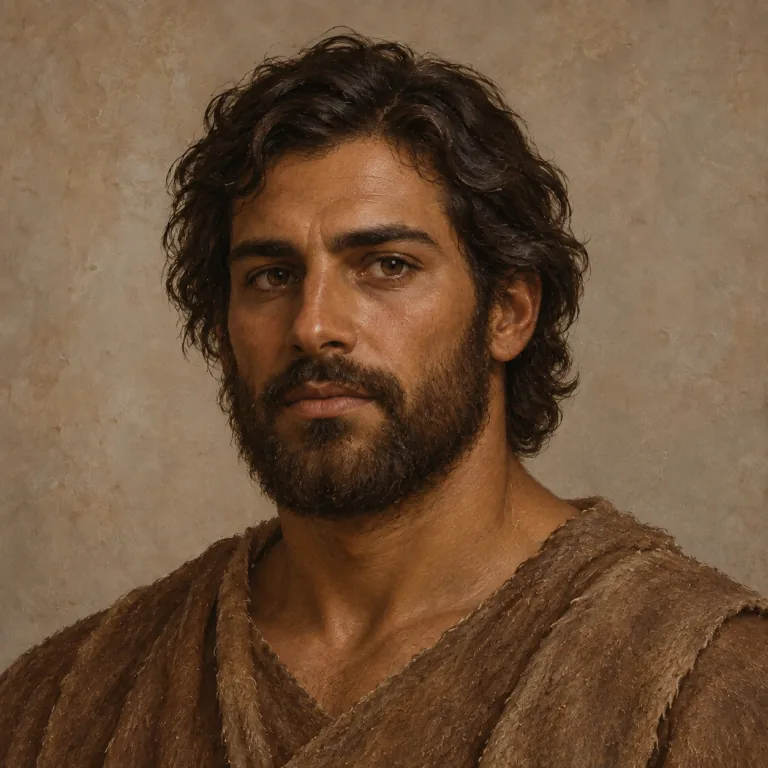
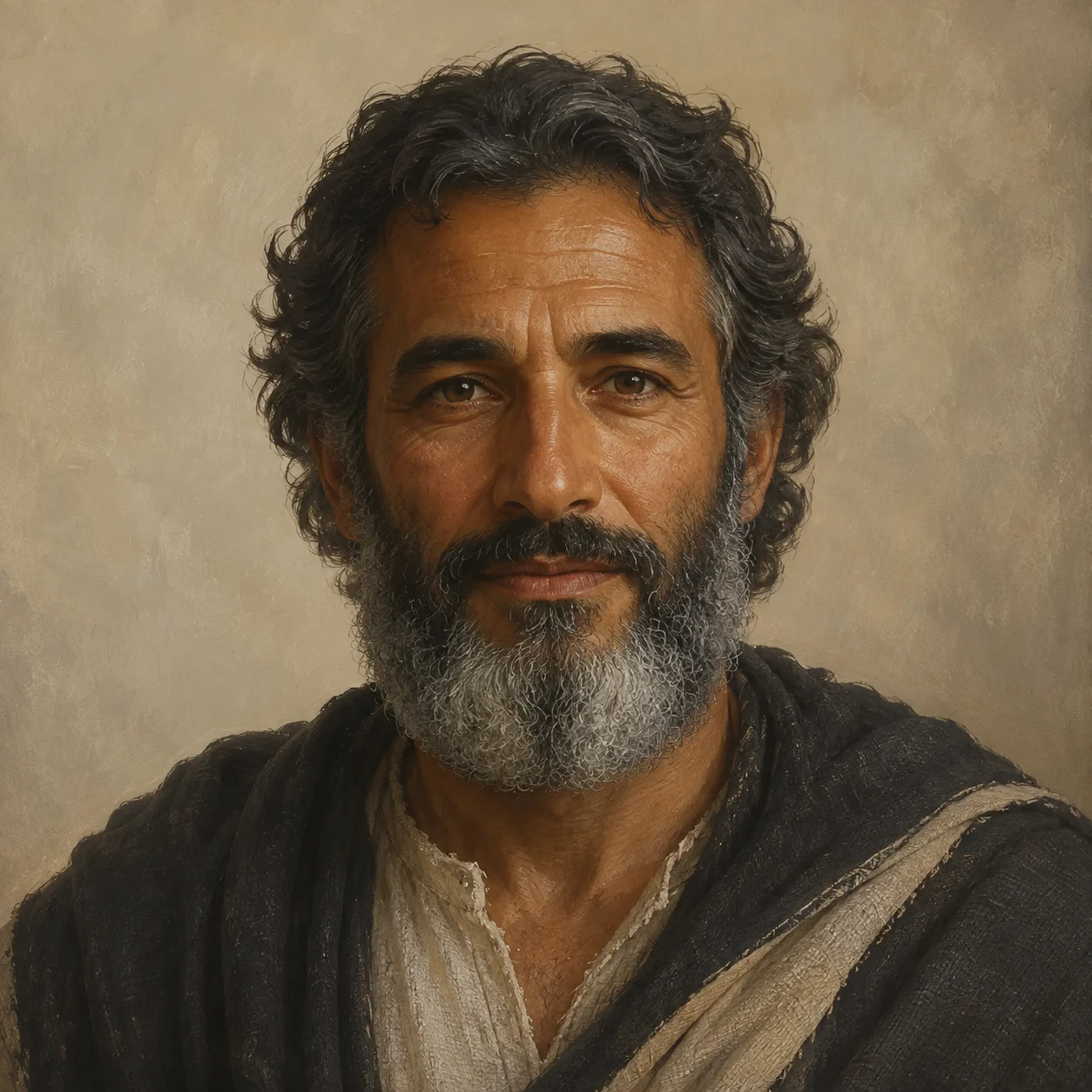
Portrait: an AI-generated artistic interpretation, not evidence of how Adam looked.
Who Adam is
Adam is the man at the centre of Genesis' garden story. The Lord God forms him from dust, gives him breath and places him in Eden to tend and keep it. He receives permission to eat from the garden with one prohibition, concerning the tree of the knowledge of good and evil. He names the animals, finds no corresponding helper among them, and recognizes the woman formed from his rib as his own flesh and bone. When she gives him the tree's fruit, he eats. The pair cover themselves and hide; questioned by God, Adam admits eating while pointing to the woman God gave him. The judgment names painful toil, a resistant ground and eventual return to dust. Adam names his wife Eve, and God clothes them before sending the man out and guarding the way to the tree of life. Genesis names Cain, Abel and Seth among their children, with further sons and daughters in the genealogy. Adam's age at Seth's birth is given as 130, and his total life as 930 years. The text does not describe his response to Abel's killing or give a creation-year date for his life.
Cited passages: Genesis 2:7, Genesis 2:8, Genesis 2:9, Genesis 2:15, Genesis 2:16, Genesis 2:17, Genesis 2:18, Genesis 2:19, Genesis 2:20, Genesis 2:21, Genesis 2:22, Genesis 2:23, Genesis 2:24, Genesis 2:25, Genesis 3:6, Genesis 3:7, Genesis 3:8, Genesis 3:9, Genesis 3:10, Genesis 3:11, Genesis 3:12, Genesis 3:17, Genesis 3:18, Genesis 3:19, Genesis 3:20, Genesis 3:21, Genesis 3:22, Genesis 3:23, Genesis 3:24, Genesis 4:1, Genesis 4:2, Genesis 4:8, Genesis 4:25, Genesis 5:1, Genesis 5:2, Genesis 5:3, Genesis 5:4, Genesis 5:5
Historical setting
The opening creation account speaks of humanity, male and female, in God's image. The garden account often calls its central figure the man: where the KJV names Adam in Genesis 2:19–23, the ASV usually uses man. Genesis 5:2 even applies Adam to male and female together in KJV and ASV, while BBE says Man. Deuteronomy 32:8 uses sons of Adam for the human groups divided among nations; ASV and BBE render children of men. That reference does not place Adam in Moses' time. Other apparent references require care: Job 31:33 compares concealed wrongdoing with Adam in KJV/ASV, while BBE omits that comparison; Hosea 6:7 has like men in KJV, like Adam in ASV and like a man in BBE. These are speeches and comparisons, not additional narrated incidents in his life. First Chronicles begins its genealogy with Adam, Luke's genealogy reaches back to him and then to God, and Jude locates Enoch as seventh from Adam.
Cited passages: Genesis 1:26, Genesis 1:27, Genesis 1:28, Genesis 2:19, Genesis 2:20, Genesis 2:21, Genesis 2:22, Genesis 2:23, Genesis 5:1, Genesis 5:2, Deuteronomy 32:8, Job 31:33, Hosea 6:7, 1 Chronicles 1:1, Luke 3:23, Luke 3:38, Jude 1:14
How the story is told
Dust frames Adam's story: it is the material from which he is formed and the destination named in the judgment. Work begins before disobedience, but the later sentence makes toil painful and the ground resistant. The movement from unashamed nakedness to covering and hiding marks the changed relationship; Adam's answer both admits the act and directs attention toward the woman and the giver. Later writings use him for distinct arguments. Romans 5 contrasts the disobedience and death associated with Adam with righteousness and life through Christ. First Corinthians 15 calls him the first man and contrasts the living soul from earth with the last Adam, a life-giving spirit, in its argument about resurrection. First Timothy 2 invokes Adam's prior formation and says he was not deceived while using Eve's deception in its restrictions on women's teaching and authority. Those are the later texts' interpretations of the opening story; their different purposes should remain visible when read alongside Genesis.
Cited passages: Genesis 2:7, Genesis 2:15, Genesis 2:25, Genesis 3:7, Genesis 3:8, Genesis 3:9, Genesis 3:10, Genesis 3:11, Genesis 3:12, Genesis 3:17, Genesis 3:18, Genesis 3:19, Romans 5:12, Romans 5:13, Romans 5:14, Romans 5:15, Romans 5:16, Romans 5:17, Romans 5:18, Romans 5:19, 1 Corinthians 15:20, 1 Corinthians 15:21, 1 Corinthians 15:22, 1 Corinthians 15:23, 1 Corinthians 15:42, 1 Corinthians 15:43, 1 Corinthians 15:44, 1 Corinthians 15:45, 1 Corinthians 15:46, 1 Corinthians 15:47, 1 Corinthians 15:48, 1 Corinthians 15:49, 1 Timothy 2:11, 1 Timothy 2:12, 1 Timothy 2:13, 1 Timothy 2:14, 1 Timothy 2:15
Story moments
- Breath from God (Genesis 2:7). Genesis introduces the man through dust formed into a living being by God's breath.
- Work in the garden (Genesis 2:15). The man is placed in Eden to tend and keep it before the command is broken.
- A shared act (Genesis 3:6). The woman gives the fruit to her husband with her, and he eats.
- An answer that points elsewhere (Genesis 3:12). Adam acknowledges eating while referring to the woman God gave him.
- Return to dust (Genesis 3:19). The judgment places toil within the span of a life that ends in return to the ground.
- The genealogy records his death (Genesis 5:5). Genesis gives Adam's life as 930 years and closes his entry with his death.
Key passages
Genesis 2:20
And Adam gave names to all cattle, and to the fowl of the air, and to every beast of the field; but for Adam there was not found an help meet for him.
Genesis 3:17
And unto Adam he said, Because thou hast hearkened unto the voice of thy wife, and hast eaten of the tree, of which I commanded thee, saying, Thou shalt not eat of it: cursed is the ground for thy sake; in sorrow shalt thou eat of it all the days of thy life;
Genesis 3:21
Unto Adam also and to his wife did the Lord God make coats of skins, and clothed them.
Genesis 4:1
And Adam knew Eve his wife; and she conceived, and bare Cain, and said, I have gotten a man from the Lord.
Genesis 4:25
And Adam knew his wife again; and she bare a son, and called his name Seth: For God, said she, hath appointed me another seed instead of Abel, whom Cain slew.
Genesis 5:1
This is the book of the generations of Adam. In the day that God created man, in the likeness of God made he him;
King James Version. 27 indexed passages in total.
For reflection
Adam admits eating while pointing toward someone else. What changes when acknowledging an action includes taking responsibility for it, rather than stopping at an explanation of how it happened?
Books Adam appears in
Related people

Names and references are adapted from STEPBible TIPNR. A person listed with a verse is named or indexed there; it does not mean they wrote or spoke it.