Person in the Old and New Testaments
Noah
Noah: the just man who built the ark and received the covenant of the bow
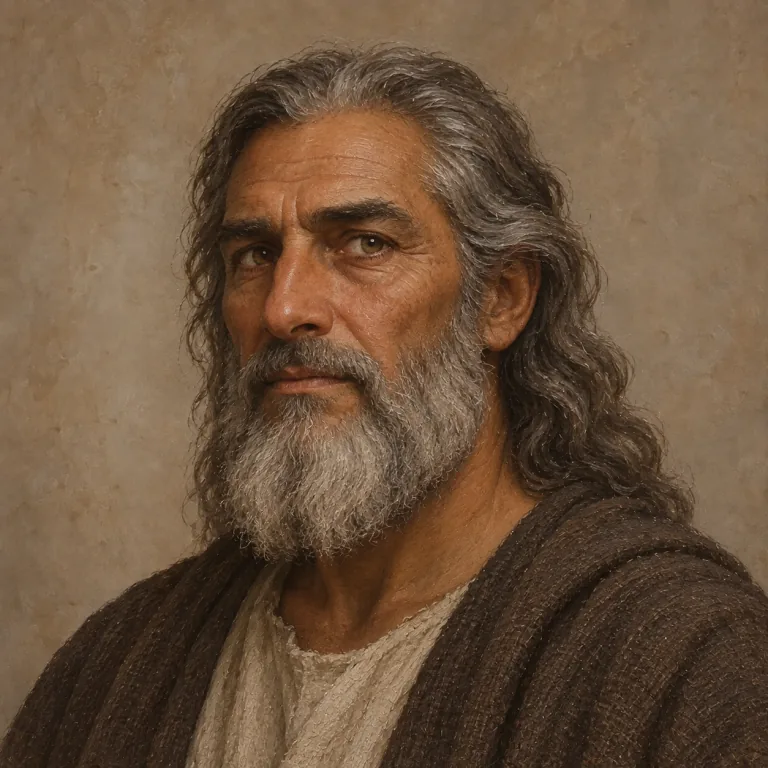
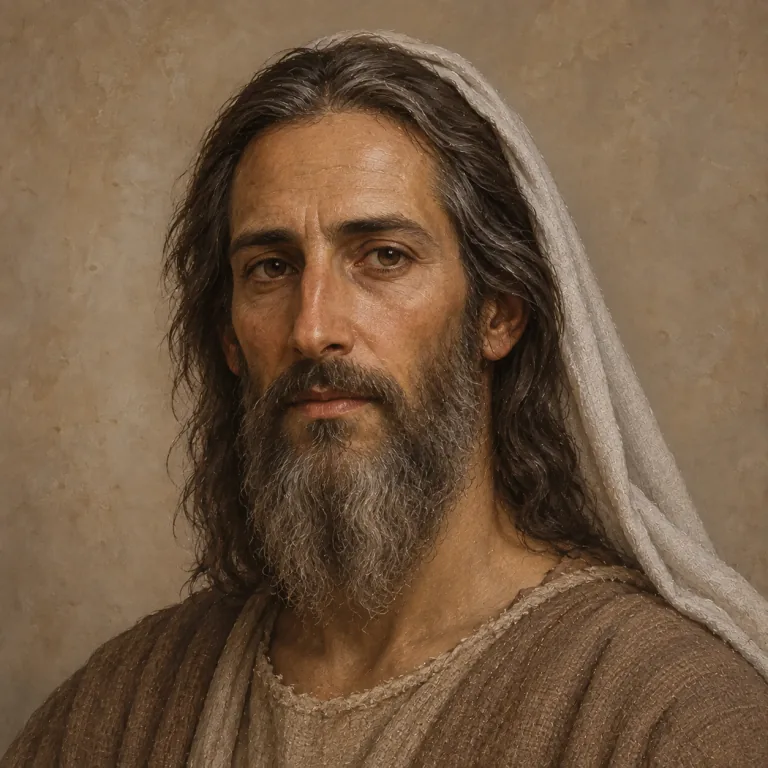
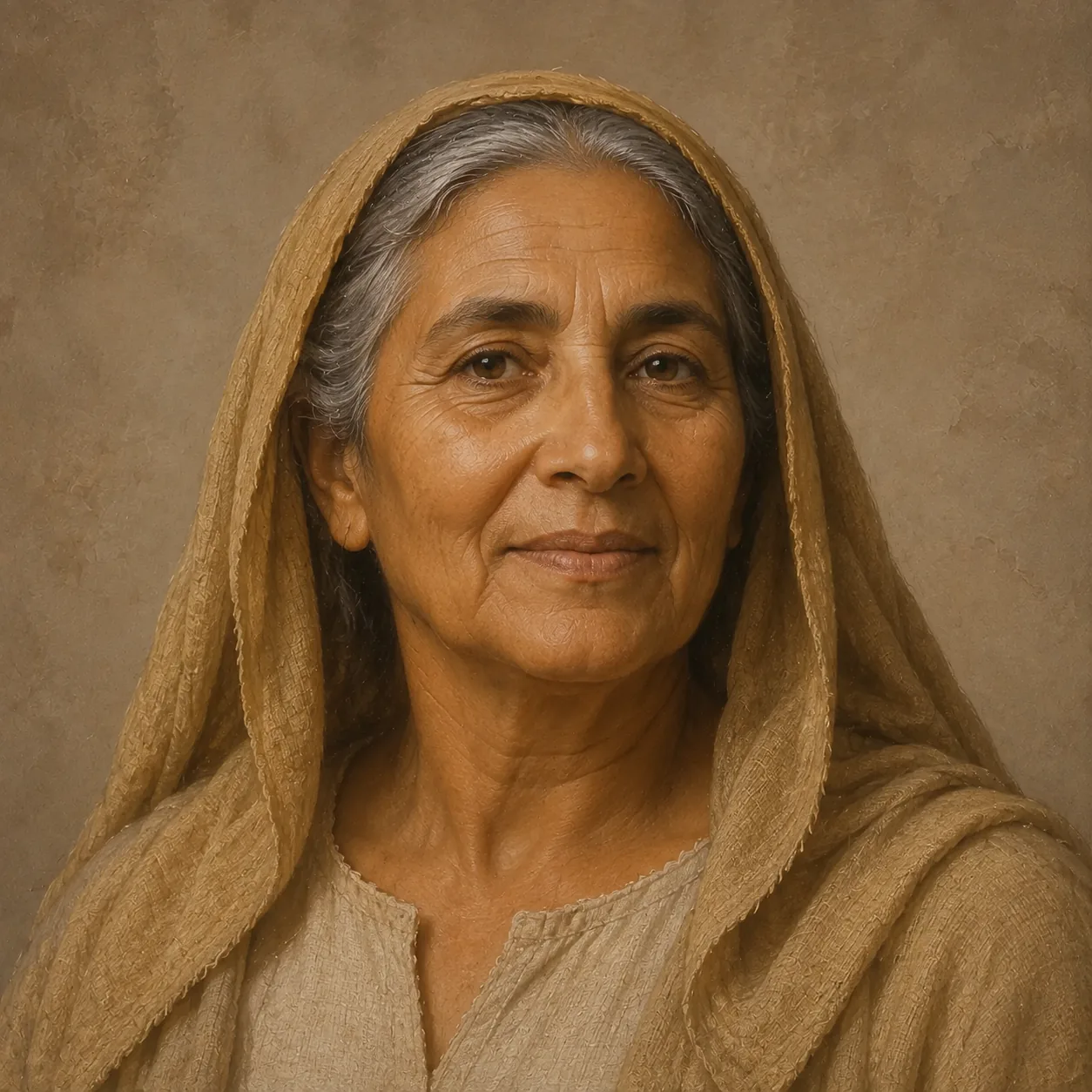
Portrait: an AI-generated artistic interpretation, not evidence of how Noah looked.
Who Noah is
Lamech names his son Noah and says this one will comfort them concerning their toil because of the ground the Lord has cursed. At five hundred Noah begets Shem, Ham and Japheth. When God resolves to destroy man, Noah finds grace in the Lord's eyes; the narrator calls him just, perfect in his generations, and says he walked with God. God tells Noah the end of all flesh has come, gives the ark's dimensions in gopher wood, promises a covenant, and orders animals and food brought in. Noah does all God commands. The Lord calls him righteous and tells him to enter with his house. Noah is six hundred when the flood comes. He, his wife, his sons and their wives enter, the animals go in, and the Lord shuts him in. All flesh dies and only Noah and those with him remain. God remembers Noah and the waters go down. Noah sends a raven and then a dove, removes the ark's covering, and at God's word goes out. He builds an altar and offers burnt offerings, and the Lord resolves never again to curse the ground. God blesses Noah and his sons, forbids eating blood, and establishes a covenant with all flesh with the bow as its token. Noah plants a vineyard, becomes drunk and lies uncovered; Ham sees and tells, Shem and Japheth cover him, and Noah, waking, curses Canaan and blesses the Lord God of Shem. He lives three hundred fifty years after the flood and dies at nine hundred fifty. Later books recall the waters of Noah, name him with Daniel and Job, compare his days to the coming of the Son of man, and count him among the faithful.
Cited passages: Genesis 5:29, Genesis 5:32, Genesis 6:8, Genesis 6:9, Genesis 6:13, Genesis 6:14, Genesis 6:16, Genesis 6:18, Genesis 6:22, Genesis 7:1, Genesis 7:2, Genesis 7:6, Genesis 7:7, Genesis 7:16, Genesis 7:23, Genesis 8:1, Genesis 8:7, Genesis 8:11, Genesis 8:13, Genesis 8:18, Genesis 8:20, Genesis 8:21, Genesis 9:1, Genesis 9:4, Genesis 9:6, Genesis 9:13, Genesis 9:20, Genesis 9:21, Genesis 9:22, Genesis 9:23, Genesis 9:25, Genesis 9:26, Genesis 9:28, Genesis 9:29, Genesis 10:32, Isaiah 54:9, Ezekiel 14:14, Matthew 24:37, Hebrews 11:7
Historical setting
Noah is the son of Lamech in the line of Seth. That Lamech is a different man from the Lamech of Cain's line in Genesis 4, who takes two wives and says he has slain a man. Noah's wife and his sons' wives are never named; the eight people in the ark are the ones listed at Genesis 7:13, and 1 Peter gives the number as eight souls. The text gives two instructions about the animals, two of every sort and, for clean beasts, by sevens, and reports that they came in two and two as God commanded. The ark's size is stated in cubits. The narrator calls Noah just and perfect in his generations and reports the Lord calling him righteous; Genesis records no preaching by Noah, and preacher of righteousness is 2 Peter's later phrase. Noah's only recorded words in Genesis are the curse on Canaan and the blessings after the vineyard episode. The text says his younger son did something to him but describes only that Ham saw his nakedness and told his brothers, and the curse falls on Canaan, Ham's son, not on Ham. The text does not say which son the phrase his younger son names. Isaiah refers to the waters of Noah as an oath that they should no more go over the earth. Ezekiel names Noah beside Daniel and Job as men who could deliver only their own souls. Matthew and Luke spell the name Noe and compare his days to the Son of man's coming; 1 Chronicles and Luke's genealogy list him between Lamech and Shem. Hebrews reads his building as faith and 1 Peter calls the saving of eight by water a like figure of baptism; those are later citations, not Genesis narrative.
Cited passages: Genesis 5:28, Genesis 4:19, Genesis 4:23, Genesis 7:13, 1 Peter 3:20, Genesis 6:19, Genesis 7:2, Genesis 7:9, Genesis 6:15, Genesis 6:9, Genesis 7:1, 2 Peter 2:5, Genesis 9:24, Genesis 9:22, Genesis 9:25, Genesis 9:18, Isaiah 54:9, Ezekiel 14:20, Matthew 24:38, Luke 17:27, 1 Chronicles 1:4, Luke 3:36, Hebrews 11:7, 1 Peter 3:21
How the story is told
Noah's name is explained by Lamech's hope of comfort concerning the ground the Lord has cursed, and the account closes that thread when the Lord, smelling the burnt offering, says he will not again curse the ground. The narrator introduces him with the phrase walked with God, used of Enoch in the previous chapter, and marks his obedience with a repeated formula: he did according to all that God commanded him. Through chapters 6 to 8 God speaks and Noah acts; Noah does not speak until chapter 9, and his only recorded words are the curse on Canaan and the sayings about Shem and Japheth that follow it. The turning point is the sentence God remembered Noah, after which every movement of the water reverses. After the raven, the dove is sent, then sent again after seven days and again after seven more, and the dove's olive leaf is the first sign Noah reads for himself. God's blessing after the flood, be fruitful and multiply, repeats the blessing given at creation, and the covenant with the bow is stated three times as a token. The vineyard scene ends the section with Noah uncovered and his sons divided, so the man who walked with God is last shown drunk in his tent and then speaking a curse, and the story moves at once to his descendants. The New Testament uses him for two points: Jesus compares his days with people eating and drinking until the day Noe entered the ark, and Hebrews and the Petrine letters use his rescue as a pattern of faith and of few saved.
Cited passages: Genesis 5:29, Genesis 8:21, Genesis 5:24, Genesis 6:9, Genesis 6:22, Genesis 7:5, Genesis 9:25, Genesis 9:27, Genesis 8:1, Genesis 8:10, Genesis 8:12, Genesis 8:11, Genesis 9:1, Genesis 1:28, Genesis 9:12, Genesis 9:17, Genesis 9:21, Genesis 10:1, Matthew 24:38, Luke 17:26, Hebrews 11:7, 1 Peter 3:20, Genesis 8:7, Matthew 24:4
Story moments
- Noah finds grace (Genesis 6:8). Against the Lord's resolve to destroy man, Noah finds grace in the Lord's eyes.
- He does all God commands (Genesis 6:22). Having heard the ark's plan, Noah does according to all that God commanded him.
- The Lord shuts him in (Genesis 7:16). After the animals enter male and female, the Lord shuts Noah in the ark.
- God remembers Noah (Genesis 8:1). God remembers Noah and the living things with him, and makes a wind pass so the waters go down.
- An altar and burnt offerings (Genesis 8:20). Noah builds an altar and offers burnt offerings of every clean beast and fowl.
- The bow in the cloud (Genesis 9:13). God sets his bow in the cloud as the token of the covenant with the earth.
- Cursed be Canaan (Genesis 9:25). Waking from his wine, Noah curses Canaan and blesses the Lord God of Shem.
Key passages
Genesis 5:29
And he called his name Noah, saying, This same shall comfort us concerning our work and toil of our hands, because of the ground which the Lord hath cursed.
Genesis 5:30
And Lamech lived after he begat Noah five hundred ninety and five years, and begat sons and daughters:
Genesis 5:32
And Noah was five hundred years old: and Noah begat Shem, Ham, and Japheth.
Genesis 6:8
But Noah found grace in the eyes of the Lord.
Genesis 6:9
These are the generations of Noah: Noah was a just man and perfect in his generations, and Noah walked with God.
Genesis 6:10
And Noah begat three sons, Shem, Ham, and Japheth.
King James Version. 47 indexed passages in total.
For reflection
Through three chapters Noah acts on God's words without a recorded word of his own, and when he finally speaks it is to curse a grandson. What does the reader make of a story that withholds his voice until that moment?
Books Noah appears in
Related people
Names and references are adapted from STEPBible TIPNR. A person listed with a verse is named or indexed there; it does not mean they wrote or spoke it.