The Torah · Old Testament
Genesis 10
Families and nations after the flood
General context
The chapter traces the families of Noah's sons after the flood. It lists descendants of Japheth, Ham and Shem, repeatedly connecting families with lands, languages and nations. The account of Nimrod briefly expands the lists into a description of a mighty hunter and the beginning of his kingdom in Shinar. Canaan's descendants and borders receive particular attention. Within Shem's line, Eber's sons Peleg and Joktan introduce another division of the family. The closing statement connects the nations after the flood with these families.
Cited passages: Genesis 10:1, Genesis 10:2, Genesis 10:5, Genesis 10:6, Genesis 10:8, Genesis 10:9, Genesis 10:10, Genesis 10:15, Genesis 10:18, Genesis 10:19, Genesis 10:20, Genesis 10:21, Genesis 10:25, Genesis 10:31, Genesis 10:32
Genesis 10 (KJV)
1Now these are the generations of the sons of Noah, Shem, Ham, and Japheth: and unto them were sons born after the flood.
2The sons of Japheth; Gomer, and Magog, and Madai, and Javan, and Tubal, and Meshech, and Tiras.
3And the sons of Gomer; Ashkenaz, and Riphath, and Togarmah.
4And the sons of Javan; Elishah, and Tarshish, Kittim, and Dodanim.
5By these were the isles of the Gentiles divided in their lands; every one after his tongue, after their families, in their nations.
6And the sons of Ham; Cush, and Mizraim, and Phut, and Canaan.
7And the sons of Cush; Seba, and Havilah, and Sabtah, and Raamah, and Sabtecha: and the sons of Raamah; Sheba, and Dedan.
8And Cush begat Nimrod: he began to be a mighty one in the earth.
9He was a mighty hunter before the Lord: wherefore it is said, Even as Nimrod the mighty hunter before the Lord.
10And the beginning of his kingdom was Babel, and Erech, and Accad, and Calneh, in the land of Shinar.
11Out of that land went forth Asshur, and builded Nineveh, and the city Rehoboth, and Calah,
12And Resen between Nineveh and Calah: the same is a great city.
13And Mizraim begat Ludim, and Anamim, and Lehabim, and Naphtuhim,
14And Pathrusim, and Casluhim, (out of whom came Philistim,) and Caphtorim.
15And Canaan begat Sidon his firstborn, and Heth,
16And the Jebusite, and the Amorite, and the Girgasite,
17And the Hivite, and the Arkite, and the Sinite,
18And the Arvadite, and the Zemarite, and the Hamathite: and afterward were the families of the Canaanites spread abroad.
19And the border of the Canaanites was from Sidon, as thou comest to Gerar, unto Gaza; as thou goest, unto Sodom, and Gomorrah, and Admah, and Zeboim, even unto Lasha.
20These are the sons of Ham, after their families, after their tongues, in their countries, and in their nations.
21Unto Shem also, the father of all the children of Eber, the brother of Japheth the elder, even to him were children born.
22The children of Shem; Elam, and Asshur, and Arphaxad, and Lud, and Aram.
23And the children of Aram; Uz, and Hul, and Gether, and Mash.
24And Arphaxad begat Salah; and Salah begat Eber.
25And unto Eber were born two sons: the name of one was Peleg; for in his days was the earth divided; and his brother’s name was Joktan.
26And Joktan begat Almodad, and Sheleph, and Hazarmaveth, and Jerah,
27And Hadoram, and Uzal, and Diklah,
28And Obal, and Abimael, and Sheba,
29And Ophir, and Havilah, and Jobab: all these were the sons of Joktan.
30And their dwelling was from Mesha, as thou goest unto Sephar a mount of the east.
31These are the sons of Shem, after their families, after their tongues, in their lands, after their nations.
32These are the families of the sons of Noah, after their generations, in their nations: and by these were the nations divided in the earth after the flood.
This page shows the King James Version. In the app, reading opens in the Berean Standard Bible unless you have chosen another translation. The reader includes five translations: the Berean Standard Bible (BSB), the King James Version (KJV), the World English Bible (WEB), the Bible in Basic English (BBE), and the American Standard Version (ASV). Search covers three of them: Berean Standard, King James, and World English. Basic English and American Standard readers search the King James words.
Historical context
This is the account's picture of peoples and places after the flood. Babel, Erech, Accad and Calneh are associated with the beginning of Nimrod's kingdom in Shinar; Nineveh and other cities also appear in the passage. The Canaanite border is described through named places, beginning with Sidon. The notice about Peleg says that the earth was divided in his days, without describing how that division occurred. These family and territorial notices do not identify modern nations or racial categories.
Cited passages: Genesis 10:1, Genesis 10:8, Genesis 10:10, Genesis 10:11, Genesis 10:12, Genesis 10:19, Genesis 10:25, Genesis 10:32
Literary context
The opening names Shem, Ham and Japheth, while the extended lists proceed through Japheth, Ham and then Shem. Repeated closing formulas gather each group by family, language, land and nation. The longer notices about Nimrod, Canaan's territory and Peleg interrupt the sequence of names. The final verse draws the separate branches back together as the families of Noah's sons. The chapter therefore presents many peoples through a shared family framework rather than following a single person's journey.
Cited passages: Genesis 10:1, Genesis 10:2, Genesis 10:5, Genesis 10:6, Genesis 10:8, Genesis 10:9, Genesis 10:10, Genesis 10:19, Genesis 10:20, Genesis 10:21, Genesis 10:25, Genesis 10:31, Genesis 10:32
Key moments
- Families, languages and lands (Genesis 10:5). The descendants are grouped by their lands, languages, families and nations.
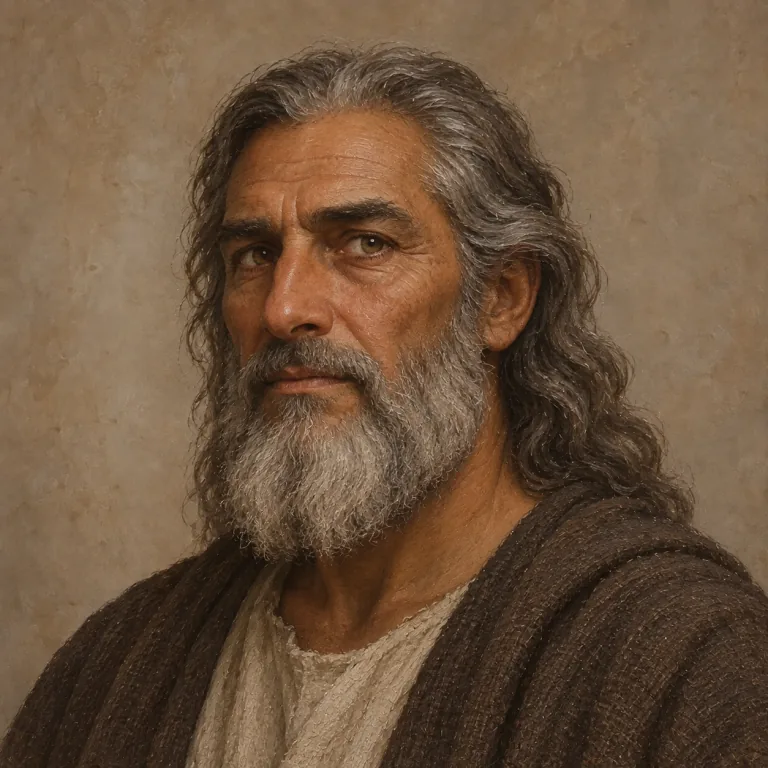
- Nimrod is described as a hunter (Genesis 10:9). Nimrod is called a mighty hunter before the Lord.
- A notice about Peleg (Genesis 10:25). Eber has two sons, Peleg and Joktan; the account links Peleg with a division of the earth in his days.
- The families are gathered together (Genesis 10:32). The closing verse connects the nations after the flood with the families of Noah's sons.
For reflection
How does tracing these different families and nations back to Noah's household shape your reading of the lists?
People in this chapter
Also indexed here: