Person in the Old Testament
Cyrus
Cyrus: the Persian king who proclaimed the return and the rebuilding
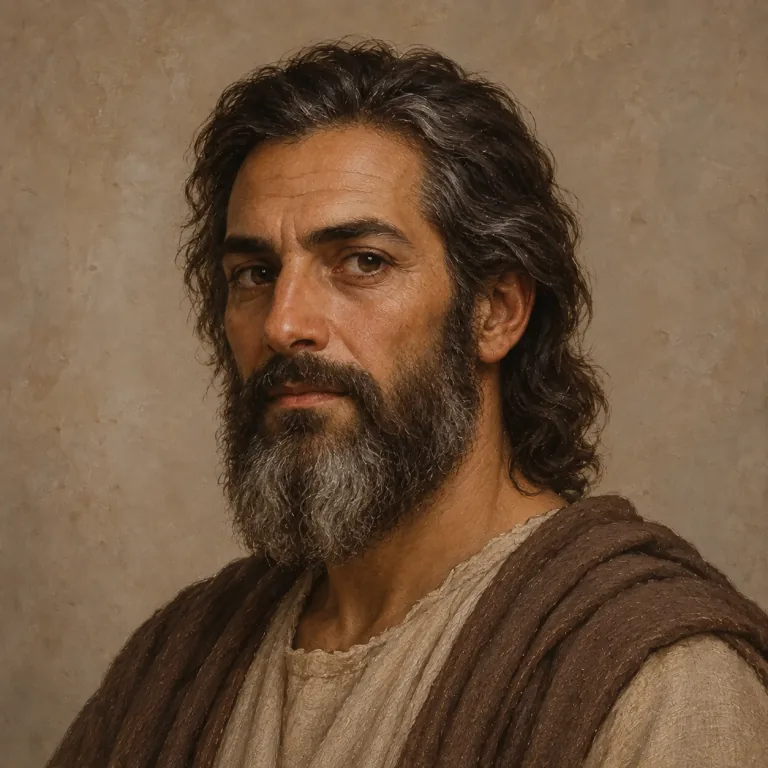
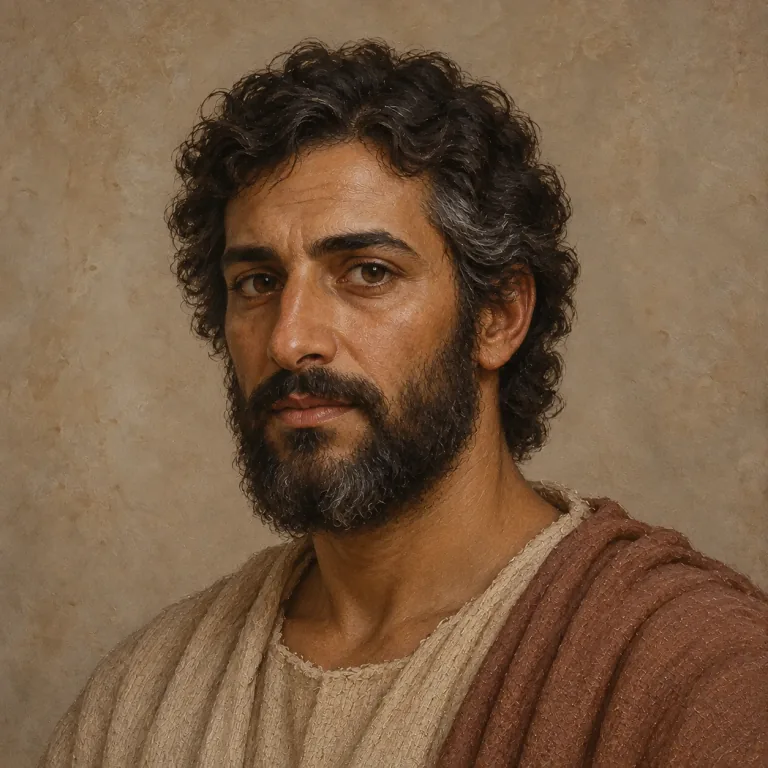
Portrait: an AI-generated artistic interpretation, not evidence of how Cyrus looked.
Who Cyrus is
Cyrus king of Persia appears at the close of 2 Chronicles and the opening of Ezra. In his first year the Lord stirs his spirit so that Jeremiah's word may be fulfilled, and he proclaims in writing that the Lord God of heaven has given him all the kingdoms of the earth and charged him to build a house at Jerusalem; he invites the Lord's people to go up and build, with their neighbors' help. He brings out the vessels of the house of the Lord that Nebuchadnezzar had taken, counted out to Sheshbazzar the prince of Judah. Later in Ezra his name is invoked rather than his person: the builders buy cedar according to his grant, Zerubbabel and Jeshua refuse the adversaries because Cyrus commanded the Jews to build, and the opponents hire counsellors all his days until Darius. When Tatnai questions the work, the elders answer that Cyrus decreed the house be built and gave the vessels to Sheshbazzar, whom he made governor, and ask for a search of the records. Darius's search finds at Achmetha a roll of Cyrus's decree with the house's dimensions and funding, and the house is finished according to the commandment of Cyrus, Darius and Artaxerxes. In Isaiah the Lord calls Cyrus his shepherd who will see Jerusalem built and the temple founded, and addresses him as his anointed, called by name for Jacob's sake though he has not known the Lord, raised up to build the city and free the captives without price. Daniel continues to Cyrus's first year, prospers in the reign of Darius and of Cyrus the Persian, and receives a revelation in Cyrus's third year.
Cited passages: 2 Chronicles 36:22, 2 Chronicles 36:23, Ezra 1:1, Ezra 1:2, Ezra 1:3, Ezra 1:4, Ezra 1:7, Ezra 1:8, Ezra 1:11, Ezra 3:7, Ezra 4:3, Ezra 4:5, Ezra 5:13, Ezra 5:14, Ezra 5:17, Ezra 6:2, Ezra 6:3, Ezra 6:4, Ezra 6:5, Ezra 6:14, Isaiah 44:28, Isaiah 45:1, Isaiah 45:4, Isaiah 45:13, Daniel 1:21, Daniel 6:28, Daniel 10:1
Historical setting
The passages give Cyrus three titles: king of Persia in Chronicles, Ezra and Daniel, the king of Babylon in the elders' reply to Tatnai, and Cyrus the Persian in Daniel. The proclamation in Chronicles and the one in Ezra are nearly the same, but Ezra's adds the command to build the house and the instruction to neighbors, and the decree found at Achmetha is a different document again, with dimensions and funding not in the proclamation; the text presents all as his without harmonizing them. The books credit the Lord with his action: the Lord stirs his spirit, and Isaiah says the Lord girded him though he did not know the Lord. Isaiah's oracle is the only place he is called the Lord's anointed and shepherd; those passages name him and describe what he will do for Jerusalem and the captives, and this guide reports them without dating claims. The passages do not narrate his conquest of Babylon; Daniel says Darius the Median took that kingdom, and the relation between that Darius and Cyrus is not explained in the text. Ezra does not record his death, only that opposition lasted all his days. Daniel says Daniel continued to Cyrus's first year and also that a revelation came in his third year; both statements stand. Beyond the decrees, his only reported words are the instruction to Sheshbazzar to carry the vessels to Jerusalem, as the elders recount it; he receives no age, lineage or personal description. Sheshbazzar, to whom he entrusts the vessels, is called prince of Judah and governor; Zerubbabel, who cites his command, is not identified with Sheshbazzar in the text.
Cited passages: 2 Chronicles 36:22, Ezra 5:13, Daniel 6:28, 2 Chronicles 36:23, Ezra 1:3, Ezra 6:3, Ezra 1:1, Isaiah 45:5, Isaiah 45:1, Isaiah 44:28, Daniel 5:31, Ezra 4:5, Daniel 1:21, Daniel 10:1, Ezra 1:8, Ezra 5:14, Ezra 4:3
How the story is told
In Chronicles Cyrus is the last word. His decree turns a chapter of burning and exile toward an open invitation, and the book stops before anyone goes up. Ezra begins with the same words, so his proclamation is the seam joining the two books. From then on Ezra treats him as a document: a grant for cedar, a command quoted against adversaries, a span of days marking the opposition, and a decree that must be searched for and is found as a roll in a distant palace. The plot of the dispute with Tatnai turns entirely on whether that roll exists. Isaiah presents him in the Lord's first-person speech, as shepherd, anointed, held by the hand, called and surnamed, with gates opened and treasures given, and the repeated point is the king's not knowing the one who names him; the woe against the clay that questions its potter follows immediately, so the naming of a foreign king is guarded against objection. Daniel uses his reign only as a clock for Daniel's survival and visions. Across the passages Cyrus acts by stirring, granting and restoring, and every narrator credits the Lord with the stirring.
Cited passages: 2 Chronicles 36:23, Ezra 1:2, Ezra 3:7, Ezra 4:3, Ezra 4:5, Ezra 6:2, Ezra 5:17, Isaiah 45:1, Isaiah 45:3, Isaiah 45:4, Isaiah 45:9, Daniel 6:28, 2 Chronicles 36:22
Story moments
- His spirit stirred (2 Chronicles 36:22). In Cyrus's first year the Lord moves him to proclaim the rebuilding, fulfilling Jeremiah's word.
- Let him go up (Ezra 1:3). Cyrus invites the Lord's people to return to Jerusalem and build the house.
- The vessels counted out (Ezra 1:8). Cyrus has the temple vessels numbered to Sheshbazzar the prince of Judah.
- His command cited (Ezra 4:3). Zerubbabel and Jeshua refuse the adversaries because Cyrus commanded the Jews to build.
- The roll at Achmetha (Ezra 6:3). Darius's search finds Cyrus's decree with the house's dimensions and funding.
- My shepherd (Isaiah 44:28). The Lord names Cyrus as the shepherd who will see Jerusalem built and the temple founded.
- His anointed (Isaiah 45:1). The Lord addresses Cyrus as his anointed, held by the hand to subdue nations.
Key passages
2 Chronicles 36:22
Now in the first year of Cyrus king of Persia, that the word of the Lord spoken by the mouth of Jeremiah might be accomplished, the Lord stirred up the spirit of Cyrus king of Persia, that he made a proclamation throughout all his kingdom, and put it also in writing, saying,
2 Chronicles 36:23
Thus saith Cyrus king of Persia, All the kingdoms of the earth hath the Lord God of heaven given me; and he hath charged me to build him an house in Jerusalem, which is in Judah. Who is there among you of all his people? The Lord his God be with him, and let him go up.
Ezra 1:1
Now in the first year of Cyrus king of Persia, that the word of the Lord by the mouth of Jeremiah might be fulfilled, the Lord stirred up the spirit of Cyrus king of Persia, that he made a proclamation throughout all his kingdom, and put it also in writing, saying,
Ezra 1:2
Thus saith Cyrus king of Persia, The Lord God of heaven hath given me all the kingdoms of the earth; and he hath charged me to build him an house at Jerusalem, which is in Judah.
Ezra 1:7
Also Cyrus the king brought forth the vessels of the house of the Lord, which Nebuchadnezzar had brought forth out of Jerusalem, and had put them in the house of his gods;
Ezra 1:8
Even those did Cyrus king of Persia bring forth by the hand of Mithredath the treasurer, and numbered them unto Sheshbazzar, the prince of Judah.
King James Version. 19 indexed passages in total.
For reflection
Isaiah has the Lord say he called Cyrus by name and girded him though Cyrus had not known him. What does it mean, in these passages, for someone to carry out a purpose he does not recognize as such, and does the text treat that as making his part smaller or larger?
Books Cyrus appears in
Related people

Names and references are adapted from STEPBible TIPNR. A person listed with a verse is named or indexed there; it does not mean they wrote or spoke it.