Person in the Old Testament
Joshua the son of Josedech
Joshua the son of Josedech: the high priest of the return in Ezra, Haggai and Zechariah
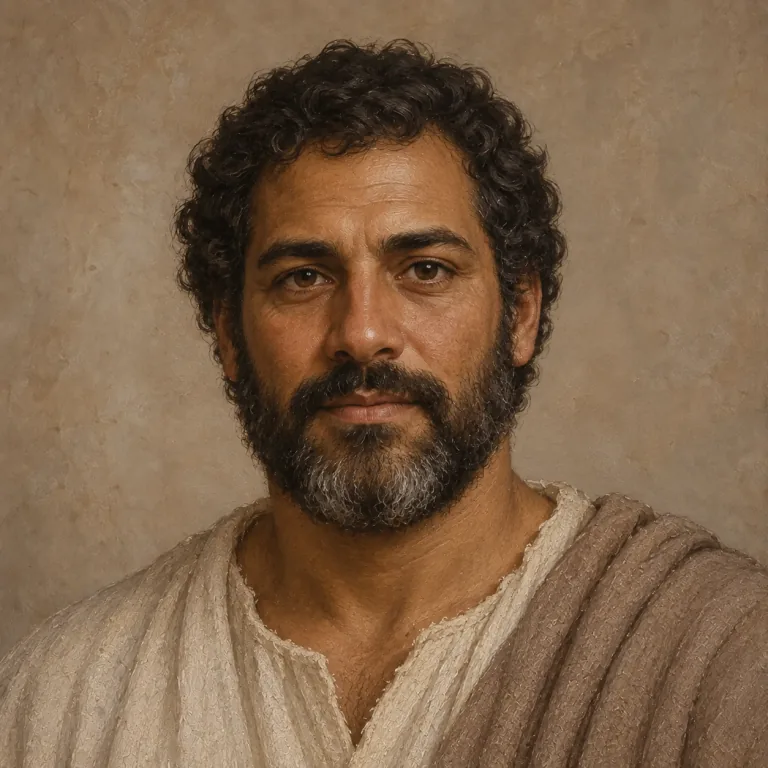
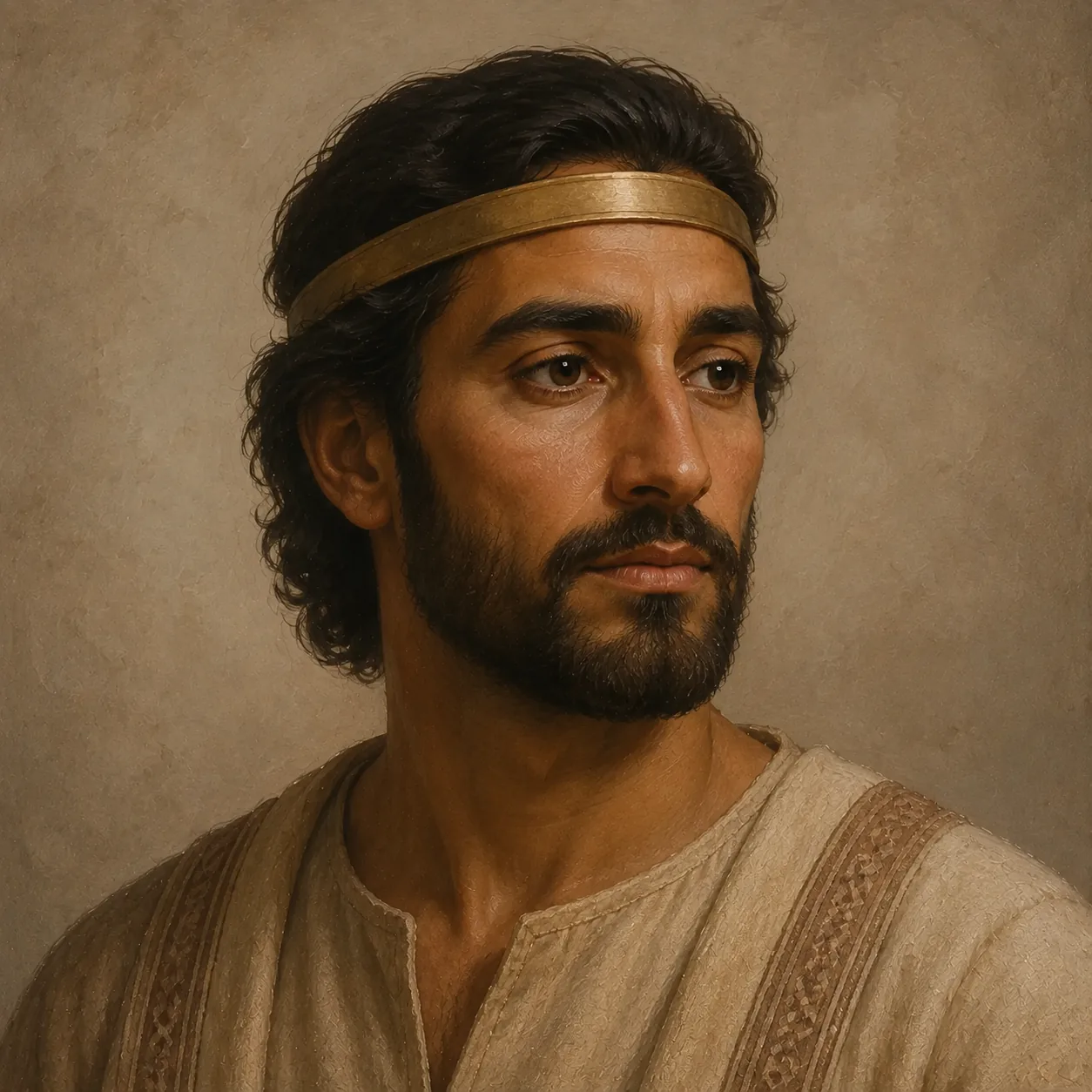
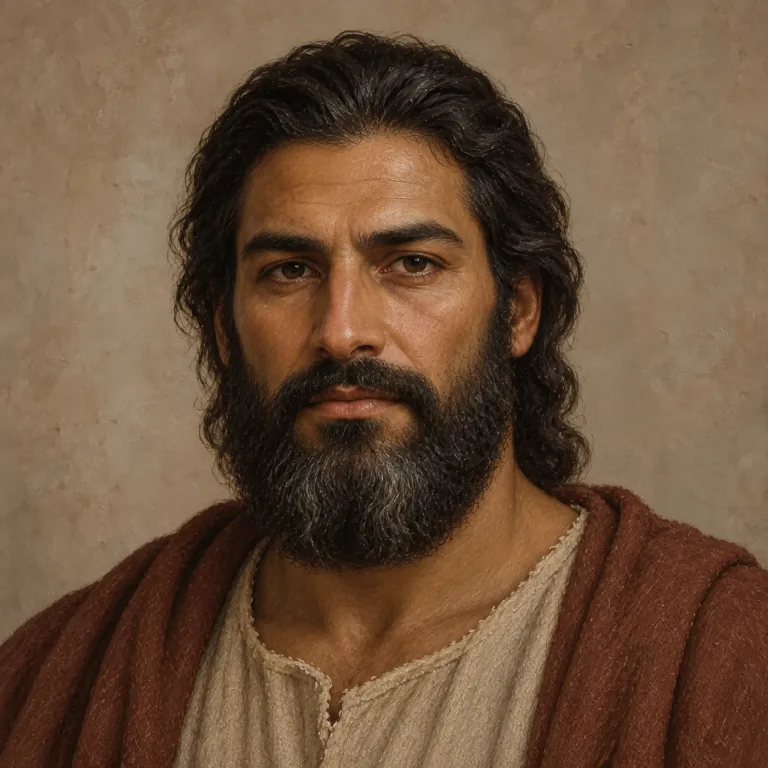
Portrait: an AI-generated artistic interpretation, not evidence of how Joshua looked.
Who Joshua is
This Joshua, spelled Jeshua in Ezra and Nehemiah, is named second after Zerubbabel among those who came up from Babylon. As Jeshua the son of Jozadak he stands with his brother priests to build the altar of the God of Israel in the seventh month, and in the second year he and Zerubbabel appoint Levites to oversee the work on the house. He joins Zerubbabel in refusing the adversaries who ask to build with them, and after Haggai and Zechariah prophesy he rises with Zerubbabel to build again. Some of his sons and brethren are later found among the priests who had taken strange wives and give their hands to put them away. Nehemiah lists the priests who went up with him, names his son Joiakim as the start of a high-priestly line running to Jaddua, and calls him Jeshua the son of Jozadak. In Haggai he is Joshua the son of Josedech, the high priest, addressed together with the governor: the people obey the Lord's voice, the Lord stirs up his spirit, and he is told to be strong and work. In Zechariah's vision he stands before the angel of the Lord in filthy garments with Satan at his right hand to resist him; the Lord rebukes Satan, asks whether this is not a brand plucked out of the fire, has the garments removed and a fair mitre set on his head, and promises that if he walks in the Lord's ways he will judge the house and keep its courts. He and his fellows are called men wondered at, and a stone with seven eyes is laid before him. Later, crowns of silver and gold are set on his head with a word about the man whose name is The BRANCH, who will build the temple.
Cited passages: Ezra 2:2, Ezra 3:2, Ezra 3:8, Ezra 4:3, Ezra 5:2, Ezra 10:18, Ezra 10:19, Nehemiah 12:7, Nehemiah 12:10, Nehemiah 12:26, Haggai 1:1, Haggai 1:12, Haggai 1:14, Haggai 2:4, Zechariah 3:1, Zechariah 3:2, Zechariah 3:3, Zechariah 3:5, Zechariah 3:7, Zechariah 3:8, Zechariah 3:9, Zechariah 6:11, Zechariah 6:12
Historical setting
The same man carries two spellings and two forms of his father's name: Jeshua the son of Jozadak in Ezra and Nehemiah, Joshua the son of Josedech in Haggai and Zechariah. The title high priest is used only in Haggai and Zechariah; Ezra names him with his brethren the priests, and Nehemiah 12 makes him the head of the line that runs through Joiakim, Eliashib, Joiada and Jonathan to Jaddua. He must be kept apart from Jeshua the son of Nun, named in Nehemiah 8 for the days of the first booths, and from the Levite Jeshua who appears with Kadmiel in the lists and at the foundation; the register's priestly entry, the children of Jedaiah, of the house of Jeshua, is not tied by the text to him. Ezra 10 states that sons of Jeshua the son of Jozadak had taken strange wives; the text does not comment on the high priest himself. Zechariah's vision presents his filthy garments and their removal as an act done to him, with the words I have caused thine iniquity to pass from thee, but does not say what the iniquity was. The oracle at the crowning speaks of the man whose name is The BRANCH as one who will build the temple and rule; the text addresses Joshua but does not say the BRANCH is Joshua, and the crowns are afterward kept as a memorial in the temple. Nothing is recorded of his birth, age or death.
Cited passages: Ezra 3:2, Haggai 2:2, Nehemiah 12:10, Nehemiah 12:11, Nehemiah 8:17, Ezra 2:40, Ezra 3:9, Ezra 2:36, Ezra 10:18, Zechariah 3:4, Zechariah 6:13, Zechariah 6:14
How the story is told
In Ezra, Jeshua is a name in a pair, always beside Zerubbabel, sharing the altar, the foundation, the refusal and the renewed building, and he is given no speech of his own. Haggai keeps the pairing but adds his title, so that governor and high priest are addressed together and stirred together. Zechariah separates him from Zerubbabel and makes him the centre of a courtroom scene: an accuser at his right hand, a rebuke, soiled clothing replaced, a mitre placed, and a conditional promise. The vision moves from what is done to him to what is asked of him, and then widens from the man to his fellows and to a stone with seven eyes. The crowning scene in Zechariah 6 uses him as the one on whose head a sign is placed while the word points beyond the moment to a builder and ruler. Nehemiah 12 turns him into the first name of a genealogy, and Ezra 10 lets the failure of his sons stand in the record. Across the books he is shown more by what happens around and upon him than by anything he does alone.
Cited passages: Ezra 3:2, Ezra 5:2, Haggai 1:14, Zechariah 3:1, Zechariah 3:2, Zechariah 3:4, Zechariah 3:5, Zechariah 3:7, Zechariah 3:8, Zechariah 6:11, Zechariah 6:12, Nehemiah 12:10, Ezra 10:18
Story moments
- Second name in the register (Ezra 2:2). Jeshua is listed right after Zerubbabel among those who came up from Babylon.
- Building the altar (Ezra 3:2). Jeshua the son of Jozadak and his brother priests build the altar with Zerubbabel.
- Resuming the work (Ezra 5:2). After the prophets speak, Jeshua and Zerubbabel begin to build the house again.
- Sons among the offenders (Ezra 10:18). Sons of Jeshua the son of Jozadak are found to have taken strange wives.
- Told to be strong (Haggai 2:4). Haggai's word commands Joshua the high priest and the people to be strong and work.
- Filthy garments removed (Zechariah 3:4). In Zechariah's vision Joshua's soiled clothes are replaced and his iniquity said to pass.
- Crowned before the BRANCH oracle (Zechariah 6:11). Crowns of silver and gold are set on Joshua's head with a word about the BRANCH.
Key passages
Ezra 2:2
Which came with Zerubbabel: Jeshua, Nehemiah, Seraiah, Reelaiah, Mordecai, Bilshan, Mispar, Bigvai, Rehum, Baanah. The number of the men of the people of Israel:
Ezra 3:2
Then stood up Jeshua the son of Jozadak, and his brethren the priests, and Zerubbabel the son of Shealtiel, and his brethren, and builded the altar of the God of Israel, to offer burnt offerings thereon, as it is written in the law of Moses the man of God.
Ezra 3:8
Now in the second year of their coming unto the house of God at Jerusalem, in the second month, began Zerubbabel the son of Shealtiel, and Jeshua the son of Jozadak, and the remnant of their brethren the priests and the Levites, and all they that were come out of the captivity unto Jerusalem; and appointed the Levites, from twenty years old and upward, to set forward the work of the house of the Lord.
Ezra 4:3
But Zerubbabel, and Jeshua, and the rest of the chief of the fathers of Israel, said unto them, Ye have nothing to do with us to build an house unto our God; but we ourselves together will build unto the Lord God of Israel, as king Cyrus the king of Persia hath commanded us.
Ezra 5:2
Then rose up Zerubbabel the son of Shealtiel, and Jeshua the son of Jozadak, and began to build the house of God which is at Jerusalem: and with them were the prophets of God helping them.
Nehemiah 7:7
Who came with Zerubbabel, Jeshua, Nehemiah, Azariah, Raamiah, Nahamani, Mordecai, Bilshan, Mispereth, Bigvai, Nehum, Baanah. The number, I say, of the men of the people of Israel was this;
King James Version. 21 indexed passages in total.
For reflection
Zechariah shows the high priest standing in filthy garments with an accuser beside him, and the clean clothing is put on him by others. What does it mean for the one who purifies the people to be shown needing purification himself?
Books Joshua appears in
Related people
Names and references are adapted from STEPBible TIPNR. A person listed with a verse is named or indexed there; it does not mean they wrote or spoke it.