Person in the New Testament
Nicodemus
Nicodemus: the ruler who came by night and brought spices to the burial
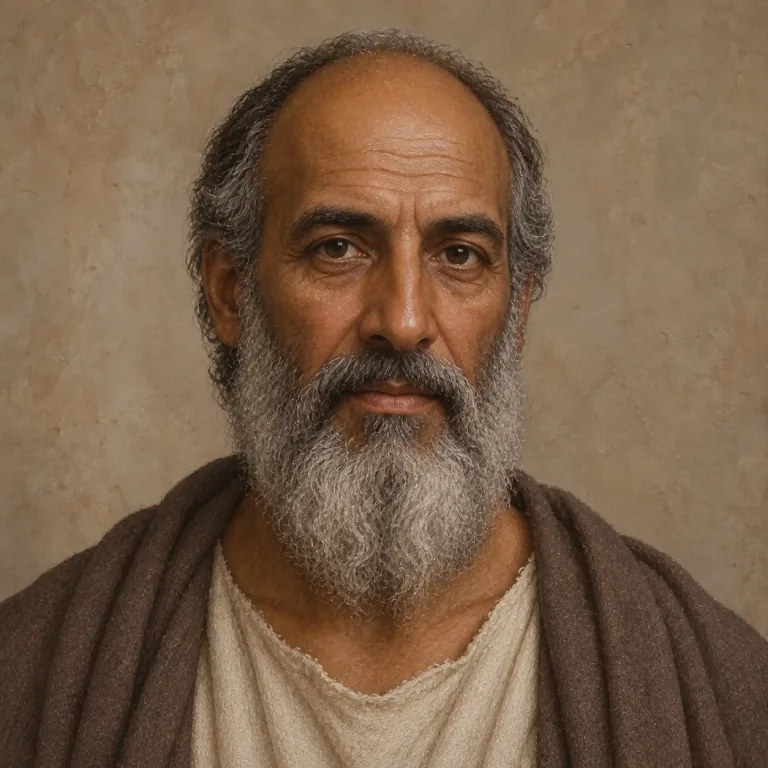
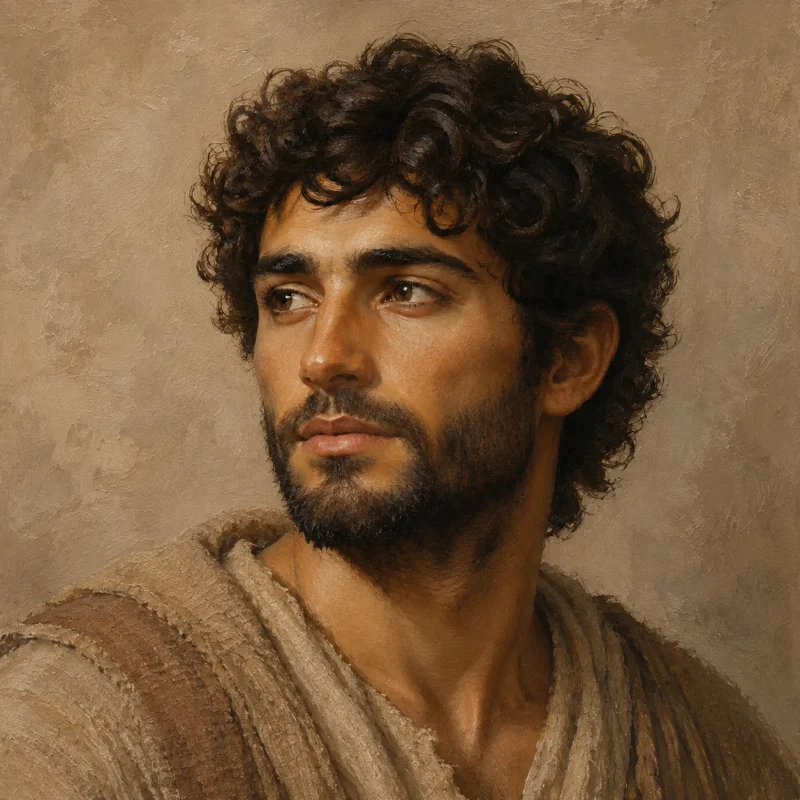
Portrait: an AI-generated artistic interpretation, not evidence of how Nicodemus looked.
Who Nicodemus is
John introduces him as a man of the Pharisees named Nicodemus, a ruler of the Jews. He comes to Jesus by night and says that they know he is a teacher come from God, because no man could do these miracles unless God were with him. Jesus answers that a man must be born again to see the kingdom of God, and Nicodemus asks how a man can be born when he is old and enter a second time into his mother's womb. Jesus answers about water and the Spirit and about the wind, and Nicodemus asks how these things can be. Jesus asks whether he, a master of Israel, does not know these things, and the discourse goes on without another word from him. He appears again when officers fail to bring Jesus in and the Pharisees ask whether any of the rulers has believed; Nicodemus, whom the narrator identifies as the one who came to Jesus by night and as one of them, asks whether their law judges a man before hearing him, and they ask in reply whether he is also of Galilee. He appears a third time at the burial, coming with Joseph of Arimathea and bringing a mixture of myrrh and aloes, about an hundred pound weight, and they wind the body in linen clothes with the spices.
Cited passages: John 3:1, John 3:2, John 3:3, John 3:4, John 3:5, John 3:8, John 3:9, John 3:10, John 7:45, John 7:47, John 7:48, John 7:50, John 7:51, John 7:52, John 19:38, John 19:39, John 19:40
Historical setting
All three passages are in John, and no other book names him. He is identified as a Pharisee and a ruler of the Jews, and Jesus addresses him as a master of Israel; no town, family or age is given. The night visit is marked twice, once as it happens and once in the parenthesis at the council scene, which also states that he was one of them. The text never says why he came by night. It does not record what he concluded after the conversation, and his question in the council concerns legal procedure rather than belief, which the text never states either way. At the burial the narrator reports what he brought and what was done with the body and says nothing about what followed for him. He is not recorded as speaking again.
Cited passages: John 3:1, John 3:2, John 3:10, John 7:50, John 7:51, John 7:52, John 19:38, John 19:39, John 19:40, John 19:42
How the story is told
Night and light frame his appearances. He arrives by night, and the discourse that follows ends on light coming into the world and men loving darkness rather than light. When he returns in the council scene the narrator will not let the reader forget it, repeating the night visit inside a parenthesis. His first words are a statement about what they know, and everything he says after that is a question. The first question takes the answer in the most physical terms available, a second entry into a mother's womb, and the second asks only how such things can be, after which the conversation moves past him. In the council he asks one question and receives a question about Galilee in reply, and the scene closes with every man going to his own house. At the burial he says nothing at all; the text records only what he carried and how much of it, an hundred pound weight of myrrh and aloes.
Cited passages: John 3:2, John 3:4, John 3:9, John 3:19, John 3:20, John 3:21, John 7:50, John 7:51, John 7:52, John 7:53, John 19:39, John 19:40
Story moments
- Came to Jesus by night (John 3:2). He calls Jesus a teacher come from God because of the miracles.
- Born when he is old? (John 3:4). He answers the saying about new birth in physical terms.
- How can these things be? (John 3:9). His last recorded words in the conversation are a question.
- Doth our law judge any man? (John 7:51). He raises procedure when the Pharisees ask whether any ruler believed.
- Art thou also of Galilee? (John 7:52). They answer his question with a question and the meeting breaks up.
- Myrrh and aloes at the burial (John 19:39). He comes with Joseph of Arimathea carrying about an hundred pound weight.
Key passages
John 3:1
There was a man of the Pharisees, named Nicodemus, a ruler of the Jews:
John 3:4
Nicodemus saith unto him, How can a man be born when he is old? can he enter the second time into his mother’s womb, and be born?
John 3:9
Nicodemus answered and said unto him, How can these things be?
John 7:50
Nicodemus saith unto them, (he that came to Jesus by night, being one of them,)
John 19:39
And there came also Nicodemus, which at the first came to Jesus by night, and brought a mixture of myrrh and aloes, about an hundred pound weight.
King James Version. 5 indexed passages in total.
For reflection
John records three questions in the dark, one question in a council, and then a weight of spices with no words attached. What does that last silent appearance settle about him, and what does it leave open?
Books Nicodemus appears in
Related people

Names and references are adapted from STEPBible TIPNR. A person listed with a verse is named or indexed there; it does not mean they wrote or spoke it.