Person in the Old Testament
Mephibosheth
Mephibosheth: Jonathan's son at David's table

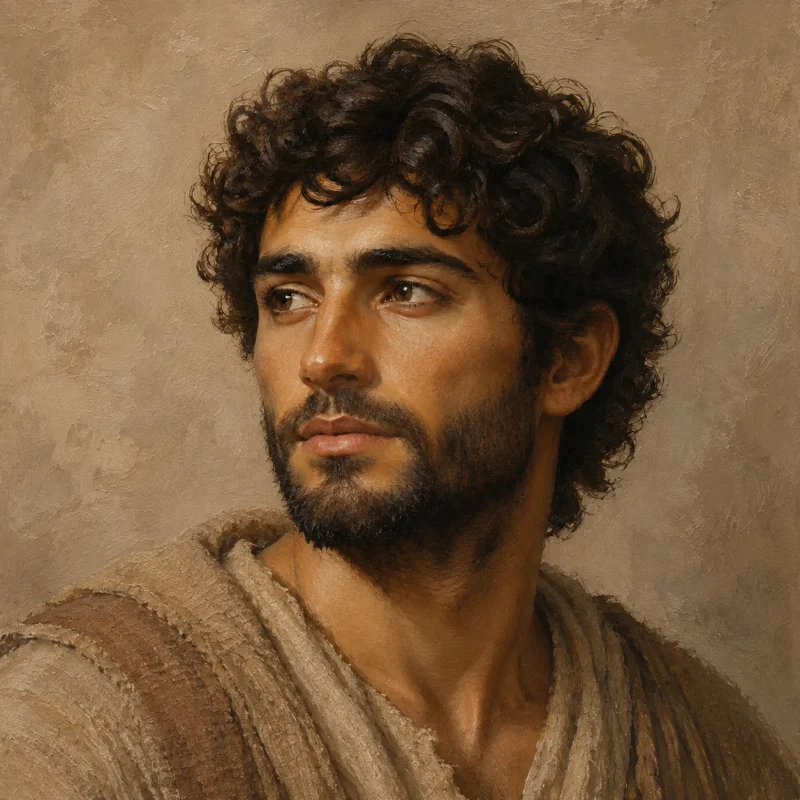
Portrait: an AI-generated artistic interpretation, not evidence of how Mephibosheth looked.
Who Mephibosheth is
Mephibosheth is Jonathan's son and Saul's grandson. At five, he falls while his nurse flees after news of Saul and Jonathan's deaths and becomes disabled in both feet. David later seeks a survivor of Saul's house to whom he can show kindness for Jonathan's sake. He restores Saul's land to Mephibosheth, assigns Ziba's household to work it and gives Mephibosheth a continuing place at his table. During Absalom's rebellion Ziba accuses Mephibosheth of hoping to receive Saul's kingdom. After David returns, Mephibosheth disputes Ziba's account. David orders the land divided. In the famine account, David spares Mephibosheth because of his oath with Jonathan.
Cited passages: 2 Samuel 4:4, 2 Samuel 9:1, 2 Samuel 9:2, 2 Samuel 9:3, 2 Samuel 9:4, 2 Samuel 9:5, 2 Samuel 9:6, 2 Samuel 9:7, 2 Samuel 9:8, 2 Samuel 9:9, 2 Samuel 9:10, 2 Samuel 9:11, 2 Samuel 9:12, 2 Samuel 9:13, 2 Samuel 16:1, 2 Samuel 16:2, 2 Samuel 16:3, 2 Samuel 16:4, 2 Samuel 19:24, 2 Samuel 19:25, 2 Samuel 19:26, 2 Samuel 19:27, 2 Samuel 19:28, 2 Samuel 19:29, 2 Samuel 19:30, 2 Samuel 21:7
Historical setting
Mephibosheth is found with Machir in Lo-debar and has a son named Micha. Chronicles' corresponding line names Jonathan's son Merib-baal and his son Micah. The table arrangement does not erase his disability: Samuel still describes both feet as affected after he settles in Jerusalem. Ziba's accusation and Mephibosheth's claim that Ziba deceived and slandered him remain competing accounts; David's division of the land comes without an explanation resolving them. The other Mephibosheth handed over to the Gibeonites is Saul and Rizpah's son, not Jonathan's son.
Cited passages: 2 Samuel 9:4, 2 Samuel 9:5, 2 Samuel 9:6, 2 Samuel 9:7, 2 Samuel 9:8, 2 Samuel 9:9, 2 Samuel 9:10, 2 Samuel 9:11, 2 Samuel 9:12, 2 Samuel 9:13, 1 Chronicles 8:33, 1 Chronicles 8:34, 1 Chronicles 8:35, 2 Samuel 16:3, 2 Samuel 16:4, 2 Samuel 19:24, 2 Samuel 19:25, 2 Samuel 19:26, 2 Samuel 19:27, 2 Samuel 19:28, 2 Samuel 19:29, 2 Samuel 19:30, 2 Samuel 21:7, 2 Samuel 21:8
How the story is told
David's appeal to Jonathan explains his kindness and his decision to spare Mephibosheth in the famine account. When David receives him, Mephibosheth compares himself to a dead dog; his position at the royal table sharply changes his circumstances. When David returns from exile, the narrative describes Mephibosheth's neglected feet, beard and clothes, then records his defense. His final willingness to let Ziba have everything places the king's safe return above the property in his own stated response. It does not supply a narrator's verdict on every disputed claim.
Cited passages: 2 Samuel 9:1, 2 Samuel 9:2, 2 Samuel 9:3, 2 Samuel 9:4, 2 Samuel 9:5, 2 Samuel 9:6, 2 Samuel 9:7, 2 Samuel 9:8, 2 Samuel 9:11, 2 Samuel 9:12, 2 Samuel 9:13, 2 Samuel 19:24, 2 Samuel 19:25, 2 Samuel 19:26, 2 Samuel 19:27, 2 Samuel 19:28, 2 Samuel 19:29, 2 Samuel 19:30, 2 Samuel 21:7
Story moments
- A fall during flight (2 Samuel 4:4). The childhood notice explains the injury during the flight after Saul and Jonathan's deaths.
- Kindness for Jonathan's sake (2 Samuel 9:7). David promises restored land and a continuing place at his table.
- Life in Jerusalem (2 Samuel 9:13). Mephibosheth lives in Jerusalem and eats at David's table; both feet remain affected.
- Ziba's accusation (2 Samuel 16:3). Ziba claims Mephibosheth is waiting in Jerusalem for Saul's kingdom to be restored to him.
- A disputed account (2 Samuel 19:27). Mephibosheth tells David that Ziba has slandered him.
- The king's return valued (2 Samuel 19:30). Mephibosheth says Ziba may take everything now that David has returned in peace.
- Spared because of an oath (2 Samuel 21:7). David spares Jonathan's son because of their oath before the Lord.
Key passages
2 Samuel 4:4
And Jonathan, Saul’s son, had a son that was lame of his feet. He was five years old when the tidings came of Saul and Jonathan out of Jezreel, and his nurse took him up, and fled: and it came to pass, as she made haste to flee, that he fell, and became lame. And his name was Mephibosheth.
2 Samuel 9:6
Now when Mephibosheth, the son of Jonathan, the son of Saul, was come unto David, he fell on his face, and did reverence. And David said, Mephibosheth. And he answered, Behold thy servant!
2 Samuel 9:10
Thou therefore, and thy sons, and thy servants, shall till the land for him, and thou shalt bring in the fruits, that thy master’s son may have food to eat: but Mephibosheth thy master’s son shall eat bread alway at my table. Now Ziba had fifteen sons and twenty servants.
2 Samuel 9:11
Then said Ziba unto the king, According to all that my lord the king hath commanded his servant, so shall thy servant do. As for Mephibosheth, said the king, he shall eat at my table, as one of the king’s sons.
2 Samuel 9:12
And Mephibosheth had a young son, whose name was Micha. And all that dwelt in the house of Ziba were servants unto Mephibosheth.
2 Samuel 9:13
So Mephibosheth dwelt in Jerusalem: for he did eat continually at the king’s table; and was lame on both his feet.
King James Version. 14 indexed passages in total.
For reflection
How do David's promise to Jonathan and the competing accounts about Mephibosheth shape the way you read kindness, dependence and judgment in these scenes?
Books Mephibosheth appears in
Related people




Names and references are adapted from STEPBible TIPNR. A person listed with a verse is named or indexed there; it does not mean they wrote or spoke it.