Person in the Old Testament
Jonathan
Jonathan: Saul's son and David's covenant friend
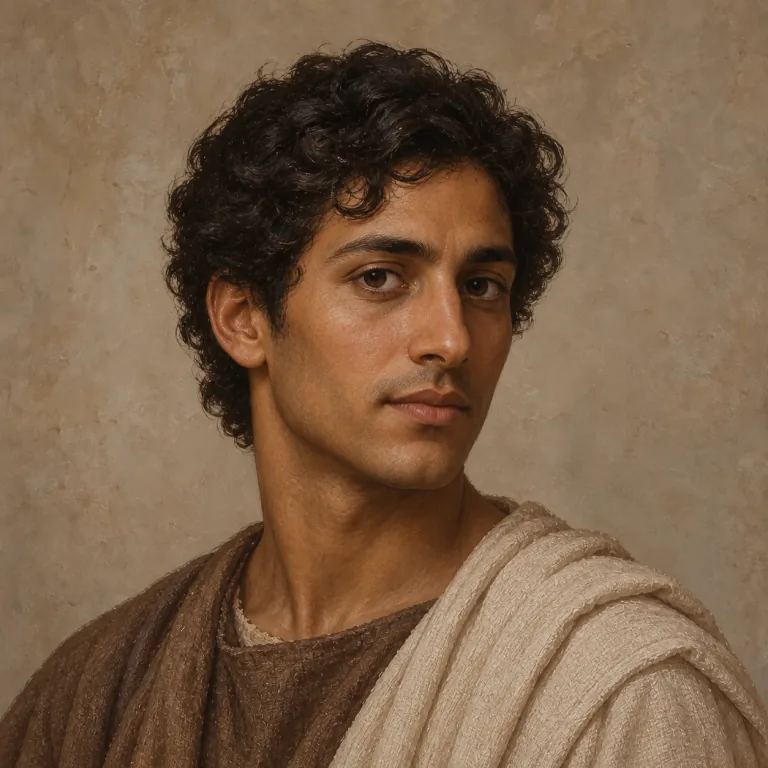
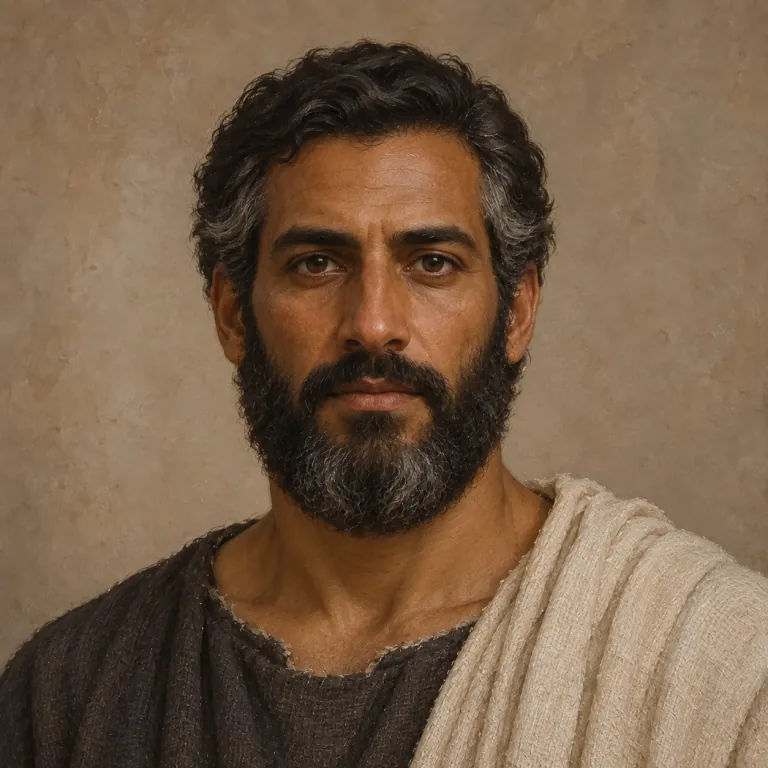
Portrait: an AI-generated artistic interpretation, not evidence of how Jonathan looked.
Who Jonathan is
Jonathan is Saul's son and a military leader who attacks the Philistines, first at Geba and later with his armor-bearer at a rocky pass. He forms a covenant with David and defends him before Saul, even when his father throws a spear at him. He warns David to flee and later strengthens him in God in the wilderness. Jonathan dies with Saul in the Philistine battle. David mourns him and later shows kindness to his son Mephibosheth for Jonathan's sake.
Cited passages: 1 Samuel 13:2, 1 Samuel 13:3, 1 Samuel 14:1, 1 Samuel 14:2, 1 Samuel 14:3, 1 Samuel 14:4, 1 Samuel 14:5, 1 Samuel 14:6, 1 Samuel 14:7, 1 Samuel 14:8, 1 Samuel 14:9, 1 Samuel 14:10, 1 Samuel 14:11, 1 Samuel 14:12, 1 Samuel 14:13, 1 Samuel 14:14, 1 Samuel 18:1, 1 Samuel 18:2, 1 Samuel 18:3, 1 Samuel 18:4, 1 Samuel 19:4, 1 Samuel 19:5, 1 Samuel 19:6, 1 Samuel 19:7, 1 Samuel 20:30, 1 Samuel 20:31, 1 Samuel 20:32, 1 Samuel 20:33, 1 Samuel 20:34, 1 Samuel 20:35, 1 Samuel 20:36, 1 Samuel 20:37, 1 Samuel 20:38, 1 Samuel 20:39, 1 Samuel 20:40, 1 Samuel 20:41, 1 Samuel 20:42, 1 Samuel 23:16, 1 Samuel 23:17, 1 Samuel 23:18, 1 Samuel 31:2, 2 Samuel 1:25, 2 Samuel 1:26, 2 Samuel 1:27, 2 Samuel 9:1, 2 Samuel 9:2, 2 Samuel 9:3, 2 Samuel 9:4, 2 Samuel 9:5, 2 Samuel 9:6, 2 Samuel 9:7
Historical setting
Jonathan's place in Saul's family makes the friendship politically costly: Saul says David's survival prevents Jonathan's kingdom from being established. Jonathan himself expects David to reign and hopes to stand next to him, but he dies before that can happen. He is distinct from Jonathan son of Shimea, David's nephew, and from Jonathan son of Abiathar. The surviving son named Mephibosheth is Jonathan's child, not the different son of Saul and Rizpah with the same name.
Cited passages: 1 Samuel 20:30, 1 Samuel 20:31, 1 Samuel 20:32, 1 Samuel 20:33, 1 Samuel 23:17, 1 Samuel 31:2, 2 Samuel 4:4, 2 Samuel 21:7, 2 Samuel 21:8, 2 Samuel 21:21, 1 Kings 1:42
How the story is told
Jonathan's confidence that the Lord can save through few men leads into a victory that Saul's oath nearly turns into his death. His later covenant places enduring kindness toward a household above the rivalry Saul expects from a royal son. David's lament speaks of love beyond the love of women as poetry of grief; it does not narrate a sexual relationship. The covenant's concern for descendants continues in David's treatment of Mephibosheth.
Cited passages: 1 Samuel 14:6, 1 Samuel 14:24, 1 Samuel 14:25, 1 Samuel 14:26, 1 Samuel 14:27, 1 Samuel 14:28, 1 Samuel 14:29, 1 Samuel 14:30, 1 Samuel 14:43, 1 Samuel 14:44, 1 Samuel 14:45, 1 Samuel 20:14, 1 Samuel 20:15, 1 Samuel 20:16, 1 Samuel 20:17, 2 Samuel 1:25, 2 Samuel 1:26, 2 Samuel 1:27, 2 Samuel 9:1, 2 Samuel 9:2, 2 Samuel 9:3, 2 Samuel 9:4, 2 Samuel 9:5, 2 Samuel 9:6, 2 Samuel 9:7, 2 Samuel 21:7
Story moments
- Confidence with few companions (1 Samuel 14:6). Jonathan says the Lord's power to save is not limited by numbers.
- Rescued from Saul's sentence (1 Samuel 14:45). The people prevent Jonathan's execution after his unwitting breach of the oath.
- A covenant with David (1 Samuel 18:3). Jonathan makes a covenant because he loves David as his own soul.
- His father turns on him (1 Samuel 20:33). Saul throws a spear at Jonathan when he defends David.
- Strengthening David in God (1 Samuel 23:16). Jonathan visits David in hiding to strengthen him.
- Jonathan falls in battle (1 Samuel 31:2). The Philistines kill Jonathan along with two of his brothers.
- Kindness for his son (2 Samuel 9:7). David promises Mephibosheth land and a place at his table for Jonathan's sake.
Key passages
1 Samuel 13:2
Saul chose him three thousand men of Israel; whereof two thousand were with Saul in Michmash and in mount Beth-el, and a thousand were with Jonathan in Gibeah of Benjamin: and the rest of the people he sent every man to his tent.
1 Samuel 13:3
And Jonathan smote the garrison of the Philistines that was in Geba, and the Philistines heard of it. And Saul blew the trumpet throughout all the land, saying, Let the Hebrews hear.
1 Samuel 13:16
And Saul, and Jonathan his son, and the people that were present with them, abode in Gibeah of Benjamin: but the Philistines encamped in Michmash.
1 Samuel 13:22
So it came to pass in the day of battle, that there was neither sword nor spear found in the hand of any of the people that were with Saul and Jonathan: but with Saul and with Jonathan his son was there found.
1 Samuel 14:1
Now it came to pass upon a day, that Jonathan the son of Saul said unto the young man that bare his armour, Come, and let us go over to the Philistines’ garrison, that is on the other side. But he told not his father.
1 Samuel 14:3
And Ahiah, the son of Ahitub, I-chabod’s brother, the son of Phinehas, the son of Eli, the Lord’s priest in Shiloh, wearing an ephod. And the people knew not that Jonathan was gone.
King James Version. 82 indexed passages in total.
For reflection
What risks does Jonathan accept to protect David, and how does the covenant extend beyond either man's immediate safety?
Books Jonathan appears in
Related people

Names and references are adapted from STEPBible TIPNR. A person listed with a verse is named or indexed there; it does not mean they wrote or spoke it.