The Histories · Old Testament
2 Samuel 4
Ish-bosheth's killers face David's judgment
General context
Abner's death weakens Ish-bosheth and unsettles Israel. Two of his captains, Rechab and Baanah, enter his house while he rests, kill him and carry his head to David. They present the act as the Lord's vengeance against David's enemy. David instead condemns the killing of a righteous man in his own bed and orders their execution. Ish-bosheth's head is buried in Abner's tomb.
Cited passages: 2 Samuel 4:1, 2 Samuel 4:2, 2 Samuel 4:3, 2 Samuel 4:5, 2 Samuel 4:6, 2 Samuel 4:7, 2 Samuel 4:8, 2 Samuel 4:9, 2 Samuel 4:10, 2 Samuel 4:11, 2 Samuel 4:12
2 Samuel 4 (KJV)
1And when Saul’s son heard that Abner was dead in Hebron, his hands were feeble, and all the Israelites were troubled.
2And Saul’s son had two men that were captains of bands: the name of the one was Baanah, and the name of the other Rechab, the sons of Rimmon a Beerothite, of the children of Benjamin: (for Beeroth also was reckoned to Benjamin:
3And the Beerothites fled to Gittaim, and were sojourners there until this day.)
4And Jonathan, Saul’s son, had a son that was lame of his feet. He was five years old when the tidings came of Saul and Jonathan out of Jezreel, and his nurse took him up, and fled: and it came to pass, as she made haste to flee, that he fell, and became lame. And his name was Mephibosheth.
5And the sons of Rimmon the Beerothite, Rechab and Baanah, went, and came about the heat of the day to the house of Ish-bosheth, who lay on a bed at noon.
6And they came thither into the midst of the house, as though they would have fetched wheat; and they smote him under the fifth rib: and Rechab and Baanah his brother escaped.
7For when they came into the house, he lay on his bed in his bedchamber, and they smote him, and slew him, and beheaded him, and took his head, and gat them away through the plain all night.
8And they brought the head of Ish-bosheth unto David to Hebron, and said to the king, Behold the head of Ish-bosheth the son of Saul thine enemy, which sought thy life; and the Lord hath avenged my lord the king this day of Saul, and of his seed.
9And David answered Rechab and Baanah his brother, the sons of Rimmon the Beerothite, and said unto them, As the Lord liveth, who hath redeemed my soul out of all adversity,
10When one told me, saying, Behold, Saul is dead, thinking to have brought good tidings, I took hold of him, and slew him in Ziklag, who thought that I would have given him a reward for his tidings:
11How much more, when wicked men have slain a righteous person in his own house upon his bed? shall I not therefore now require his blood of your hand, and take you away from the earth?
12And David commanded his young men, and they slew them, and cut off their hands and their feet, and hanged them up over the pool in Hebron. But they took the head of Ish-bosheth, and buried it in the sepulchre of Abner in Hebron.
This page shows the King James Version. In the app, reading opens in the Berean Standard Bible unless you have chosen another translation. The reader includes five translations: the Berean Standard Bible (BSB), the King James Version (KJV), the World English Bible (WEB), the Bible in Basic English (BBE), and the American Standard Version (ASV). Search covers three of them: Berean Standard, King James, and World English. Basic English and American Standard readers search the King James words.
Historical context
The assassins are brothers from Beeroth, a place reckoned to Benjamin. A brief family notice introduces Jonathan's son Mephibosheth: he was five when news of Saul and Jonathan's deaths prompted his nurse to flee, and he was injured in the fall during that escape. This notice concerns a surviving member of Saul's family, distinct from the main account of Ish-bosheth's murder.
Cited passages: 2 Samuel 4:2, 2 Samuel 4:3, 2 Samuel 4:4
Literary context
The killers interpret a severed head as good news for David, but he answers by recalling what happened to the messenger who reported Saul's death. Their claim that the Lord has avenged David remains their explanation, not the narrator's authorization. David's response gives the royal victim a burial while treating the killers as accountable for an act they expected to be welcomed.
Cited passages: 2 Samuel 4:7, 2 Samuel 4:8, 2 Samuel 4:9, 2 Samuel 4:10, 2 Samuel 4:11, 2 Samuel 4:12
Key moments
- A surviving child of Jonathan (2 Samuel 4:4). The narrator introduces Mephibosheth and recounts the childhood injury during his nurse's flight.
- Ish-bosheth murdered (2 Samuel 4:7). The brothers kill him in his bedchamber and take his head.
- Vengeance claimed (2 Samuel 4:8). They tell David that the Lord has avenged him against Saul's house.
- David condemns the act (2 Samuel 4:11). David calls the killing of a righteous man in his bed an act requiring judgment.
- A burial at Hebron (2 Samuel 4:12). Ish-bosheth's head is buried in Abner's tomb.
For reflection
What assumptions about David and about vengeance do the killers bring to Hebron, and how does his answer challenge them?
People in this chapter

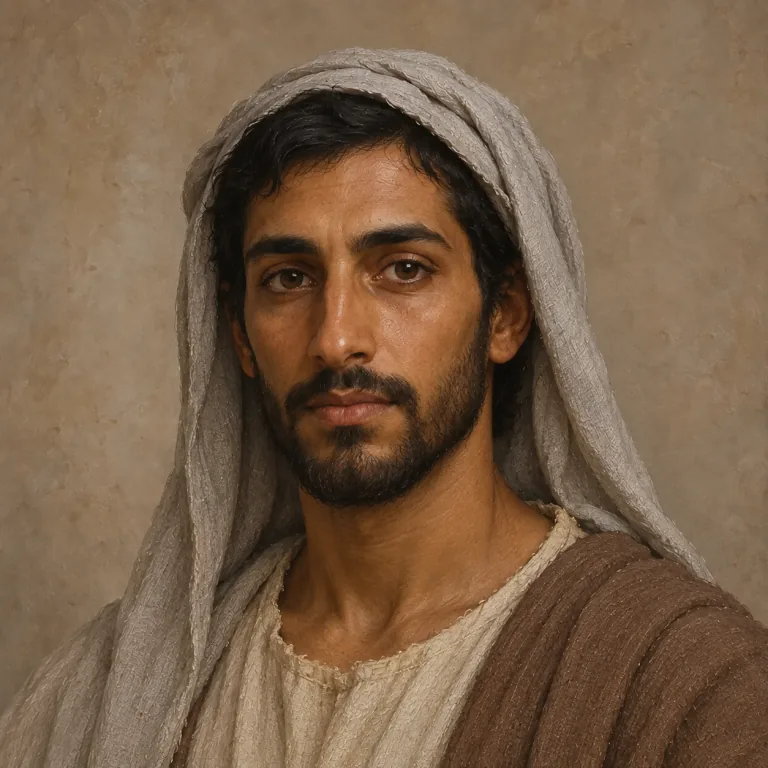
Also indexed here: