Person in the Old and New Testaments
Manasseh
Manasseh: the son of Hezekiah whose long reign Kings blames for Judah's fall
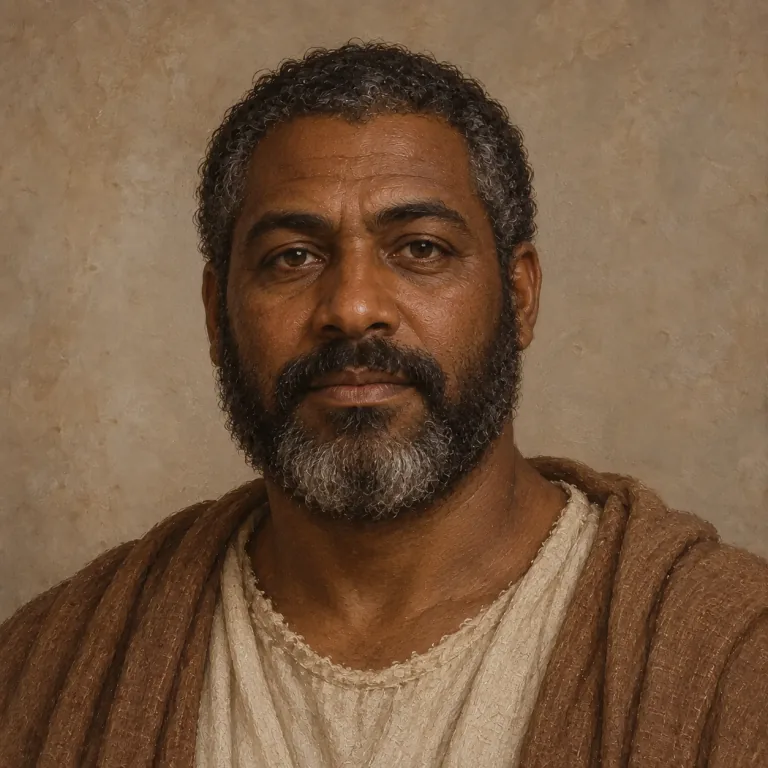
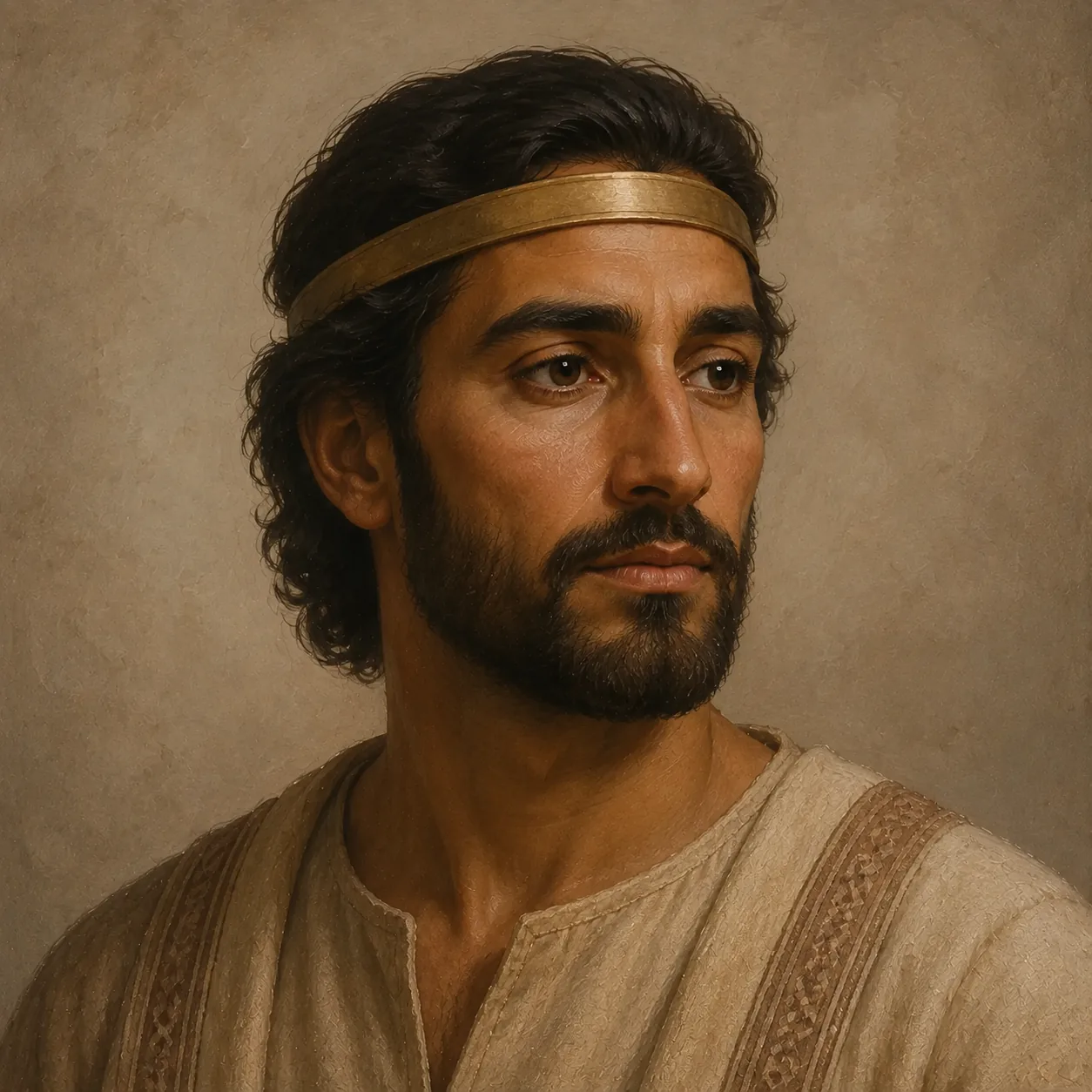
Portrait: an AI-generated artistic interpretation, not evidence of how Manasseh looked.
Who Manasseh is
Manasseh is the son of Hezekiah and father of Amon in the line of David's kings, listed in 1 Chronicles 3 and in Matthew's genealogy as Manasses. He becomes king of Judah at twelve and reigns fifty-five years; Kings names his mother Hephzi-bah. Both Kings and Chronicles say he rebuilds the high places his father destroyed, raises altars for Baal, makes groves, worships the host of heaven, builds altars in the house of the Lord and its two courts, passes his son, or in Chronicles his children, through the fire, practises enchantments and deals with familiar spirits, sets a carved image in the house where the Lord had put his name, and leads Judah to do worse than the nations the Lord destroyed. Kings adds the prophets' oracle that Jerusalem will be measured by Samaria's line and wiped like a dish, and says he shed very much innocent blood. Chronicles adds that the Lord spoke to him and his people without result, that Assyrian captains took him among the thorns, bound him and carried him to Babylon, that in affliction he humbled himself and prayed, that God heard him and brought him back to Jerusalem, and that he then built walls, removed the strange gods and altars, repaired the Lord's altar and commanded Judah to serve the Lord, though the people still used the high places. He dies and is buried at his own house; Amon succeeds him. Later, Josiah beats down the altars Manasseh made, and Kings and Jeremiah both name Manasseh as the reason Judah is removed from the land.
Cited passages: 1 Chronicles 3:13, Matthew 1:10, 2 Kings 21:1, 2 Kings 21:3, 2 Chronicles 33:3, 2 Kings 21:5, 2 Kings 21:6, 2 Chronicles 33:6, 2 Kings 21:7, 2 Kings 21:9, 2 Kings 21:13, 2 Kings 21:16, 2 Chronicles 33:10, 2 Chronicles 33:11, 2 Chronicles 33:12, 2 Chronicles 33:13, 2 Chronicles 33:14, 2 Chronicles 33:15, 2 Chronicles 33:16, 2 Chronicles 33:17, 2 Kings 21:18, 2 Kings 23:12, 2 Kings 24:3, Jeremiah 15:4
Historical setting
This Manasseh is the king of Judah, the son of Hezekiah; the tribe of Manasseh and Joseph's son of that name are different entries and are not confused with him in these passages. Kings and Chronicles agree on his age, the length of his reign, the catalogue of his practices and Amon's succession, and both say the Lord's promise about the house and the land was conditional on keeping the law. They differ in what follows. Kings records no captivity, prayer or repentance, and its later chapters say the Lord's wrath did not turn even under Josiah because of Manasseh's provocations, and that Judah's removal came for his sins and the innocent blood the Lord would not pardon. Chronicles records the Assyrian captains, the fetters, Babylon, the prayer, the return and the removal of the idols, then says the prayer itself is written elsewhere; neither book gives the prayer's words. Chronicles also makes Amon's refusal to humble himself the measure of his father's humbling. Kings names the mother and the garden of Uzza; Chronicles says only his own house. Kings says his son, Chronicles his children, in the fire. No prophet who spoke to him is named in either book, no dates are given beyond regnal years, and the phrase among the thorns is not explained. Jeremiah 15:4 gives the Lord's word naming him as the cause of removal, and Matthew lists him between Ezekias and Amon in the descent to Jesus.
Cited passages: 2 Kings 21:1, 2 Chronicles 33:1, 2 Kings 21:8, 2 Chronicles 33:8, 2 Kings 23:26, 2 Kings 24:4, 2 Chronicles 33:11, 2 Chronicles 33:18, 2 Chronicles 33:19, 2 Chronicles 33:23, 2 Kings 21:18, 2 Chronicles 33:20, 2 Kings 21:6, 2 Chronicles 33:6, 2 Kings 21:10, Jeremiah 15:4, Matthew 1:10
How the story is told
In Kings, Manasseh is written as the reversal of Hezekiah: the first thing said of him is that he built up again what his father destroyed, and the list of his acts is interrupted by the Lord's own earlier promises so that each act stands against a word. The oracle against him borrows the measures of Samaria and Ahab, binding Judah's future to Israel's finished story, and the book returns to his name twice more to explain why Josiah's reform cannot save the city. In Chronicles the same catalogue leads somewhere else. The sequence is the Lord spake, they would not hearken, wherefore the Lord brought, and then affliction, humbling, prayer, hearing, return. The word humbled recurs, and the narrator's summary, then Manasseh knew that the Lord he was God, gives the reign a turning point Kings does not have. Amon is then judged by his father's humbling rather than his father's sins. Jeremiah uses the name as a reason inside an oracle, and Matthew as a link in a list. The two long portraits do not cancel each other; each book uses Manasseh for its own argument, one about why judgment came and one about what prayer in affliction can do.
Cited passages: 2 Kings 21:3, 2 Kings 21:4, 2 Kings 21:7, 2 Kings 21:13, 2 Kings 23:26, 2 Kings 24:3, 2 Chronicles 33:10, 2 Chronicles 33:11, 2 Chronicles 33:12, 2 Chronicles 33:13, 2 Chronicles 33:19, 2 Chronicles 33:23, Jeremiah 15:4, Matthew 1:10
Story moments
- The high places rebuilt (2 Kings 21:3). Manasseh rebuilds what Hezekiah destroyed and raises altars for Baal.
- An image in the Lord's house (2 Kings 21:7). He sets a graven image in the house where the Lord said he would put his name for ever.
- Innocent blood fills Jerusalem (2 Kings 21:16). The narrator says Manasseh shed very much innocent blood from one end of the city to the other.
- Bound and carried to Babylon (2 Chronicles 33:11). Assyrian captains take Manasseh among the thorns and carry him in fetters to Babylon.
- His prayer heard (2 Chronicles 33:13). God hears Manasseh's supplication and brings him back to Jerusalem.
- The idols removed (2 Chronicles 33:15). Manasseh takes the strange gods and the idol out of the house of the Lord.
- Judah's fall laid to Manasseh (2 Kings 24:3). The narrator says Judah's removal came for the sins of Manasseh.
Key passages
1 Chronicles 3:13
Ahaz his son, Hezekiah his son, Manasseh his son,
Matthew 1:10
And Ezekias begat Manasses; and Manasses begat Amon; and Amon begat Josias;
King James Version. 24 indexed passages in total.
For reflection
Kings says the Lord would not pardon the innocent blood Manasseh shed; Chronicles says the Lord heard his supplication and brought him home. What does it ask of a reader to hold both accounts without forcing one to swallow the other?
Books Manasseh appears in
Related people

Names and references are adapted from STEPBible TIPNR. A person listed with a verse is named or indexed there; it does not mean they wrote or spoke it.