Person in the Old Testament
Joab
Joab: David's commander
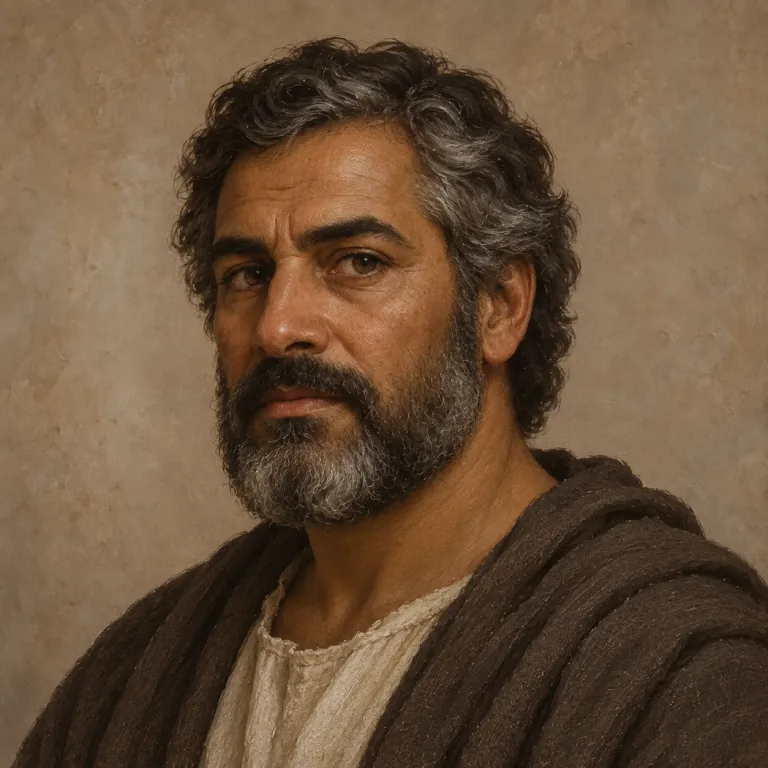
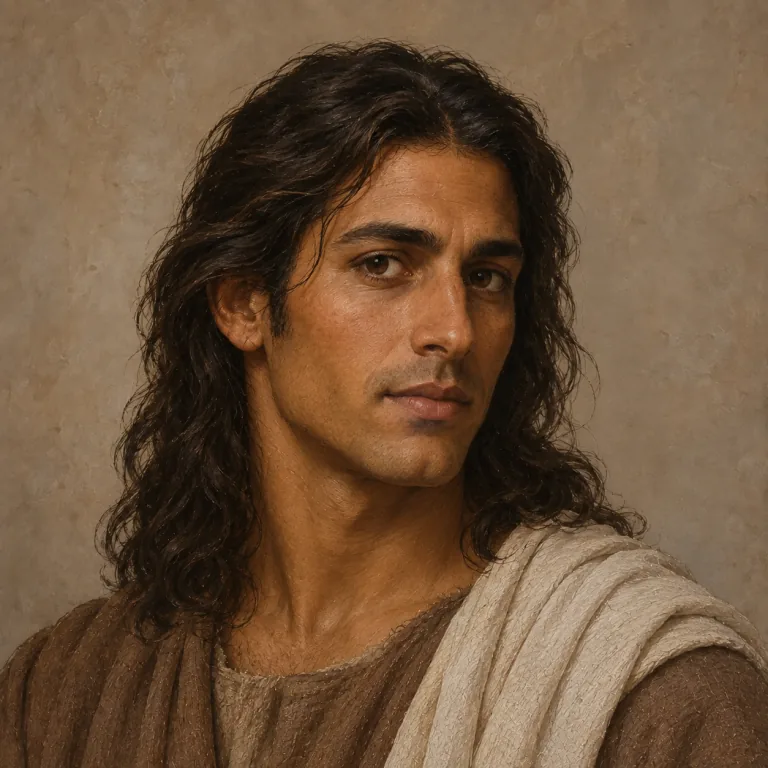
Portrait: an AI-generated artistic interpretation, not evidence of how Joab looked.
Who Joab is
Joab, a son of Zeruiah and brother of Abishai and Asahel, commands David's forces. He kills Abner in revenge for Asahel's death and carries out David's plan to have Uriah killed in battle. During Absalom's rebellion he attacks the king's son despite David's order to spare him; his armor-bearers finish the killing. He later kills Amasa while greeting him. Near the succession, Joab supports Adonijah. Under Solomon, Benaiah executes him on the king's orders.
Cited passages: 1 Chronicles 2:16, 2 Samuel 3:26, 2 Samuel 3:27, 2 Samuel 3:28, 2 Samuel 3:29, 2 Samuel 3:30, 2 Samuel 11:14, 2 Samuel 11:15, 2 Samuel 11:16, 2 Samuel 11:17, 2 Samuel 11:18, 2 Samuel 11:19, 2 Samuel 11:20, 2 Samuel 11:21, 2 Samuel 18:5, 2 Samuel 18:10, 2 Samuel 18:11, 2 Samuel 18:12, 2 Samuel 18:13, 2 Samuel 18:14, 2 Samuel 18:15, 2 Samuel 20:8, 2 Samuel 20:9, 2 Samuel 20:10, 2 Samuel 20:23, 1 Kings 1:7, 1 Kings 2:28, 1 Kings 2:29, 1 Kings 2:30, 1 Kings 2:31, 1 Kings 2:32, 1 Kings 2:33, 1 Kings 2:34, 1 Kings 2:35
Historical setting
The family genealogy places Zeruiah among David's sisters, making Joab his nephew. His first mention in 1 Samuel names him only as Abishai's brother; Abishai, not Joab, enters Saul's camp. Later episodes show him commanding sieges and negotiating with the wise woman of Abel for the delivery of Sheba, after which he withdraws the army. He also objects to David's census but carries it out when the king overrules him. His final refuge at the altar does not prevent Solomon's execution order.
Cited passages: 1 Chronicles 2:13, 1 Chronicles 2:14, 1 Chronicles 2:15, 1 Chronicles 2:16, 1 Samuel 26:6, 1 Samuel 26:7, 2 Samuel 20:15, 2 Samuel 20:16, 2 Samuel 20:17, 2 Samuel 20:18, 2 Samuel 20:19, 2 Samuel 20:20, 2 Samuel 20:21, 2 Samuel 20:22, 2 Samuel 20:23, 2 Samuel 24:2, 2 Samuel 24:3, 2 Samuel 24:4, 2 Samuel 24:5, 2 Samuel 24:6, 2 Samuel 24:7, 2 Samuel 24:8, 2 Samuel 24:9, 1 Kings 2:28, 1 Kings 2:29, 1 Kings 2:30, 1 Kings 2:31, 1 Kings 2:32, 1 Kings 2:33, 1 Kings 2:34, 2 Samuel 11:1
How the story is told
Joab's service to David repeatedly sits beside actions that expose or overstep royal authority. The killing of Uriah follows David's deliberate instruction; the killing of Abner follows Joab's recall of a man David had sent away in peace. Joab can negotiate to end a siege and question a royal command, yet he also uses a greeting to approach Amasa before killing him. Solomon's final judgment names the blood of Abner and Amasa, bringing those earlier deaths into the succession story.
Cited passages: 2 Samuel 3:21, 2 Samuel 3:22, 2 Samuel 3:23, 2 Samuel 3:24, 2 Samuel 3:25, 2 Samuel 3:26, 2 Samuel 3:27, 2 Samuel 3:28, 2 Samuel 3:29, 2 Samuel 3:30, 2 Samuel 11:14, 2 Samuel 11:15, 2 Samuel 11:16, 2 Samuel 11:17, 2 Samuel 20:9, 2 Samuel 20:10, 2 Samuel 20:16, 2 Samuel 20:17, 2 Samuel 20:18, 2 Samuel 20:19, 2 Samuel 20:20, 2 Samuel 20:21, 2 Samuel 20:22, 2 Samuel 24:2, 2 Samuel 24:3, 2 Samuel 24:4, 1 Kings 2:31, 1 Kings 2:32, 1 Kings 2:33
Story moments
- Abner killed (2 Samuel 3:27). Joab kills Abner after taking him aside, with Asahel's death given as the reason.
- Uriah deliberately exposed (2 Samuel 11:16). Joab assigns Uriah to a place where he knows strong enemy fighters are stationed.
- Absalom attacked against orders (2 Samuel 18:14). Joab strikes Absalom despite the king's instruction to deal gently with him.
- Amasa killed during a greeting (2 Samuel 20:10). Joab kills Amasa after approaching him as if to greet him.
- The siege ended by negotiation (2 Samuel 20:22). After the city delivers Sheba's head, Joab withdraws his forces.
- The census questioned (2 Samuel 24:3). Joab asks why David wants the people numbered.
- Adonijah supported (1 Kings 1:7). Joab joins Abiathar in helping Adonijah's claim.
- Execution under Solomon (1 Kings 2:34). Benaiah kills Joab and he is buried at his own house in the wilderness.
Key passages
1 Samuel 26:6
Then answered David and said to Ahimelech the Hittite, and to Abishai the son of Zeruiah, brother to Joab, saying, Who will go down with me to Saul to the camp? And Abishai said, I will go down with thee.
2 Samuel 2:13
And Joab the son of Zeruiah, and the servants of David, went out, and met together by the pool of Gibeon: and they sat down, the one on the one side of the pool, and the other on the other side of the pool.
2 Samuel 2:14
And Abner said to Joab, Let the young men now arise, and play before us. And Joab said, Let them arise.
2 Samuel 2:18
And there were three sons of Zeruiah there, Joab, and Abishai, and Asahel: and Asahel was as light of foot as a wild roe.
2 Samuel 2:22
And Abner said again to Asahel, Turn thee aside from following me: wherefore should I smite thee to the ground? how then should I hold up my face to Joab thy brother?
2 Samuel 2:24
Joab also and Abishai pursued after Abner: and the sun went down when they were come to the hill of Ammah, that lieth before Giah by the way of the wilderness of Gibeon.
King James Version. 120 indexed passages in total.
For reflection
How do Joab's obedience, objections and independent violence require different judgments rather than one blanket account of loyalty?
Books Joab appears in
Related people

Names and references are adapted from STEPBible TIPNR. A person listed with a verse is named or indexed there; it does not mean they wrote or spoke it.