Person in the Old Testament
Ezra
Ezra: the priest and scribe who brought the law up from Babylon
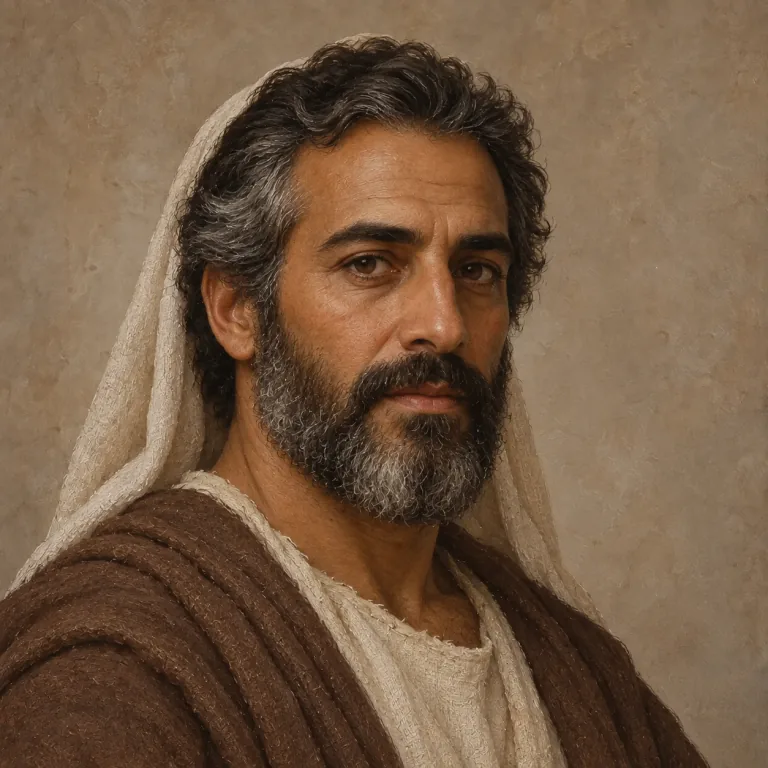
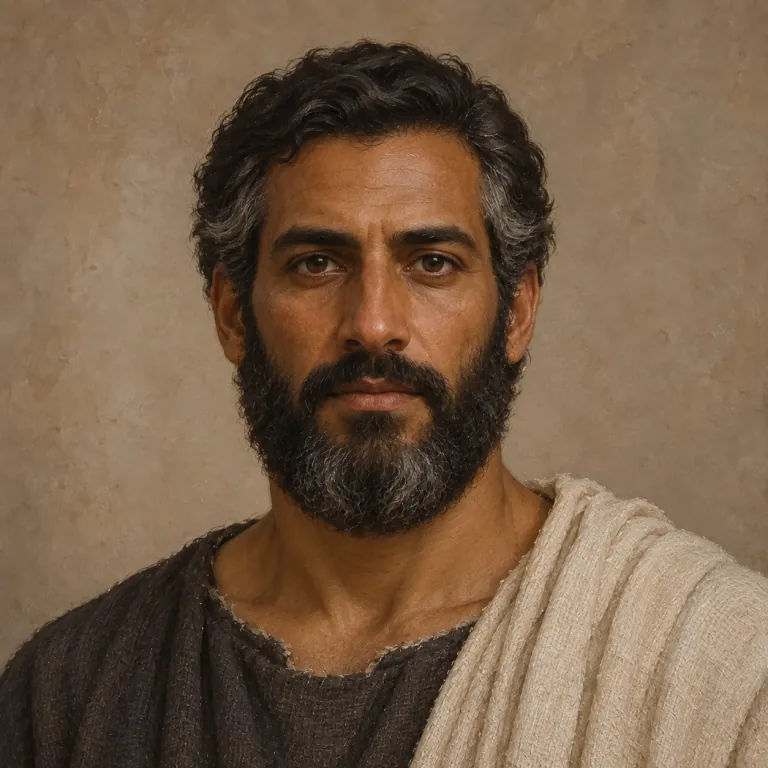
Portrait: an AI-generated artistic interpretation, not evidence of how Ezra looked.
Who Ezra is
Ezra enters in the reign of Artaxerxes king of Persia with a genealogy running from his father Seraiah back to Aaron the chief priest. The narrator calls him a ready scribe in the law of Moses and says the king granted all his request because the hand of the Lord was on him. He leaves Babylon on the first day of the first month and reaches Jerusalem on the first day of the fifth month in the king's seventh year, having prepared his heart to seek the law, to do it and to teach it. The king's letter names him priest and scribe of the law of the God of heaven, gives him silver, gold and vessels for the house, and tells him to appoint judges and teach the law. From the end of Ezra 7 the book speaks in his own voice: he blesses the Lord, gathers leaders, finds no Levites at Ahava and sends for them, proclaims a fast rather than ask for an escort, weighs the treasure to twelve priests. When princes report marriages with the peoples of the lands, he tears his clothes, pulls out his hair, and prays a confession at the evening sacrifice. Shechaniah proposes a covenant, Ezra makes Israel swear, fasts in a chamber, addresses the assembly in the rain and sits with chiefs to examine the cases. In Nehemiah he reappears at the water gate, reading the law from a wooden pulpit from morning to midday while Levites give the sense, then teaching the chiefs on the second day. He is named alongside Nehemiah the Tirshatha, the temple wards are dated to his days along with those of Joiakim and Nehemiah, and he walks before one of the companies at the dedication of the wall.
Cited passages: Ezra 7:1, Ezra 7:5, Ezra 7:6, Ezra 7:9, Ezra 7:8, Ezra 7:10, Ezra 7:11, Ezra 7:12, Ezra 7:25, Ezra 7:27, Ezra 8:15, Ezra 8:21, Ezra 8:24, Ezra 9:3, Ezra 9:5, Ezra 10:2, Ezra 10:5, Ezra 10:6, Ezra 10:10, Ezra 10:16, Nehemiah 8:1, Nehemiah 8:3, Nehemiah 8:4, Nehemiah 8:8, Nehemiah 8:9, Nehemiah 8:13, Nehemiah 12:26, Nehemiah 12:36
Historical setting
The text gives Ezra two roles, priest by descent and scribe by skill, and uses both titles together. His genealogy runs through Zadok and Phinehas to Aaron and does not claim to be complete. The king is Artaxerxes; the book does not say whether he is the Artaxerxes who halted the wall in Ezra 4, nor how Ezra's seventh-year arrival relates to Nehemiah's twentieth-year arrival under a king of the same name. Ezra's own voice runs from Ezra 7:27 through chapter 9, then the narrative returns to the third person in chapter 10. Ezra 8 places Sherebiah and Hashabiah among Levites and then among chief priests; the text does not resolve this. Ezra is absent from Nehemiah 1 to 7, and the book does not say where he was or how he and Nehemiah came to act together. The name Ezra also appears in Nehemiah 12 among the priests who went up with Zerubbabel and again as a priestly house in the days of Joiakim; the text does not link these to the scribe, who came later. Ezra is not among the sealers of the covenant in Nehemiah 10. Nothing is recorded of his birth, age, family, death or life in Babylon, and Ezra 10 ends without saying how the marriage covenant was carried out.
Cited passages: Ezra 7:11, Ezra 7:2, Ezra 7:5, Ezra 7:7, Ezra 4:7, Nehemiah 2:1, Ezra 7:28, Ezra 10:1, Ezra 8:18, Ezra 8:24, Nehemiah 8:2, Nehemiah 12:1, Nehemiah 12:13, Nehemiah 10:1, Ezra 10:44
How the story is told
Ezra is introduced by descent, by skill and by royal commission before he speaks, and the phrase the hand of the Lord his God upon him is the narrator's explanation for everything that goes well. When his own voice takes over, the emphasis falls on scruple: he weighs treasure twice, refuses an escort because of what he had already said to the king, and responds to the marriage report by tearing his own clothes and pulling his own hair rather than striking anyone. His prayer in Ezra 9 asks for nothing; the plan comes from Shechaniah, and Ezra's role becomes that of the one who makes others swear and sits to examine. In Nehemiah he is the reader and teacher, standing above the people on a pulpit while others give the sense, and the narrator ties the people's joy to their having understood. The book of Ezra leaves him at a list of offenders, and Nehemiah 12 gives him a place at the head of a thanksgiving procession, so the two books close his story on different notes, unfinished discipline and public celebration.
Cited passages: Ezra 7:6, Ezra 7:9, Ezra 8:34, Ezra 8:22, Ezra 9:3, Ezra 9:15, Ezra 10:3, Ezra 10:16, Nehemiah 8:5, Nehemiah 8:12, Ezra 10:44, Nehemiah 12:36
Story moments
- A scribe with a lineage (Ezra 7:6). The narrator presents Ezra as a ready scribe whose requests the king grants.
- The king's commission (Ezra 7:25). Artaxerxes tells Ezra to appoint judges and teach the law beyond the river.
- Fasting instead of an escort (Ezra 8:21). At Ahava Ezra proclaims a fast to seek a right way for the company.
- Torn garment and pulled hair (Ezra 9:3). Hearing of the mixed marriages, Ezra tears his clothes and sits astonished.
- Making Israel swear (Ezra 10:5). Ezra binds the priests, Levites and people by oath to Shechaniah's proposal.
- Reading from the wooden pulpit (Nehemiah 8:4). Ezra reads the law at the water gate with thirteen men beside him.
- Before the procession (Nehemiah 12:36). Ezra walks ahead of one thanksgiving company at the dedication of the wall.
Key passages
Ezra 7:1
Now after these things, in the reign of Artaxerxes king of Persia, Ezra the son of Seraiah, the son of Azariah, the son of Hilkiah,
Ezra 7:6
This Ezra went up from Babylon; and he was a ready scribe in the law of Moses, which the Lord God of Israel had given: and the king granted him all his request, according to the hand of the Lord his God upon him.
Ezra 7:10
For Ezra had prepared his heart to seek the law of the Lord, and to do it, and to teach in Israel statutes and judgments.
Ezra 7:11
Now this is the copy of the letter that the king Artaxerxes gave unto Ezra the priest, the scribe, even a scribe of the words of the commandments of the Lord, and of his statutes to Israel.
Ezra 7:12
Artaxerxes, king of kings, unto Ezra the priest, a scribe of the law of the God of heaven, perfect peace, and at such a time.
Ezra 7:21
And I, even I Artaxerxes the king, do make a decree to all the treasurers which are beyond the river, that whatsoever Ezra the priest, the scribe of the law of the God of heaven, shall require of you, it be done speedily,
King James Version. 22 indexed passages in total.
For reflection
The narrator says Ezra prepared his heart to seek the law, to do it, and to teach it. Which of those three does the text show him doing most, and where does the record leave a gap between what he knew and what was carried out?
Books Ezra appears in
Related people

Names and references are adapted from STEPBible TIPNR. A person listed with a verse is named or indexed there; it does not mean they wrote or spoke it.