Person in the Old Testament
Esther
Esther: the orphaned Jewish girl made queen who spoke for her people
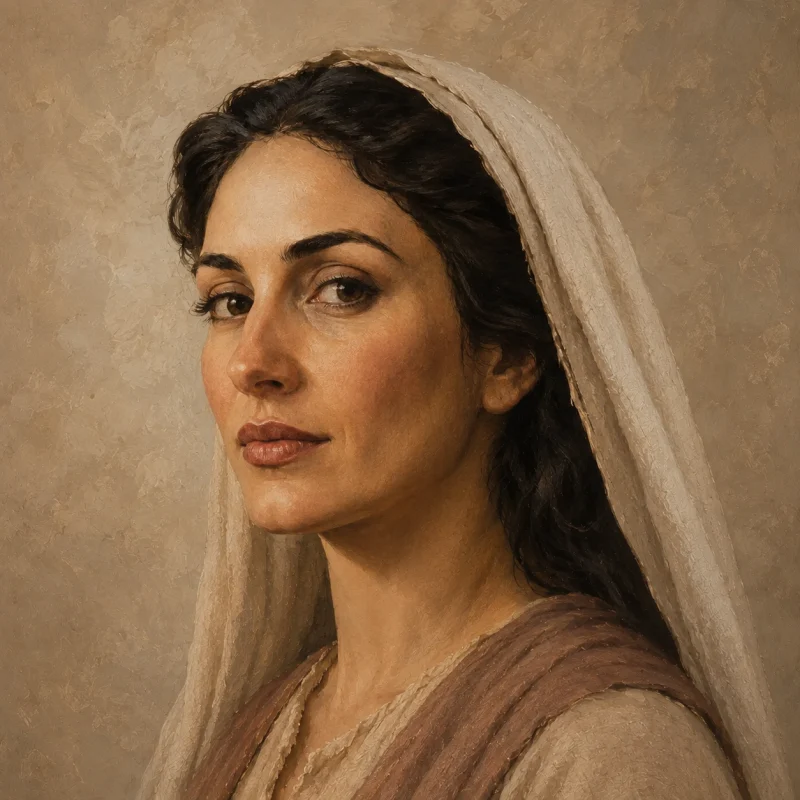
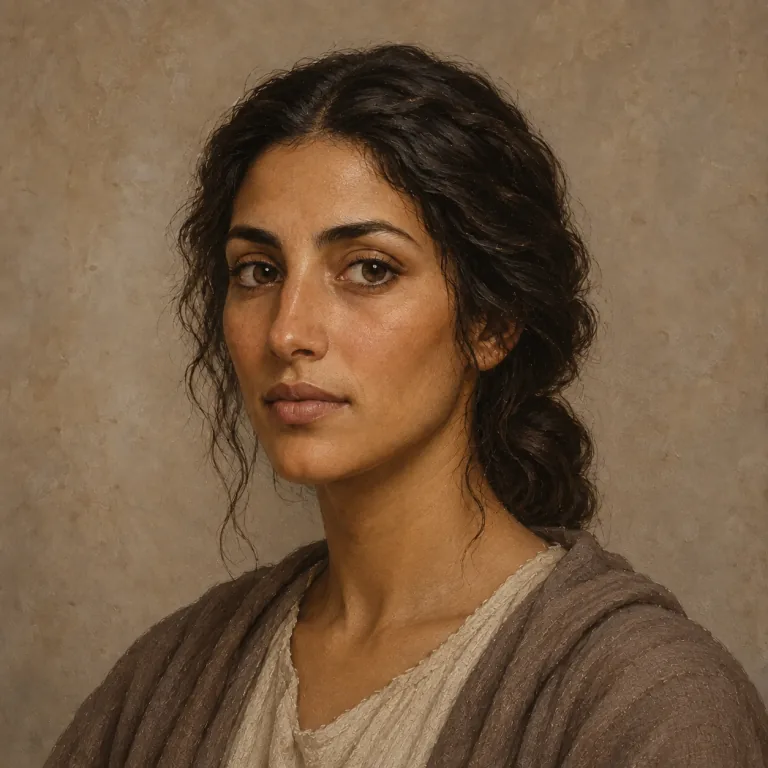
Portrait: an AI-generated artistic interpretation, not evidence of how Esther looked.
Who Esther is
Esther, also called Hadassah, is the daughter of Abihail and the orphaned cousin of Mordecai, who brings her up as his own daughter. When the king gathers young virgins to Shushan after Vashti's removal, she is taken to the king's house, pleases Hegai the keeper of the women, and hides her people and kindred as Mordecai has charged her. She asks for nothing beyond what Hegai appoints, wins the favour of all who see her, and in the seventh year of the reign the king loves her above all the women and makes her queen instead of Vashti. She passes Mordecai's warning of a plot to the king in his name. When the decree against the Jews goes out, she learns of Mordecai's mourning, sends him clothing he refuses, and through Hatach hears his charge to go to the king. She answers that anyone who enters the inner court unsummoned faces death unless the king holds out the sceptre, and that she has not been called for thirty days. After Mordecai's reply she calls a three-day fast, says she will go in against the law, and adds, if I perish, I perish. On the third day she stands in the court, receives the sceptre, and asks the king and Haman to two banquets. At the second she asks for her life and her people and names Haman. She receives Haman's house, tells the king what Mordecai is to her, pleads with tears for the decree to be reversed, and is told to write a new one. After the fighting she asks a second day in Shushan and the hanging of Haman's sons, and with Mordecai writes the letter confirming Purim; the decree of Esther is written in the book.
Cited passages: Esther 2:7, Esther 2:8, Esther 2:9, Esther 2:10, Esther 2:15, Esther 2:16, Esther 2:17, Esther 2:22, Esther 4:4, Esther 4:5, Esther 4:8, Esther 4:11, Esther 4:16, Esther 5:1, Esther 5:2, Esther 5:4, Esther 5:8, Esther 7:3, Esther 7:6, Esther 8:1, Esther 8:3, Esther 8:5, Esther 8:8, Esther 9:13, Esther 9:29, Esther 9:32
Historical setting
Esther appears only in the book that bears her name, in forty-five verses from chapter 2 to chapter 9. The text gives her two names, Hadassah and Esther, names her father Abihail and calls her Mordecai's uncle's daughter, so his cousin, and says both her parents were dead when he took her as his daughter. Her concealment of her people is explained only by Mordecai's charge, and the text does not say how she kept it hidden through the purification and the crowning. The narrator says the king loved her, and says nothing of her own feelings about being taken to the king's house. The rule she describes for the inner court, with its death penalty and sceptre exception, is stated in her words to Hatach, and its truth is shown when the sceptre is held out. The narrator never explains why she invites Haman or why she twice defers her petition. Her speech at the second banquet does not use the word Jews, but by claiming the people as her own she discloses her belonging; chapter 8 says she then told the king what Mordecai was to her. Her request for a second day of killing in Shushan and for the hanging of Haman's already dead sons is hers, without any stated reason. She writes with all authority with Mordecai, and the book calls the final confirmation the decree of Esther. She is absent from the final chapter, and the book records no children or later life.
Cited passages: Esther 2:7, Esther 2:15, Esther 2:10, Esther 2:17, Esther 4:11, Esther 5:2, Esther 5:4, Esther 5:8, Esther 7:3, Esther 7:4, Esther 8:1, Esther 9:13, Esther 9:10, Esther 9:29, Esther 9:32
How the story is told
Esther begins as someone acted upon and ends as someone who writes with authority. In chapter 2 she is brought, taken, preferred and crowned, and the narrator twice notes that she does what Mordecai commands. Chapter 4 turns on that relationship: Mordecai charges her, she answers with the law, he presses her, and she gives the orders that he then carries out. Her approach to the king is told against Vashti's refusal, one queen declining a summons and the other coming without one. Her petition is withheld across two banquets, so the king's repeated formula, to the half of the kingdom, is heard three times before it is answered, and when she finally speaks her request is built in parallel, her life and her people. Her deferential formula, if I have found favour, recurs at each request and in chapter 8 reaches four conditions. The narrator gives her the line if I perish, I perish, and no reflection after it, and the book's summary of the deliverance names her coming before the king as the turning point while leaving her out of its last chapter.
Cited passages: Esther 2:8, Esther 2:16, Esther 2:20, Esther 4:8, Esther 4:13, Esther 4:17, Esther 1:12, Esther 5:1, Esther 5:3, Esther 7:2, Esther 7:3, Esther 5:8, Esther 8:5, Esther 4:16, Esther 9:25
Story moments
- Taken as Mordecai's daughter (Esther 2:7). The orphaned Hadassah, that is Esther, is raised by her cousin Mordecai.
- Her people hidden (Esther 2:10). Esther does not reveal her kindred because Mordecai has charged her.
- Crowned instead of Vashti (Esther 2:17). The king loves Esther above all the women and makes her queen.
- If I perish, I perish (Esther 4:16). Esther calls a fast and resolves to go to the king against the law.
- The sceptre held out (Esther 5:2). Esther stands in the inner court and the king extends the golden sceptre.
- My life and my people (Esther 7:3). At the second banquet Esther asks for her life and her people.
- The decree of Esther (Esther 9:32). Esther's decree confirms the matters of Purim and is written in the book.
Key passages
Esther 2:7
And he brought up Hadassah, that is, Esther, his uncle’s daughter: for she had neither father nor mother, and the maid was fair and beautiful; whom Mordecai, when her father and mother were dead, took for his own daughter.
Esther 2:8
So it came to pass, when the king’s commandment and his decree was heard, and when many maidens were gathered together unto Shushan the palace, to the custody of Hegai, that Esther was brought also unto the king’s house, to the custody of Hegai, keeper of the women.
Esther 2:10
Esther had not shewed her people nor her kindred: for Mordecai had charged her that she should not shew it.
Esther 2:11
And Mordecai walked every day before the court of the women’s house, to know how Esther did, and what should become of her.
Esther 2:15
Now when the turn of Esther, the daughter of Abihail the uncle of Mordecai, who had taken her for his daughter, was come to go in unto the king, she required nothing but what Hegai the king’s chamberlain, the keeper of the women, appointed. And Esther obtained favour in the sight of all them that looked upon her.
Esther 2:16
So Esther was taken unto king Ahasuerus into his house royal in the tenth month, which is the month Tebeth, in the seventh year of his reign.
King James Version. 45 indexed passages in total.
For reflection
Esther says, if I perish, I perish, and the narrator adds nothing about what she felt on the third day. What does the text leave for the reader to supply between her decision and her standing in the court?
Books Esther appears in
Related people
Names and references are adapted from STEPBible TIPNR. A person listed with a verse is named or indexed there; it does not mean they wrote or spoke it.