Person in the Old Testament
Mordecai
Mordecai: the Jew at the king's gate who became next to the king
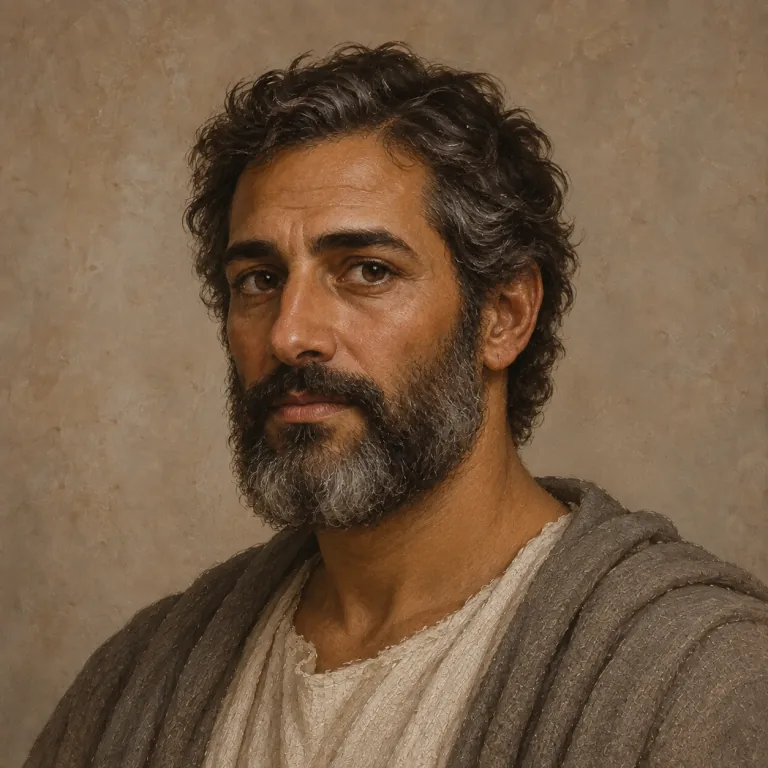
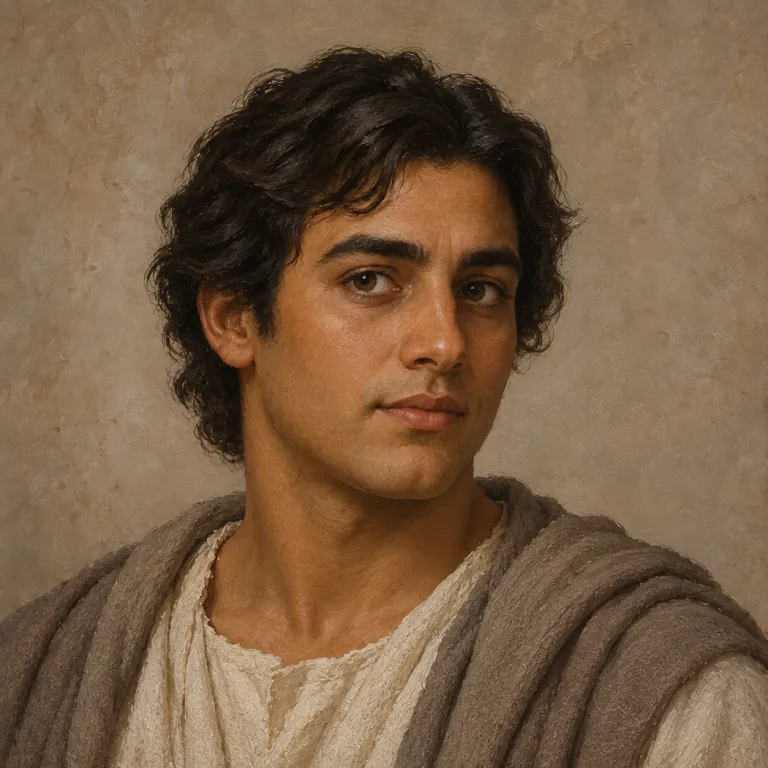
Portrait: an AI-generated artistic interpretation, not evidence of how Mordecai looked.
Who Mordecai is
Mordecai is a Jew in Shushan the palace, the son of Jair, son of Shimei, son of Kish, a Benjamite, linked to the captivity carried from Jerusalem with Jeconiah. He brings up his orphaned cousin Hadassah, that is Esther, as his own daughter, charges her not to reveal her people, and walks daily before the women's court to learn how she does. Sitting in the king's gate, he learns that two chamberlains plan to lay hand on the king and reports it through Esther in his own name; the matter is recorded in the chronicles. When Haman is promoted, Mordecai does not bow, and the servants report to Haman that he is a Jew. After the decree against the Jews he tears his clothes, puts on sackcloth and ashes, and cries bitterly before the gate. Through Hatach he sends Esther the decree and charges her to go to the king, warns her that she will not escape in the king's house, and asks whether she has come to the kingdom for such a time as this. He then does all that Esther commands. Haman's gallows is built for him, but that night the king has the chronicles read, finds Mordecai unrewarded, and has Haman lead him through the city in royal apparel; Mordecai then returns to the gate. After Haman's death Mordecai receives the king's ring and Haman's house, writes the second decree in the king's name, and goes out in royal apparel while Shushan rejoices. Fear of him falls on the officials, he grows greater, and he writes the letters that establish Purim, the second of them with Esther. The book ends with Mordecai next to the king, great among the Jews and speaking peace to all his seed.
Cited passages: Esther 2:5, Esther 2:6, Esther 2:7, Esther 2:10, Esther 2:11, Esther 2:21, Esther 2:22, Esther 2:23, Esther 3:2, Esther 3:4, Esther 4:1, Esther 4:8, Esther 4:13, Esther 4:14, Esther 4:17, Esther 5:14, Esther 6:2, Esther 6:3, Esther 6:11, Esther 6:12, Esther 8:2, Esther 8:9, Esther 8:15, Esther 9:3, Esther 9:4, Esther 9:20, Esther 9:29, Esther 10:3
Historical setting
Mordecai appears only in Esther, in fifty verses across chapters 2 to 10. The narrator gives his line as Jair, Shimei and Kish, calls him a Benjamite, and attaches a clause about the captivity carried from Jerusalem with Jeconiah king of Judah, whom Nebuchadnezzar carried away; the text does not say how the captivity relates to the timing of his own life, and the book makes no calculation. Esther is his uncle's daughter, the daughter of Abihail the uncle of Mordecai, so his cousin, whom he took for his own daughter. The reason he charges her to hide her people is not given, and the reason he does not bow to Haman is not given either; the servants connect it to his being a Jew, which he had told them. His place in the king's gate is stated repeatedly but never explained. The reward for exposing Bigthan and Teresh is stated as undone until the king's sleepless night. His words to Esther in chapter 4 are carried by Hatach and by unnamed messengers; the question about such a time as this is his, with no speaker beyond him. The narrator attributes the officials' help to fear of Mordecai and calls him great in the king's house. The label the Jew stays with him to the last verse, and no descendants are named, though the text says he spoke peace to all his seed.
Cited passages: Esther 2:5, Esther 2:6, Esther 2:7, Esther 2:15, Esther 2:10, Esther 3:4, Esther 2:19, Esther 6:3, Esther 4:5, Esther 4:12, Esther 4:14, Esther 9:3, Esther 9:4, Esther 10:3
How the story is told
Mordecai is presented by position more than by speech. He stands, sits and walks at fixed places, before the court of the women's house, in the king's gate, before the gate in sackcloth, and finally next to the king. His two refusals, to bow and to accept the raiment Esther sends, are reported without explanation, and his one long speech is delivered through messengers. The chapter 4 exchange turns on a change of command: he charges Esther to go in, and the chapter ends with him doing what she commands. The chronicles entry that records his service lies unused for four chapters before it turns the plot, and the honour he receives from Haman is the exact honour Haman designed for himself. His rise mirrors Haman's in its details, the seat above the princes, the ring, the royal apparel, the sealed letters, so that the book's second half rewrites its first with the two men exchanged. The narrator withholds his inner life entirely, giving him a bitter cry but no stated thoughts, and lets the closing verse describe him by what he did for his people rather than by anything he said.
Cited passages: Esther 2:11, Esther 2:19, Esther 4:2, Esther 10:3, Esther 3:2, Esther 4:4, Esther 4:8, Esther 4:17, Esther 2:23, Esther 6:10, Esther 3:1, Esther 8:2, Esther 8:15, Esther 8:10, Esther 4:1
Story moments
- A Jew in Shushan (Esther 2:5). The narrator introduces Mordecai, a Benjamite of the captivity, in Shushan the palace.
- Esther taken as his daughter (Esther 2:7). Mordecai brings up his orphaned cousin Hadassah, that is Esther.
- The plot reported (Esther 2:22). Mordecai learns of the chamberlains' plot and Esther tells the king in his name.
- He does not bow (Esther 3:2). Mordecai does not bow to Haman while the other servants in the gate do.
- Sackcloth at the gate (Esther 4:1). Mordecai tears his clothes and cries bitterly when the decree is known.
- Led through the city (Esther 6:11). Haman arrays Mordecai and leads him on horseback through Shushan.
- Next unto the king (Esther 10:3). Mordecai the Jew ends the book next to the king and speaking peace to his people.
Key passages
Esther 2:5
Now in Shushan the palace there was a certain Jew, whose name was Mordecai, the son of Jair, the son of Shimei, the son of Kish, a Benjamite;
Esther 2:7
And he brought up Hadassah, that is, Esther, his uncle’s daughter: for she had neither father nor mother, and the maid was fair and beautiful; whom Mordecai, when her father and mother were dead, took for his own daughter.
Esther 2:10
Esther had not shewed her people nor her kindred: for Mordecai had charged her that she should not shew it.
Esther 2:11
And Mordecai walked every day before the court of the women’s house, to know how Esther did, and what should become of her.
Esther 2:15
Now when the turn of Esther, the daughter of Abihail the uncle of Mordecai, who had taken her for his daughter, was come to go in unto the king, she required nothing but what Hegai the king’s chamberlain, the keeper of the women, appointed. And Esther obtained favour in the sight of all them that looked upon her.
Esther 2:19
And when the virgins were gathered together the second time, then Mordecai sat in the king’s gate.
King James Version. 50 indexed passages in total.
For reflection
Mordecai charges Esther to go to the king and then does what she commands. What does the text show in that exchange about who leads and who follows, and when the roles change?
Books Mordecai appears in
Related people
Names and references are adapted from STEPBible TIPNR. A person listed with a verse is named or indexed there; it does not mean they wrote or spoke it.