The Histories · Old Testament
Esther 1
Esther 1: the king's feasts and Vashti's refusal
General context
The narrator opens in the days of Ahasuerus, who reigns from India to Ethiopia over a hundred and twenty-seven provinces and sits on his throne in Shushan the palace. In the third year of his reign he makes a feast for his princes and servants and displays the riches of his kingdom for a hundred and eighty days. A second feast follows for all the people in Shushan, seven days in the garden court, with hangings, marble pillars, gold and silver beds, gold vessels and royal wine in abundance; the drinking is by law with no one compelled. Vashti the queen makes her own feast for the women. On the seventh day, the king, merry with wine, commands seven named chamberlains to bring Vashti before him wearing the crown royal to show her beauty. Vashti refuses. The king is very angry and asks the wise men who know law and judgment what should be done to her according to law. Memucan, one of the seven princes of Persia and Media, answers that her deed wrongs all the princes and all the people, because women everywhere will despise their husbands once they hear of it. He proposes a royal commandment, written among the laws of the Persians and Medes so that it cannot be altered, that Vashti come no more before the king and that her royal estate be given to another. The king and princes are pleased. Letters go to every province in its own writing and language, saying that every man should bear rule in his own house.
Cited passages: Esther 1:1, Esther 1:2, Esther 1:3, Esther 1:4, Esther 1:5, Esther 1:6, Esther 1:7, Esther 1:8, Esther 1:9, Esther 1:10, Esther 1:11, Esther 1:12, Esther 1:13, Esther 1:14, Esther 1:15, Esther 1:16, Esther 1:17, Esther 1:18, Esther 1:19, Esther 1:20, Esther 1:21, Esther 1:22
Esther 1 (KJV)
1Now it came to pass in the days of Ahasuerus, (this is Ahasuerus which reigned, from India even unto Ethiopia, over an hundred and seven and twenty provinces:)
2That in those days, when the king Ahasuerus sat on the throne of his kingdom, which was in Shushan the palace,
3In the third year of his reign, he made a feast unto all his princes and his servants; the power of Persia and Media, the nobles and princes of the provinces, being before him:
4When he shewed the riches of his glorious kingdom and the honour of his excellent majesty many days, even an hundred and fourscore days.
5And when these days were expired, the king made a feast unto all the people that were present in Shushan the palace, both unto great and small, seven days, in the court of the garden of the king’s palace;
6Where were white, green, and blue, hangings, fastened with cords of fine linen and purple to silver rings and pillars of marble: the beds were of gold and silver, upon a pavement of red, and blue, and white, and black, marble.
7And they gave them drink in vessels of gold, (the vessels being diverse one from another,) and royal wine in abundance, according to the state of the king.
8And the drinking was according to the law; none did compel: for so the king had appointed to all the officers of his house, that they should do according to every man’s pleasure.
9Also Vashti the queen made a feast for the women in the royal house which belonged to king Ahasuerus.
10On the seventh day, when the heart of the king was merry with wine, he commanded Mehuman, Biztha, Harbona, Bigtha, and Abagtha, Zethar, and Carcas, the seven chamberlains that served in the presence of Ahasuerus the king,
11To bring Vashti the queen before the king with the crown royal, to shew the people and the princes her beauty: for she was fair to look on.
12But the queen Vashti refused to come at the king’s commandment by his chamberlains: therefore was the king very wroth, and his anger burned in him.
13Then the king said to the wise men, which knew the times, (for so was the king’s manner toward all that knew law and judgment:
14And the next unto him was Carshena, Shethar, Admatha, Tarshish, Meres, Marsena, and Memucan, the seven princes of Persia and Media, which saw the king’s face, and which sat the first in the kingdom;)
15What shall we do unto the queen Vashti according to law, because she hath not performed the commandment of the king Ahasuerus by the chamberlains?
16And Memucan answered before the king and the princes, Vashti the queen hath not done wrong to the king only, but also to all the princes, and to all the people that are in all the provinces of the king Ahasuerus.
17For this deed of the queen shall come abroad unto all women, so that they shall despise their husbands in their eyes, when it shall be reported, The king Ahasuerus commanded Vashti the queen to be brought in before him, but she came not.
18Likewise shall the ladies of Persia and Media say this day unto all the king’s princes, which have heard of the deed of the queen. Thus shall there arise too much contempt and wrath.
19If it please the king, let there go a royal commandment from him, and let it be written among the laws of the Persians and the Medes, that it be not altered, That Vashti come no more before king Ahasuerus; and let the king give her royal estate unto another that is better than she.
20And when the king’s decree which he shall make shall be published throughout all his empire, (for it is great,) all the wives shall give to their husbands honour, both to great and small.
21And the saying pleased the king and the princes; and the king did according to the word of Memucan:
22For he sent letters into all the king’s provinces, into every province according to the writing thereof, and to every people after their language, that every man should bear rule in his own house, and that it should be published according to the language of every people.
This page shows the King James Version. In the app, reading opens in the Berean Standard Bible unless you have chosen another translation. The reader includes five translations: the Berean Standard Bible (BSB), the King James Version (KJV), the World English Bible (WEB), the Bible in Basic English (BBE), and the American Standard Version (ASV). Search covers three of them: Berean Standard, King James, and World English. Basic English and American Standard readers search the King James words.
Historical context
The narrator identifies Ahasuerus only by the extent of his reign, a hundred and twenty-seven provinces from India to Ethiopia, and by his seat in Shushan the palace; the book names no father or other name for him. The time marker is the third year of his reign, and the feast lengths are a hundred and eighty days and then seven. The kingdom is named as Persia and Media. Vashti is called the queen and holds a feast for the women in the royal house; the text does not say who she is beyond that. Her refusal is reported in one clause, that she refused to come at the king's commandment by his chamberlains, and no reason is given. The king's question is about what to do according to law, and the answer comes from Memucan, one of seven named princes, not from the king; the narrator then says the king did according to the word of Memucan. Memucan's claim that Vashti wronged all the princes and all the people is his own argument. The decree bars Vashti from coming before the king and gives her royal estate to another; it does not say she is killed or sent away, and the book does not report her fate beyond the king remembering her and what was decreed against her. The idea that a written law of the Persians and Medes cannot be altered is stated here by Memucan and returns later when the king says a writing sealed with his ring may no man reverse.
Cited passages: Esther 1:1, Esther 1:2, Esther 1:3, Esther 1:4, Esther 1:5, Esther 1:9, Esther 1:12, Esther 1:13, Esther 1:15, Esther 1:16, Esther 1:19, Esther 1:21, Esther 2:1, Esther 8:8
Literary context
The chapter is built as a descending series of feasts, a hundred and eighty days, then seven days, then Vashti's feast for the women, before the crisis on the seventh day when the king's heart is merry with wine. The narrator lists colours, metals and materials for the second feast without any comment, and the king's wish to show his queen's beauty follows his showing of the riches of his kingdom, so that Vashti is presented as one more thing on display. Her refusal takes a single clause, while the men's deliberation fills the rest of the chapter. Two lists of seven names, the chamberlains and the princes, frame the king's command and his consultation. Memucan's speech expands one refusal into an empire-wide danger, moving from the king to all the princes, to all women, to all the wives, and the decree that results is published across the empire to say that every man should rule in his own house. The narrator notes that at the feast none did compel, and then the king commands the queen to be brought. Vashti never speaks. The removal of the queen leaves the vacancy that the next chapter fills, and the phrase about a law that cannot be altered sets up the problem of the later decrees.
Cited passages: Esther 1:4, Esther 1:5, Esther 1:9, Esther 1:10, Esther 1:11, Esther 1:12, Esther 1:14, Esther 1:16, Esther 1:17, Esther 1:20, Esther 1:22, Esther 1:8, Esther 1:19, Esther 2:4
Key moments
- Feast for the princes (Esther 1:3). In his third year the king makes a feast and displays his riches for a hundred and eighty days.
- Vashti's own feast (Esther 1:9). Vashti the queen holds a feast for the women in the royal house.
- The queen refuses (Esther 1:12). Vashti refuses to come at the king's command and the king's anger burns.
- Memucan's counsel (Esther 1:16). Memucan says Vashti has wronged all the princes and all the people.
- A law that cannot be altered (Esther 1:19). Memucan proposes that Vashti come no more before the king and her estate go to another.
- Letters to every province (Esther 1:22). The king sends letters that every man should bear rule in his own house.
For reflection
Vashti's refusal is reported in one clause with no reason attached, and the men who respond to it speak at length. What might a reader notice about the chapter by weighing that silence against Memucan's speech?
People in this chapter
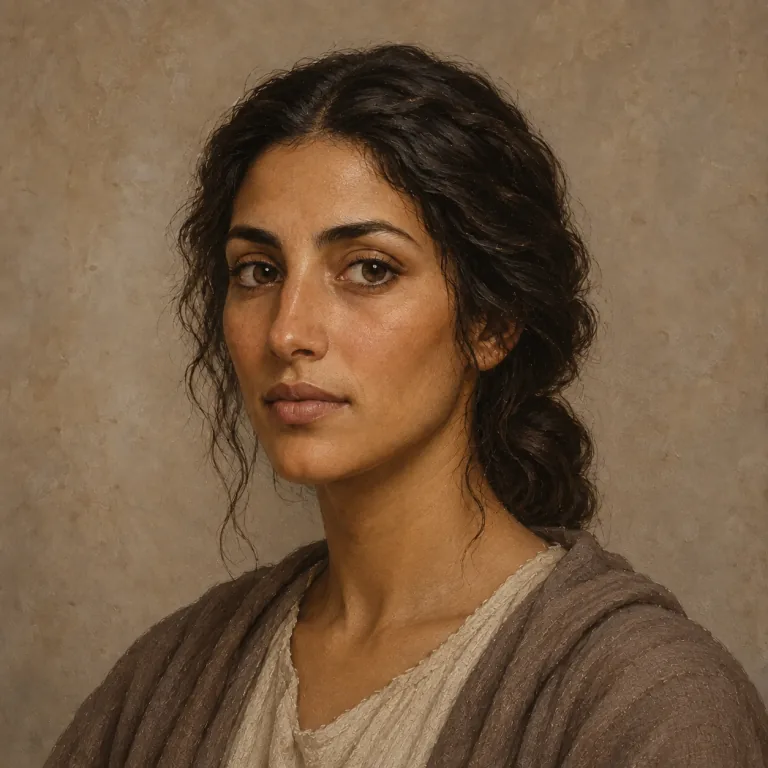
Also indexed here: