Person in the New Testament
Caiaphas
Caiaphas: the high priest in whose palace the council gathered against Jesus
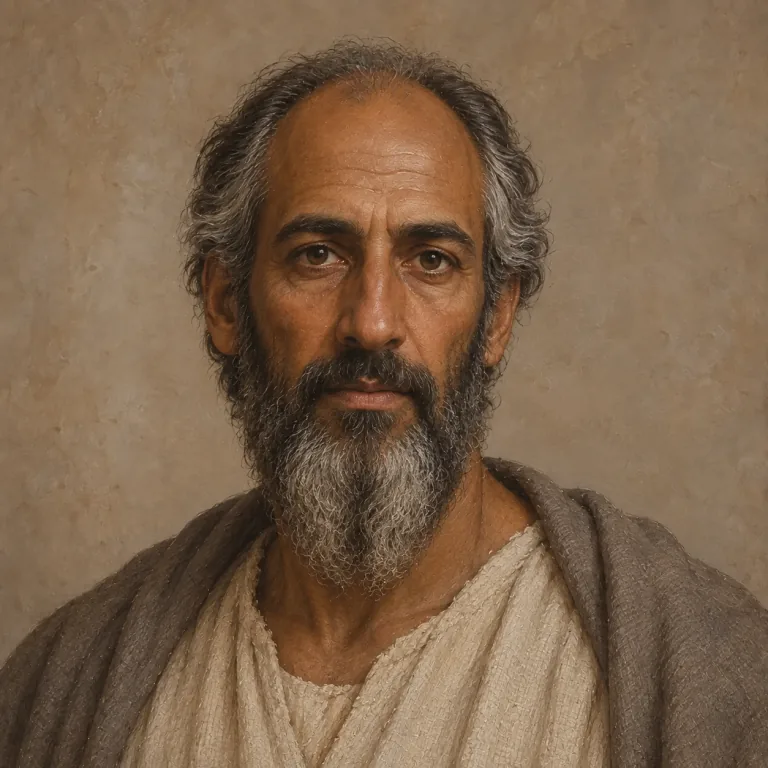
Portrait: an AI-generated artistic interpretation, not evidence of how Caiaphas looked.
Who Caiaphas is
Matthew names him twice. The chief priests, the scribes and the elders of the people assemble at the palace of the high priest, who was called Caiaphas, and after the arrest those who had laid hold on Jesus lead him away to Caiaphas the high priest, where the scribes and the elders were assembled. Luke 3:2 names Annas and Caiaphas being the high priests when the word of God came to John. John reports him speaking in a council of chief priests and Pharisees: one of them, named Caiaphas, being the high priest that same year, tells them it is expedient that one man should die for the people, and the narrator adds that he did not speak this of himself but prophesied. John 18 says Jesus was led to Annas first, who was father in law to Caiaphas, that Annas sent him bound to Caiaphas the high priest, and that from Caiaphas they led him to the hall of judgment. Acts 4:6 lists him at Jerusalem with Annas the high priest, John and Alexander. Those verses are all the text gives of him.
Cited passages: Matthew 26:3, Matthew 26:57, Luke 3:2, John 11:49, John 11:50, John 11:51, John 18:13, John 18:24, John 18:28, Acts 4:6
Historical setting
The passages describe the office in more than one way and do not reconcile them. Luke 3:2 says Annas and Caiaphas being the high priests. John 18:13 calls Annas father in law to Caiaphas, which was the high priest that same year. Acts 4:6 calls Annas the high priest and names Caiaphas after him. John twice adds the phrase that same year, which the text does not explain. Matthew names Caiaphas at the start of the chapter and at the arrest, and then calls the man who questions Jesus simply the high priest, so the name in Matthew's trial scene comes from those earlier verses rather than from the trial itself. The judgment that the words about one man dying were a prophecy is the narrator's in John 11:51, not a claim Caiaphas makes. Nothing is said of his family beyond the relation to Annas, and nothing of his death.
Cited passages: Luke 3:2, John 18:13, Acts 4:6, John 11:49, Matthew 26:3, Matthew 26:57, Matthew 26:63, John 11:51
How the story is told
He is placed at the joints of the story rather than in its foreground. In Matthew his palace is where the plot is laid and where Jesus is taken, so the name marks a location twice before any words are exchanged. In John he is given one speech, and it is the sentence the narrator turns into a prophecy, so the reader hears his reasoning and then hears it read a second way. John 18 uses his name as a station on a route, from Annas, to Caiaphas, to the hall of judgment. Acts 4 has him only as a name in a list of those gathered at Jerusalem. The only words these passages attribute to him by name are in John 11; the questions at the trial in Matthew are given to the high priest without repeating the name.
Cited passages: Matthew 26:3, Matthew 26:57, John 11:49, John 11:50, John 11:51, John 18:24, John 18:28, Acts 4:6
Story moments
- The palace meeting (Matthew 26:3). The chief priests, scribes and elders assemble at the palace of the high priest called Caiaphas.
- Jesus led to Caiaphas (Matthew 26:57). Those who arrested Jesus bring him to Caiaphas, where the scribes and elders are gathered.
- One man for the people (John 11:50). Caiaphas tells the council it is expedient that one man should die for the people.
- Called a prophecy (John 11:51). The narrator says he did not speak this of himself but prophesied as high priest that year.
- Sent bound from Annas (John 18:24). Annas sends Jesus bound to Caiaphas the high priest.
- From Caiaphas to the hall (John 18:28). Jesus is led from Caiaphas to the hall of judgment early in the morning.
- Named at Jerusalem (Acts 4:6). Caiaphas is listed among those gathered with Annas, John and Alexander.
Key passages
Matthew 26:3
Then assembled together the chief priests, and the scribes, and the elders of the people, unto the palace of the high priest, who was called Caiaphas,
Matthew 26:57
And they that had laid hold on Jesus led him away to Caiaphas the high priest, where the scribes and the elders were assembled.
Luke 3:2
Annas and Caiaphas being the high priests, the word of God came unto John the son of Zacharias in the wilderness.
John 11:49
And one of them, named Caiaphas, being the high priest that same year, said unto them, Ye know nothing at all,
John 18:13
And led him away to Annas first; for he was father in law to Caiaphas, which was the high priest that same year.
John 18:14
Now Caiaphas was he, which gave counsel to the Jews, that it was expedient that one man should die for the people.
King James Version. 9 indexed passages in total.
For reflection
The one speech recorded from Caiaphas is a calculation about what is expedient, and the narrator calls it a prophecy. What does it change to hear the same sentence twice over in two senses?
Books Caiaphas appears in
Related people





Names and references are adapted from STEPBible TIPNR. A person listed with a verse is named or indexed there; it does not mean they wrote or spoke it.