Person in the Old and New Testaments
Rahab
Rahab protects the spies and seeks her household's survival
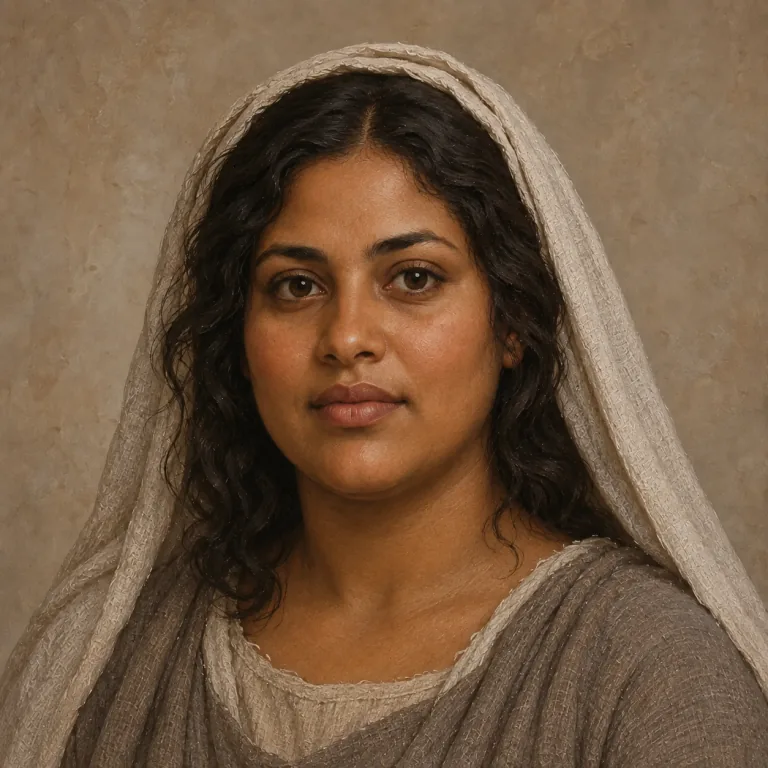
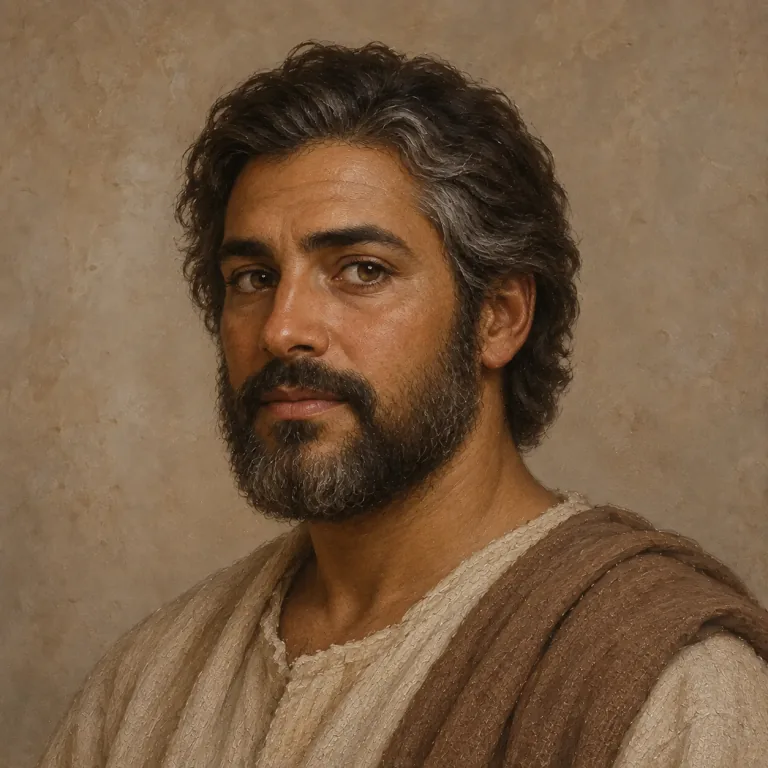
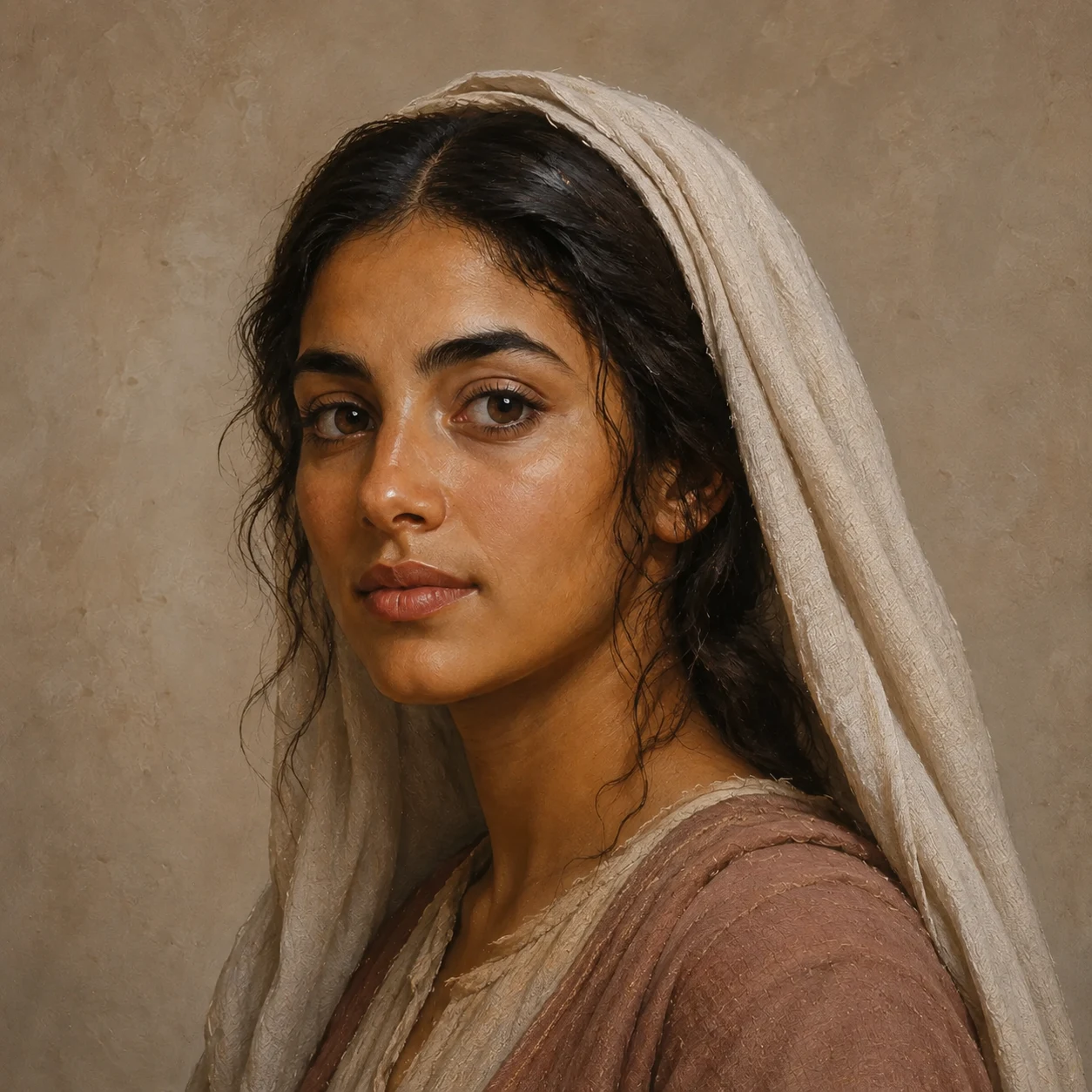
Portrait: an AI-generated artistic interpretation, not evidence of how Rahab looked.
Who Rahab is
Rahab is the woman in Jericho whose house receives the two men Joshua sends to spy on the land. The account calls her a harlot. When the king demands the men, she hides them beneath flax on her roof and gives a false report that they have already left. She tells the spies what her people have heard of the Lord's acts, acknowledges him as God in heaven and on earth, and asks for sworn protection for her family. She lowers the men through a window in her wall house and advises them to hide in the hills. Their agreement requires secrecy, a scarlet line at the window and the household's remaining inside. During Jericho's destruction the same spies bring her family out, first placing them outside Israel's camp; the narrator later says she lives among Israel. Matthew's genealogy of Jesus names a Rachab as the mother of Boaz by Salmon and does not say she is this woman; the timing fits, since Salmon's father Nahshon was captain of Judah in the wilderness (Ruth 4:20, Numbers 2:3). Hebrews recalls her reception of the spies as faith, while James cites receiving and sending them out by another route in its argument about works.
Cited passages: Joshua 2:1, Joshua 2:2, Joshua 2:3, Joshua 2:4, Joshua 2:5, Joshua 2:6, Joshua 2:7, Joshua 2:8, Joshua 2:9, Joshua 2:10, Joshua 2:11, Joshua 2:12, Joshua 2:13, Joshua 2:14, Joshua 2:15, Joshua 2:16, Joshua 2:18, Joshua 2:19, Joshua 2:20, Joshua 2:21, Joshua 2:22, Joshua 2:23, Joshua 2:24, Joshua 6:22, Joshua 6:23, Joshua 6:24, Joshua 6:25, Matthew 1:1, Matthew 1:2, Matthew 1:3, Matthew 1:4, Matthew 1:5, Matthew 1:6, Hebrews 11:31, James 2:24, James 2:25, James 2:26, Ruth 4:20, Numbers 2:3
Historical setting
Joshua supplies a short narrative of Rahab's intervention and rescue, not a continuous life story. The text calls her a harlot. Neither the house nor the roof's flax establishes an innkeeping or textile occupation. The king and spies remain unnamed. The oath's conditions concern secrecy, the identifying line and people staying within the house, and the rescue is set amid the city's explicitly described killing. Matthew's parentage notice names a Rachab, and no verse joins her to the Rahab of Joshua; what points to it is the name and the timing, since Salmon's father Nahshon led Judah in the wilderness. Matthew gives no account of her meeting Salmon and does not identify him as a spy. Hebrews and James offer later theological readings of her actions: Hebrews emphasizes faith, and James explicitly argues from works. These uses should be distinguished from new biographical scenes or an unstated account of her later household life.
Cited passages: Joshua 2:1, Joshua 2:2, Joshua 2:3, Joshua 2:4, Joshua 2:5, Joshua 2:6, Joshua 2:14, Joshua 2:15, Joshua 2:16, Joshua 2:17, Joshua 2:18, Joshua 2:19, Joshua 2:20, Joshua 2:21, Joshua 6:21, Joshua 6:22, Joshua 6:23, Joshua 6:24, Joshua 6:25, Matthew 1:4, Matthew 1:5, Matthew 1:6, Hebrews 11:31, James 2:24, James 2:25, James 2:26, Ruth 4:20, Numbers 2:3
How the story is told
In Joshua, Rahab's speech interprets Israel's approach from inside Jericho. Her report of fear is followed by acknowledgment of the Lord and a request that names the lives she wants preserved. Words become an oath with visible and practical conditions, and the later rescue answers that agreement. Her concealment and false report remain part of the narrative rather than disappearing beneath the later praise. If Matthew's Rachab is she, he gives her a place in a genealogy; Hebrews places her in its sequence of faith examples; James pairs her example with Abraham while arguing that faith without works is dead. The same figure serves different purposes in these passages.
Cited passages: Joshua 2:3, Joshua 2:4, Joshua 2:5, Joshua 2:6, Joshua 2:7, Joshua 2:8, Joshua 2:9, Joshua 2:10, Joshua 2:11, Joshua 2:12, Joshua 2:13, Joshua 2:14, Joshua 2:18, Joshua 2:19, Joshua 2:20, Joshua 2:21, Joshua 6:22, Joshua 6:23, Joshua 6:24, Joshua 6:25, Matthew 1:1, Matthew 1:2, Matthew 1:3, Matthew 1:4, Matthew 1:5, Matthew 1:6, Hebrews 11:30, Hebrews 11:31, James 2:14, James 2:15, James 2:16, James 2:17, James 2:18, James 2:19, James 2:20, James 2:21, James 2:22, James 2:23, James 2:24, James 2:25, James 2:26
Story moments
- The men hidden under flax (Joshua 2:6). Rahab conceals the spies on the roof while the king's men seek them.
- Protection requested for her family (Joshua 2:13). She asks that her parents, siblings and all they have be preserved alive.
- The household is brought out (Joshua 6:23). The spies rescue Rahab and her relatives and first place them outside Israel's camp.
- Her reception remembered as faith (Hebrews 11:31). Hebrews connects her survival with receiving the spies in peace.
- Her actions cited in James (James 2:25). James uses her reception and redirected departure of the messengers in its argument about works.
Key passages
Joshua 2:1
And Joshua the son of Nun sent out of Shittim two men to spy secretly, saying, Go view the land, even Jericho. And they went, and came into an harlot’s house, named Rahab, and lodged there.
Joshua 2:3
And the king of Jericho sent unto Rahab, saying, Bring forth the men that are come to thee, which are entered into thine house: for they be come to search out all the country.
Joshua 6:17
And the city shall be accursed, even it, and all that are therein, to the Lord: only Rahab the harlot shall live, she and all that are with her in the house, because she hid the messengers that we sent.
Joshua 6:23
And the young men that were spies went in, and brought out Rahab, and her father, and her mother, and her brethren, and all that she had; and they brought out all her kindred, and left them without the camp of Israel.
Joshua 6:25
And Joshua saved Rahab the harlot alive, and her father’s household, and all that she had; and she dwelleth in Israel even unto this day; because she hid the messengers, which Joshua sent to spy out Jericho.
Matthew 1:5
And Salmon begat Booz of Rachab; and Booz begat Obed of Ruth; and Obed begat Jesse;
King James Version. 8 indexed passages in total.
For reflection
Rahab asks for the lives of her parents, siblings and their households, extending the concern beyond herself. Whose needs might be missing when you think only about your own safety?
Books Rahab appears in
Related people
Names and references are adapted from STEPBible TIPNR. A person listed with a verse is named or indexed there; it does not mean they wrote or spoke it.