Person in the New Testament
Joseph
Joseph: Mary's husband, who acts on dreams and never speaks in the text
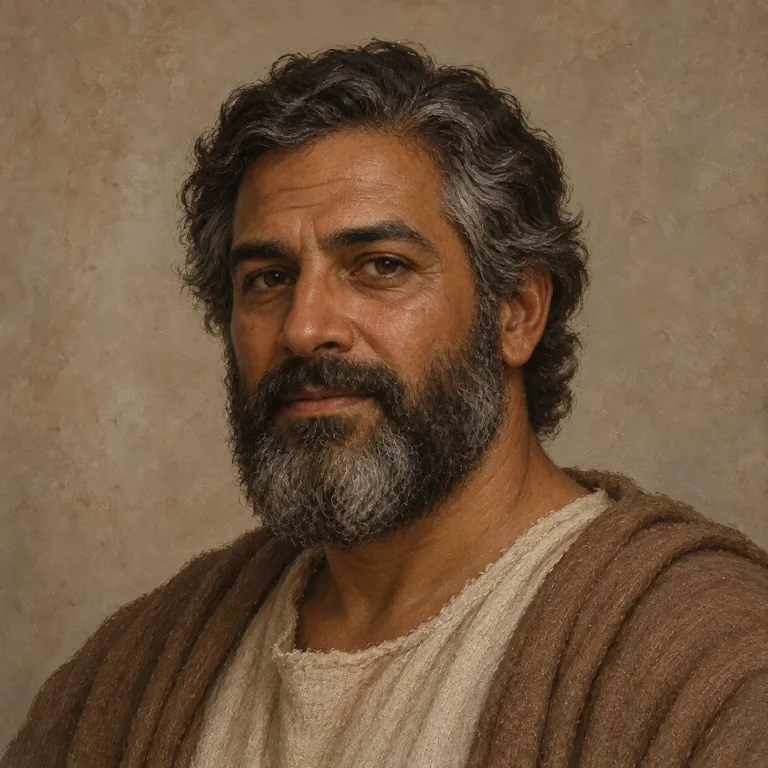
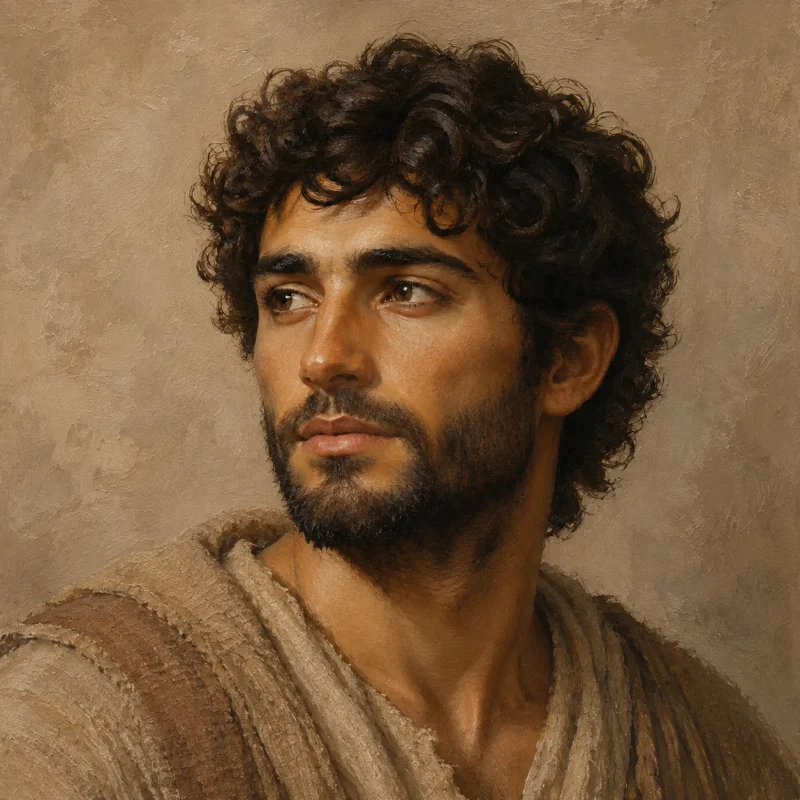
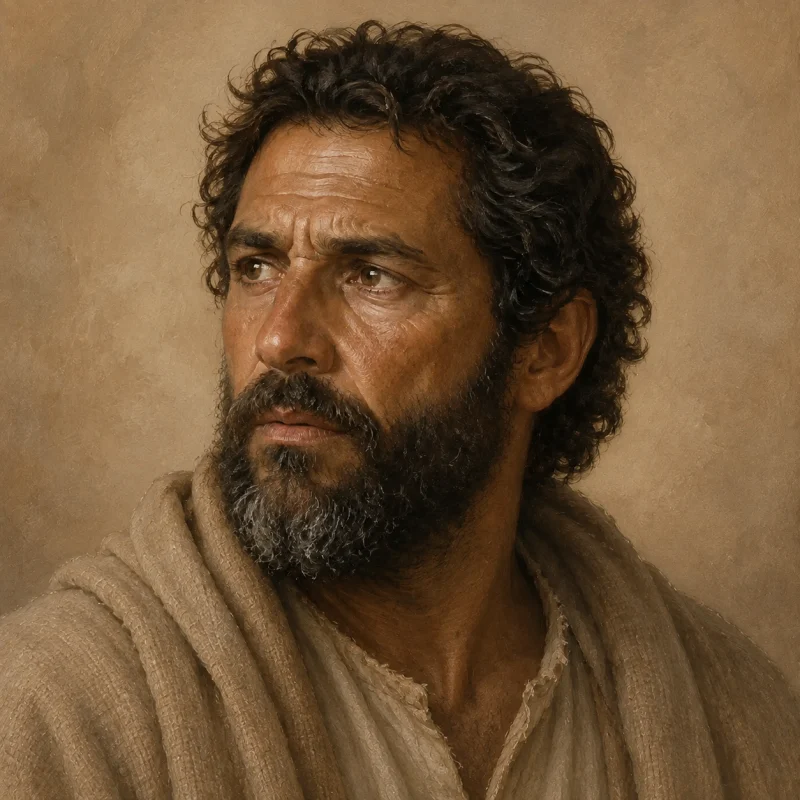
Portrait: an AI-generated artistic interpretation, not evidence of how Joseph looked.
Who Joseph is
Joseph enters Matthew's genealogy as the son of Jacob and the husband of Mary. Told that Mary is with child before they come together, he decides to put her away privately, and an angel in a dream tells him not to fear to take her and gives the child's name. He does as he is told and names the child. Two further dreams move him, first into Egypt and then back to the land of Israel, and a warning about Archelaus turns him aside to Galilee and to Nazareth. Luke calls Mary a virgin espoused to a man whose name was Joseph, of the house of David, and reports that he goes up from Nazareth to Bethlehem to be taxed with Mary his espoused wife. Shepherds find Mary and Joseph and the babe. Joseph and Jesus' mother marvel at what is said about him. At the passover when Jesus is twelve, Joseph and his mother do not know that the boy has stayed behind, and his mother says that his father and she have sought him sorrowing. Luke's genealogy calls Jesus the son of Joseph with the words as was supposed. Later voices identify Jesus by him: Joseph's son in Nazareth, the son of Joseph in Philip's report to Nathanael, and the son of Joseph whose father and mother are known.
Cited passages: Matthew 1:16, Matthew 1:18, Matthew 1:19, Matthew 1:20, Matthew 1:24, Matthew 2:13, Matthew 2:19, Matthew 2:22, Luke 1:27, Luke 2:4, Luke 2:5, Luke 2:16, Luke 2:33, Luke 2:43, Luke 2:48, Luke 3:23, Luke 4:22, John 1:45, John 6:42
Historical setting
The two genealogies name different fathers for him. Matthew writes that Jacob begat Joseph the husband of Mary, and Luke calls Jesus the son of Joseph, which was the son of Heli, with the qualifier as was supposed attached to the link. The text does not explain the difference. He is identified in every passage by relation, to Mary, to Nazareth, or to Jesus, which keeps him apart from other men who carry the name. He has no recorded words anywhere in these passages; everything attributed to him is action or silence. Matthew 13:55 has the townspeople ask whether this is not the carpenter's son, without naming the carpenter, while Luke 4:22 has them ask whether this is not Joseph's son. The last passage in which he is present is the return to Nazareth after the passover; no later scene shows him, and none of these texts reports his death.
Cited passages: Matthew 1:16, Luke 3:23, Matthew 1:19, Matthew 13:55, Luke 4:22, Luke 2:41, Luke 2:51, John 6:42
How the story is told
Matthew builds him out of a repeated pattern: he is told something while asleep and then does it while awake. The angel speaks, and the next sentence reports the obedience, so the narrative gives his decisions no inward commentary beyond the note that he was a just man and the single line that he thought on these things. Luke uses him differently, as the one who travels and is present. He goes up to Bethlehem, he is found with Mary and the babe, he marvels, and he loses the boy on the road home. In Luke's scene it is Mary who speaks, and Joseph appears in her words as thy father. By the time the crowds argue about Jesus in Nazareth, in John's report to Nathanael, and in the complaint at Capernaum, his name has become a way of placing Jesus rather than a person on stage.
Cited passages: Matthew 1:20, Matthew 1:24, Matthew 2:14, Matthew 2:21, Luke 2:4, Luke 2:33, Luke 2:48, John 1:45
Story moments
- A private plan (Matthew 1:19). Joseph decides to put Mary away privately rather than expose her.
- Told in a dream (Matthew 1:20). An angel of the Lord tells Joseph in a dream not to fear to take Mary as his wife.
- Leaving by night (Matthew 2:14). Joseph takes the child and his mother by night and goes into Egypt.
- Turning aside to Galilee (Matthew 2:22). Afraid of Archelaus and warned in a dream, Joseph turns aside into Galilee.
- The journey to Bethlehem (Luke 2:4). Joseph goes up from Nazareth to Bethlehem to be taxed with Mary.
- The boy left behind (Luke 2:43). Joseph and Jesus' mother do not know that the boy has stayed in Jerusalem.
- As was supposed (Luke 3:23). Luke's genealogy qualifies the link to Joseph with the words as was supposed.
Key passages
Matthew 1:16
And Jacob begat Joseph the husband of Mary, of whom was born Jesus, who is called Christ.
Matthew 1:18
Now the birth of Jesus Christ was on this wise: When as his mother Mary was espoused to Joseph, before they came together, she was found with child of the Holy Ghost.
Matthew 1:19
Then Joseph her husband, being a just man, and not willing to make her a publick example, was minded to put her away privily.
Matthew 1:20
But while he thought on these things, behold, the angel of the Lord appeared unto him in a dream, saying, Joseph, thou son of David, fear not to take unto thee Mary thy wife: for that which is conceived in her is of the Holy Ghost.
Matthew 1:24
Then Joseph being raised from sleep did as the angel of the Lord had bidden him, and took unto him his wife:
Matthew 2:13
And when they were departed, behold, the angel of the Lord appeareth to Joseph in a dream, saying, Arise, and take the young child and his mother, and flee into Egypt, and be thou there until I bring thee word: for Herod will seek the young child to destroy him.
King James Version. 16 indexed passages in total.
For reflection
Across every passage that names him, Joseph is given no line of speech. What difference does that silence make to the way the reader reads his decisions?
Books Joseph appears in
Related people
Names and references are adapted from STEPBible TIPNR. A person listed with a verse is named or indexed there; it does not mean they wrote or spoke it.