Person in the Old and New Testaments
Jonah
Jonah: the son of Amittai who fled from the errand to Nineveh
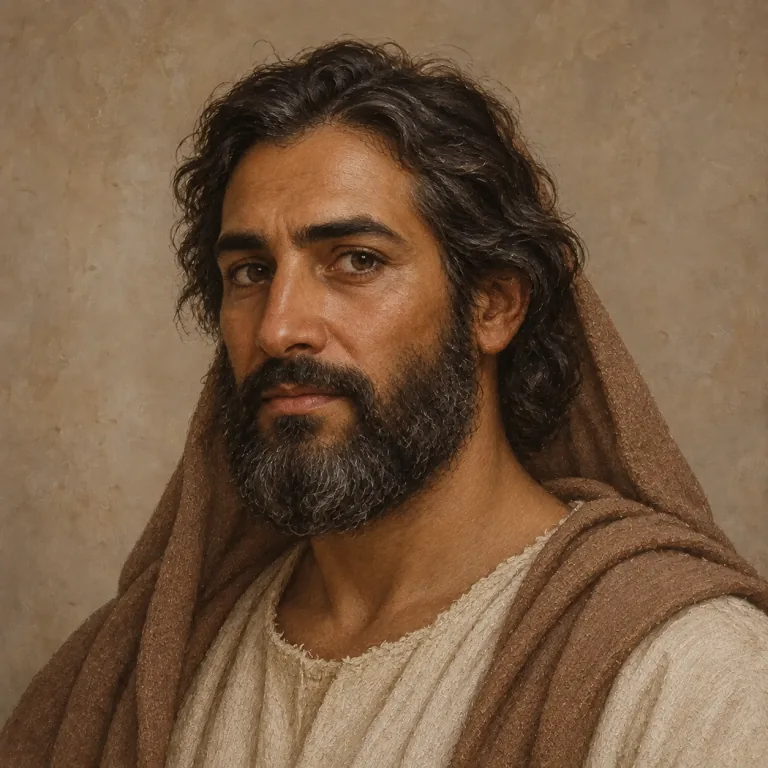
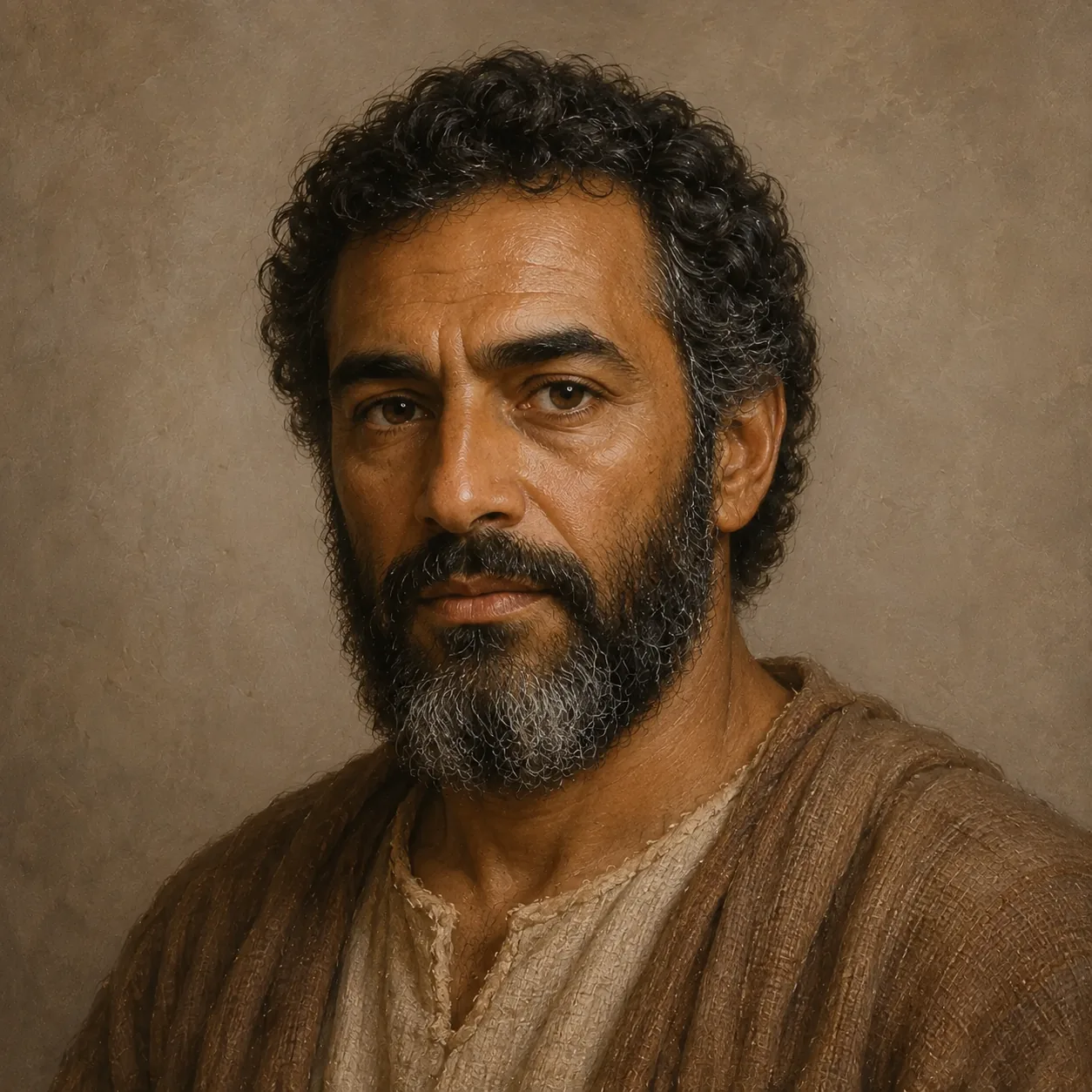
Portrait: an AI-generated artistic interpretation, not evidence of how Jonah looked.
Who Jonah is
He is first met in 2 Kings, where a restored border is credited to "the word of the Lord God of Israel, which he spake by the hand of his servant Jonah, the son of Amittai, the prophet, which was of Gath-hepher." His own book opens with a command to go to Nineveh, and "Jonah rose up to flee unto Tarshish from the presence of the Lord." He sleeps through the storm, the lot falls on him, he tells the crew to throw him overboard, and "the Lord had prepared a great fish to swallow up Jonah." From inside it he prays and ends, "Salvation is of the Lord," and the fish puts him on dry land. The word comes "the second time," he goes, and cries one sentence: "Yet forty days, and Nineveh shall be overthrown." When the city turns and God relents, "it displeased Jonah exceedingly, and he was very angry." He sits east of the city under a booth, is glad of a gourd, loses it to a worm, and says, "I do well to be angry, even unto death." The book ends with a question to him that he does not answer. In the Gospels he is named as a sign: "as Jonas was three days and three nights in the whale’s belly," and "they repented at the preaching of Jonas."
Cited passages: 2 Kings 14:25, Jonah 1:1, Jonah 1:3, Jonah 1:5, Jonah 1:7, Jonah 1:17, Jonah 2:1, Jonah 2:9, Jonah 2:10, Jonah 3:1, Jonah 3:4, Jonah 4:1, Jonah 4:5, Jonah 4:6, Jonah 4:9, Matthew 12:40, Matthew 12:41
Historical setting
Two books give his name and both add "the son of Amittai." Only 2 Kings 14:25 adds more, calling him "the prophet, which was of Gath-hepher" and placing his word in the reign of "Jeroboam the son of Joash king of Israel"; his own book gives no king, no year and no town. The Gospels spell the name Jonas and use him in argument rather than narrative: Matthew 12:39 and 16:4 both give "the sign of the prophet Jonas," Luke 11:30 says "as Jonas was a sign unto the Ninevites," and Matthew 12:41 and Luke 11:32 both say the men of Nineveh "repented at the preaching of Jonas." Where Jonah 1:17 says "a great fish," Matthew 12:40 says "the whale’s belly"; the two wordings sit side by side and neither book explains the other. The handle "the Reluctant" is a product label and is not a phrase in the printed text. What the text does say is that he fled, that he was "very angry," and that his last recorded words are a defence of that anger. Nothing is recorded of his death.
Cited passages: 2 Kings 14:25, 2 Kings 14:23, Jonah 1:1, Matthew 12:39, Matthew 16:4, Luke 11:30, Luke 11:32, Jonah 1:17, Matthew 12:40, Jonah 4:1
How the story is told
In his own book he is mostly moved rather than moving: he is thrown, swallowed, vomited out, given a gourd and left in the sun. His speech is rationed. The longest thing he says is a prayer from inside a fish, and the shortest is his whole message to a city, "Yet forty days, and Nineveh shall be overthrown." The one reason he offers for anything comes late, at 4:2, where he says he fled because he already knew the Lord to be "a gracious God, and merciful, slow to anger." Twice he asks to die, and twice he is asked, "Doest thou well to be angry?", answering only the second time. Everyone else in the book moves toward God, the sailors who sacrifice, the city that fasts, while the prophet moves away and then sits down to watch. The Gospels drop the story and keep the shape of it, the three days and the preaching that was believed.
Cited passages: Jonah 1:15, Jonah 2:10, Jonah 3:4, Jonah 4:2, Jonah 4:3, Jonah 4:8, Jonah 4:9, Jonah 1:16, Jonah 4:5, Luke 11:29
Story moments
- Named in 2 Kings (2 Kings 14:25). A restored border is credited to a word spoken by Jonah the son of Amittai of Gath-hepher.
- Flight to Tarshish (Jonah 1:3). Sent to Nineveh, Jonah boards a ship going the opposite way.
- Swallowed by a great fish (Jonah 1:17). Thrown into the sea, he is swallowed by a fish the Lord prepared.
- Salvation is of the Lord (Jonah 2:9). His prayer from inside the fish ends with a statement about deliverance.
- Yet forty days (Jonah 3:4). His entire message to Nineveh is one sentence about forty days.
- Very angry (Jonah 4:1). When the city is spared, Jonah is displeased and angry.
- A sign in the Gospels (Matthew 12:41). Jesus points to Nineveh repenting at the preaching of Jonas.
Key passages
2 Kings 14:25
He restored the coast of Israel from the entering of Hamath unto the sea of the plain, according to the word of the Lord God of Israel, which he spake by the hand of his servant Jonah, the son of Amittai, the prophet, which was of Gath-hepher.
Jonah 1:1
Now the word of the Lord came unto Jonah the son of Amittai, saying,
Jonah 1:3
But Jonah rose up to flee unto Tarshish from the presence of the Lord, and went down to Joppa; and he found a ship going to Tarshish: so he paid the fare thereof, and went down into it, to go with them unto Tarshish from the presence of the Lord.
Jonah 1:5
Then the mariners were afraid, and cried every man unto his god, and cast forth the wares that were in the ship into the sea, to lighten it of them. But Jonah was gone down into the sides of the ship; and he lay, and was fast asleep.
Jonah 1:7
And they said every one to his fellow, Come, and let us cast lots, that we may know for whose cause this evil is upon us. So they cast lots, and the lot fell upon Jonah.
Jonah 1:15
So they took up Jonah, and cast him forth into the sea: and the sea ceased from her raging.
King James Version. 24 indexed passages in total.
For reflection
The one reason he ever gives for fleeing is that he already knew what God would do. What does the book leave the reader to decide about a man whose complaint is that the warning worked?
Books Jonah appears in
Related people




Names and references are adapted from STEPBible TIPNR. A person listed with a verse is named or indexed there; it does not mean they wrote or spoke it.