The Histories · Old Testament
2 Samuel 5
David rules all Israel and takes Jerusalem
General context
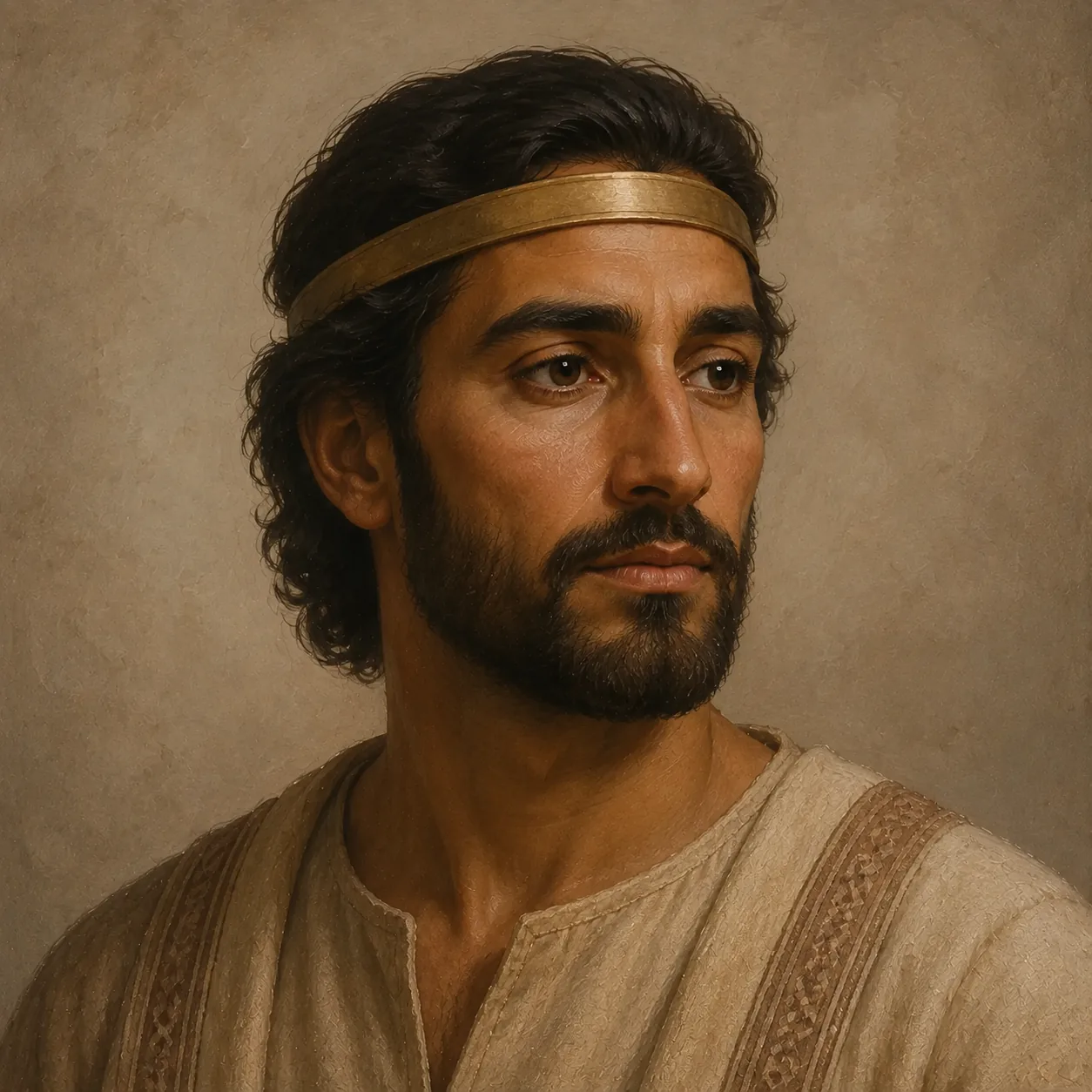
Israel's elders come to Hebron, make a covenant with David and anoint him king over all Israel. David captures the Jebusite stronghold of Zion and establishes his residence there. Hiram of Tyre sends materials and workers for his house, and David recognizes his kingdom as established for Israel's sake. The chapter lists children born in Jerusalem and recounts two victories over the Philistines, each following a fresh inquiry of the Lord.
Cited passages: 2 Samuel 5:1, 2 Samuel 5:2, 2 Samuel 5:3, 2 Samuel 5:4, 2 Samuel 5:5, 2 Samuel 5:6, 2 Samuel 5:7, 2 Samuel 5:8, 2 Samuel 5:9, 2 Samuel 5:10, 2 Samuel 5:11, 2 Samuel 5:12, 2 Samuel 5:13, 2 Samuel 5:14, 2 Samuel 5:15, 2 Samuel 5:16, 2 Samuel 5:17, 2 Samuel 5:18, 2 Samuel 5:19, 2 Samuel 5:20, 2 Samuel 5:21, 2 Samuel 5:22, 2 Samuel 5:23, 2 Samuel 5:24, 2 Samuel 5:25
2 Samuel 5 (KJV)
1Then came all the tribes of Israel to David unto Hebron, and spake, saying, Behold, we are thy bone and thy flesh.
2Also in time past, when Saul was king over us, thou wast he that leddest out and broughtest in Israel: and the Lord said to thee, Thou shalt feed my people Israel, and thou shalt be a captain over Israel.
3So all the elders of Israel came to the king to Hebron; and king David made a league with them in Hebron before the Lord: and they anointed David king over Israel.
4David was thirty years old when he began to reign, and he reigned forty years.
5In Hebron he reigned over Judah seven years and six months: and in Jerusalem he reigned thirty and three years over all Israel and Judah.
6And the king and his men went to Jerusalem unto the Jebusites, the inhabitants of the land: which spake unto David, saying, Except thou take away the blind and the lame, thou shalt not come in hither: thinking, David cannot come in hither.
7Nevertheless David took the strong hold of Zion: the same is the city of David.
8And David said on that day, Whosoever getteth up to the gutter, and smiteth the Jebusites, and the lame and the blind, that are hated of David’s soul, he shall be chief and captain. Wherefore they said, The blind and the lame shall not come into the house.
9So David dwelt in the fort, and called it the city of David. And David built round about from Millo and inward.
10And David went on, and grew great, and the Lord God of hosts was with him.
11And Hiram king of Tyre sent messengers to David, and cedar trees, and carpenters, and masons: and they built David an house.
12And David perceived that the Lord had established him king over Israel, and that he had exalted his kingdom for his people Israel’s sake.
13And David took him more concubines and wives out of Jerusalem, after he was come from Hebron: and there were yet sons and daughters born to David.
14And these be the names of those that were born unto him in Jerusalem; Shammua, and Shobab, and Nathan, and Solomon,
15Ibhar also, and Elishua, and Nepheg, and Japhia,
16And Elishama, and Eliada, and Eliphalet.
17But when the Philistines heard that they had anointed David king over Israel, all the Philistines came up to seek David; and David heard of it, and went down to the hold.
18The Philistines also came and spread themselves in the valley of Rephaim.
19And David enquired of the Lord, saying, Shall I go up to the Philistines? wilt thou deliver them into mine hand? And the Lord said unto David, Go up: for I will doubtless deliver the Philistines into thine hand.
20And David came to Baal-perazim, and David smote them there, and said, The Lord hath broken forth upon mine enemies before me, as the breach of waters. Therefore he called the name of that place Baal-perazim.
21And there they left their images, and David and his men burned them.
22And the Philistines came up yet again, and spread themselves in the valley of Rephaim.
23And when David enquired of the Lord, he said, Thou shalt not go up; but fetch a compass behind them, and come upon them over against the mulberry trees.
24And let it be, when thou hearest the sound of a going in the tops of the mulberry trees, that then thou shalt bestir thyself: for then shall the Lord go out before thee, to smite the host of the Philistines.
25And David did so, as the Lord had commanded him; and smote the Philistines from Geba until thou come to Gazer.
This page shows the King James Version. In the app, reading opens in the Berean Standard Bible unless you have chosen another translation. The reader includes five translations: the Berean Standard Bible (BSB), the King James Version (KJV), the World English Bible (WEB), the Bible in Basic English (BBE), and the American Standard Version (ASV). Search covers three of them: Berean Standard, King James, and World English. Basic English and American Standard readers search the King James words.
Historical context
The account gives David's age at the beginning of his reign as thirty and summarizes his years at Hebron and Jerusalem. Zion becomes the city of David. The capture account contains a taunt about the blind and lame and a difficult reply with differing wording across translations; it should not be expanded into an unsupported general policy toward disabled people. Hiram's cedar and skilled workers connect the royal building project with Tyre.
Cited passages: 2 Samuel 5:4, 2 Samuel 5:5, 2 Samuel 5:6, 2 Samuel 5:7, 2 Samuel 5:8, 2 Samuel 5:9, 2 Samuel 5:10, 2 Samuel 5:11, 2 Samuel 5:12
Literary context
Recognition by the tribes, capture of a capital and foreign assistance establish the growing kingdom, but the narrator also credits the Lord's presence. The two Philistine encounters do not repeat the same instructions: David first goes up to fight, then circles behind and waits for the announced sound. Success is presented through attentive response to particular guidance.
Cited passages: 2 Samuel 5:1, 2 Samuel 5:2, 2 Samuel 5:3, 2 Samuel 5:7, 2 Samuel 5:8, 2 Samuel 5:9, 2 Samuel 5:10, 2 Samuel 5:11, 2 Samuel 5:12, 2 Samuel 5:17, 2 Samuel 5:18, 2 Samuel 5:19, 2 Samuel 5:20, 2 Samuel 5:21, 2 Samuel 5:22, 2 Samuel 5:23, 2 Samuel 5:24, 2 Samuel 5:25
Key moments
- Anointed by Israel's elders (2 Samuel 5:3). David makes a covenant with the elders and is anointed king over Israel.
- Zion captured (2 Samuel 5:7). David takes the stronghold that becomes the city of David.
- The kingdom's purpose recognized (2 Samuel 5:12). David perceives that the Lord has exalted his kingdom for Israel's sake.
- A victory named (2 Samuel 5:20). David names Baal-perazim after describing the Lord breaking through his enemies.
- Different instructions for the next battle (2 Samuel 5:23). The Lord tells David to circle behind the Philistines.
For reflection
What difference does it make that David asks again before the second battle instead of assuming the earlier instructions still apply?
People in this chapter
Also indexed here: