The Histories · Old Testament
2 Kings 17
2 Kings 17: Samaria falls, Israel is carried to Assyria, and the narrator explains why
General context
Hoshea the son of Elah reigns nine years over Israel and does evil, though not as the kings before him. Shalmaneser king of Assyria comes up, and Hoshea becomes his servant and pays tribute. When the king of Assyria finds that Hoshea has sent to So king of Egypt and stopped the yearly present, he imprisons him, besieges Samaria three years, takes it, and carries Israel to Halah, Habor by the river of Gozan, and the cities of the Medes. The narrator then explains: Israel sinned against the Lord who brought them out of Egypt, feared other gods, built high places in every city, set up images and groves, served idols, and ignored the prophets and seers who called them to turn. They hardened their necks, rejected the covenant, made two calves, worshipped the host of heaven, served Baal, passed their children through the fire, and practised divination. The Lord removed them from his sight; only Judah was left, and Judah also walked in Israel's statutes. The narrator traces the trouble to Jeroboam's sin. The king of Assyria settles people from Babylon, Cuthah, Ava, Hamath and Sepharvaim in Samaria. They do not fear the Lord, and lions kill some of them. A deported priest is sent back to Beth-el to teach them, but each nation makes its own gods, and the Sepharvites burn their children. The narrator says they feared the Lord and served their own gods, unto this day.
Cited passages: 2 Kings 17:1, 2 Kings 17:2, 2 Kings 17:3, 2 Kings 17:4, 2 Kings 17:5, 2 Kings 17:6, 2 Kings 17:7, 2 Kings 17:8, 2 Kings 17:9, 2 Kings 17:10, 2 Kings 17:12, 2 Kings 17:13, 2 Kings 17:14, 2 Kings 17:15, 2 Kings 17:16, 2 Kings 17:17, 2 Kings 17:18, 2 Kings 17:19, 2 Kings 17:21, 2 Kings 17:23, 2 Kings 17:24, 2 Kings 17:25, 2 Kings 17:27, 2 Kings 17:28, 2 Kings 17:29, 2 Kings 17:31, 2 Kings 17:33, 2 Kings 17:41
2 Kings 17 (KJV)
1In the twelfth year of Ahaz king of Judah began Hoshea the son of Elah to reign in Samaria over Israel nine years.
2And he did that which was evil in the sight of the Lord, but not as the kings of Israel that were before him.
3Against him came up Shalmaneser king of Assyria; and Hoshea became his servant, and gave him presents.
4And the king of Assyria found conspiracy in Hoshea: for he had sent messengers to So king of Egypt, and brought no present to the king of Assyria, as he had done year by year: therefore the king of Assyria shut him up, and bound him in prison.
5Then the king of Assyria came up throughout all the land, and went up to Samaria, and besieged it three years.
6In the ninth year of Hoshea the king of Assyria took Samaria, and carried Israel away into Assyria, and placed them in Halah and in Habor by the river of Gozan, and in the cities of the Medes.
7For so it was, that the children of Israel had sinned against the Lord their God, which had brought them up out of the land of Egypt, from under the hand of Pharaoh king of Egypt, and had feared other gods,
8And walked in the statutes of the heathen, whom the Lord cast out from before the children of Israel, and of the kings of Israel, which they had made.
9And the children of Israel did secretly those things that were not right against the Lord their God, and they built them high places in all their cities, from the tower of the watchmen to the fenced city.
10And they set them up images and groves in every high hill, and under every green tree:
11And there they burnt incense in all the high places, as did the heathen whom the Lord carried away before them; and wrought wicked things to provoke the Lord to anger:
12For they served idols, whereof the Lord had said unto them, Ye shall not do this thing.
13Yet the Lord testified against Israel, and against Judah, by all the prophets, and by all the seers, saying, Turn ye from your evil ways, and keep my commandments and my statutes, according to all the law which I commanded your fathers, and which I sent to you by my servants the prophets.
14Notwithstanding they would not hear, but hardened their necks, like to the neck of their fathers, that did not believe in the Lord their God.
15And they rejected his statutes, and his covenant that he made with their fathers, and his testimonies which he testified against them; and they followed vanity, and became vain, and went after the heathen that were round about them, concerning whom the Lord had charged them, that they should not do like them.
16And they left all the commandments of the Lord their God, and made them molten images, even two calves, and made a grove, and worshipped all the host of heaven, and served Baal.
17And they caused their sons and their daughters to pass through the fire, and used divination and enchantments, and sold themselves to do evil in the sight of the Lord, to provoke him to anger.
18Therefore the Lord was very angry with Israel, and removed them out of his sight: there was none left but the tribe of Judah only.
19Also Judah kept not the commandments of the Lord their God, but walked in the statutes of Israel which they made.
20And the Lord rejected all the seed of Israel, and afflicted them, and delivered them into the hand of spoilers, until he had cast them out of his sight.
21For he rent Israel from the house of David; and they made Jeroboam the son of Nebat king: and Jeroboam drave Israel from following the Lord, and made them sin a great sin.
22For the children of Israel walked in all the sins of Jeroboam which he did; they departed not from them;
23Until the Lord removed Israel out of his sight, as he had said by all his servants the prophets. So was Israel carried away out of their own land to Assyria unto this day.
24And the king of Assyria brought men from Babylon, and from Cuthah, and from Ava, and from Hamath, and from Sepharvaim, and placed them in the cities of Samaria instead of the children of Israel: and they possessed Samaria, and dwelt in the cities thereof.
25And so it was at the beginning of their dwelling there, that they feared not the Lord: therefore the Lord sent lions among them, which slew some of them.
26Wherefore they spake to the king of Assyria, saying, The nations which thou hast removed, and placed in the cities of Samaria, know not the manner of the God of the land: therefore he hath sent lions among them, and, behold, they slay them, because they know not the manner of the God of the land.
27Then the king of Assyria commanded, saying, Carry thither one of the priests whom ye brought from thence; and let them go and dwell there, and let him teach them the manner of the God of the land.
28Then one of the priests whom they had carried away from Samaria came and dwelt in Beth-el, and taught them how they should fear the Lord.
29Howbeit every nation made gods of their own, and put them in the houses of the high places which the Samaritans had made, every nation in their cities wherein they dwelt.
30And the men of Babylon made Succoth-benoth, and the men of Cuth made Nergal, and the men of Hamath made Ashima,
31And the Avites made Nibhaz and Tartak, and the Sepharvites burnt their children in fire to Adrammelech and Anammelech, the gods of Sepharvaim.
32So they feared the Lord, and made unto themselves of the lowest of them priests of the high places, which sacrificed for them in the houses of the high places.
33They feared the Lord, and served their own gods, after the manner of the nations whom they carried away from thence.
34Unto this day they do after the former manners: they fear not the Lord, neither do they after their statutes, or after their ordinances, or after the law and commandment which the Lord commanded the children of Jacob, whom he named Israel;
35With whom the Lord had made a covenant, and charged them, saying, Ye shall not fear other gods, nor bow yourselves to them, nor serve them, nor sacrifice to them:
36But the Lord, who brought you up out of the land of Egypt with great power and a stretched out arm, him shall ye fear, and him shall ye worship, and to him shall ye do sacrifice.
37And the statutes, and the ordinances, and the law, and the commandment, which he wrote for you, ye shall observe to do for evermore; and ye shall not fear other gods.
38And the covenant that I have made with you ye shall not forget; neither shall ye fear other gods.
39But the Lord your God ye shall fear; and he shall deliver you out of the hand of all your enemies.
40Howbeit they did not hearken, but they did after their former manner.
41So these nations feared the Lord, and served their graven images, both their children, and their children’s children: as did their fathers, so do they unto this day.
This page shows the King James Version. In the app, reading opens in the Berean Standard Bible unless you have chosen another translation. The reader includes five translations: the Berean Standard Bible (BSB), the King James Version (KJV), the World English Bible (WEB), the Bible in Basic English (BBE), and the American Standard Version (ASV). Search covers three of them: Berean Standard, King James, and World English. Basic English and American Standard readers search the King James words.
Historical context
The chapter separates a short report from a long explanation. The report names Shalmaneser as the Assyrian king who comes up against Hoshea, but from verse 4 onward speaks only of the king of Assyria, so the text does not say which king took Samaria. So king of Egypt is named once and nothing more is said of him. The places of exile are listed, but the number deported is not given. The explanation is the narrator's, not a quoted prophet, though it says the Lord testified by all the prophets and seers and quotes their message. Hoshea's own verdict is milder than his predecessors', yet the fall comes in his reign; the narrator attributes it to the accumulated sins of the nation rather than to Hoshea alone. Judah is explicitly included in the indictment, which prepares for the later chapters. The settlers are named by city of origin, and the gods they make are listed by nation, but the text does not describe those gods beyond their names except to say the Sepharvites burnt their children to theirs. The priest sent back teaches at Beth-el; whether the teaching was accepted is answered only by the repeated statement that they feared the Lord and served their own gods. The phrase unto this day refers to the narrator's own time, which the chapter does not date. The word Samaritans appears once in the chapter, for those who had built the houses of the high places.
Cited passages: 2 Kings 17:3, 2 Kings 17:4, 2 Kings 17:6, 2 Kings 17:13, 2 Kings 17:2, 2 Kings 17:22, 2 Kings 17:19, 2 Kings 17:30, 2 Kings 17:31, 2 Kings 17:28, 2 Kings 17:34, 2 Kings 17:29
Literary context
Six verses of event are followed by seventeen verses of reason, and the reason is built as a list that widens with each clause: other gods, statutes of the nations, high places, images, incense, idols. Against the list the narrator sets a single command, Turn ye from your evil ways, and a single response, they would not hear. The section then reaches back to the beginning of the divided kingdom, tying the exile to Jeroboam's calves and the tearing of Israel from David's house, so that the whole of Kings since Solomon is read as one movement toward this chapter. The settlement story mirrors the exile: Israel is removed from the land, others are placed in it, and the new people repeat the old pattern of fearing the Lord while serving other gods. The narrator states the contradiction in verse 33, they feared the Lord and served their own gods, says in verse 34 that they fear not the Lord, and repeats the contradiction in the last verse, leaving the tension unresolved. The chapter's last words, unto this day, make its ending a present condition rather than a closed past.
Cited passages: 2 Kings 17:6, 2 Kings 17:7, 2 Kings 17:11, 2 Kings 17:13, 2 Kings 17:14, 2 Kings 17:16, 2 Kings 17:21, 2 Kings 17:23, 2 Kings 17:24, 2 Kings 17:33, 2 Kings 17:34, 2 Kings 17:41
Key moments
- Hoshea's appeal to Egypt found out (2 Kings 17:4). The king of Assyria discovers Hoshea's messengers to So and imprisons him.
- Samaria taken after three years (2 Kings 17:6). The king of Assyria takes Samaria and settles Israel in Halah, Habor and the cities of the Medes.
- The prophets' call refused (2 Kings 17:13). The narrator says the Lord testified by all the prophets and seers, calling Israel and Judah to turn.
- Only Judah left (2 Kings 17:18). The Lord removes Israel from his sight, and the narrator says only the tribe of Judah remains.
- The sin of Jeroboam traced (2 Kings 17:21). The narrator ties the exile back to Israel's separation from David's house and Jeroboam's sin.
- Lions among the settlers (2 Kings 17:25). The newcomers do not fear the Lord, and lions kill some of them.
- Fearing the Lord and serving their gods (2 Kings 17:33). The narrator says the settlers feared the Lord and served their own gods.
For reflection
The narrator says the settlers feared the Lord and served their own gods, and a few verses later that they fear not the Lord. What does the chapter suggest about a fear of God that sits alongside other loyalties?
People in this chapter
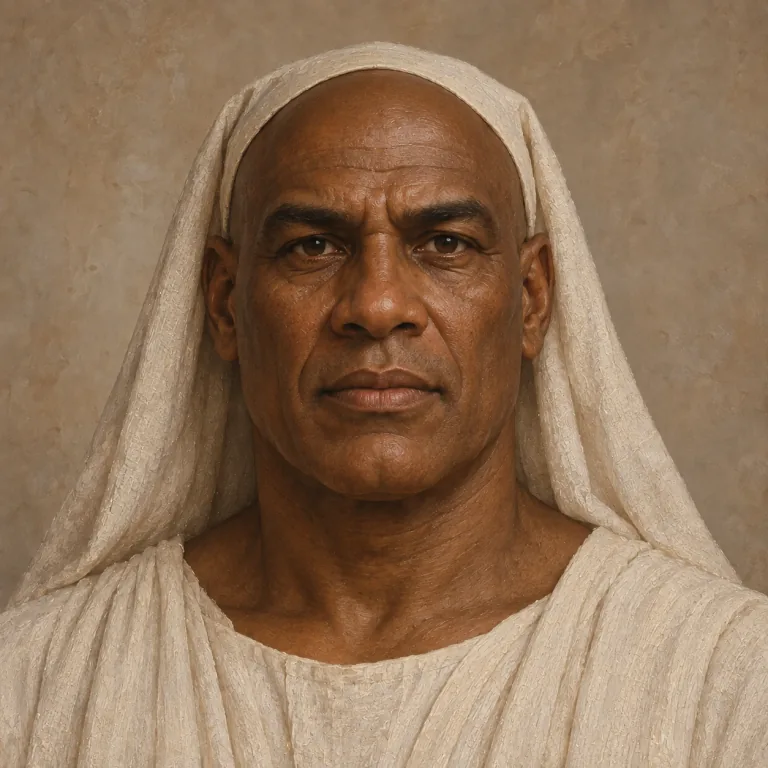
Also indexed here:
- Hoshea
- Adrammelech
- Ahaz
- Anammelech
- Elah
- Nebat
- Shalmaneser
- So