Person in the New Testament
Jude
Jude: a name in two family lists and a letter the text does not join

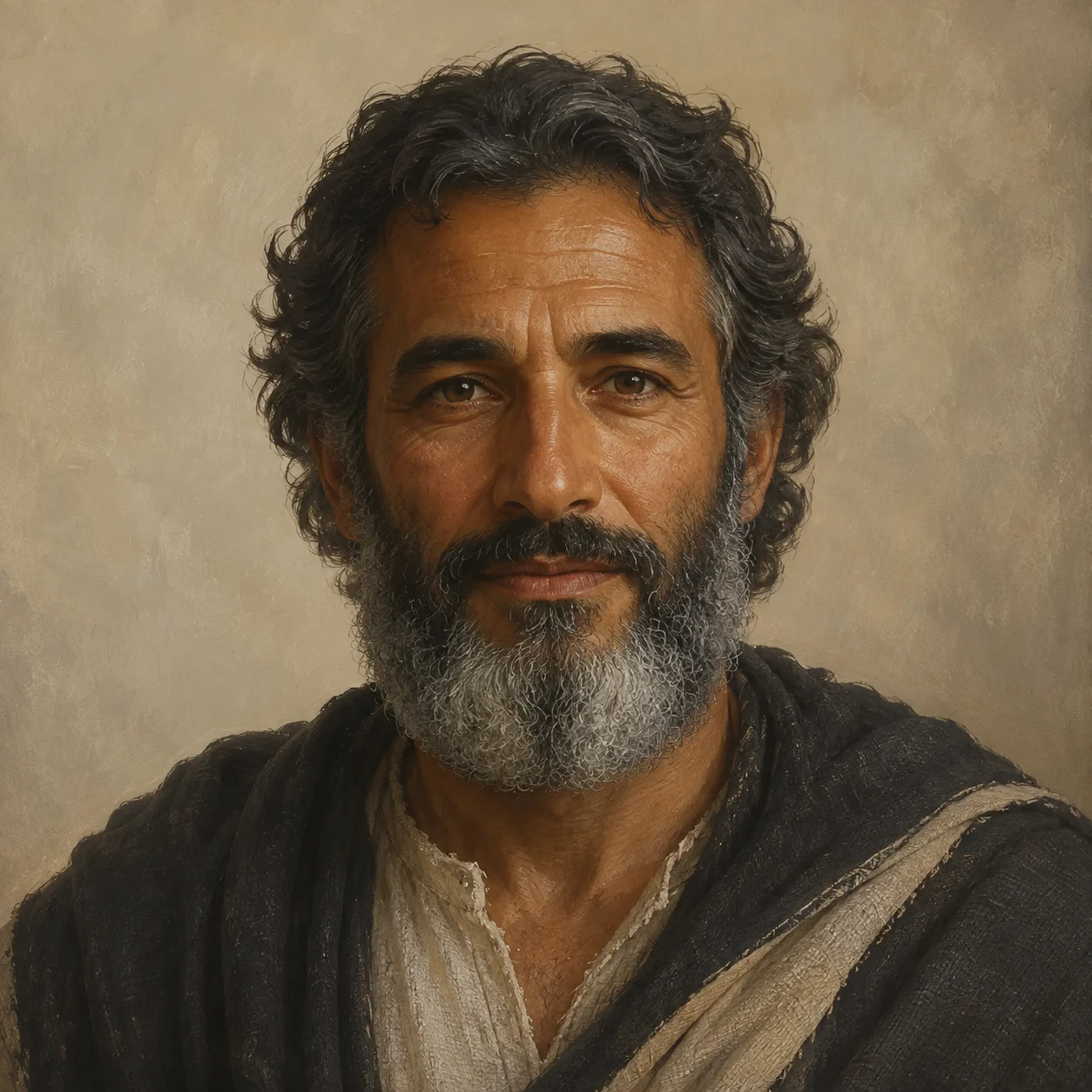
Portrait: an AI-generated artistic interpretation, not evidence of how Jude looked.
Who Jude is
The one direct mention is in Mark, where the people of Jesus' own country ask whether this is not the carpenter, the son of Mary, the brother of James, and of Joses, and of Juda, and Simon, and whether his sisters are not there with them; the text says they were offended at him. Matthew records the same question in his own wording, asking whether this is not the carpenter's son, whether his mother is called Mary, and naming the brethren James, Joses, Simon and Judas, with the sisters. The third passage indexed for this handle is the opening of a letter whose writer calls himself Jude, the servant of Jesus Christ, and brother of James, writing to those who are sanctified, preserved and called. That writer says he had meant to write about the common salvation and instead urges his readers to contend earnestly for the faith once delivered to the saints, tells them to remember the words spoken before by the apostles, and ends with a doxology. Nothing in these passages states that the brother named in the gospel question and the writer of the letter are the same man.
Cited passages: Mark 6:3, Matthew 13:54, Matthew 13:55, Matthew 13:56, Jude 1:1, Jude 1:2, Jude 1:3, Jude 1:17, Jude 1:24, Jude 1:25
Historical setting
The identity is not settled by the text, and the spellings differ across the three passages: Mark prints Juda, Matthew prints Judas, and the letter opens with Jude. In the gospel passages the name is one item in a family list recited by neighbours; nothing else is said about him, no age, trade, words or later appearance. The letter's writer identifies himself only by service to Jesus Christ and by a brother named James, and he does not name a father, a mother, a town, or a relationship to Jesus. Two more men called Judas stand in the apostle lists, Judas the brother of James and Judas Iscariot, and the passages never say whether any of these are the same person. The honest report is that the source leaves the question open.
Cited passages: Mark 6:3, Matthew 13:55, Jude 1:1, Jude 1:17, Luke 6:16, Acts 1:13
How the story is told
In the gospels the name does no work of its own. It is part of a list the neighbours use to cut Jesus down to a known family, and the sentence ends in their taking offence rather than in anything about the brothers. In the letter the same name carries a voice, and the first thing that voice does is place itself under someone else, as a servant and as a brother of James. The only element the passages share is the pairing of this name with a James, and a reader has to decide what to make of that, because the text does not.
Cited passages: Mark 6:3, Matthew 13:55, Matthew 13:56, Jude 1:1, Jude 1:3, Jude 1:17
Story moments
- Named among the brethren (Mark 6:3). The townspeople list Juda among the brothers of the carpenter.
- The same question in Matthew (Matthew 13:55). Matthew’s version names the brethren and spells the name Judas.
- A letter opens (Jude 1:1). The writer calls himself Jude, the servant of Jesus Christ, and brother of James.
- Contend for the faith (Jude 1:3). He says he wrote to urge them to contend for the faith once delivered.
- Remember the apostles’ words (Jude 1:17). He points his readers back to what the apostles had spoken.
Key passages
Mark 6:3
Is not this the carpenter, the son of Mary, the brother of James, and Joses, and of Juda, and Simon? and are not his sisters here with us? And they were offended at him.
King James Version. 3 indexed passages in total.
For reflection
The name appears beside a James in a family list and again beside a James at the head of a letter, and the text never says whether it is one man. What is gained, and what is lost, by leaving that open?
Books Jude appears in
Related people





Names and references are adapted from STEPBible TIPNR. A person listed with a verse is named or indexed there; it does not mean they wrote or spoke it.