Person in the New Testament
Herodias
Herodias: the wife whose marriage John condemned and whose daughter asked for his head

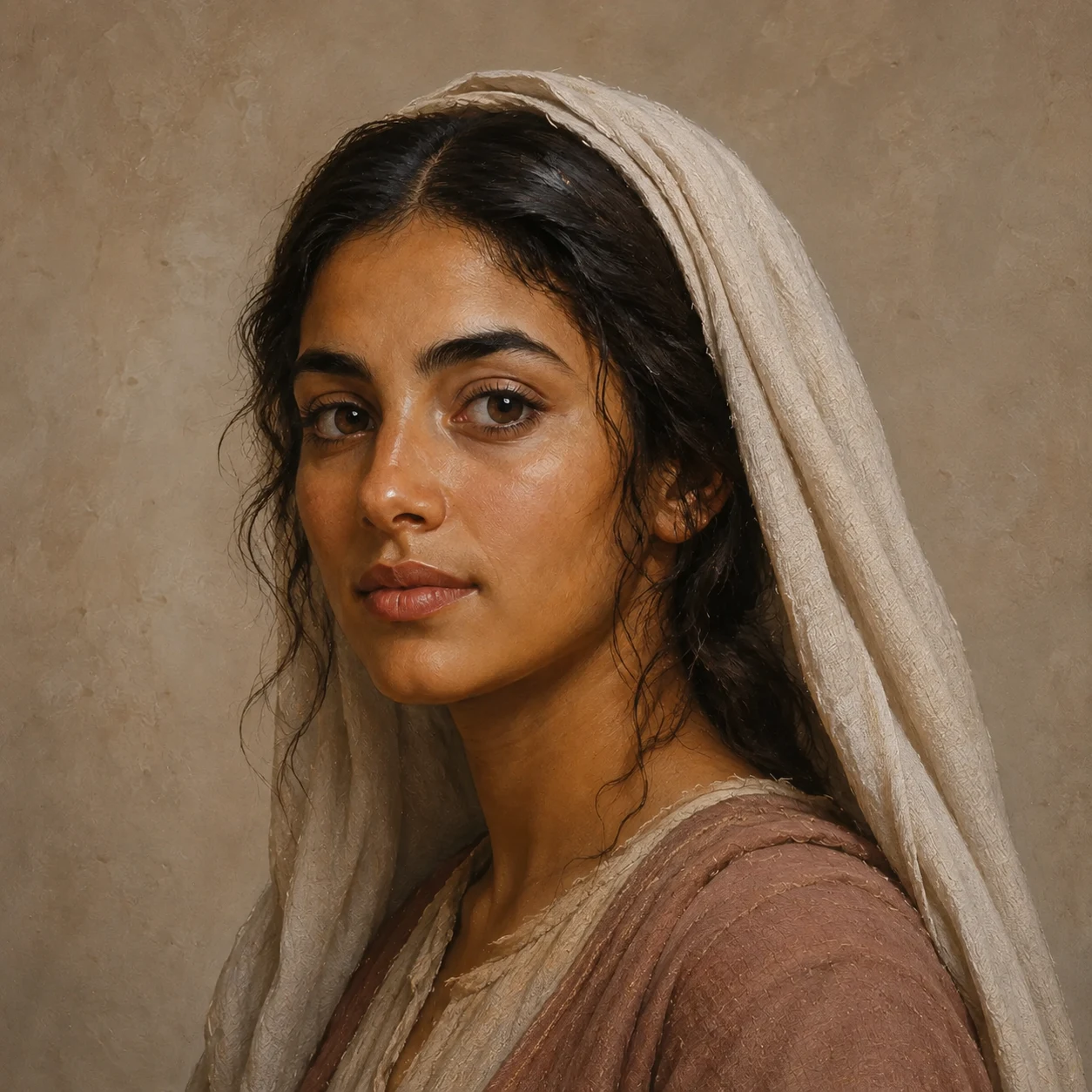
Portrait: an AI-generated artistic interpretation, not evidence of how Herodias looked.
Who Herodias is
Herodias appears only in connection with John the Baptist's imprisonment and death. Matthew says Herod had arrested and bound John for Herodias' sake, and identifies her as his brother Philip's wife, since John had told Herod it was not lawful for him to have her. Mark says the same and adds that Herod had married her, and that Herodias held a quarrel against John and would have killed him but could not, because Herod feared John and heard him gladly. At the birthday supper her daughter dances and pleases Herod, who swears to give whatever she asks. In Mark the girl goes out and asks her mother what to ask, and her mother answers with the head of John the Baptist. In Matthew the girl is described as being before instructed of her mother when she asks for the head in a charger. When the head is brought, the girl gives it to her mother. Luke names her once, in the report that John reproved Herod the tetrarch for Herodias his brother Philip's wife and for all the evils Herod had done, after which Herod shut John up in prison.
Cited passages: Matthew 14:3, Matthew 14:4, Matthew 14:6, Matthew 14:8, Matthew 14:11, Mark 6:17, Mark 6:19, Mark 6:22, Mark 6:24, Mark 6:28, Luke 3:19
Historical setting
She is identified only by relation, as his brother Philip's wife and as the mother of the girl who dances. Her parents, her origin and her later life are not given, and her daughter is never named; the texts call her the daughter of Herodias and the damsel. The Philip named as her husband is described only by that relation; Luke 3:1 separately names a brother Philip as tetrarch of Iturea and Trachonitis, and none of these passages says whether the same man is meant. Mark states that Herod had married her, which Matthew and Luke do not say in those words. Mark alone reports her wish to kill John and the reason it failed, that Herod feared John. Matthew says the girl was instructed beforehand, while Mark has her leave the room to ask; the two accounts place the instruction at different moments and the texts do not reconcile them.
Cited passages: Matthew 14:3, Mark 6:17, Luke 3:1, Mark 6:19, Mark 6:20, Matthew 14:8, Mark 6:24, Matthew 14:11
How the story is told
She acts entirely through other people. John's rebuke is addressed to Herod, not to her, the oath is sworn to her daughter, and the request reaches the king in the daughter's mouth. She is given one line in all these passages, six words in Mark answering a question: the head of John the Baptist. The narrator of Mark states her wish and her frustration plainly, would have killed him but she could not, which makes the birthday scene read as the opening she did not have before. Both accounts end the episode by returning the head to her, so the last movement of the story runs back to the woman Mark places outside the room.
Cited passages: Matthew 14:4, Mark 6:19, Mark 6:23, Mark 6:24, Mark 6:25, Matthew 14:11, Mark 6:28
Story moments
- Named as the reason (Matthew 14:3). Matthew says John was imprisoned for Herodias' sake, his brother Philip's wife.
- The marriage stated (Mark 6:17). Mark adds that Herod had married her.
- A quarrel she cannot act on (Mark 6:19). Mark says Herodias wanted John killed but could not bring it about.
- Her answer (Mark 6:24). Asked by her daughter what to request, she names the head of John the Baptist.
- The daughter instructed (Matthew 14:8). Matthew says the girl asked for the head after being instructed by her mother.
- The head brought to her (Matthew 14:11). The girl receives the head in a charger and brings it to her mother.
- Named in Luke's summary (Luke 3:19). Luke reports John reproving Herod over Herodias and all his evils.
Key passages
Matthew 14:3
For Herod had laid hold on John, and bound him, and put him in prison for Herodias’ sake, his brother Philip’s wife.
Matthew 14:6
But when Herod’s birthday was kept, the daughter of Herodias danced before them, and pleased Herod.
Mark 6:17
For Herod himself had sent forth and laid hold upon John, and bound him in prison for Herodias’ sake, his brother Philip’s wife: for he had married her.
Mark 6:19
Therefore Herodias had a quarrel against him, and would have killed him; but she could not:
Mark 6:22
And when the daughter of the said Herodias came in, and danced, and pleased Herod and them that sat with him, the king said unto the damsel, Ask of me whatsoever thou wilt, and I will give it thee.
Luke 3:19
But Herod the tetrarch, being reproved by him for Herodias his brother Philip’s wife, and for all the evils which Herod had done,
King James Version. 6 indexed passages in total.
For reflection
Herodias speaks once in these accounts, and the sentence is an answer to her daughter's question. What weight does the reader give to a figure the narrators keep offstage?
Books Herodias appears in
Related people
Names and references are adapted from STEPBible TIPNR. A person listed with a verse is named or indexed there; it does not mean they wrote or spoke it.