Person in the Old Testament
Gehazi
Gehazi: Elisha's servant who ran after Naaman's silver
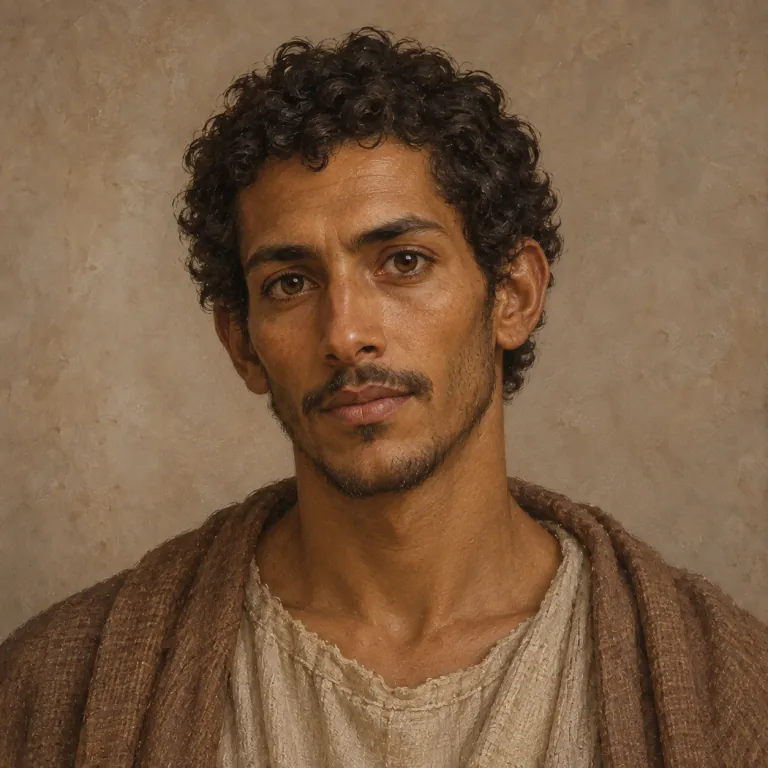
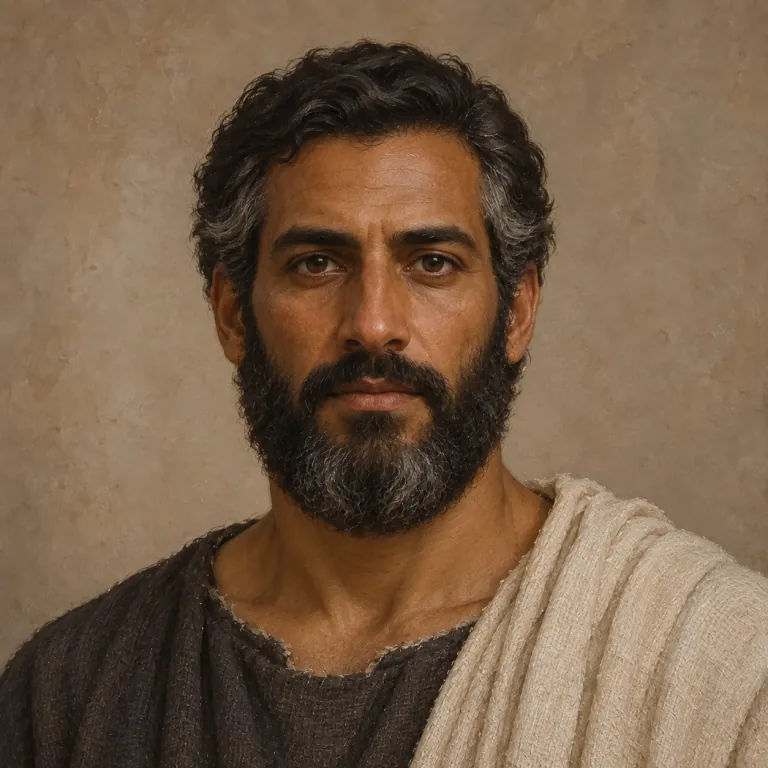
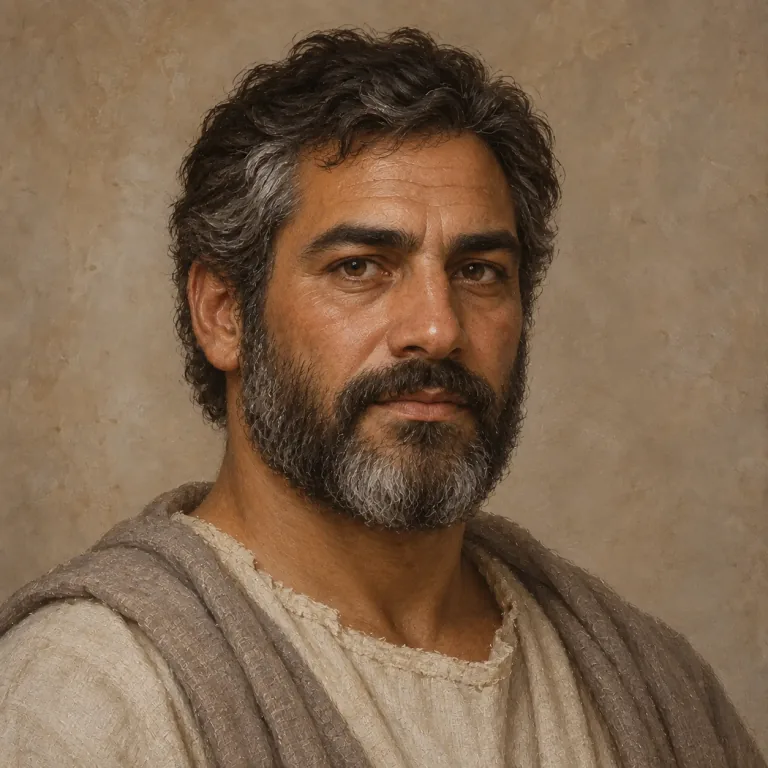
Portrait: an AI-generated artistic interpretation, not evidence of how Gehazi looked.
Who Gehazi is
Gehazi appears first at Shunem as Elisha's servant. He calls the Shunammite woman at Elisha's word, and when Elisha asks what can be done for her, Gehazi supplies the answer: she has no child and her husband is old. When the woman later rides to Carmel after her son's death, Elisha sends Gehazi to run and ask whether all is well, and when she seizes Elisha's feet Gehazi moves to push her away until Elisha stops him. Elisha then sends Gehazi ahead with his staff, forbidding greetings on the road, to lay the staff on the child's face; there is no voice or hearing, and Gehazi reports that the child is not awake. After the boy revives, Gehazi again calls the woman in. In the Naaman story Gehazi watches Elisha refuse the Syrian's gift, resolves aloud to run after him and take something, and catches up with him. Naaman gets down from his chariot; Gehazi lies that Elisha wants a talent of silver and two garments for two young prophets from mount Ephraim, and Naaman presses two talents on him. Gehazi stores the goods at the tower and tells Elisha he went nowhere. Elisha says his heart went with him and that Naaman's leprosy will cling to Gehazi and his descendants for ever; Gehazi leaves a leper white as snow. Later the king talks with Gehazi about Elisha's great deeds, and as he tells how Elisha restored a dead body the Shunammite woman arrives with her son, and Gehazi identifies them to the king.
Cited passages: 2 Kings 4:12, 2 Kings 4:14, 2 Kings 4:25, 2 Kings 4:26, 2 Kings 4:27, 2 Kings 4:29, 2 Kings 4:31, 2 Kings 4:36, 2 Kings 5:20, 2 Kings 5:21, 2 Kings 5:22, 2 Kings 5:23, 2 Kings 5:24, 2 Kings 5:25, 2 Kings 5:26, 2 Kings 5:27, 2 Kings 8:4, 2 Kings 8:5
Historical setting
Gehazi is identified only by his role, "his servant" and "the servant of Elisha the man of God"; the text gives no father, town or tribe. The name occurs only in these three passages of 2 Kings. The unnamed servant who serves loaves in 4:43 and the unnamed "servant of the man of God" at Dothan in 6:15 are not called Gehazi, and the text does not say whether they are he. The staff mission is his alone, and the narrator gives no reason why the staff produces "neither voice, nor hearing". His sentence in 5:27 extends the leprosy to his seed for ever, yet in 8:4 he is talking with the king and is still called the servant of the man of God, with no mention of leprosy; the text does not say whether the conversation with the king comes before or after the Naaman episode, since 8:1 opens only with "Then spake Elisha unto the woman" and a famine of seven years. The king in chapter 8 is unnamed. Elisha addresses Gehazi by name once, in the question "Whence comest thou, Gehazi?"; the details of Gehazi's lie, mount Ephraim and two young prophets, are his invention and no such visitors are narrated.
Cited passages: 2 Kings 4:12, 2 Kings 5:20, 2 Kings 4:43, 2 Kings 6:15, 2 Kings 4:31, 2 Kings 5:27, 2 Kings 8:4, 2 Kings 8:1, 2 Kings 5:25, 2 Kings 5:22
How the story is told
In the Shunem story Gehazi is the go-between. He calls, runs, asks the set question, tries to push the grieving mother off, and carries the staff; his reports are short, and his one initiative, the observation that she has no child, sets the whole story in motion. The mother refuses to deal through him, swearing she will not leave Elisha, and the staff in his hand fails where the prophet's own body succeeds. In the Naaman story Gehazi steps forward and the narrator quotes his private resolve. His oath, "as the Lord liveth", copies the oath Elisha used to refuse the gift; his lie is detailed and his denial to Elisha is flat. The exchange ends with Elisha's "Went not mine heart with thee", which answers Elisha's earlier confession that the Lord had hidden the Shunammite's grief from him: the prophet who did not know then knows now. The final scene turns Gehazi into a witness. The man who once tried to thrust the woman away names her and her son before the king, and her arrival interrupts his own account of the miracle.
Cited passages: 2 Kings 4:15, 2 Kings 4:26, 2 Kings 4:27, 2 Kings 4:14, 2 Kings 4:30, 2 Kings 4:34, 2 Kings 5:16, 2 Kings 5:20, 2 Kings 5:25, 2 Kings 5:26, 2 Kings 8:5
Story moments
- She hath no child (2 Kings 4:14). Gehazi tells Elisha what the Shunammite lacks, and the promise of a son follows.
- He tries to push her away (2 Kings 4:27). When the mother grips Elisha's feet, Gehazi moves to thrust her off and is stopped.
- The staff brings no voice (2 Kings 4:31). Gehazi lays Elisha's staff on the child's face and reports that he has not woken.
- I will run after him (2 Kings 5:20). Gehazi resolves to take something from Naaman after Elisha refuses the gift.
- The lie about two young prophets (2 Kings 5:22). Gehazi asks Naaman for silver and garments in Elisha's name.
- A leper white as snow (2 Kings 5:27). Elisha declares Naaman's leprosy will cling to Gehazi and his seed.
- Witness before the king (2 Kings 8:5). Gehazi identifies the Shunammite and her restored son to the king.
Key passages
2 Kings 4:12
And he said to Gehazi his servant, Call this Shunammite. And when he had called her, she stood before him.
2 Kings 4:14
And he said, What then is to be done for her? And Gehazi answered, Verily she hath no child, and her husband is old.
2 Kings 4:25
So she went and came unto the man of God to mount Carmel. And it came to pass, when the man of God saw her afar off, that he said to Gehazi his servant, Behold, yonder is that Shunammite:
2 Kings 4:27
And when she came to the man of God to the hill, she caught him by the feet: but Gehazi came near to thrust her away. And the man of God said, Let her alone; for her soul is vexed within her: and the Lord hath hid it from me, and hath not told me.
2 Kings 4:29
Then he said to Gehazi, Gird up thy loins, and take my staff in thine hand, and go thy way: if thou meet any man, salute him not; and if any salute thee, answer him not again: and lay my staff upon the face of the child.
2 Kings 4:31
And Gehazi passed on before them, and laid the staff upon the face of the child; but there was neither voice, nor hearing. Wherefore he went again to meet him, and told him, saying, The child is not awaked.
King James Version. 12 indexed passages in total.
For reflection
Gehazi says his master has "spared" Naaman by refusing the gift. What does he think Elisha lost in that refusal, and what does the story show Gehazi gaining and losing by correcting it?
Books Gehazi appears in
Related people
Names and references are adapted from STEPBible TIPNR. A person listed with a verse is named or indexed there; it does not mean they wrote or spoke it.