Person in the Old and New Testaments
Boaz
Boaz: kindness and a public commitment
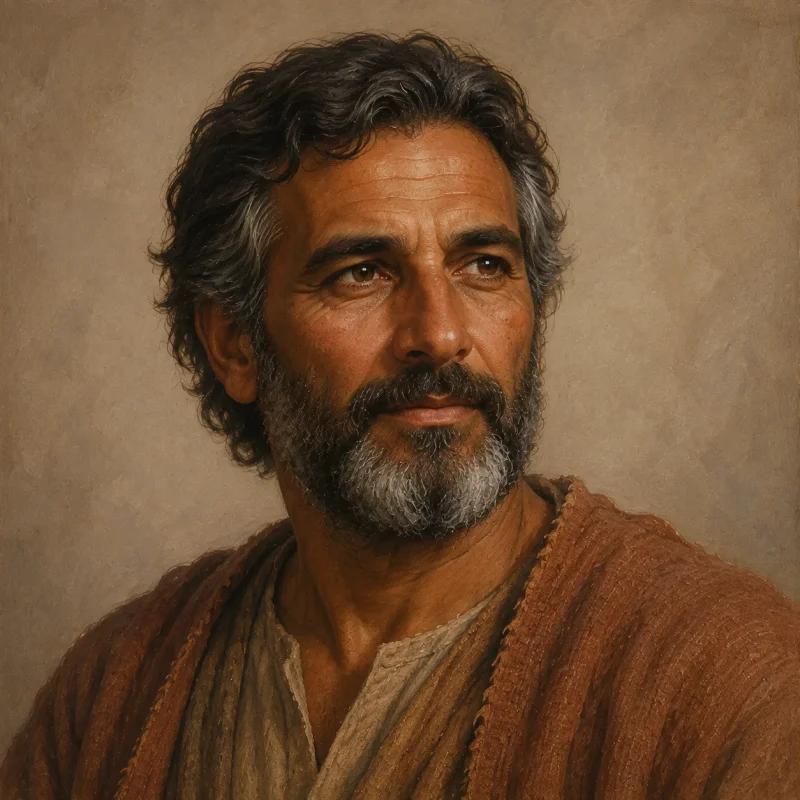
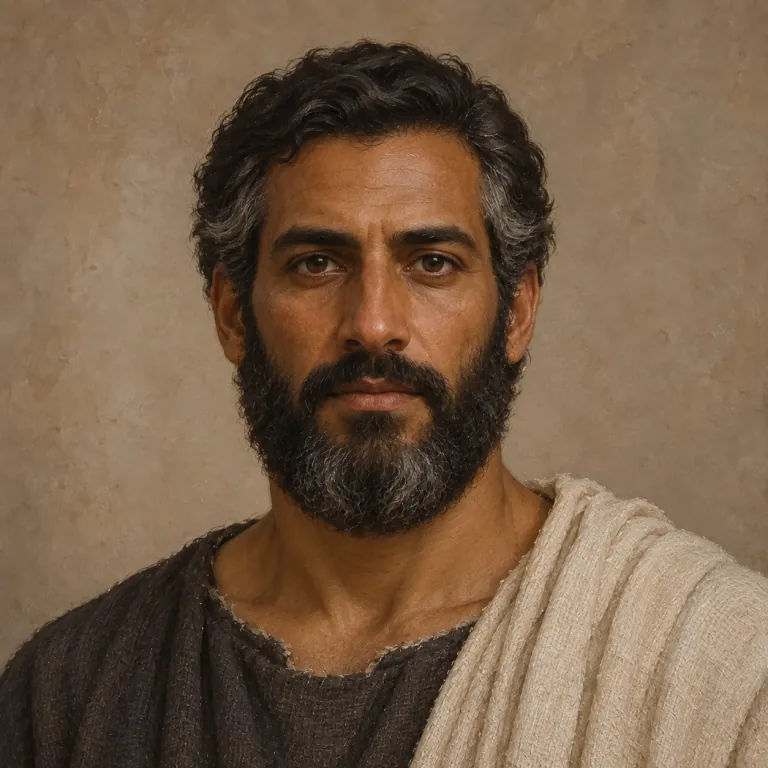
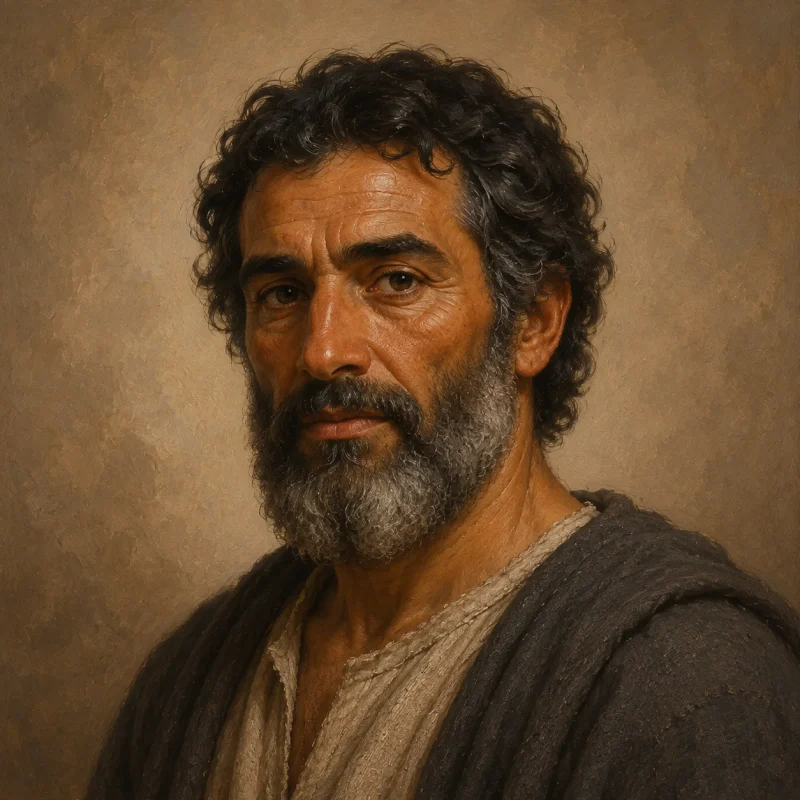
Portrait: an AI-generated artistic interpretation, not evidence of how Boaz looked.
Who Boaz is
Boaz is a wealthy man of Elimelech's family whose field Ruth enters to glean after returning with Naomi. He learns what Ruth has done for her mother-in-law, gives her protection and food, and instructs his workers to leave extra grain for her. At the threshing floor, Ruth asks him to spread his garment over her because he is a near relative. Boaz promises to act, while explaining that another relative has the prior claim. He brings the matter before ten elders at Bethlehem's gate. When the nearer relative declines, Boaz publicly acquires the family property and takes Ruth as his wife to preserve the dead man's name in his inheritance. They become the parents of Obed, whose line leads through Jesse to David.
Cited passages: Ruth 2:1, Ruth 2:2, Ruth 2:3, Ruth 2:4, Ruth 2:5, Ruth 2:6, Ruth 2:7, Ruth 2:8, Ruth 2:9, Ruth 2:10, Ruth 2:11, Ruth 2:12, Ruth 2:13, Ruth 2:14, Ruth 2:15, Ruth 2:16, Ruth 3:8, Ruth 3:9, Ruth 3:10, Ruth 3:11, Ruth 3:12, Ruth 3:13, Ruth 4:1, Ruth 4:2, Ruth 4:3, Ruth 4:4, Ruth 4:5, Ruth 4:6, Ruth 4:7, Ruth 4:8, Ruth 4:9, Ruth 4:10, Ruth 4:11, Ruth 4:12, Ruth 4:13, Ruth 4:14, Ruth 4:15, Ruth 4:16, Ruth 4:17
Historical setting
Ruth places this household story in the days of the judges. Barley and wheat harvests, workers and gleaners, kinship, land and witnesses shape Boaz's dealings with Ruth and Naomi. He is related to Elimelech, but the book does not specify the exact degree or state that he is Mahlon's brother. It explains the removal and transfer of a shoe as a former custom for confirming redemption and exchange. Ruth and First Chronicles place Boaz in the ancestry of David. Matthew and Luke later include him in their genealogies of Jesus; Matthew also names a Rachab as his mother, and does not say she is Rahab of Jericho. These family notices are later references, not additional episodes in Boaz's life.
Cited passages: Ruth 1:1, Ruth 2:1, Ruth 2:3, Ruth 2:4, Ruth 2:5, Ruth 2:6, Ruth 2:7, Ruth 2:8, Ruth 2:9, Ruth 2:23, Ruth 4:1, Ruth 4:2, Ruth 4:3, Ruth 4:4, Ruth 4:5, Ruth 4:6, Ruth 4:7, Ruth 4:8, Ruth 4:9, Ruth 4:10, Ruth 4:18, Ruth 4:19, Ruth 4:20, Ruth 4:21, Ruth 4:22, 1 Chronicles 2:11, 1 Chronicles 2:12, 1 Chronicles 2:13, 1 Chronicles 2:14, 1 Chronicles 2:15, Matthew 1:5, Matthew 1:6, Luke 3:31, Luke 3:32
How the story is told
Boaz first prays that Ruth will receive a reward under the Lord's wings, while his own instructions provide food and protection. Her later request for his covering brings that language of shelter into their encounter. The promise at night leaves a real obstacle: a nearer relative must first decide. The story resolves it through public speech and witnesses at the gate, rather than ending with the private promise alone. Boaz states that his action will preserve the dead man's name, and the book closes by carrying the family line forward to David. The account records the marriage and conception after the gate proceedings; it does not narrate a sexual encounter at the threshing floor.
Cited passages: Ruth 2:8, Ruth 2:9, Ruth 2:10, Ruth 2:11, Ruth 2:12, Ruth 2:13, Ruth 2:14, Ruth 2:15, Ruth 2:16, Ruth 3:9, Ruth 3:10, Ruth 3:11, Ruth 3:12, Ruth 3:13, Ruth 3:14, Ruth 4:1, Ruth 4:2, Ruth 4:3, Ruth 4:4, Ruth 4:5, Ruth 4:6, Ruth 4:7, Ruth 4:8, Ruth 4:9, Ruth 4:10, Ruth 4:11, Ruth 4:12, Ruth 4:13, Ruth 4:17, Ruth 4:18, Ruth 4:19, Ruth 4:20, Ruth 4:21, Ruth 4:22
Story moments
- Ruth enters his field (Ruth 2:3). Ruth gleans in a field belonging to Boaz, a relative of Elimelech.
- Protection among the workers (Ruth 2:9). Boaz tells Ruth where to glean and says he has charged the young men not to touch her.
- Extra grain left for Ruth (Ruth 2:16). Boaz orders workers to leave grain deliberately for her to gather.
- A nearer relative (Ruth 3:12). Boaz acknowledges that another relative has a prior claim.
- A commitment before witnesses (Ruth 4:10). Boaz declares that he takes Ruth as wife to preserve the dead man's name in his inheritance.
- Obed is born (Ruth 4:13). Boaz marries Ruth, and the Lord gives her conception and a son.
Key passages
Ruth 2:1
And Naomi had a kinsman of her husband’s, a mighty man of wealth, of the family of Elimelech; and his name was Boaz.
Ruth 2:3
And she went, and came, and gleaned in the field after the reapers: and her hap was to light on a part of the field belonging unto Boaz, who was of the kindred of Elimelech.
Ruth 2:4
And, behold, Boaz came from Beth-lehem, and said unto the reapers, The Lord be with you. And they answered him, The Lord bless thee.
Ruth 2:5
Then said Boaz unto his servant that was set over the reapers, Whose damsel is this?
Ruth 2:8
Then said Boaz unto Ruth, Hearest thou not, my daughter? Go not to glean in another field, neither go from hence, but abide here fast by my maidens:
Ruth 2:11
And Boaz answered and said unto her, It hath fully been shewed me, all that thou hast done unto thy mother in law since the death of thine husband: and how thou hast left thy father and thy mother, and the land of thy nativity, and art come unto a people which thou knewest not heretofore.
King James Version. 22 indexed passages in total.
For reflection
How do Boaz's words about shelter compare with his instructions to workers and his commitment before witnesses? Follow the promise through to the public action that fulfils it.
Books Boaz appears in
Related people
Names and references are adapted from STEPBible TIPNR. A person listed with a verse is named or indexed there; it does not mean they wrote or spoke it.