Person in the Old Testament
Naomi
Naomi: returning to Bethlehem
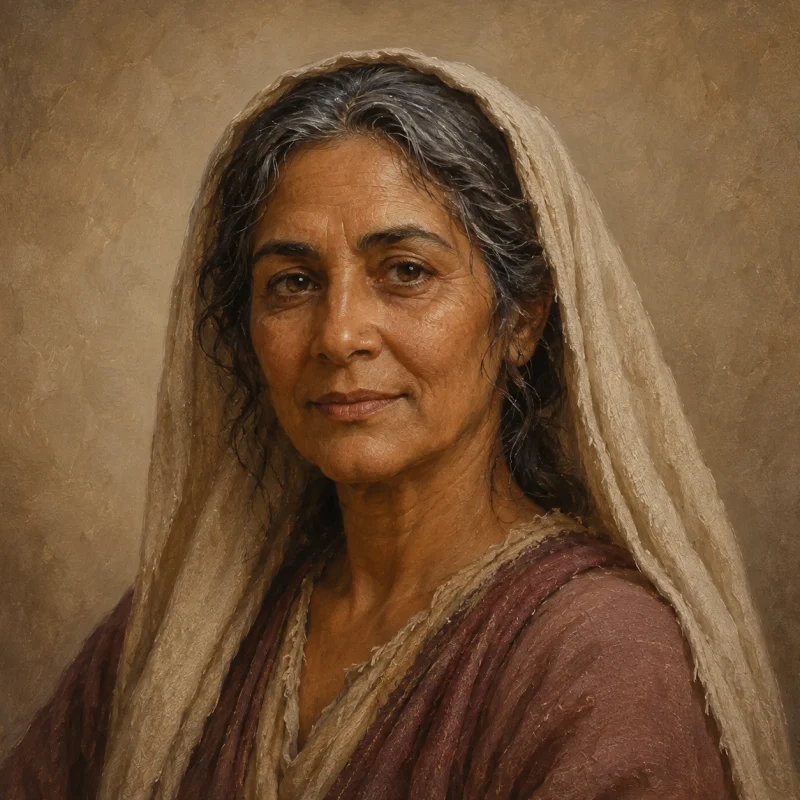
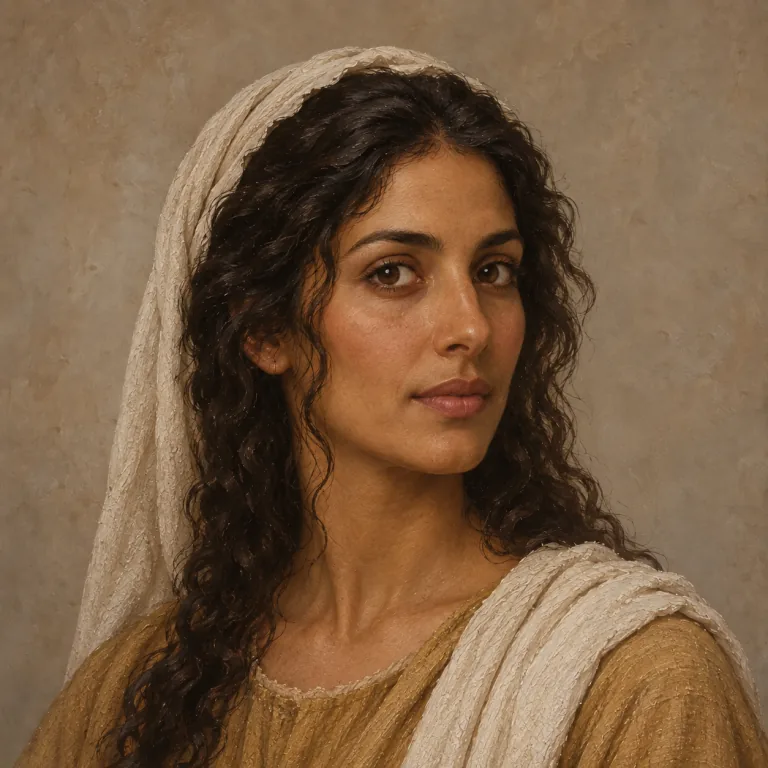
Portrait: an AI-generated artistic interpretation, not evidence of how Naomi looked.
Who Naomi is
Naomi leaves Bethlehem for Moab with her husband Elimelech and their sons Mahlon and Chilion during a famine. Her husband and both sons die there. Hearing that the Lord has given food to his people, she sets out for Judah with her daughters-in-law, then urges them to return to their own families. Orpah leaves, while Ruth refuses to part from her. In Bethlehem, Naomi asks to be called Mara and describes herself as returning empty. Ruth brings home food from Boaz's field, and Naomi identifies him as a near relative. She later guides Ruth's visit to his threshing floor, seeking security for her. After Boaz marries Ruth and Obed is born, Naomi takes the child into her arms and cares for him. The closing family line names Obed as Jesse's father and David's grandfather.
Cited passages: Ruth 1:1, Ruth 1:2, Ruth 1:3, Ruth 1:4, Ruth 1:5, Ruth 1:6, Ruth 1:7, Ruth 1:8, Ruth 1:9, Ruth 1:10, Ruth 1:11, Ruth 1:12, Ruth 1:13, Ruth 1:14, Ruth 1:15, Ruth 1:16, Ruth 1:17, Ruth 1:18, Ruth 1:19, Ruth 1:20, Ruth 1:21, Ruth 1:22, Ruth 2:17, Ruth 2:18, Ruth 2:19, Ruth 2:20, Ruth 2:21, Ruth 2:22, Ruth 2:23, Ruth 3:1, Ruth 3:2, Ruth 3:3, Ruth 3:4, Ruth 3:5, Ruth 4:13, Ruth 4:14, Ruth 4:15, Ruth 4:16, Ruth 4:17
Historical setting
The book sets Naomi's story in the days of the judges, moving between Moab and Bethlehem during famine, bereavement and harvest. Ruth and Orpah are Moabite women who married Naomi's sons, and the account mentions a stay of about ten years. Naomi and Ruth reach Bethlehem at the beginning of barley harvest, and Ruth continues gleaning through the wheat harvest. At the city gate, Boaz speaks about Elimelech's land and publicly declares his acquisition of the family property from Naomi. These details describe the household's circumstances without supplying Naomi's age, the causes of the deaths or a complete account of her earlier life.
Cited passages: Ruth 1:1, Ruth 1:2, Ruth 1:3, Ruth 1:4, Ruth 1:5, Ruth 1:6, Ruth 1:22, Ruth 2:23, Ruth 4:1, Ruth 4:2, Ruth 4:3, Ruth 4:4, Ruth 4:5, Ruth 4:6, Ruth 4:7, Ruth 4:8, Ruth 4:9, Ruth 4:10
How the story is told
Naomi's words about bitterness and emptiness give voice to her loss. They are her account of what the Almighty has done; the narrator does not explain the deaths as punishment for a stated offence. Her early wish that her daughters-in-law find rest returns when she seeks rest for Ruth in chapter 3. The barley sent home with Ruth and the child later held by Naomi answer the earlier image of emptiness within the story. The neighbours' saying that a son has been born to Naomi belongs to that household restoration: the preceding verses explicitly identify Ruth as the child's mother. The women also praise Ruth's love for Naomi, keeping their relationship central to the ending.
Cited passages: Ruth 1:3, Ruth 1:4, Ruth 1:5, Ruth 1:8, Ruth 1:9, Ruth 1:20, Ruth 1:21, Ruth 3:1, Ruth 3:15, Ruth 3:16, Ruth 3:17, Ruth 4:13, Ruth 4:14, Ruth 4:15, Ruth 4:16, Ruth 4:17
Story moments
- Bereaved in Moab (Ruth 1:5). Naomi is left without her husband and both sons.
- Ruth stays with her (Ruth 1:16). Ruth refuses to leave Naomi and commits herself to Naomi's people and God.
- A lament in Bethlehem (Ruth 1:20). Naomi asks to be called Mara because of the bitterness she attributes to the Almighty.
- A relative identified (Ruth 2:20). Naomi names Boaz as one of their near relatives after Ruth returns from his field.
- Seeking rest for Ruth (Ruth 3:1). Naomi explains her wish to seek Ruth's security before proposing the threshing-floor visit.
- Caring for Obed (Ruth 4:16). Naomi takes Ruth's child into her arms and becomes his caregiver.
Key passages
Ruth 1:2
And the name of the man was Elimelech, and the name of his wife Naomi, and the name of his two sons Mahlon and Chilion, Ephrathites of Beth-lehem-judah. And they came into the country of Moab, and continued there.
Ruth 1:3
And Elimelech Naomi’s husband died; and she was left, and her two sons.
Ruth 1:8
And Naomi said unto her two daughters in law, Go, return each to her mother’s house: the Lord deal kindly with you, as ye have dealt with the dead, and with me.
Ruth 1:11
And Naomi said, Turn again, my daughters: why will ye go with me? are there yet any more sons in my womb, that they may be your husbands?
Ruth 1:19
So they two went until they came to Beth-lehem. And it came to pass, when they were come to Beth-lehem, that all the city was moved about them, and they said, Is this Naomi?
Ruth 1:20
And she said unto them, Call me not Naomi, call me Mara: for the Almighty hath dealt very bitterly with me.
King James Version. 20 indexed passages in total.
For reflection
How do Naomi's words on returning compare with the food and care she later receives? Let her grief be heard alongside Ruth's loyalty and the women's words at Obed's birth.
Books Naomi appears in
Related people


Names and references are adapted from STEPBible TIPNR. A person listed with a verse is named or indexed there; it does not mean they wrote or spoke it.