Person in the Old Testament
Azariah
Azariah: the companion of Daniel renamed Abed-nego and kept whole in the furnace
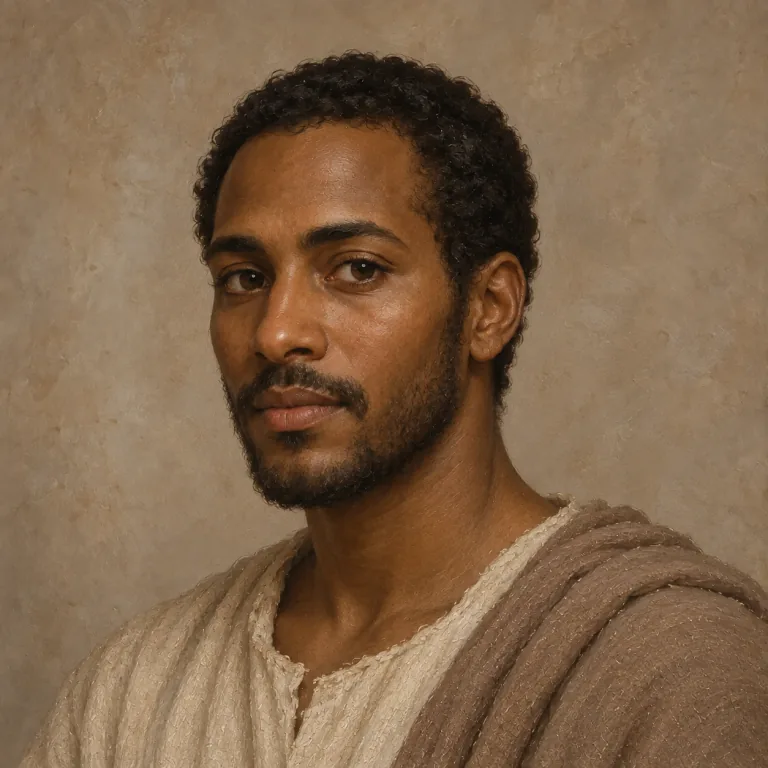
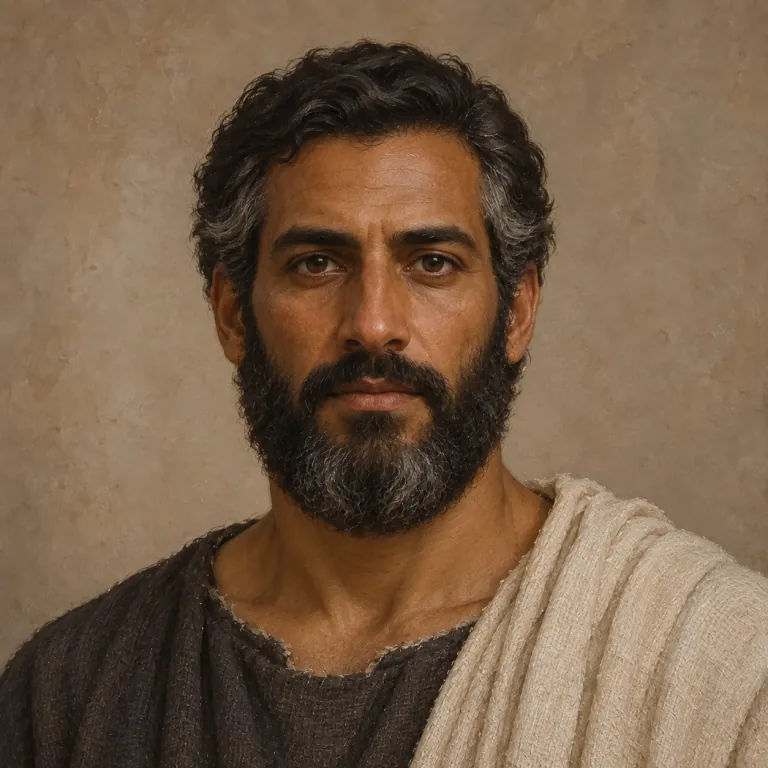
Portrait: an AI-generated artistic interpretation, not evidence of how Azariah looked.
Who Azariah is
Azariah closes the list of four children of Judah in Daniel 1, and the prince of the eunuchs gives him the name printed in the KJV as Abed–nego. He is one of the four under Melzar who ask to be proved ten days on pulse and water, and one of the four to whom God gives knowledge and skill; when the king examines them, none is found like Daniel, Hananiah, Mishael and Azariah, and they stand before him. In chapter 2 Daniel tells Azariah and the other two the king's matter, that they may seek mercies from the God of heaven, and Daniel's thanksgiving speaks of what we desired of thee. After Daniel becomes ruler of the province, the king sets Shadrach, Meshach and Abed-nego over its affairs. In chapter 3 Abed-nego is the last name in each of the repeated lists: accused by the Chaldeans, summoned in the king's rage, questioned, and warned that no god will deliver him from the king's hands. With the others he answers that their God is able and will deliver, and that if not they still will not serve the king's gods. Bound, he falls into the furnace heated seven times; the king sees four walking unhurt and calls the three out as servants of the most high God; the officials see no burn, no changed coat and no smell of fire. The king blesses the God of Shadrach, Meshach and Abed-nego, decrees against speaking amiss of him, and promotes the three in the province of Babylon.
Cited passages: Daniel 1:6, Daniel 1:7, Daniel 1:12, Daniel 1:17, Daniel 1:19, Daniel 2:17, Daniel 2:18, Daniel 2:23, Daniel 2:49, Daniel 3:12, Daniel 3:15, Daniel 3:17, Daniel 3:18, Daniel 3:23, Daniel 3:26, Daniel 3:27, Daniel 3:29, Daniel 3:30
Historical setting
Azariah is a name other men bear in the Old Testament, among them a son of Zadok the priest listed among a king's princes, and a king of Judah made king at sixteen. The index keeps this Azariah as the captive of Judah of Daniel 1 to 3, with no father named and no link to those men. The KJV prints his Babylonian name with a dash, Abed–nego, in every occurrence. The text uses the name Azariah only in Daniel 1 and 2:17; the name Abed-nego carries him from Daniel 2:49 through the end of chapter 3. He never speaks apart from the three, and the narrator's accounts of him are all plural. The accusation against him rests on the office Daniel asked for him, and the king's question whether any god can deliver him is answered by the event, not by a speech of his own. His age, family and later life are not given, and Daniel does not mention him after chapter 3.
Cited passages: 1 Kings 4:2, 2 Kings 14:21, Daniel 1:6, Daniel 1:7, Daniel 2:17, Daniel 3:16, Daniel 3:12, Daniel 3:15, Daniel 3:30
How the story is told
Azariah ends every list of the three, so in chapter 3 each repeated formula, the accusation, the summons, the question, the binding, the calling out and the blessing, closes on his Babylonian name. That name, given by a Babylonian officer, is the one the Babylonian king uses when he confesses their God, and the text lets that irony stand without comment. In chapter 1 Azariah is part of a comparison judged by appearance; in chapter 2 he is part of a we that Daniel's thanksgiving acknowledges; in chapter 3 he is part of a body count the king cannot reconcile, three thrown, four seen. The friends' speech is brief, and its structure, if he does and if he does not, is the moral centre of the chapter. Nebuchadnezzar's decree that no one may speak against their God mirrors his earlier decree that everyone must bow to his image, and Azariah's story ends inside that reversal, promoted by the king who bound him.
Cited passages: Daniel 3:20, Daniel 3:28, Daniel 1:13, Daniel 2:23, Daniel 3:24, Daniel 3:18, Daniel 3:6, Daniel 3:29
Story moments
- Last of the four from Judah (Daniel 1:6). Azariah closes the list of captives chosen with Daniel, Hananiah and Mishael.
- Renamed Abed-nego (Daniel 1:7). The prince of the eunuchs gives Azariah his Babylonian name.
- Stood before the king (Daniel 1:19). None is found like the four, and they enter the king's service.
- What we desired of thee (Daniel 2:23). Daniel's thanksgiving counts his companions in the request God answered.
- Who is that God (Daniel 3:15). The king asks what god can deliver the three from his hands.
- No smell of fire (Daniel 3:27). The officials find the three unburned, coats unchanged.
- A decree in their God's favour (Daniel 3:29). Nebuchadnezzar forbids speaking amiss of the God of Shadrach, Meshach and Abed-nego.
Key passages
Daniel 1:6
Now among these were of the children of Judah, Daniel, Hananiah, Mishael, and Azariah:
Daniel 1:7
Unto whom the prince of the eunuchs gave names: for he gave unto Daniel the name of Belteshazzar; and to Hananiah, of Shadrach; and to Mishael, of Meshach; and to Azariah, of Abed-nego.
Daniel 1:11
Then said Daniel to Melzar, whom the prince of the eunuchs had set over Daniel, Hananiah, Mishael, and Azariah,
Daniel 1:19
And the king communed with them; and among them all was found none like Daniel, Hananiah, Mishael, and Azariah: therefore stood they before the king.
Daniel 2:17
Then Daniel went to his house, and made the thing known to Hananiah, Mishael, and Azariah, his companions:
Daniel 2:49
Then Daniel requested of the king, and he set Shadrach, Meshach, and Abed-nego, over the affairs of the province of Babylon: but Daniel sat in the gate of the king.
King James Version. 18 indexed passages in total.
For reflection
The name the king uses when he blesses Azariah's God is the one a Babylonian officer chose for him. What does the account show about keeping an identity under a name someone else gave?
Books Azariah appears in
Related people


Names and references are adapted from STEPBible TIPNR. A person listed with a verse is named or indexed there; it does not mean they wrote or spoke it.